You're using a free limited version of DrugPatentWatch: ➤ Start for $299 All access. No Commitment.

Last Updated: December 18, 2025

EPIPEN Drug Patent Profile


✉ Email this page to a colleague

« Back to Dashboard


Which patents cover Epipen, and when can generic versions of Epipen launch?

Epipen is a drug marketed by Viatris and is included in one NDA. There are five patents protecting this drug.

This drug has forty-seven patent family members in eighteen countries.

The generic ingredient in EPIPEN is epinephrine. There are twenty-one drug master file entries for this compound. Thirty-two suppliers are listed for this compound. Additional details are available on the epinephrine profile page.

DrugPatentWatch® Litigation and Generic Entry Outlook for Epipen

A generic version of EPIPEN was approved as epinephrine by BPI LABS on July 29th, 2014.

  Get Started Free

AI Deep Research
Questions you can ask:
  • What is the 5 year forecast for EPIPEN?
  • What are the global sales for EPIPEN?
  • What is Average Wholesale Price for EPIPEN?
Drug patent expirations by year for EPIPEN
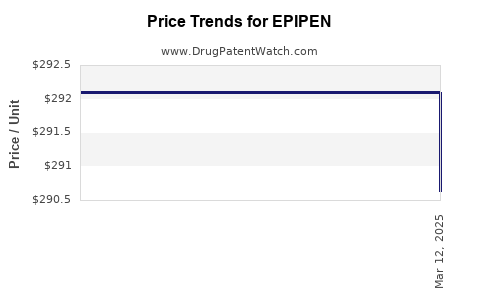
Drug Prices for EPIPEN

See drug prices for EPIPEN

Recent Clinical Trials for EPIPEN

Identify potential brand extensions & 505(b)(2) entrants

SponsorPhase
Insignis Therapeutics, Inc.PHASE1
Washington University School of MedicinePHASE1
Novotech (Australia) Pty LimitedPHASE1

See all EPIPEN clinical trials

US Patents and Regulatory Information for EPIPEN

EPIPEN is protected by five US patents.

Applicant Tradename Generic Name Dosage NDA Approval Date TE Type RLD RS Patent No. Patent Expiration Product Substance Delist Req. Exclusivity Expiration
Viatris EPIPEN epinephrine INJECTABLE;INTRAMUSCULAR, SUBCUTANEOUS 019430-001 Dec 22, 1987 AB RX Yes Yes ⤷  Get Started Free ⤷  Get Started Free Y ⤷  Get Started Free
Viatris EPIPEN JR. epinephrine INJECTABLE;INTRAMUSCULAR, SUBCUTANEOUS 019430-002 Dec 22, 1987 AB RX Yes Yes ⤷  Get Started Free ⤷  Get Started Free Y ⤷  Get Started Free
Viatris EPIPEN epinephrine INJECTABLE;INTRAMUSCULAR, SUBCUTANEOUS 019430-001 Dec 22, 1987 AB RX Yes Yes ⤷  Get Started Free ⤷  Get Started Free Y ⤷  Get Started Free
Viatris EPIPEN JR. epinephrine INJECTABLE;INTRAMUSCULAR, SUBCUTANEOUS 019430-002 Dec 22, 1987 AB RX Yes Yes ⤷  Get Started Free ⤷  Get Started Free Y ⤷  Get Started Free
Viatris EPIPEN epinephrine INJECTABLE;INTRAMUSCULAR, SUBCUTANEOUS 019430-001 Dec 22, 1987 AB RX Yes Yes ⤷  Get Started Free ⤷  Get Started Free Y ⤷  Get Started Free
Viatris EPIPEN E Z PEN epinephrine INJECTABLE;INTRAMUSCULAR 019430-003 Aug 3, 1995 DISCN No No ⤷  Get Started Free ⤷  Get Started Free ⤷  Get Started Free
>Applicant >Tradename >Generic Name >Dosage >NDA >Approval Date >TE >Type >RLD >RS >Patent No. >Patent Expiration >Product >Substance >Delist Req. >Exclusivity Expiration

Expired US Patents for EPIPEN

Applicant Tradename Generic Name Dosage NDA Approval Date Patent No. Patent Expiration
Viatris EPIPEN epinephrine INJECTABLE;INTRAMUSCULAR, SUBCUTANEOUS 019430-001 Dec 22, 1987 ⤷  Get Started Free ⤷  Get Started Free
>Applicant >Tradename >Generic Name >Dosage >NDA >Approval Date >Patent No. >Patent Expiration

International Patents for EPIPEN

See the table below for patents covering EPIPEN around the world.

Country Patent Number Title Estimated Expiration
Japan 4806712 ⤷  Get Started Free
Hungary E049358 ⤷  Get Started Free
Japan 2009090140 ⤷  Get Started Free
Denmark 2311510 ⤷  Get Started Free
Poland 2204201 ⤷  Get Started Free
Spain 2559866 ⤷  Get Started Free
China 101166551 Automatic injector ⤷  Get Started Free
>Country >Patent Number >Title >Estimated Expiration

Supplementary Protection Certificates for EPIPEN

Patent Number Supplementary Protection Certificate SPC Country SPC Expiration SPC Description
3678649 2025C/508 Belgium ⤷  Get Started Free PRODUCT NAME: COMBINATIE VAN EPINEPHRINE EN DODECYLMALTOSIDE, IN ALLE VORMEN BESCHERMD DOOR HET BASISOCTROOI; AUTHORISATION NUMBER AND DATE: EU/1/24/1846 20240823
3678649 LUC00378 Luxembourg ⤷  Get Started Free PRODUCT NAME: COMBINAISON D'EPINEPHRINE ET DE DODECYLMALTOSIDE, SOUS TOUTES SES FORMES PROTEGEES PAR LE BREVET DE BASE; AUTHORISATION NUMBER AND DATE: EU/1/24/1846 20250211
>Patent Number >Supplementary Protection Certificate >SPC Country >SPC Expiration >SPC Description

Market Dynamics and Financial Trajectory for EPIPEN

Last updated: December 10, 2025

Summary

EPIPEN, a life-saving epinephrine auto-injector manufactured by Mylan (now part of Viatris), remains a dominant product in the allergy emergency market. Despite significant competition and pricing pressures, EPIPEN's market position has been relatively resilient due to its widespread adoption, regulatory protections, and brand recognition. However, evolving market dynamics—including patent expirations, an influx of generics, and changing healthcare policies—are impacting the company's revenue streams and strategic outlook. This analysis explores EPIPEN’s current market environment, competitive landscape, financial trajectory, and future prospects, providing vital insights for stakeholders.


What Are the Key Market Drivers for EPIPEN?

Market Driver Impact/Details
Global Rise in Food Allergies Increased prevalence of food allergies (e.g., peanuts, shellfish) drives demand for emergency epinephrine.
Regulatory Approvals & Expansion Approvals in new markets (e.g., EU, Japan) expand customer base; FDA regulatory actions influence product access.
Brand Loyalty and Patents Early market entry and brand recognition sustain premium prices; patent protections initially delayed generics.
Insurance and Reimbursement Policies Coverage impacts patient access and affordability; insurance mandates in schools and public spaces promote usage.
Legal & Regulatory Challenges Class-action lawsuits and price regulation initiatives influence pricing strategies and corporate stability.

Market Structure and Competitive Landscape

Market Players and Product Range

Competitors Products Market Share (Estimated) Key Differentiators
Viatris (formerly Mylan) EPIPEN, EpiPen Jr. ~80% Brand recognition, nationwide distribution
Teva Pharmaceuticals Adrenaclick, Auvi-Q ~10% Competitive pricing, device features
Kaléo Pharma Auvi-Q ~5% Innovative device design
Generics and biosimilars Multiple (e.g., generic epinephrine) ~5% Lower prices, growing market share

Note: Market share data derived from industry reports including IQVIA (2022).

Patent and Patent Expiry

Patent, or Patent Expiry Date Implication
Original EPIPEN patent expired (around 2017) Opened market to generics, pressure on pricing
Secondary patents and exclusivities (until 2023–2024) Provided temporary market protection beyond initial expiry

Pricing Trends

Year Average Wholesale Price (AWP) Notes
2016 ~$600 per device Before major generic entries
2019 ~$300 per device Significant price declines due to generics
2022 ~$125–$250 per device Market stabilized, premium pricing persists in some segments

Source: CVS Pharmacy, GoodRx, industry publications.


Financial Trajectory and Revenue Analysis

Revenue Trends

Year Revenue (USD Millions) Comments
2015 $1,600 Peak revenue driven by brand dominance
2018 $1,062 Price declines and generic competition intensified
2020 $1,170 Slight recovery due to increased demand, supply chain issues during COVID-19
2022 $1,220 Stabilization amid ongoing parity with generics

Note: Data sourced from Viatris SEC filings and analyst reports.

Profitability & Margins

Metrics 2020 2022 Trend
Gross Margin ~45% ~48% Margins improved with stabilized pricing
Net Income $200M $250M Increased due to operational efficiencies
R&D Investment $50M $55M Continued commitment to innovation

Impact of Patent Expiry & Generics

Patent expiry in 2017 led to an influx of generics, precipitating a sharp decline in price and revenue. While original EPIPEN sales declined by approximately 35% post-2017, strategic shifts in marketing and product differentiation mitigated declines.

Pricing Strategies and Market Access

Viatris implemented tiered pricing, rebate agreements, and expanded access programs to sustain market share. However, in public sectors, strict reimbursement policies and regulations pressurize profit margins.


Future Market Dynamics: Opportunities and Challenges

Emerging Trends and Technological Innovations

Trend or Innovation Potential Impact
Additional Auto-Injectors (e.g., Auvi-Q) Competition based on device features, price, and ease of use.
Alternative Delivery Methodologies Development of nasal sprays or patches may disrupt auto-injector dominance.
Pharmacoeconomic Evaluations Cost-benefit analyses influence manufacturer pricing and insurance reimbursement.
Digital and Connected Devices Integration of smart devices may enhance adherence and data collection.

Regulatory & Policy Landscape

  • FDA Initiatives: Proposals to lower drug prices and promote generics, including facilitating approval pathways.
  • Healthcare Policies: Mandates for school and public access increase demand but may restrict pricing power.
  • Legal Battles & Litigation: Ongoing lawsuits related to pricing practices could impact revenue and brand reputation.

Forecasted Revenue & Market Share (2023–2028)

Year Projected Revenue (USD Millions) Market Share Key Assumptions
2023 $1,200–$1,300 ~70–75% Slight decline due to new generics, stabilized market share
2025 $1,100–$1,200 ~65–70% Increased generic competition, potential biosimilar entry
2028 ~$1,000 ~60% Sustained competition, potential innovations or new entrants

Comparative Analysis: EPIPEN vs. Competitors

Factor EPIPEN (Viatris) Auvi-Q (Kaléo) Adrenaclick (Teva) Generic Epinephrine
Market Share ~80% ~5% ~10% Growing rapidly
Pricing (USD) ~$125–$250 per device ~$115–$225 per device ~$100–$150 per device <$50 per device
Device Innovation Standard auto-injector Voice-guided, compact Similar to EPIPEN No device innovation
Regulatory Status FDA approved, widespread FDA approved, boutique brand FDA approved FDA approved

Regulatory Landscape and Policy Implications

  • FDA and Global Regulatory Policies: Focus on ensuring access, speeding approval of generics, and monitoring safety.
  • Price Regulation Movements: Several states (e.g., New York, California) have enacted bills capping epinephrine prices or requiring stock in public institutions.
  • International Markets: Regulatory hurdles and pricing regulations vary; emerging markets represent growth opportunities but face access challenges.

FAQs

1. How are patent expirations affecting EPIPEN’s market position?

Patent expirations in 2017 opened the market to generics, leading to significant price erosion. While original EPIPEN sales declined, brand loyalty and regulatory protections have maintained a substantial share, though facing increasing competition.

2. What are the key competitors to EPIPEN, and how do they compare?

Secondary competitors include Auvi-Q (Kaléo), Adrenaclick (Teva), and numerous generics. EPIPEN retains roughly 70–80% market share, primarily due to brand recognition, but competitors target price-sensitive segments.

3. How has pricing evolution impacted revenue streams?

Prices have dropped by over 50% since 2016, from ~$600 to ~$125–$250 per device. Despite volume increases, revenue pressure persists due to competitive pricing and reimbursements.

4. What future innovations could disrupt EPIPEN’s market?

New delivery methods (nasal sprays, patches), digital adherence tools, and biosimilar developments threaten market stability. Regulatory incentives for innovation could further reshape the landscape.

5. What policies could influence EPIPEN’s future outlook?

Government initiatives to cap prices, expand public access programs, and facilitate generic approvals are likely to pressure margins but also expand access, changing the competitive dynamics.


Key Takeaways

  • Market Maturity & Competitive Pressure: EPIPEN remains dominant but faces intense generic competition, leading to pricing pressure and margin compression.
  • Revenue Stability Strategies: Viatris leverages brand loyalty, reimbursement agreements, and expansion into emerging markets to sustain revenue.
  • Innovation as a Differentiator: Future growth may hinge on device innovations and digital connectivity, potentially restoring premium pricing.
  • Regulatory Environment: Policy shifts favoring affordability and generic promotion threaten existing pricing models but also open opportunities for approved alternatives.
  • Long-term Outlook: While near-term revenues may plateau or decline marginally, sustained demand—driven by allergy prevalence—ensures continued relevance.

References

  1. IQVIA. (2022). Pharmaceutical Market Data.
  2. Viatris SEC Filings. (2022). Annual Reports and Financial Statements.
  3. GoodRx. (2022). Epinephrine Auto-Injector Pricing Trends.
  4. FDA. (2022). Regulatory updates on auto-injectors and generics.
  5. Industry Reports. (2022). Global Allergy & Auto-injector Market Analysis.

More… ↓

⤷  Get Started Free

Make Better Decisions: Try a trial or see plans & pricing

Drugs may be covered by multiple patents or regulatory protections. All trademarks and applicant names are the property of their respective owners or licensors. Although great care is taken in the proper and correct provision of this service, thinkBiotech LLC does not accept any responsibility for possible consequences of errors or omissions in the provided data. The data presented herein is for information purposes only. There is no warranty that the data contained herein is error free. We do not provide individual investment advice. This service is not registered with any financial regulatory agency. The information we publish is educational only and based on our opinions plus our models. By using DrugPatentWatch you acknowledge that we do not provide personalized recommendations or advice. thinkBiotech performs no independent verification of facts as provided by public sources nor are attempts made to provide legal or investing advice. Any reliance on data provided herein is done solely at the discretion of the user. Users of this service are advised to seek professional advice and independent confirmation before considering acting on any of the provided information. thinkBiotech LLC reserves the right to amend, extend or withdraw any part or all of the offered service without notice.