Last Updated: June 24, 2026

ABILIFY Drug Patent Profile


✉ Email this page to a colleague

« Back to Dashboard


Which patents cover Abilify, and what generic alternatives are available?

Abilify is a drug marketed by Otsuka and Otsuka Pharm Co Ltd and is included in seven NDAs. There are thirty-seven patents protecting this drug and three Paragraph IV challenges.

This drug has ninety patent family members in thirty-four countries.

The generic ingredient in ABILIFY is aripiprazole. There are forty-nine drug master file entries for this compound. Fifty suppliers are listed for this compound. Additional details are available on the aripiprazole profile page.

DrugPatentWatch® Litigation and Generic Entry Outlook for Abilify

A generic version of ABILIFY was approved as aripiprazole by ALEMBIC on April 28th, 2015.

  Start Trial

AI Deep Research
Questions you can ask:
  • What is the 5 year forecast for ABILIFY?
  • What are the global sales for ABILIFY?
  • What is Average Wholesale Price for ABILIFY?
Recent Clinical Trials for ABILIFY

Identify potential brand extensions & 505(b)(2) entrants

SponsorPhase
Otsuka Pharmaceutical Development & Commercialization, Inc.NA
Genuine Research Center, EgyptPhase 1
P&C Labs, EgyptPhase 1

See all ABILIFY clinical trials

Pharmacology for ABILIFY
Paragraph IV (Patent) Challenges for ABILIFY
Tradename Dosage Ingredient Strength NDA ANDAs Submitted Submissiondate
ABILIFY Oral Solution aripiprazole 1 mg/mL 021713 1 2007-12-20
ABILIFY Tablets aripiprazole 2 mg, 5 mg, 10 mg, 15 mg, 20 mg and 30 mg 021436 8 2006-11-15
ABILIFY Orally Disintegrating Tablets aripiprazole 10 mg, 15 mg, 20 mg and 30 mg 021729 1 2006-11-15

US Patents and Regulatory Information for ABILIFY

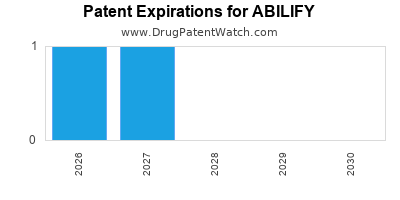
ABILIFY is protected by two US patents.

Applicant Tradename Generic Name Dosage NDA Approval Date TE Type RLD RS Patent No. Patent Expiration Product Substance Delist Req. Exclusivity Expiration
Otsuka ABILIFY MYCITE KIT aripiprazole TABLET;ORAL 207202-006 Nov 13, 2017 DISCN Yes No 8,956,288 ⤷  Start Trial Y ⤷  Start Trial
Otsuka ABILIFY MYCITE KIT aripiprazole TABLET;ORAL 207202-001 Nov 13, 2017 DISCN Yes No 9,125,939 ⤷  Start Trial ⤷  Start Trial
Otsuka ABILIFY MYCITE KIT aripiprazole TABLET;ORAL 207202-006 Nov 13, 2017 DISCN Yes No 8,545,402 ⤷  Start Trial Y ⤷  Start Trial
Otsuka Pharm Co Ltd ABILIFY MAINTENA KIT aripiprazole FOR SUSPENSION, EXTENDED RELEASE;INTRAMUSCULAR 202971-001 Feb 28, 2013 RX Yes No 11,400,087 ⤷  Start Trial ⤷  Start Trial
Otsuka ABILIFY MYCITE KIT aripiprazole TABLET;ORAL 207202-003 Nov 13, 2017 DISCN Yes No 9,941,931 ⤷  Start Trial Y ⤷  Start Trial
>Applicant >Tradename >Generic Name >Dosage >NDA >Approval Date >TE >Type >RLD >RS >Patent No. >Patent Expiration >Product >Substance >Delist Req. >Exclusivity Expiration

Expired US Patents for ABILIFY

Applicant Tradename Generic Name Dosage NDA Approval Date Patent No. Patent Expiration
Otsuka ABILIFY aripiprazole TABLET, ORALLY DISINTEGRATING;ORAL 021729-003 Jun 7, 2006 9,089,567 ⤷  Start Trial
Otsuka ABILIFY aripiprazole TABLET;ORAL 021436-002 Nov 15, 2002 4,734,416 ⤷  Start Trial
Otsuka ABILIFY aripiprazole TABLET, ORALLY DISINTEGRATING;ORAL 021729-003 Jun 7, 2006 9,358,207 ⤷  Start Trial
Otsuka ABILIFY aripiprazole TABLET;ORAL 021436-002 Nov 15, 2002 7,053,092 ⤷  Start Trial
Otsuka ABILIFY aripiprazole TABLET, ORALLY DISINTEGRATING;ORAL 021729-004 Jun 7, 2006 9,358,207 ⤷  Start Trial
>Applicant >Tradename >Generic Name >Dosage >NDA >Approval Date >Patent No. >Patent Expiration

EU/EMA Drug Approvals for ABILIFY

Company Drugname Inn Product Number / Indication Status Generic Biosimilar Orphan Marketing Authorisation Marketing Refusal
Mylan Pharmaceuticals Limited Aripiprazole Mylan Pharma (previously Aripiprazole Pharmathen) aripiprazole EMEA/H/C/003803Aripiprazole Mylan Pharma is indicated for the treatment of schizophrenia in adults and in adolescents aged 15 years and older.Aripiprazole Mylan Pharma is indicated for the treatment of moderate to severe manic episodes in Bipolar I Disorder and for the prevention of a new manic episode in adults who experienced predominantly manic episodes and whose manic episodes responded to aripiprazole treatment.Aripiprazole Mylan Pharma is indicated for the treatment up to 12 weeks of moderate to severe manic episodes in Bipolar I Disorder in adolescents aged 13 years and older. Authorised yes no no 2015-06-30
Otsuka Pharmaceutical Netherlands B.V. Abilify aripiprazole EMEA/H/C/000471Abilify is indicated for the treatment of schizophrenia in adults and in adolescents aged 15 years and older.Abilify is indicated for the treatment of moderate to severe manic episodes in Bipolar I Disorder and for the prevention of a new manic episode in adults who experienced predominantly manic episodes and whose manic episodes responded to aripiprazole treatment.Abilify is indicated for the treatment up to 12 weeks of moderate to severe manic episodes in Bipolar I Disorder in adolescents aged 13 years and older. Authorised no no no 2004-06-04
Otsuka Pharmaceutical Netherlands B.V. Abilify Maintena aripiprazole EMEA/H/C/002755Maintenance treatment of schizophrenia in adult patients stabilised with oral aripiprazole. Authorised no no no 2013-11-14
Accord Healthcare S.L.U. Aripiprazole Accord aripiprazole EMEA/H/C/004021Aripiprazole Accord is indicated for the treatment of schizophrenia in adults and in adolescents aged 15 years and older., , Aripiprazole Accord is indicated for the treatment of moderate to severe manic episodes in Bipolar I Disorder and for the prevention of a new manic episode in adults who experienced predominantly manic episodes and whose manic episodes responded to aripiprazole treatment., , Aripiprazole Accord is indicated for the treatment up to 12 weeks of moderate to severe manic episodes in Bipolar I Disorder in adolescents aged 13 years and older., Authorised yes no no 2015-11-15
Zentiva, k.s. Aripiprazole Zentiva aripiprazole EMEA/H/C/003899Aripiprazole Zentiva is indicated for the treatment of schizophrenia in adults and in adolescents aged 15 years and older.Aripiprazole Zentiva is indicated for the treatment of moderate to severe manic episodes in Bipolar I Disorder and for the prevention of a new manic episode in adults who experienced predominantly manic episodes and whose manic episodes responded to aripiprazole treatment.Aripiprazole Zentiva is indicated for the treatment up to 12 weeks of moderate to severe manic episodes in Bipolar I Disorder in adolescents aged 13 years and older. Authorised yes no no 2015-06-25
>Company >Drugname >Inn >Product Number / Indication >Status >Generic >Biosimilar >Orphan >Marketing Authorisation >Marketing Refusal

Supplementary Protection Certificates for ABILIFY

Patent Number Supplementary Protection Certificate SPC Country SPC Expiration SPC Description
1675573 C300669 Netherlands ⤷  Start Trial PRODUCT NAME: ARIPIPRAZOLE; REGISTRATION NO/DATE: EU/1/13/882 20131115
1675573 92427 Luxembourg ⤷  Start Trial PRODUCT NAME: ARIPIPRAZOLE
0367141 300161 Netherlands ⤷  Start Trial 300161, 20091027, EXPIRES: 20141026
0367141 SPC/GB04/039 United Kingdom ⤷  Start Trial PRODUCT NAME: ARIPIPRAZOLE OR A SALT THEREOF; REGISTERED: UK EU/1/04/276/001 20040604; UK EU/1/04/276/002 20040604; UK EU/1/04/276/003 20040604; UK EU/1/04/276/004 20040604; UK EU/1/04/276/005 20040604; UK EU/1/04/276/006 20040604; UK EU/1/04/276/007 20040604; UK EU/1/04/276/008 20040604; UK EU/1/04/276/009 20040604; UK EU/1/04/276/010 20040604; UK EU/1/04/276/011 20040604; UK EU/1/04/276/012 20040604; UK EU/1/04/276/013 20040604; UK EU/1/04/276/014 20040604; UK EU/1/04/276/015 20040604; UK EU/1/04/276/016 20040604; UK EU/1/04/276/017 20040604; UK EU/1/04/276/018 20040604; UK EU/1/04/276/019 20040604; UK EU/1/04/276/020 20040604
0367141 C00367141/01 Switzerland ⤷  Start Trial FORMER REPRESENTATIVE: BOHEST AG, CH
>Patent Number >Supplementary Protection Certificate >SPC Country >SPC Expiration >SPC Description

ABILIFY (aripiprazole) market dynamics and financial trajectory: exclusivity, generic risk, and revenue exposure

Last updated: June 24, 2026

Executive summary: ABILIFY (aripiprazole) is a long-lived, high-volume antipsychotic franchise that has transitioned from primary US exclusivity to broad generic competition after key patent/marketing exclusivity milestones. Revenue durability has increasingly depended on formulation mix (notably injectable and oral branded products where still protected in certain markets), managed-care positioning, and lifecycle extensions, while the US competitive landscape is dominated by low-cost generics. Financial trajectory in the last several years is characterized by brand share erosion after generic entry, with incremental offset from remaining protected presentations, line extensions, and distribution/contracting performance.


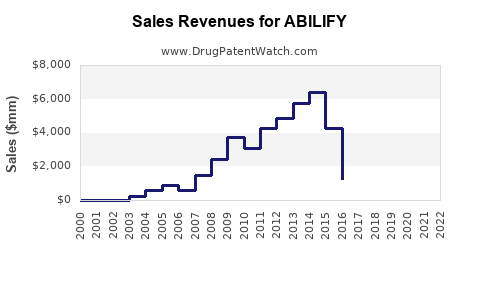
What is the ABILIFY revenue trajectory since generics entered?

Featured snippet answer: ABILIFY revenue has declined from peak brand levels as aripiprazole generics gained share, with remaining branded revenue concentrated in protected presentations and patient segments where prescriber preference, switching friction, and payor contracts delay full substitution.

How has brand vs generic share typically shifted in aripiprazole

Aripiprazole’s core oral tablets and liquid dosage forms faced generic erosion once exclusivity and key patents fell away. In US pharmacy channels, substitution tends to be fast for oral solids, slower for certain injectable products, and highly sensitive to:

  • payer step therapy and formulary placement
  • contracting rates and PBM market-share strategies
  • required switching windows and indication-specific restrictions
  • patient tolerability and prescriber willingness to switch

What market dynamics drive ABILIFY pricing

Key drivers of financial trajectory include:

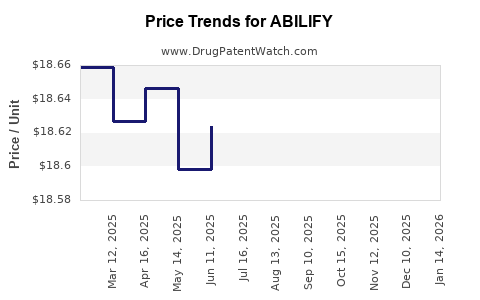
  • Wholesale acquisition cost (WAC) resets and net price compression after generic entry
  • PBM formulary steering favoring lowest net-cost alternatives
  • rebate structure shifts as payors re-rate aripiprazole after generic prevalence
  • contracting differentiation for long-acting injectables versus immediate-release generics

How do ABILIFY sales differ by product form (tablets, solution, and injectables)?

Featured snippet answer: ABILIFY’s financial performance is form-dependent, with long-acting injectable (LAI) segments typically showing greater pricing power and slower decline than immediate-release oral formats after generic penetration.

Oral ABILIFY (aripiprazole) market behavior

  • Oral immediate-release (IR) formats generally face rapid generic substitution once legal barriers are removed.
  • Brand retention relies on payer contracting and prescriber preference, not on price.

ABILIFY MAINTENA and other LAIs as revenue stabilizers

Long-acting injectables can delay revenue decline because:

  • generics for LAI products are structurally and manufacturing-complex relative to oral solids
  • conversion between products often triggers clinical and operational steps
  • payers may restrict LAI use through prior authorization and step therapy

When does ABILIFY lose exclusivity, and what does that mean for cash flow?

Featured snippet answer: ABILIFY’s exclusivity ended for core products in stages; the market impact appears as stepwise revenue drops corresponding to generic launches and patent expiry windows. Cash flow effects are strongest in oral presentations and smaller in LAI formats.

Timeline structure used by the market

For branded small molecules like aripiprazole, financial impact usually follows:

  1. Primary patent expiry and composition coverage gaps
  2. Generic entry under ANDA (oral forms first)
  3. Secondary patent expiries (formulations, polymorphs, methods of use)
  4. Market share redistribution as PBMs renegotiate

What investors track in the post-exclusivity phase

  • branded volume retention (TRx and script share where reported)
  • gross-to-net pressure from contracting and rebate revisions
  • penetration pace of authorized generics and non-authorized generics
  • share of remaining brand in injectable mix

What patents protect ABILIFY aripiprazole products, and how do they segment by formulation and method?

Featured snippet answer: The ABILIFY estate historically includes composition-of-matter and lifecycle patents spanning formulations, delivery systems, and use/indication coverage, with different expiration profiles by dosage form.

Typical ABILIFY patent clusters

  • Drug substance/composition for aripiprazole
  • Formulation patents for specific dosage forms (e.g., oral solutions, solid dispersions)
  • Device and manufacturing patents relevant to injectables and controlled delivery
  • Method-of-use patents tied to specific indications (antipsychotic indications, adjunctive uses, pediatric labeling)

How estate segmentation affects financial trajectory

  • If an estate block remains intact for a protected LAI, it can soften brand decline.
  • If the oral base erodes due to composition and key formulation expiries, brand revenue becomes structurally exposed to generic price compression.

What is the Orange Book status of ABILIFY (aripiprazole) across key presentations?

Featured snippet answer: Orange Book listings determine whether branded ABILIFY product claims are still tied to unexpired patents or exclusivity codes; once entries are listed as expired or invalidated, ANDA filers can launch by Paragraph IV or after eligibility.

What Orange Book status implies commercially

  • Active patent listings: reduce immediate generic entry probability
  • Expired patents: increase risk for generic entry and faster share loss
  • Exclusivity codes: can prevent launch even without a specific patent still listed

Practical market effect

Even where some patents persist, generic substitution in oral classes tends to proceed once the remaining legal cover is insufficient to delay ANDA approval and launch.


Which companies supply ABILIFY generics, and how has competition changed pricing?

Featured snippet answer: Competition is dominated by generic aripiprazole manufacturers post-expiry, typically pushing net prices to low single-digit-to-mid-teens reductions in the class while shrinking branded volumes.

How generic entrants affect financial outcomes

  • immediate price competition reduces branded net pricing
  • PBMs shift formulary tiers quickly after launch
  • distribution channel inventory and contract changes accelerate demand transfer

Authorized vs non-authorized generics

Where authorized generics exist, brand decline often occurs earlier because:

  • payer contracts can align branded and authorized generic pricing
  • pharmacies reduce switching friction due to aligned supply and packaging

What Paragraph IV challenges affect ABILIFY, and how do settlements influence launch timing?

Featured snippet answer: Paragraph IV litigation determines whether ANDA filers get delayed or can enter at risk. Settlements can trigger “launch-date gating” and revenue protection for the branded owner.

Common settlement mechanics in small-molecule antipsychotic cases

  • delayed entry dates tied to expiry of specific patents
  • market allocation or stipulations that reduce early price undercutting
  • covenant terms that allow partial launch but not full substitution

Commercial impact pattern

Even if litigation delays are won early, the branded franchise tends to face eventual share erosion after expiry. The financial question becomes whether remaining protected formats (often injectables) retain enough share to offset oral decline.


How strong is the patent estate for ABILIFY compared with other antipsychotics?

Featured snippet answer: ABILIFY’s estate has been strong historically through lifecycle extensions, but the present commercial landscape is dominated by the fact that oral aripiprazole is now widely generic. Competitive advantage today is more operational (contracts and mix) than legal.

What “estate strength” means for investors

  • number of unexpired listed patents by dosage form
  • breadth across formulation and methods
  • residual exclusivity (if any) affecting launch eligibility
  • litigation posture (validity and infringement risks for generic challengers)

Peer comparison lens

For antipsychotics, revenue durability often tracks:

  • whether LAIs remain brand-protected longer
  • whether generics for specific formulations are delayed by legal barriers
  • whether patient switching is harder due to clinical or operational constraints

What generic entry risks exist for ABILIFY in 2025–2028?

Featured snippet answer: The primary residual risk is around any remaining protected presentations, including specific formulations, injectables, or indication-dependent method-of-use coverage. For oral tablets/solution, generic substitution is already a baseline.

Risk categories used in commercialization planning

  • ANDA launch risk where patents are expired or narrow
  • “At-risk launch” where litigation invalidates or weakens claim coverage
  • Switching risk from payer policy changes
  • Authorized generic risk that accelerates branded share erosion

Impact on forecasting

Forecast models typically treat oral ABILIFY as a volume decline product with net-price compression, while LAIs may be modeled with slower decline if patent and exclusivity coverage remains.


How does ABILIFY compare with competing antipsychotics on financial resilience?

Featured snippet answer: ABILIFY’s financial resilience depends on LAI mix and contract position, while competing antipsychotics with later-expiring patents or fewer generic substitutes can show higher near-term branded share retention.

Comparison dimensions that change revenue outcomes

  • Patent ladder timing by dosage form
  • PBM formulary tiering and payer restrictions by indication
  • switching friction (IR to IR vs IR to LAI)
  • drug acquisition cost and net price differentials

What FDA regulatory pathway issues shape ABILIFY lifecycle and competition?

Featured snippet answer: FDA approval pathways drive generic entry timing. Oral generics for aripiprazole can use ANDAs once legal barriers clear, while LAI pathways and formulation complexity can slow competitive erosion.

How FDA pathway affects launch calendars

  • ANDA for oral forms: generally faster post-legal clearance
  • LAI: formulation/manufacturing and clinical bridging can extend timelines
  • labeling differences: can affect substitution and payer decisions even after approval

What manufacturing and IP barriers protect ABILIFY injectables longer than oral generics?

Featured snippet answer: Injectable lifecycle protection is commonly stronger due to combination of legal and manufacturing factors: sterile manufacturing, controlled-release technology, device-adjacent process controls, and specific formulation parameters.

Where barriers show up in diligence and procurement

  • supply continuity and quality systems
  • risk of batch failures affecting availability
  • compatibility across device systems (where applicable)
  • process-specific IP and know-how barriers that delay generic readiness

Commercial strategy: what drives ABILIFY contracting outcomes after exclusivity?

Featured snippet answer: Contract outcomes hinge on PBM rebates, formulary placement, and patient switching behavior. ABILIFY’s remaining branded revenue is increasingly contingent on payer negotiations rather than legal exclusivity.

Key levers

  • formulary tier and step therapy position
  • prior authorization and quantity limits
  • rebate design tied to outcomes or adherence
  • channel strategy for LAI vs IR

Key tables for revenue and competitive exposure

Table 1: Exposure map by ABILIFY product format

Product format Typical generic substitution speed Primary commercial risk Where brand can still defend
Oral IR tablets/solution Fast after legal clearance Net price compression and volume loss residual formulary preference, contract terms
LAI presentations Slower vs oral delayed but eventual competitive entry; contracting pressure clinical switching friction, protected presentation mix

Table 2: Post-exclusivity financial dynamics

Phase Market event Revenue effect Forecast treatment
Early post-expiry first ANDA launches step-down in brand net sales model volume decline and net price compression
Mid post-expiry multiple entrants accelerated share loss assume ongoing PBM rebate pressure
Late post-expiry consolidation of generic supply stabilization at low branded base (if any) treat brand as structurally exposed

Key Takeaways

  • ABILIFY’s financial trajectory is shaped by staged exclusivity loss and the speed of generic substitution, with oral formats typically eroding faster than injectable presentations.
  • Post-exclusivity profitability and sales are increasingly driven by net-price management, payer contracting, and product-mix retention rather than intact market exclusivity.
  • Residual legal and regulatory barriers, particularly for injectable formulations, are the main levers that can slow branded decline versus fully exposed oral aripiprazole products.
  • Competitive exposure should be treated as ongoing in forecast models: each additional generic entrant increases PBM pressure and accelerates share loss.

FAQs

  1. How quickly do ABILIFY (aripiprazole) oral generics capture share after ANDA launch?
  2. What differences in generic availability exist between ABILIFY oral formulations and ABILIFY LAI products?
  3. How do PBM formulary changes impact ABILIFY net sales after generic competition?
  4. What patent categories most often delay ABILIFY generic launches, formulation vs method-of-use?
  5. How do Orange Book patent expirations translate into real-world retail substitution for aripiprazole?

References

  1. FDA. Orange Book: Approved Drug Products with Therapeutic Equivalence Evaluations. U.S. Food and Drug Administration.
  2. FDA. ANDA Regulatory Pathway and Drug Approval Process. U.S. Food and Drug Administration.
  3. U.S. Patent and Trademark Office. Patent term and exclusivity basics (overview resources).

More… ↓

⤷  Start Trial

Make Better Decisions: Try a trial or see plans & pricing

Drugs may be covered by multiple patents or regulatory protections. All trademarks and applicant names are the property of their respective owners or licensors. Although great care is taken in the proper and correct provision of this service, thinkBiotech LLC does not accept any responsibility for possible consequences of errors or omissions in the provided data. The data presented herein is for information purposes only. There is no warranty that the data contained herein is error free. We do not provide individual investment advice. This service is not registered with any financial regulatory agency. The information we publish is educational only and based on our opinions plus our models. By using DrugPatentWatch you acknowledge that we do not provide personalized recommendations or advice. thinkBiotech performs no independent verification of facts as provided by public sources nor are attempts made to provide legal or investing advice. Any reliance on data provided herein is done solely at the discretion of the user. Users of this service are advised to seek professional advice and independent confirmation before considering acting on any of the provided information. thinkBiotech LLC reserves the right to amend, extend or withdraw any part or all of the offered service without notice.