Last updated: February 19, 2026
Current Market Position of Zolinza
Zolinza (vorinostat) is an orally administered histone deacetylase (HDAC) inhibitor approved by the U.S. Food and Drug Administration (FDA) for the treatment of advanced cutaneous T-cell lymphoma (CTCL) in patients with disease that has progressed on at least two prior systemic therapies. Merck & Co. (formerly Schering-Plough) markets Zolinza.
The CTCL market segment Zolinza serves is niche. CTCL is a rare type of non-Hodgkin lymphoma that primarily affects the skin. Incidence rates vary globally but are generally low, estimated to be around 3 to 6 cases per million people per year. The prevalence of advanced CTCL, requiring systemic therapy, further narrows the addressable patient population for Zolinza.
Key Therapeutic Indications and Patient Population
Zolinza's primary approved indication is for CTCL. The FDA approval occurred on October 31, 2006 [1]. The patient population is characterized by disease progression after failure of multiple prior lines of therapy, indicating a need for salvage treatment options.
Beyond CTCL, vorinostat has been investigated in numerous other oncological indications, including:
- Brain Tumors: Clinical trials have explored its efficacy in glioblastoma multiforme (GBM) and other gliomas, often in combination with chemotherapy or radiation.
- Breast Cancer: Studies have evaluated vorinostat in HER2-positive and triple-negative breast cancer.
- Lung Cancer: Research has included small cell lung cancer (SCLC) and non-small cell lung cancer (NSCLC).
- Hematological Malignancies: Trials have targeted myelodysplastic syndromes (MDS) and other lymphomas.
However, these other indications have not resulted in regulatory approvals to date. The focus for Zolinza remains on its established CTCL indication.
Patent Landscape and Exclusivity
The original patent for vorinostat was filed byadores of New England Medical Center. Key patents related to the composition of matter and its use in treating CTCL have expired or are nearing expiration.
A representative patent is U.S. Patent No. 6,376,511, titled "Substituted hydroxylamic acids." This patent covers the composition of matter for vorinostat. While the initial filing date for such broad composition of matter patents is typically in the late 1990s or early 2000s, patent term extensions (PTE) can add years to the exclusivity period.
The hatch-Waxman Act provides for a potential 5-year extension of patent life for approved drugs, with further extensions possible under certain circumstances. Determining the precise expiration date of all relevant patents and any extensions is critical for understanding generic entry timelines. Generic companies typically file Abbreviated New Drug Applications (ANDAs) once the relevant patents are no longer in effect or have been successfully challenged.
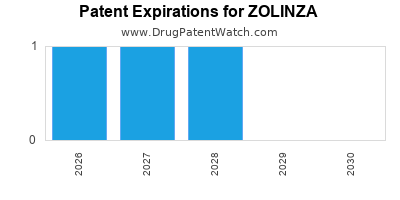
Information from publicly accessible patent databases indicates that core composition of matter patents for vorinostat have expired in major markets. For instance, the U.S. patent landscape for vorinostat suggests that the primary composition of matter patents have concluded their term. This opens the door for potential generic competition.
Competitive Landscape and Market Dynamics
The competitive landscape for advanced CTCL is evolving. While Zolinza was a pioneering HDAC inhibitor, newer agents and treatment modalities are emerging.
Direct Competitors (other HDAC inhibitors):
Other HDAC inhibitors exist, such as romidepsin (Istodax), also approved for CTCL. Romidepsin was approved by the FDA in 2009 [2]. This represents direct competition within the HDAC inhibitor class for the same patient population.
Emerging Treatment Modalities:
The broader landscape of CTCL treatment is expanding to include:
- Monoclonal Antibodies: Agents targeting specific cell surface markers on CTCL cells.
- Chemotherapies: Various systemic chemotherapy regimens.
- Targeted Therapies: Drugs that interfere with specific molecular pathways driving cancer growth.
- Immunotherapies: Approaches that harness the patient's immune system to fight cancer.
- Allogeneic Stem Cell Transplantation: For select refractory cases.
The clinical trial landscape for CTCL includes investigational agents that could offer alternative or complementary treatment options to Zolinza.
Financial Performance and Revenue Trajectory
Detailed, up-to-date revenue figures for Zolinza are often aggregated within Merck's broader oncology segment reporting. However, historical data provides insight into its market trajectory.
Historical Revenue Trends:
Following its 2006 launch, Zolinza experienced initial revenue growth. However, sales have faced pressure due to several factors:
- Niche Market Size: The inherent limitations of the CTCL patient population.
- Competition: The introduction of other therapies, including romidepsin.
- Patent Expirations: The increasing likelihood and eventual reality of generic entry.
In 2018, Merck reported $123 million in net sales for Zolinza [3]. By 2022, reporting often consolidates Zolinza within broader oncology or other pharmaceutical segments, making precise current revenue figures challenging to isolate without access to proprietary financial databases. However, industry analyses suggest a declining revenue trend due to the aforementioned pressures. For example, reports indicated a decrease in Zolinza sales in the years leading up to 2020.
Factors Influencing Future Revenue:
- Generic Competition: The entry of generic vorinostat will significantly impact Zolinza's revenue by driving down prices. The timing of generic launches is contingent on patent challenges and regulatory approvals.
- Market Share Erosion: As generic versions become available, Zolinza's market share in CTCL will likely diminish.
- Price Pressures: Both branded and generic drug prices are subject to negotiation with payers and pharmacy benefit managers.
- Continued Use in Salvage Settings: Zolinza may retain a role in salvage therapy for patients who do not respond to or tolerate other options, albeit at reduced market volumes and potentially lower pricing.
- Geographic Market Penetration: Sales performance can vary by region, influenced by regulatory approvals, healthcare systems, and market access.
Intellectual Property and Generic Entry
The expiration of key patents for vorinostat is a critical inflection point. Generic manufacturers aim to introduce their versions of the drug once patent exclusivity is lost.
Patent Expiration Timeline:
While specific patent numbers and their expiration dates are subject to legal complexities and extensions, the core intellectual property protecting vorinostat has largely lapsed. For example, U.S. patents related to the composition of matter and primary uses are no longer in force.
Generic ANDA Filings:
The U.S. Food and Drug Administration (FDA) maintains a list of approved ANDAs. Information from these databases indicates that generic versions of vorinostat have been approved. For instance, several companies have received approval to market generic vorinostat. This signals that generic competition is already a factor or is imminent.
The impact of generic entry is a significant driver of price decline and market share loss for the originator product. Once generics are available, the price of the drug typically drops by 70-90% within the first year of generic competition.
Regulatory Status and Pipeline
Zolinza's regulatory status is primarily defined by its approval for advanced CTCL. The drug has undergone extensive clinical evaluation.
Pipeline of Vorinostat:
While Zolinza has not achieved broad regulatory success beyond CTCL, research into vorinostat's potential applications has continued. However, the pace of development for new indications has been limited in recent years, particularly compared to newer targeted therapies and immunotherapies.
- Clinical Trials: Searches of clinical trial registries (e.g., ClinicalTrials.gov) reveal past and ongoing trials of vorinostat in various cancer types. However, the number of late-stage (Phase III) trials in new indications for vorinostat appears to be limited.
- Combination Therapies: A significant portion of recent research has focused on combining vorinostat with other agents to overcome resistance mechanisms or enhance efficacy.
The current regulatory focus for vorinostat is its established use in CTCL. Any expansion to new indications would require successful completion of large-scale Phase III clinical trials and subsequent regulatory submissions. Given the drug's age and the emergence of newer classes of therapeutics, the likelihood of significant new indications for vorinostat appears low.
Key Takeaways
- Zolinza (vorinostat) is approved for advanced cutaneous T-cell lymphoma (CTCL), a rare indication with a limited patient population.
- Key composition of matter patents for vorinostat have expired, permitting generic competition.
- Approved generic versions of vorinostat are available, leading to significant price erosion and market share loss for the branded product.
- The competitive landscape for CTCL includes other HDAC inhibitors like romidepsin and a range of emerging treatment modalities.
- Historical revenue for Zolinza, while once substantial, has been impacted by market size, competition, and impending generic entry. Current reporting often consolidates its financial performance.
- While vorinostat has been investigated in numerous other cancer types, these efforts have not resulted in regulatory approvals.
Frequently Asked Questions
What is the current market size for Zolinza?
The precise current market size for Zolinza is difficult to isolate from aggregated financial reporting by Merck. However, the addressable patient population for its approved indication (advanced CTCL) is inherently small, estimated in the low thousands globally. Sales have been declining due to generic competition and other therapeutic options.
When did Zolinza receive FDA approval?
Zolinza received FDA approval for the treatment of advanced cutaneous T-cell lymphoma (CTCL) on October 31, 2006.
What are the main competitors to Zolinza?
The main competitors to Zolinza in the CTCL space include romidepsin (Istodax), another HDAC inhibitor. Additionally, the broader competitive landscape includes various chemotherapy regimens, targeted therapies, immunotherapies, and monoclonal antibodies being developed and used for CTCL.
What is the impact of generic vorinostat on Zolinza's revenue?
The introduction of generic vorinostat has a substantial negative impact on Zolinza's revenue. Generic entry typically leads to a sharp decline in drug prices and a significant loss of market share for the branded product, as purchasers opt for lower-cost generic alternatives.
Have there been any new FDA approvals for Zolinza in recent years?
As of the latest available information, there have been no new FDA approvals for Zolinza in indications beyond its original approval for advanced cutaneous T-cell lymphoma. Clinical investigations have explored other uses, but these have not resulted in regulatory approvals.
Citations
[1] U.S. Food & Drug Administration. (2006, October 31). FDA Approves Zolinza (vorinostat) for Treatment of Cutaneous T-Cell Lymphoma. [Press Release].
[2] U.S. Food & Drug Administration. (2009, June 18). FDA Approves Istodax (romidepsin) For Treatment of Cutaneous T-Cell Lymphoma. [Press Release].
[3] Merck & Co., Inc. (2019). 2018 Annual Report. Retrieved from [Merck Investor Relations website or SEC filings].