Last updated: August 2, 2026
Valtrex, the branded formulation of valacyclovir hydrochloride, moved from a high-value antiviral franchise to a mature generic market after U.S. patent protection ended in 2009. GlaxoSmithKline retains the Valtrex brand, but generic valacyclovir now determines market pricing, prescription volume, and access. The product has no biosimilar exposure because valacyclovir is a chemically synthesized small molecule, not a biologic. Its commercial value is concentrated in residual brand demand, institutional purchasing, convenience-oriented prescribing, and global markets where generic substitution is less complete.
What is Valtrex and how does valacyclovir work?
Valtrex is an oral prodrug of acyclovir. After absorption, valacyclovir is converted to acyclovir, which inhibits herpesvirus DNA polymerase after phosphorylation in infected cells. The drug is approved for herpes zoster, genital herpes, herpes labialis, and selected pediatric herpesvirus indications (U.S. Food and Drug Administration [FDA], 2023).
| Attribute |
Valtrex |
| Active ingredient |
Valacyclovir hydrochloride |
| Drug class |
Oral antiviral |
| Prodrug conversion |
Valacyclovir converts to acyclovir |
| Original sponsor |
Burroughs Wellcome, later GlaxoSmithKline |
| U.S. NDA |
020487 |
| Initial U.S. approval |
1995 |
| Main dosage form |
Immediate-release tablets |
| Strengths |
500 mg and 1 gram; generic products also include 1 gram and other approved presentations |
| Primary markets |
Herpes zoster, genital herpes, herpes labialis, pediatric herpesvirus infections |
| FDA product type |
Small-molecule prescription drug |
| Biosimilar exposure |
None |
The commercial advantage over oral acyclovir is dosing convenience. Valacyclovir provides higher acyclovir exposure and generally requires fewer daily doses for common indications. Famciclovir is the principal branded or generic alternative in some treatment settings.
What patents protected Valtrex?
The core U.S. patent estate covered valacyclovir, the L-valine ester prodrug of acyclovir. The principal U.S. patent commonly associated with the original product was U.S. Patent No. 5,246,937, assigned to the Burroughs Wellcome group. Its term ended in 2009, subject to applicable patent-term adjustments and regulatory extensions.
The patent estate was commercially important because the product’s value depended on the valacyclovir prodrug rather than on acyclovir itself. Acyclovir was already an established antiviral with generic competition. Once the valacyclovir composition and related protection expired, competitors could offer the same active ingredient and substantially equivalent oral dosage forms.
What formulations were protected by Valtrex patents?
The key protection centered on:
- Valacyclovir as the valine ester of acyclovir.
- Pharmaceutical compositions containing valacyclovir.
- Oral tablet formulations.
- Therapeutic use in herpesvirus infections.
The product did not depend on a complex delivery system, device, depot formulation, or biologic manufacturing process. That limited the ability of the originator to build a durable secondary patent estate around manufacturing or delivery technology.
FDA Orange Book records historically listed patent protection for the Valtrex NDA. Current commercial protection is no longer driven by an enforceable U.S. Orange Book patent barrier. The central patent expiration event was the 2009 loss of U.S. composition protection, which opened the market to generic valacyclovir.
When did Valtrex lose exclusivity?
Valtrex lost practical U.S. market exclusivity in 2009 when generic valacyclovir entered after expiration of the principal patent protection. The product’s regulatory exclusivity had already expired before that date.
| Milestone |
Approximate date |
Commercial effect |
| U.S. NDA approval |
1995 |
Launch of Valtrex in the United States |
| Core patent term |
Through 2009 |
Protected valacyclovir composition |
| Generic entry |
2009 |
Rapid price and share erosion |
| Post-exclusivity period |
2010 onward |
Brand became a mature, largely genericized product |
| Current position |
Mature market |
Generic valacyclovir controls volume and price |
The 2009 loss of exclusivity was more consequential than any later pediatric or regulatory exclusivity. Pediatric extensions can delay generic competition for limited periods, but they do not create a durable barrier once the primary patent has expired.
How did generic valacyclovir change the market?
Generic valacyclovir changed the market through three mechanisms: price compression, substitution, and reduced brand differentiation.
Before generic entry, Valtrex benefited from a dosing advantage over acyclovir and from physician familiarity. After entry, the same active ingredient became available from multiple manufacturers. Pharmacies, insurers, pharmacy benefit managers, and health systems gained leverage to substitute generic valacyclovir for the GSK product.
The generic product competes directly with Valtrex on:
- Active ingredient.
- Approved indications.
- Oral tablet delivery.
- Strengths and dosing instructions.
- Bioequivalence.
- Pharmacy reimbursement.
The remaining brand advantages are limited. They include prescriber familiarity, patient preference, supply continuity, and selected contracts or markets where substitution rules differ.
Which companies compete with Valtrex?
The competitive field includes generic manufacturers of valacyclovir and alternative antiviral products.
| Competitor |
Product |
Competitive position |
| Multiple generic manufacturers |
Valacyclovir tablets |
Direct, therapeutically equivalent competition |
| Multiple generic manufacturers |
Acyclovir tablets and suspension |
Lower-cost alternative with more frequent dosing |
| Generic manufacturers |
Famciclovir |
Alternative oral anti-herpes treatment |
| GSK |
Valtrex |
Originator brand with limited residual premium |
| Various manufacturers |
Topical acyclovir and related products |
Narrower alternatives for selected lesions |
Generic entry risk is therefore structural rather than event-driven. A new paragraph IV challenge is not required to create exposure because the core market is already off-patent.
What is the Orange Book status of Valtrex?
The FDA Orange Book identifies approved drug products and relevant patent and exclusivity information. Valtrex is listed under NDA 020487. Its historical patent protection does not provide a current commercial barrier comparable to an active, late-life patent estate.
The Orange Book is relevant to Valtrex for three reasons:
- It records the originator NDA and approved dosage forms.
- It provides the historical framework for generic abbreviated new drug applications.
- It shows why current generic competition is lawful and commercially established.
Valtrex is not a biologic product listed in the Purple Book. It does not face biosimilar substitution because biosimilar regulation applies to biological products, not conventional small-molecule tablets.
Were there Paragraph IV challenges to Valtrex?
Generic valacyclovir applicants could use the abbreviated new drug application pathway and address listed patents through certifications, including paragraph IV certifications where applicable. The core commercial outcome was generic entry after the relevant U.S. patent protection ended in 2009.
The product is no longer a meaningful paragraph IV litigation target in the way that a recently launched, patent-protected medicine is. Any later challenge would have limited strategic value unless it involved a new formulation, an unexpired method-of-use patent, or a market with separate protection.
The economically important event was the transition from protected originator sales to generic competition, not a continuing litigation campaign.
What patent litigation and settlements affected Valtrex?
The principal litigation risk arose before generic entry, when generic manufacturers sought approval for valacyclovir products and the originator sought to enforce its patent position. Generic pharmaceutical patent disputes commonly involve:
- Paragraph IV certifications.
- Patent-infringement claims under the Hatch-Waxman Act.
- Settlement dates tied to patent expiration.
- Authorized-generic or launch arrangements.
- Challenges to composition, formulation, or use claims.
The practical result for Valtrex was entry of generic valacyclovir in 2009. There is no current Orange Book patent barrier that supports an originator-style litigation strategy against ordinary generic valacyclovir tablets. Historical settlement terms may have governed the timing of individual generic launches, but they do not restore exclusivity after the foundational patent term has expired.
What was Valtrex’s financial trajectory?
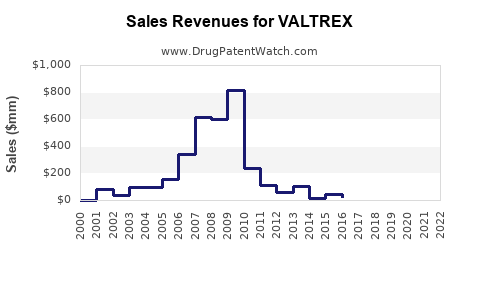
Valtrex was a major antiviral franchise before genericization. GSK reported Valtrex as a material commercial product before patent expiry, and public company disclosures have described annual sales above $1 billion in the pre-generic period. The product’s financial trajectory followed the standard small-molecule lifecycle:
- Rapid adoption after launch.
- Expansion across herpesvirus indications.
- Peak sales during the protected period.
- Sharp decline after generic entry.
- Mature brand sales with limited pricing power.
GSK no longer reports Valtrex as a major standalone growth driver in its current business disclosures. The product is economically different from newer GSK assets such as specialty medicines, vaccines, and respiratory products. Current Valtrex revenue is not separately disclosed in a way that supports a reliable public market-size calculation.
How did generic entry affect revenue?
Generic entry reduced the originator’s addressable revenue through both lower net price and lower share. The sequence was:
- Brand prescription volume shifted to generic valacyclovir.
- Payers increased substitution pressure.
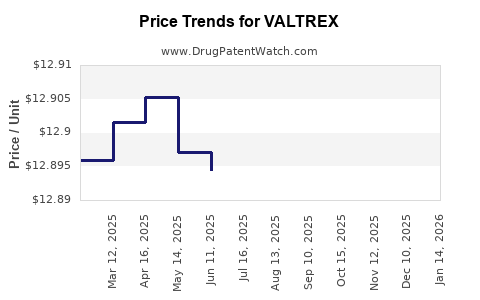
- Retail prices declined.
- Brand gross-to-net deductions became less favorable.
- Valtrex lost its role as a major contributor to GSK growth.
The asset still generates revenue through brand prescriptions, international sales, and residual physician or patient preference. That revenue is strategically smaller than the pre-2009 franchise and does not materially change GSK’s overall earnings profile.
How strong is the Valtrex patent estate?
The current patent estate is weak as a barrier to ordinary valacyclovir competition. Its strengths and limitations are clear.
| Patent-estate factor |
Assessment |
| Core composition protection |
Expired |
| Active Orange Book barrier |
No meaningful current barrier for standard tablets |
| Formulation complexity |
Low |
| Manufacturing complexity |
Low to moderate |
| Biologic comparability risk |
Not applicable |
| Generic substitution risk |
High |
| Remaining brand differentiation |
Limited |
| Litigation leverage |
Low for standard valacyclovir products |
| Lifecycle-management potential |
Limited without a new formulation or indication |
Manufacturing is not a major intellectual-property barrier. Valacyclovir is a conventional small molecule, and generic manufacturers can source the active pharmaceutical ingredient and produce oral tablets using established processes. Regulatory compliance, quality control, supply reliability, and manufacturing economics matter more than proprietary technology.
What is the FDA regulatory status of Valtrex?
Valtrex remains an FDA-approved prescription antiviral under NDA 020487. The FDA label covers adult and pediatric uses, with dosing determined by indication, age, immune status, and renal function. Dose adjustment is important in patients with renal impairment, and the label includes warnings concerning acute renal failure and central nervous system effects in susceptible patients (FDA, 2023).
The regulatory profile supports continued use but does not create meaningful commercial exclusivity. Generic valacyclovir products rely on abbreviated approval and demonstrate pharmaceutical equivalence and bioequivalence to the reference product.
What generic launch scenarios exist for Valtrex?
The relevant launch scenarios are mature-market scenarios rather than future patent cliffs.
Standard generic substitution
This is the dominant scenario. Pharmacies dispense generic valacyclovir unless the prescriber or patient specifically requests Valtrex and the payer permits it.
Residual brand premium
GSK can preserve limited brand revenue through patients who request Valtrex, physicians who prefer the reference product, and markets with less automatic substitution. The premium is constrained by payer controls.
Supply-driven share shifts
Temporary shortages, manufacturing interruptions, or wholesaler constraints can move volume between generic suppliers and the brand. These events can affect quarterly sales but do not change the long-term competitive structure.
New formulation or indication
A new formulation could create separate intellectual-property value only if it provides clinically meaningful differentiation and receives enforceable patent protection. Ordinary reformulation would face obviousness, written-description, enablement, and commercial-substitution challenges.
How does Valtrex compare with acyclovir and famciclovir?
| Factor |
Valtrex/valacyclovir |
Acyclovir |
Famciclovir |
| Dosage convenience |
Generally better than acyclovir |
More frequent dosing in many regimens |
Competitive convenience |
| Brand status |
Mature GSK brand |
Predominantly generic |
Brand and generic competition |
| Patent position |
Expired |
Expired |
Mature genericized market |
| Cost position |
Generic pricing available |
Often very low-cost |
Often higher than acyclovir |
| Main differentiation |
Oral prodrug and convenience |
Established, inexpensive antiviral |
Alternative pharmacokinetic profile |
| Biosimilar risk |
None |
None |
None |
| Commercial growth |
Limited |
Mature |
Limited |
Valacyclovir’s durable clinical advantage is convenience rather than exclusivity. That advantage supports continued prescribing, but generic availability prevents the originator from capturing the historic branded price.
Key Takeaways
- Valtrex is GSK’s branded valacyclovir product and was approved in the U.S. in 1995.
- The core U.S. patent protection expired in 2009, enabling generic valacyclovir entry.
- Generic manufacturers now control most market volume and pricing.
- Valtrex has no biosimilar risk because it is a small-molecule drug.
- The current patent estate does not create a meaningful barrier for standard valacyclovir tablets.
- Historical Valtrex sales exceeded $1 billion annually before genericization, but current standalone revenue is not separately disclosed by GSK.
- The main commercial alternatives are generic valacyclovir, acyclovir, and famciclovir.
- Future value depends on residual brand demand, supply events, international markets, and any genuinely differentiated formulation rather than on patent-protected growth.
FAQs
Is Valtrex still patent protected in the United States?
The core U.S. patent protection for valacyclovir expired in 2009. Standard generic valacyclovir tablets therefore compete without an active foundational patent barrier.
Is generic valacyclovir as effective as Valtrex?
FDA-approved generic valacyclovir products must meet applicable pharmaceutical-equivalence and bioequivalence requirements. They contain the same active ingredient as Valtrex and are used for the same approved indications.
Does Valtrex have biosimilars?
No. Valtrex is a small-molecule drug, so competitors enter through abbreviated new drug applications rather than biosimilar applications.
Can GSK launch a new Valtrex patent?
GSK could seek protection for a genuinely novel formulation, manufacturing process, or approved use. A new patent would need to satisfy patentability requirements and would not automatically restore exclusivity for conventional valacyclovir tablets.
Is Valtrex a significant future revenue driver for GSK?
No. Valtrex is a mature, genericized product. Its current financial contribution is minor relative to GSK’s newer specialty, vaccine, and respiratory franchises.
References
-
GlaxoSmithKline plc. (2009). Annual report 2009. GlaxoSmithKline.
-
GlaxoSmithKline plc. (2024). Annual report 2023. GlaxoSmithKline.
-
U.S. Food and Drug Administration. (2023). Valtrex (valacyclovir hydrochloride) tablets: Prescribing information. FDA.
-
U.S. Food and Drug Administration. (2024). Approved drug products with therapeutic equivalence evaluations: Orange Book. FDA.
-
U.S. Patent No. 5,246,937. (1993). Valine ester of acyclovir. United States Patent and Trademark Office.