Last updated: August 29, 2026
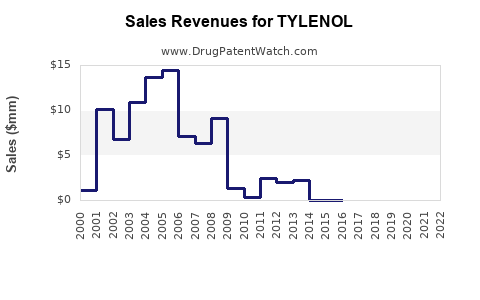
Tylenol is a mature, high-volume consumer-health brand owned by Kenvue Inc. Its active ingredient, acetaminophen, has no meaningful composition-of-matter exclusivity in the United States. Tylenol’s commercial value comes from brand recognition, retail distribution, product extensions, pediatric and liquid formulations, advertising, and consumer trust rather than patent exclusivity. Kenvue does not disclose Tylenol revenue as a standalone line item, so financial analysis must rely on company-level results, the Self Care segment, and external category data.
Who owns Tylenol and how large is the business?
Kenvue owns and markets Tylenol globally. Johnson & Johnson separated its consumer-health business through the Kenvue initial public offering in May 2023 and distributed its remaining Kenvue shares to Johnson & Johnson shareholders later that year.[1]
Tylenol is part of Kenvue’s Self Care segment, which also includes brands such as Motrin, Nicorette, Zyrtec, Benadryl, Sudafed, and Neutrogena in certain reporting classifications.
| Metric |
Publicly reported position |
| Brand owner |
Kenvue Inc. |
| Former parent |
Johnson & Johnson |
| Primary category |
Over-the-counter pain relief |
| Active ingredient |
Acetaminophen |
| U.S. regulatory pathway |
OTC monograph and related approved products |
| Standalone Tylenol revenue |
Not separately disclosed |
| Kenvue 2023 net sales |
Approximately $15.4 billion |
| Kenvue 2024 net sales |
Approximately $15.5 billion |
| Primary competitors |
Generic acetaminophen, Advil, Motrin, Aleve, aspirin and private-label products |
Kenvue’s consolidated sales provide a ceiling for assessing the brand portfolio, but they do not establish Tylenol’s individual revenue or margin. The company reports by geographic region and operating segment, not by every major brand.[1,2]
What is Tylenol’s financial trajectory?
Tylenol’s financial trajectory is likely stable to modestly growing in nominal terms, with volume constrained by private-label substitution and category maturity. Kenvue’s public filings indicate that Self Care is a large, established business exposed to pricing, retailer inventory, seasonal illness trends, and consumer switching.
Kenvue reported approximately $15.4 billion in 2023 net sales after becoming an independent company. Its 2024 sales were approximately $15.5 billion, reflecting low-single-digit growth at the company level.[1,2] Tylenol’s individual performance was not disclosed.
Financial drivers
The principal revenue drivers are:
- Retail distribution. Tylenol is sold through mass merchants, pharmacies, grocery stores, club stores, e-commerce platforms and healthcare channels.
- Brand premium. Tylenol generally prices above store-brand acetaminophen, although the premium varies by product, retailer and package size.
- Product mix. Caplets, gelcaps, rapid-release products, liquid products, chewables, dissolving powders and combination cold products carry different margins.
- Seasonality. Demand increases during respiratory-illness seasons and periods of heightened fever and pain incidence.
- Pediatric demand. Children’s Tylenol has a distinct consumer base and is less directly interchangeable with adult tablets because of dosage form and dosing considerations.
- Retailer bargaining power. Large retailers can promote private-label acetaminophen and pressure branded pricing.
Kenvue’s financial exposure is therefore more sensitive to brand share, pricing and distribution than to patent expiry. The core active ingredient is widely available from multiple manufacturers.
How does Tylenol compare with Advil, Motrin, Aleve and generic acetaminophen?
Tylenol competes primarily on perceived safety, familiarity and broad consumer use. Advil and Motrin contain ibuprofen, while Aleve contains naproxen sodium. These products have different pharmacological profiles, labeling limitations and consumer use cases.
| Brand or product |
Active ingredient |
Main competitive position |
Principal commercial risk |
| Tylenol |
Acetaminophen |
Broad pain and fever use; strong family and pediatric recognition |
Private-label substitution and safety concerns involving excessive dosing |
| Advil |
Ibuprofen |
Pain and inflammation positioning |
Category competition and NSAID safety restrictions |
| Motrin |
Ibuprofen |
Pediatric and adult pain relief |
Overlap with Advil and store brands |
| Aleve |
Naproxen sodium |
Longer-lasting pain relief positioning |
Lower purchase frequency and NSAID limitations |
| Store-brand acetaminophen |
Acetaminophen |
Low-price substitution |
Direct price competition |
| Aspirin products |
Acetylsalicylic acid |
Pain, fever and selected cardiovascular uses |
Age and safety limitations |
Tylenol’s strongest defense is not a legally protected molecule. It is the combination of brand equity, shelf presence, healthcare-provider familiarity and product breadth. The weakest point is that a consumer seeking basic acetaminophen can often substitute a lower-priced generic without changing the active ingredient.
What patents protect Tylenol?
No United States patent provides meaningful exclusivity for acetaminophen itself. The active ingredient has been used in medicine for decades, and generic manufacturers, pharmacies and retailers widely sell acetaminophen products.
Tylenol protection is primarily based on:
- The TYLENOL trademark and related marks.
- Trade dress and packaging.
- Product-specific trademarks such as Tylenol Extra Strength and Children’s Tylenol.
- Formulation, delivery-system and manufacturing know-how.
- Regulatory compliance and established distribution.
- Advertising claims supported by applicable FDA requirements.
Specific formulations can have patent or proprietary protection, but those rights do not recreate exclusivity over acetaminophen. A patent covering a particular dosage form, coating, release profile or combination product would have narrower commercial scope than a composition-of-matter patent.
What is the Orange Book status of Tylenol?
Core Tylenol products sold under the U.S. OTC drug monograph system generally do not depend on Orange Book patent listings. FDA’s OTC monograph framework establishes permitted active ingredients, dosage forms, labeling and conditions of use without requiring a conventional new-drug approval for every compliant product.[3]
Some branded products may be marketed under approved applications or may involve product-specific regulatory records. The Orange Book status must therefore be assessed at the individual product and application level. The central commercial conclusion remains unchanged: generic manufacturers do not need to wait for a Tylenol patent expiration to sell standard acetaminophen products compliant with FDA requirements.
When does Tylenol lose exclusivity?
Tylenol has already lost molecule-level exclusivity. There is no future “loss of exclusivity” event comparable to the expiry of a protected small-molecule prescription drug.
| Exclusivity layer |
Current position |
| Acetaminophen molecule |
Long expired |
| Standard immediate-release tablets |
Generic competition established |
| Brand trademark |
Ongoing if maintained and used |
| Packaging and trade dress |
Potentially enforceable against confusing imitation |
| Specific formulation patents |
Product-dependent; no broad Tylenol molecule exclusivity |
| FDA prescription-drug exclusivity |
Generally not the basis of the core OTC business |
| Pediatric product differentiation |
Commercial and regulatory, not molecule-level exclusivity |
Tylenol’s “exclusivity” is therefore commercial. Kenvue can preserve pricing power only through brand preference, product innovation, marketing and retail execution.
Are there Paragraph IV challenges against Tylenol?
A conventional Paragraph IV challenge is not the central pathway for standard OTC Tylenol products. Paragraph IV litigation typically concerns an abbreviated new drug application referencing a listed drug with Orange Book patents.[4]
Generic acetaminophen products generally compete through the OTC monograph system or other applicable FDA pathways. As a result:
- There is no principal patent cliff for standard Tylenol.
- Generic entry is already established.
- Patent litigation is more likely to concern a specific formulation, device, trademark or labeling issue than the acetaminophen molecule.
- Product-by-product review is required for any Tylenol item marketed under an approved application.
The absence of a major Paragraph IV barrier increases price competition and reduces the value of patent-based defensive strategies.
What formulation patents and method-of-use rights matter?
Formulation and delivery technologies can support differentiated products, but they normally protect only a defined product configuration. Relevant areas include:
- Rapid-release gelcaps.
- Film-coated or easy-to-swallow tablets.
- Liquid suspensions and pediatric dosing systems.
- Dissolvable powders and orally disintegrating products.
- Combination products containing acetaminophen and other active ingredients.
- Packaging designed to improve dosing accuracy or child resistance.
- Manufacturing processes that improve stability, dissolution or taste.
Method-of-use patents have limited strategic importance for standard OTC pain relief because FDA labeling and consumer use are broad. A method patent would need a narrow, enforceable indication or dosing regimen to create material exclusion.
Manufacturing know-how can matter more than patents. Suppliers must meet FDA current good manufacturing practice requirements, validate acetaminophen content and uniformity, control impurities, and maintain reliable packaging and quality systems.[5] These requirements create execution barriers but do not prevent established generic manufacturers from competing.
What FDA regulatory issues affect Tylenol?
FDA regulates Tylenol through the OTC drug framework, product-specific approvals where applicable, labeling requirements and manufacturing controls. The principal compliance issue is acetaminophen overexposure.
FDA has warned that consumers can unintentionally exceed the maximum daily amount by combining multiple products that contain acetaminophen, including pain relievers, cough medicines and cold remedies.[6] This creates regulatory and litigation exposure for:
- Label clarity.
- Dose instructions.
- Combination-product disclosure.
- Pediatric dosing.
- Product concentration changes.
- Packaging and measuring devices.
- Advertising claims.
Children’s liquid acetaminophen products have faced particular scrutiny because concentration differences and dosing-device errors can produce medication mistakes. Kenvue’s ability to maintain consumer confidence depends on consistent labeling, quality control and risk communication.
What patent litigation and settlement risks affect Tylenol?
Tylenol does not face a major patent-litigation cycle comparable to patented prescription medicines. The material legal risks are broader:
- Product-liability claims involving liver injury or overdose.
- Consumer class actions concerning labeling or marketing.
- Trademark and counterfeit disputes.
- Advertising substantiation claims.
- Retail and supply agreements.
- Regulatory enforcement involving manufacturing or labeling.
Settlement agreements involving generic entry are not the primary strategic issue because standard acetaminophen generics are already marketed. Any settlement would likely concern a specific formulation or product-specific approval rather than the base Tylenol franchise.
What licensing deals support Tylenol?
Kenvue’s filings identify licensing, supply and distribution relationships across its portfolio, but the company does not publicly disclose a standalone Tylenol licensing model that creates material exclusivity. The main value chain includes:
- Contract manufacturing and ingredient supply.
- Retail distribution agreements.
- Regional marketing rights.
- Product-specific development and supply arrangements.
- Co-promotion or channel agreements where applicable.
Kenvue’s separation from Johnson & Johnson created transitional and shared-services arrangements, but the commercial ownership of the Tylenol brand is now held by Kenvue.[1]
What generic entry risks exist for Tylenol?
Generic entry is already present and represents a permanent structural risk. The largest threats are not future launches but continued substitution.
High-risk areas
- Standard-strength and extra-strength tablets.
- Large-count bottles sold through mass retailers.
- Club-store packages.
- Basic children’s liquid products.
- E-commerce listings where consumers compare price directly.
- Retailer private-label promotions.
Lower-substitution areas
- Products with strong pediatric brand recognition.
- Formulations with differentiated dosing systems.
- Products supported by high consumer trust.
- Combination products with distinctive positioning.
- Products benefiting from physician or pharmacist familiarity.
Kenvue can reduce substitution through innovation and brand investment, but it cannot eliminate the lower-cost acetaminophen alternative.
What geographic markets are most important?
The United States is the most strategically important market for the Tylenol brand, with substantial international presence under local regulatory and commercial conditions. Geographic performance depends on:
- OTC versus prescription market structure.
- Local rules for acetaminophen labeling and dosing.
- Brand recognition.
- Pharmacy and grocery distribution.
- Local competitors and private-label penetration.
- Currency movements.
- Regulatory requirements for pediatric products.
International expansion does not create patent protection. It creates a distribution and branding opportunity subject to each country’s trademark, OTC and product-registration rules.
How strong is the Tylenol patent estate?
Tylenol has a weak patent estate but a strong brand estate.
| Estate category |
Assessment |
| Active-ingredient patents |
Weak or nonexistent |
| Standard product patents |
Limited practical protection |
| Formulation patents |
Potentially useful but narrow |
| Trademark rights |
Strong and strategically important |
| Trade dress |
Useful against confusing imitation |
| Regulatory barriers |
Moderate due to quality and labeling requirements |
| Manufacturing know-how |
Moderate |
| Distribution and retail access |
Strong but commercially contestable |
| Consumer trust |
Major strategic asset |
For investors and potential competitors, the distinction is critical. Tylenol does not justify a high valuation because of patent duration. Its value rests on repeat purchase, shelf access, brand recall, pricing discipline and Kenvue’s ability to manage safety and litigation exposure.
What generic launch scenarios should investors monitor?
The relevant scenarios are:
- Base case: Stable Tylenol sales with low-single-digit nominal growth, offset by private-label pressure.
- Price-compression case: Retailers expand store-brand promotions, reducing Tylenol volume and gross margin.
- Brand-recovery case: Kenvue gains share through product innovation, pediatric demand and stronger marketing.
- Safety-event case: Labeling, manufacturing or product-liability developments reduce consumer trust and increase costs.
- Supply disruption case: Ingredient, packaging or manufacturing interruptions shift consumers to competitors.
Because no broad patent cliff exists, Tylenol revenue should be modeled as a mature consumer staple with brand risk, not as a protected pharmaceutical asset.
Key Takeaways
- Kenvue owns Tylenol following the 2023 separation from Johnson & Johnson.
- Kenvue does not disclose standalone Tylenol revenue.
- Tylenol’s financial trajectory is tied to Kenvue’s Self Care performance, pricing, distribution and brand share.
- Acetaminophen molecule exclusivity expired long ago.
- Standard generic acetaminophen competition is already established.
- Orange Book and Paragraph IV issues are product-specific, not central to the core Tylenol franchise.
- Formulation patents may protect narrow products but do not protect the broader brand.
- Trademark, packaging, manufacturing quality and consumer trust are more important than patent duration.
- The main commercial risks are private-label substitution, price compression, safety concerns, product liability and retail bargaining power.
- Tylenol should be valued as a durable OTC consumer brand rather than a patent-protected pharmaceutical asset.
FAQs
Does Tylenol have a patent that prevents generic acetaminophen?
No. Generic acetaminophen has been marketed for many years. Tylenol’s protection comes mainly from trademarks, branding, distribution and product differentiation.
Is Tylenol listed in the FDA Orange Book?
Core OTC monograph Tylenol products generally do not rely on Orange Book patent listings. Individual products marketed under approved applications require separate review.
Can a generic manufacturer launch acetaminophen without waiting for Tylenol?
Yes, provided the product complies with the applicable FDA OTC monograph or approval pathway, including active-ingredient, dosage, labeling and manufacturing requirements.
What would most damage Tylenol revenue?
A major labeling or manufacturing event, sustained consumer safety concerns, aggressive private-label pricing, or loss of retail shelf space would pose the greatest risks.
Is Kenvue’s Tylenol business exposed to biosimilar competition?
No. Tylenol is a small-molecule OTC product, not a biologic. Biosimilar substitution is not relevant to its competitive structure.
References
- Kenvue Inc. (2024). Annual report pursuant to Section 10-K for the fiscal year ended December 31, 2023. U.S. Securities and Exchange Commission.
- Kenvue Inc. (2025). Annual report pursuant to Section 10-K for the fiscal year ended December 29, 2024. U.S. Securities and Exchange Commission.
- U.S. Food and Drug Administration. (2022). Over-the-counter monograph M013: Internal analgesic, antipyretic, and antirheumatic drug products.
- U.S. Food and Drug Administration. (2024). Approved drug products with therapeutic equivalence evaluations.
- U.S. Food and Drug Administration. (2024). Current good manufacturing practice regulations.
- U.S. Food and Drug Administration. (2023). Acetaminophen and liver injury: Information for consumers and healthcare professionals.