Last updated: August 17, 2026
Sirolimus is a mature, largely generic immunosuppressant with a declining branded business and expanding niche demand in rare diseases. The original Rapamune franchise lost its principal composition-of-matter protection years ago. Current commercial value is concentrated in transplant maintenance, lymphangioleiomyomatosis (LAM), specialty formulations, and off-label vascular and dermatologic uses. The strongest growth opportunity is not generic oral sirolimus. It is differentiated delivery, including topical and implantable formulations with new regulatory exclusivity.
What is the current market position of sirolimus?
Sirolimus, also known as rapamycin, is an mTOR inhibitor approved in the United States for kidney-transplant immunosuppression and LAM. It competes with tacrolimus, cyclosporine, mycophenolate, corticosteroids, and the related mTOR inhibitor everolimus.
The market has four distinct segments:
| Segment |
Primary use |
Commercial position |
| Oral tablets and solution |
Kidney-transplant immunosuppression |
Mature, genericized market |
| LAM treatment |
Rare pulmonary disease |
Smaller, specialty-priced market |
| Topical gel |
Facial angiofibromas associated with tuberous sclerosis complex |
Branded orphan-drug segment |
| Off-label use |
Vascular anomalies, dermatology, oncology and other conditions |
Clinically relevant but fragmented |
Rapamune was approved by the FDA in 1999 for prevention of organ rejection in kidney-transplant recipients. The FDA later approved sirolimus for LAM in 2015, based largely on evidence that treatment stabilizes lung function in patients with moderate disease or abnormal lung function [1,2].
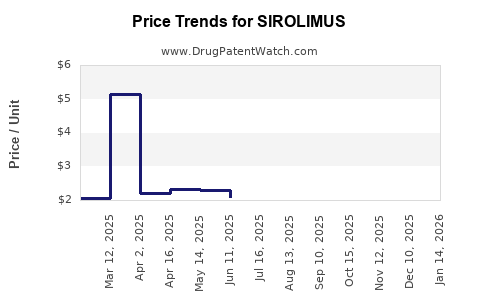
Generic entry materially changed the oral market. Multiple manufacturers now supply sirolimus tablets, while Pfizer's branded Rapamune business has limited ability to maintain premium pricing against therapeutically interchangeable products.
How large is the sirolimus market and what is its financial trajectory?
Public market-research estimates generally place the global sirolimus market in the low hundreds of millions of dollars annually, although estimates vary because some reports include only oral products while others include topical formulations, drug-eluting devices, and research applications.
The financial trajectory has four phases:
- 1999-2007: branded transplant expansion. Rapamune benefited from first-mover status in the oral sirolimus category and adoption in kidney-transplant protocols.
- 2007-2014: patent-protected decline begins. The core composition patent expired, but branded sales continued through physician familiarity, transplant-center protocols, and limited generic availability.
- 2015-2020: rare-disease diversification and generic erosion. The LAM indication created a specialty market, while generic oral products began to pressure transplant revenue.
- 2021 onward: portfolio bifurcation. Generic oral sirolimus remains a low-growth product. HYFTOR, a branded topical formulation, created a separate orphan-drug revenue opportunity.
Pfizer does not report Rapamune as a consistently separate major revenue line in its recent annual reports. The product's financial importance is therefore better assessed through prescription volume, generic substitution, specialty pricing, and the performance of differentiated products rather than through a current standalone Pfizer revenue disclosure [3].
The principal commercial drivers are:
- A large installed base of kidney-transplant patients requiring chronic immunosuppression.
- Generic price erosion in oral tablets.
- Persistent demand in LAM, where treatment is chronic and specialist-managed.
- Premium pricing for topical or device-based delivery.
- Hospital and specialty-pharmacy purchasing concentration.
- Reimbursement restrictions and prior authorization for rare-disease products.
- Competition from tacrolimus and everolimus.
When did sirolimus lose patent protection?
The principal U.S. composition-of-matter patent for rapamycin, U.S. Patent No. 5,100,899, expired in 2007, subject to the applicable patent-term and regulatory-extension calculations. Later formulation and use patents extended portions of the commercial estate but did not recreate broad composition protection for sirolimus.
| Protection category |
Approximate status |
Commercial consequence |
| Core rapamycin composition patent |
Expired |
Enabled broad generic competition |
| Oral formulation patents |
Expired or no longer commercially blocking for the core product |
Limited ability to defend tablet pricing |
| LAM method-of-use protection |
Time-limited and indication-specific |
Did not block generic transplant use |
| HYFTOR topical formulation patents |
Active or potentially active depending on claim and jurisdiction |
Supports premium specialty pricing |
| Orphan exclusivity for approved rare-disease products |
Product-specific and time-limited |
Restricts approval of the same drug for the same indication, but does not create broad molecule exclusivity |
The relevant commercial distinction is between the molecule and the delivery system. Sirolimus as an active pharmaceutical ingredient is old and broadly available. Certain topical gels, nanoparticles, implants, coatings, and other delivery systems can support separate patent claims, regulatory exclusivity, or both.
What is the FDA and Orange Book status of sirolimus?
Rapamune is an FDA-approved product listed in the Orange Book for oral sirolimus tablets and oral solution. The FDA approved generic sirolimus products through the abbreviated new drug application pathway after the relevant branded protections no longer prevented generic approval [4].
The principal FDA milestones are:
| Date |
Regulatory event |
| 1999 |
Rapamune approved for kidney-transplant immunosuppression |
| 2015 |
Sirolimus approved for LAM |
| 2019 |
FDA approval of generic sirolimus products expanded competitive supply |
| 2022 |
HYFTOR approved for facial angiofibromas in tuberous sclerosis complex |
HYFTOR is a 0.2% sirolimus topical gel developed by Nobelpharma America for adults and pediatric patients at least six years old with facial angiofibromas associated with tuberous sclerosis complex [5]. Its approval created a branded specialty market distinct from generic oral sirolimus.
The FDA approval of HYFTOR is strategically important because it demonstrates that the commercial value of sirolimus can be rebuilt through formulation and indication differentiation even after molecule-level patent expiry.
Are there Paragraph IV challenges to Rapamune or sirolimus?
The principal Paragraph IV risk occurred when generic manufacturers challenged the remaining listed patents covering Rapamune products. Once the core patents expired and generic products entered the market, the legal dispute shifted from molecule access to formulation, manufacturing, and product-specific patents.
As of the public regulatory and litigation record available through June 2024, the main commercial issue is not an active broad challenge to the sirolimus molecule. It is the continuing substitution of generic oral products for Rapamune and the separate enforcement risk surrounding newer topical or delivery-system products.
A Paragraph IV filing against a topical sirolimus product would have a different economic impact from a tablet challenge:
- A tablet challenge would affect a mature generic market with limited branded value.
- A HYFTOR challenge could affect a higher-margin orphan product.
- A challenge to a device-based product could implicate both pharmaceutical and medical-device claims.
- A formulation patent dispute may produce a narrow launch risk rather than a full-market molecule loss.
What formulations are protected by sirolimus patents?
The most commercially relevant protected formulations are differentiated delivery systems rather than conventional tablets.
Oral tablets and solution
Conventional oral products are the weakest part of the current patent estate. Their active ingredient is off-patent, and generic manufacturers can compete through bioequivalence. Manufacturing controls, stability, dissolution, impurity limits, and supply reliability remain operational barriers but generally do not support durable monopoly pricing.
Topical sirolimus gel
HYFTOR uses topical delivery to treat facial angiofibromas. The product's value depends on:
- A defined gel vehicle.
- Skin penetration and local exposure.
- Low systemic absorption.
- Tuberous sclerosis-specific clinical positioning.
- Orphan-disease commercialization and specialty distribution.
The product is more defensible than oral sirolimus because a competitor must address formulation performance, topical tolerability, clinical labeling, and patent claims rather than simply reproduce a tablet.
Drug-eluting and implantable systems
Sirolimus has been used in drug-eluting stents and investigated in coated balloons, vascular devices, implants, and localized delivery systems. These products are usually governed by a combination of drug, polymer, coating, device, manufacturing, and clinical-performance rights. The relevant market is adjacent to pharmaceutical sales and can be captured by medical-device companies rather than traditional drug manufacturers.
Nanoparticle and targeted delivery
Universities and biotechnology companies have investigated sirolimus nanoparticles, liposomes, and other targeted formulations for cancer, vascular disease, inflammatory conditions, and transplantation. These programs may have strong platform patents but face clinical, manufacturing, and regulatory hurdles. Most have not generated a broad commercial market comparable with oral transplant products.
How does sirolimus compare with tacrolimus and everolimus?
| Factor |
Sirolimus |
Tacrolimus |
Everolimus |
| Drug class |
mTOR inhibitor |
Calcineurin inhibitor |
mTOR inhibitor |
| Main transplant role |
Selected maintenance or conversion therapy |
Dominant first-line transplant immunosuppressant |
Transplant and oncology |
| Generic status |
Broadly generic |
Broadly generic |
Generic in major markets |
| Key adverse-effect concerns |
Hyperlipidemia, mouth ulcers, edema, proteinuria, impaired wound healing |
Nephrotoxicity, neurotoxicity, diabetes |
Similar mTOR-class risks |
| LAM role |
FDA-approved |
Not approved |
Not the principal FDA-approved therapy |
| Commercial differentiation |
Rare-disease and formulation niches |
Large volume and protocol familiarity |
Strong oncology and transplant franchise |
| Pricing power |
Low for oral products; higher for specialty formulations |
Low to moderate for generic forms |
Higher in certain branded oncology settings |
Tacrolimus remains the most important competitive pressure in transplant medicine because of widespread protocol adoption. Sirolimus can gain share when clinicians seek calcineurin-sparing strategies, renal-function preservation, or specific patient-management benefits. Those clinical advantages do not automatically translate into pricing power because transplant centers operate under cost controls and generic substitution.
Everolimus is the closest branded and clinical comparator. It has stronger commercial diversification through oncology indications, while sirolimus has a more concentrated opportunity in LAM, tuberous sclerosis, and specialty delivery.
Which companies are competing in the sirolimus market?
The competitive landscape includes originator companies, generic manufacturers, specialty pharmaceutical firms, and device companies.
Originator and specialty companies
- Pfizer, through the Rapamune legacy franchise.
- Nobelpharma, through HYFTOR for tuberous sclerosis-associated facial angiofibromas.
- Specialty pharmaceutical companies developing topical, oral, implantable, or targeted sirolimus products.
- Medical-device companies using sirolimus in drug-eluting systems.
Generic manufacturers
Generic competition includes companies that have obtained FDA approval for oral sirolimus tablets or solution through ANDA filings. The market is characterized by multiple suppliers, pharmacy substitution, contract manufacturing, and periodic supply volatility. Generic market share and manufacturer rankings can change rapidly as wholesalers and payers adjust purchasing contracts.
The generic opportunity is volume-driven rather than innovation-driven. Manufacturers compete on cost, supply continuity, regulatory compliance, and contract access.
What generic entry risks exist for sirolimus?
Generic entry has already produced the main erosion event for conventional oral sirolimus. Remaining risks are more specific:
- Further price compression. Additional tablet suppliers can reduce average selling prices and manufacturer margins.
- Brand-to-generic substitution. Rapamune has limited protection against automatic or protocol-driven substitution where state law and payer rules permit it.
- LAM reimbursement pressure. Insurers may require generic sirolimus before covering branded or specialty products for LAM.
- Topical substitution. HYFTOR could face a future competitor using a different gel or cream formulation if it avoids valid patent claims.
- Compounded products. Compounding pharmacies may affect demand in off-label topical and rare-disease uses, although quality and reimbursement vary.
- Supply concentration. Generic shortages or manufacturing interruptions can temporarily benefit alternative suppliers but can also impair treatment continuity.
The highest-value future litigation risk is therefore concentrated in HYFTOR and other differentiated formulations, not in conventional Rapamune tablets.
What patent litigation and settlement issues affect sirolimus?
Sirolimus litigation has historically centered on generic entry, patent validity, formulation scope, and product-specific exclusivity. The molecule's age makes broad composition litigation less important than disputes over narrower claims.
Potential settlement structures in this category include:
- Authorized-generic arrangements.
- Delayed generic entry dates.
- Covenants not to sue.
- License agreements covering a particular formulation or indication.
- Supply agreements linked to an ANDA or specialty product.
- Patent litigation settlements involving limited commercial launch rights.
No major publicly disclosed settlement has transformed the oral sirolimus market into a durable branded monopoly. The commercial record instead points to broad generic availability and fragmented specialty development.
How strong is the sirolimus patent estate?
The estate is weak for the active ingredient and standard oral dosage forms but stronger for specific delivery technologies.
| Patent-estate layer |
Relative strength |
Reason |
| Sirolimus molecule |
Low |
Old active ingredient and expired core protection |
| Standard oral tablets |
Low |
Bioequivalent generic competition |
| LAM method of use |
Moderate but narrow |
Indication-specific and time-limited |
| Topical gel |
Moderate to strong |
Formulation, vehicle, dosing, and clinical-use claims |
| Drug-device combinations |
Moderate to strong |
Multiple patent layers across drug and device |
| Nanoparticle delivery |
Variable |
Potentially broad claims but high development risk |
| Manufacturing process |
Variable |
Can protect quality and scale, but rarely blocks all alternatives |
Patent strength should be evaluated claim by claim. A broad patent covering sirolimus itself has little remaining value. A narrowly drafted patent covering a defined topical composition, delivery profile, or device coating can retain meaningful commercial value if it survives validity and infringement challenges.
What is the outlook for sirolimus revenue?
The base case is a declining or stable generic oral market with selective growth in specialty products.
Downside factors
- Continued generic price erosion.
- Heavy dependence on kidney transplantation.
- Competition from tacrolimus and everolimus.
- Reimbursement controls in LAM.
- Limited prescriber incentives to maintain Rapamune branding.
- Clinical tolerability issues that constrain broader transplant adoption.
Upside factors
- Increased use of mTOR inhibitors in calcineurin-sparing protocols.
- Improved diagnosis and treatment of LAM.
- Expansion of topical sirolimus in tuberous sclerosis.
- New vascular or implantable delivery products.
- Successful development of sirolimus in additional rare diseases.
- Greater use of localized delivery to reduce systemic toxicity.
The likely financial pattern is a barbell: low-margin, high-volume generic oral products on one side and smaller, higher-margin specialty formulations on the other. The middle market, consisting of branded conventional oral sirolimus, has limited growth potential.
Key Takeaways
- Sirolimus is commercially mature at the molecule level and broadly generic in oral forms.
- Rapamune's core patent protection expired years ago, eliminating broad composition-based exclusivity.
- The transplant market provides durable volume but limited pricing power.
- LAM is the principal FDA-approved rare-disease opportunity for oral sirolimus.
- HYFTOR created a separate branded market for topical sirolimus in tuberous sclerosis.
- Future patent value is concentrated in formulations, delivery systems, manufacturing processes, and drug-device combinations.
- The main competitive threats are tacrolimus and everolimus in transplantation, plus future topical and specialty-formulation entrants.
- Sirolimus revenue is likely to remain stable to declining in conventional oral products, with potential growth from differentiated delivery and orphan indications.
FAQs About Sirolimus Market Dynamics
Is Rapamune still patent protected?
The original rapamycin composition protection expired. Current legal exposure depends on narrower product, formulation, method-of-use, or manufacturing patents rather than broad protection for sirolimus itself.
Does sirolimus have orphan-drug exclusivity?
Sirolimus received rare-disease regulatory treatment for LAM, and HYFTOR was approved for a tuberous sclerosis-associated indication. Orphan exclusivity is indication-specific and does not prevent generic sirolimus approval for unrelated uses.
Can generic sirolimus be used for LAM?
Physicians may prescribe generic sirolimus for LAM, but the FDA-approved labeling, payer policy, formulation, and clinical circumstances determine practical access. Generic availability places pricing pressure on branded or specialty LAM products.
Why is topical sirolimus more commercially valuable than oral sirolimus?
Topical sirolimus can support distinct formulation patents, orphan positioning, specialty distribution, and premium pricing. Oral sirolimus is an old molecule with multiple generic competitors.
Is sirolimus a growth drug for pharmaceutical investors?
Conventional oral sirolimus is generally a mature or declining asset. Investment upside is more likely in differentiated topical, targeted, implantable, or device-based products than in standard generic tablets.
References
- U.S. Food and Drug Administration. (1999). Rapamune (sirolimus) prescribing information.
- U.S. Food and Drug Administration. (2015). FDA approves Rapamune to treat rare lung disease.
- Pfizer Inc. (2024). Annual report for the fiscal year ended December 31, 2023.
- U.S. Food and Drug Administration. (2024). Approved drug products with therapeutic equivalence evaluations: Orange Book.
- U.S. Food and Drug Administration. (2022). HYFTOR (sirolimus) topical gel prescribing information.
- U.S. Patent No. 5,100,899. (1992). Macrolide derivatives. United States Patent and Trademark Office.