Last updated: February 19, 2026
Risperdal, a widely prescribed antipsychotic medication, has generated substantial revenue and faced significant market challenges, including patent expirations and the introduction of generic alternatives. Its market trajectory is characterized by strong initial sales driven by efficacy in treating schizophrenia and bipolar disorder, followed by a decline in revenue as exclusivity waned and competition intensified.
What is the core patent status and expiration timeline for Risperdal?
The primary patent for risperidone, the active ingredient in Risperdal, was granted to Johnson & Johnson. The U.S. Patent No. 4,804,663 was issued on February 14, 1989, with an expiration date of February 14, 2005 [1]. However, patent extensions and subsequent patents for formulations and methods of use can alter the effective market exclusivity period.
- Core Compound Patent Expiration: February 14, 2005.
- Orphan Drug Exclusivity: Risperdal was granted orphan drug exclusivity for its use in treating pediatric schizophrenia. This exclusivity typically lasts for seven years from the approval date of the orphan drug indication. Approval for pediatric use occurred after the initial compound patent's expiration, providing a limited period of de facto market protection for that specific indication [2].
- Formulation and Method Patents: Johnson & Johnson also held patents related to specific formulations of risperidone, such as orally disintegrating tablets (Risperdal M-Tab), and methods of treatment. These patents could provide secondary layers of protection, but generally have shorter durations than the core compound patent. For example, patents related to the orally disintegrating tablet formulation had varying expiration dates, with some extending into the late 2000s [3].
How has generic competition impacted Risperdal's market share and pricing?
The expiration of the core compound patent in 2005 paved the way for generic manufacturers to enter the market. This introduction of lower-cost alternatives led to a rapid erosion of Risperdal's market share and significant price reductions.
- Market Share Shift: Prior to generic entry, Risperdal held a dominant position in the antipsychotic market. Following the introduction of generic risperidone, its market share declined sharply. Data from market analysis firms indicate that by the late 2000s, generic risperidone captured a substantial majority of the prescription volume [4].
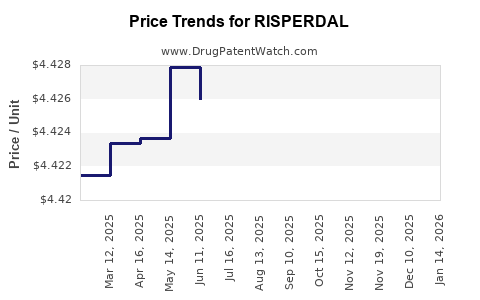
- Pricing Compression: The price of risperidone has decreased substantially since the advent of generic competition. Branded Risperdal typically commanded a premium price. Generic versions entered the market at significantly lower price points, forcing Johnson & Johnson to reduce its pricing for the branded product to remain competitive, though often with limited success in regaining market share. Wholesale acquisition costs for generic risperidone are now a fraction of the historical branded price [5].
- Impact on Manufacturers: Johnson & Johnson's pharmaceutical segment, Janssen Pharmaceutica, experienced a significant decline in Risperdal sales following patent expirations and the influx of generics. The company's revenue streams were increasingly reliant on newer products or alternative formulations that offered extended patent protection or perceived therapeutic advantages.
What were the key therapeutic indications and initial market reception for Risperdal?
Risperdal was approved by the U.S. Food and Drug Administration (FDA) for the treatment of schizophrenia and bipolar disorder. Its introduction represented a significant advancement in the management of these conditions.
- Schizophrenia: Risperdal was approved for the treatment of schizophrenia in adult patients in 1993. It offered a more favorable side-effect profile compared to some older antipsychotics, particularly regarding extrapyramidal symptoms (EPS) at therapeutic doses [6].
- Bipolar Disorder: Approval for the treatment of manic or mixed episodes associated with bipolar I disorder in adults followed in 2003. This expanded the drug's addressable market and contributed to its commercial success.
- Pediatric Indications: Approval for the treatment of irritability associated with autistic disorder in pediatric patients (ages 5-16) was granted in 2003, and for schizophrenia in adolescents (ages 13-17) in 2006. These pediatric indications were important from a clinical perspective and also offered a degree of market exclusivity for those specific age groups.
- Market Reception: Risperdal was generally well-received by the medical community due to its efficacy and improved tolerability compared to older atypical antipsychotics. It quickly became a blockbuster drug, generating billions in annual sales for Johnson & Johnson. The drug's success was driven by its ability to manage positive and negative symptoms of schizophrenia and its utility in managing manic episodes in bipolar disorder.
What are the historical sales figures and revenue trends for Risperdal?
Risperdal was one of Johnson & Johnson's top-selling drugs for an extended period, demonstrating substantial peak sales before experiencing a precipitous decline due to generic competition.
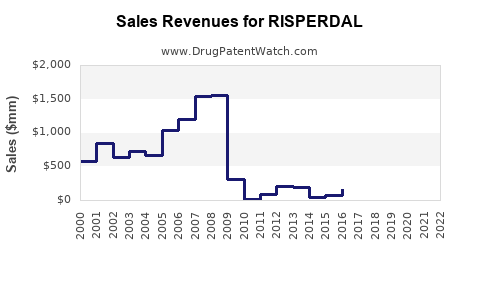
- Peak Sales: Risperdal achieved peak annual sales in the range of $4 billion to $4.5 billion globally in the mid-2000s, prior to the widespread availability of generic versions [7].
- Post-Generic Sales Decline: Following the FDA's approval of generic risperidone in 2008, sales of branded Risperdal declined sharply. By 2010, global sales had fallen to approximately $2 billion, and continued to decrease significantly in subsequent years.
- Revenue Breakdown: Sales were primarily driven by prescriptions in the United States and major European markets. The U.S. market accounted for a substantial portion of global revenue due to higher drug prices and market size.
- Janssen Pharmaceutical Segment Impact: The revenue decline from Risperdal significantly impacted the financial performance of Johnson & Johnson's Janssen Pharmaceutical Companies segment, necessitating a strategic focus on other pipeline drugs and established profitable products.
What are the key clinical and regulatory challenges faced by Risperdal?
Beyond patent expiration, Risperdal has been subject to significant regulatory scrutiny and litigation, primarily concerning its marketing practices and alleged off-label promotion, as well as safety concerns.
- Marketing and Off-Label Promotion Litigation: Johnson & Johnson faced substantial legal challenges and fines related to allegations of improper marketing of Risperdal. These included accusations of encouraging physicians to prescribe the drug for unapproved uses (off-label), particularly for elderly dementia patients, where studies later showed increased risks of stroke and death [8].
- DOJ Settlement: In 2013, Johnson & Johnson agreed to pay $2.2 billion to resolve criminal and civil allegations related to the marketing of Risperdal and other drugs. This included a $1.1 billion criminal fine, the largest ever paid by a pharmaceutical company at the time [8].
- Civil Lawsuits: The company also faced thousands of individual civil lawsuits from patients and their families alleging harm from the drug, leading to significant settlement payouts.
- Safety Warnings and Post-Market Surveillance: The FDA has issued various safety warnings and label updates for risperidone based on post-market surveillance data. These include warnings about increased mortality in elderly patients with dementia-related psychosis and potential side effects such as tardive dyskinesia, metabolic changes, and hyperprolactinemia.
- Black Box Warnings: Risperdal carries a "black box warning" regarding the increased risk of death in elderly patients with dementia-related psychosis. This has influenced prescribing patterns and contributed to a more cautious approach in managing this patient population.
What is the current market status and future outlook for Risperdal and its generics?
Risperdal, as a branded product, has a negligible market presence due to genericization. The market is now dominated by generic risperidone, which continues to be a widely prescribed antipsychotic due to its established efficacy and affordability.
- Generic Dominance: The market for risperidone is now a mature generics market. Multiple manufacturers produce generic versions, leading to intense price competition.
- Continued Prescription Volume: Despite the availability of newer antipsychotics, risperidone remains a first- or second-line treatment option for many patients with schizophrenia and bipolar disorder, particularly in cost-sensitive healthcare systems. Its established clinical profile and affordability ensure continued demand for generic formulations.
- Niche Formulations: While the primary market is generic oral tablets, specialized formulations like long-acting injectables (e.g., Risperdal Consta, which has its own patent considerations and potential for generic entry later) and orally disintegrating tablets continue to be prescribed for specific patient needs, albeit with a smaller market share compared to oral generics.
- Competition from Newer Agents: Newer antipsychotics with novel mechanisms of action or potentially improved side-effect profiles continue to emerge, posing long-term competitive pressure on all older agents, including risperidone. However, the cost-effectiveness of generic risperidone is a significant barrier for new entrants without demonstrable superior clinical outcomes.
Key Takeaways
- Risperdal's core patent expired in 2005, leading to the rapid introduction of generic risperidone.
- Generic competition resulted in a dramatic decline in branded Risperdal sales, from a peak of over $4 billion annually to minimal levels.
- Johnson & Johnson faced significant legal and financial repercussions due to off-label marketing allegations, including substantial fines and settlements.
- Despite regulatory scrutiny and safety warnings, generic risperidone remains a widely prescribed and cost-effective treatment for schizophrenia and bipolar disorder.
- The market for risperidone is now a mature generics market characterized by intense price competition.
FAQs
- When was Risperdal first approved by the FDA?
Risperdal was first approved by the FDA for the treatment of schizophrenia in adult patients on January 27, 1993.
- What are the primary side effects associated with Risperdal?
Common side effects include drowsiness, dizziness, weight gain, increased prolactin levels, and extrapyramidal symptoms (such as tremors or stiffness). More serious potential side effects include tardive dyskinesia, metabolic changes, and an increased risk of stroke in elderly patients with dementia-related psychosis.
- Are there any specific formulations of Risperdal that have longer market exclusivity?
Yes, specialized formulations like long-acting injectable versions (e.g., Risperdal Consta) and orally disintegrating tablets (Risperdal M-Tab) had their own patent protection, which extended their market exclusivity beyond the expiration of the core compound patent. However, generic versions of these formulations have also become available.
- What is the current market share of branded Risperdal versus generic risperidone?
Branded Risperdal has a negligible market share. The market is overwhelmingly dominated by generic risperidone, which accounts for over 95% of prescriptions.
- Have there been any recent significant legal developments concerning Risperdal marketing?
The most significant legal developments occurred in the early to mid-2010s, particularly the 2013 settlement with the U.S. Department of Justice for $2.2 billion. While ongoing individual lawsuits may still occur, there have been no recent large-scale federal settlements on the scale of the 2013 resolution.
Citations
[1] U.S. Patent 4,804,663. (1989). Piperidine derivatives. United States Patent and Trademark Office.
[2] U.S. Food and Drug Administration. (n.d.). Orphan Drug Designations and Approvals. Retrieved from https://www.fda.gov/for-industry/applying-permission-research-or-marketing-cber/orphan-drug-designations-and-approvals (Note: Specific designation dates for Risperdal's orphan indications are not publicly available in a single consolidated list but are tied to approval of specific pediatric uses.)
[3] Various U.S. Patents related to risperidone formulations, e.g., U.S. Patent 6,063,787 (Expired). (Assigned to Johnson & Johnson).
[4] Industry market analysis reports (e.g., from IQVIA, formerly IMS Health) indicate generic market share data for antipsychotics post-2008. Specific report access requires subscription.
[5] Generic drug pricing databases (e.g., GoodRx, Medi-Span) illustrate price compression from branded to generic risperidone.
[6] Kane, J. M. (1997). Risperidone in the treatment of schizophrenia. The Journal of Clinical Psychiatry, 58(Suppl 5), 19-25.
[7] Johnson & Johnson Annual Reports (2005-2010). SEC Filings.
[8] U.S. Department of Justice. (2013, October 30). Justice Department Secures $2.2 Billion in Settlements with Johnson & Johnson to Resolve False Claims Act Liabilities. Retrieved from https://www.justice.gov/opa/pr/justice-department-secures-22-billion-settlements-johnson-johnson-resolve-false-claims-act