Last updated: August 30, 2026
Ortho Evra was the first widely marketed contraceptive patch in the United States. Johnson & Johnson commercialized it through its Ortho Women’s Health business after FDA approval in 2001. The product combined norelgestromin and ethinyl estradiol in a once-weekly transdermal system.
The product’s commercial position weakened after safety disclosures concerning systemic estrogen exposure, product recalls, lawsuits and competition from lower-cost generic and branded-generic patches. Ortho Evra is no longer the principal U.S. commercial product. Its successor market is led by Xulane, manufactured by Mylan, now part of Viatris, and by other norelgestromin/ethinyl estradiol transdermal systems.
Ortho Evra has no meaningful current standalone revenue stream for Johnson & Johnson. Its financial trajectory is best understood as a transition from branded contraceptive growth to mature, largely genericized market demand.
What was Ortho Evra and how did the contraceptive patch work?
Ortho Evra was a transdermal hormonal contraceptive containing:
| Attribute |
Ortho Evra specification |
| Active ingredients |
Norelgestromin and ethinyl estradiol |
| Delivery route |
Transdermal |
| Typical schedule |
One patch weekly for three weeks, followed by one patch-free week |
| Original U.S. sponsor |
Ortho-McNeil Pharmaceutical, a Johnson & Johnson company |
| FDA approval |
2001 |
| Therapeutic category |
Hormonal contraception |
| Primary commercial alternative |
Xulane |
| Primary market issue |
Higher systemic estrogen exposure than many oral contraceptives |
The patch delivered approximately 150 micrograms of norelgestromin and 35 micrograms of ethinyl estradiol per day under the original Ortho Evra labeling. The system was designed to improve adherence by reducing daily dosing requirements. The weekly schedule created a convenience advantage over oral contraceptives, but the product’s estrogen exposure profile became a material commercial and regulatory concern.
In 2005, the FDA required labeling changes after data indicated that women using Ortho Evra could experience higher overall estrogen exposure than women taking a typical oral contraceptive containing 35 micrograms of ethinyl estradiol. The revised labeling addressed potential thromboembolic risk and identified higher-risk patient populations.[1]
When did Ortho Evra lose exclusivity?
Ortho Evra lost practical U.S. exclusivity through a combination of patent expiry, generic competition and brand withdrawal rather than through one discrete market event.
The original product’s principal intellectual-property protection covered the transdermal delivery system and hormone combination. Relevant U.S. patent protection expired during the 2010s, with the key commercial barriers no longer protecting the branded product by the time generic alternatives gained broad market access.
Mylan’s Xulane was approved as a generic version of Ortho Evra and became the principal U.S. replacement product. The commercial market therefore shifted from a protected Johnson & Johnson brand to a lower-priced product distributed by Mylan/Viatris.
Ortho Evra exclusivity timeline
| Year |
Event |
| 2001 |
FDA approves Ortho Evra |
| 2002 |
U.S. commercial launch |
| 2005 |
FDA labeling changes address higher systemic estrogen exposure |
| 2006-2008 |
Additional safety communications, litigation and market scrutiny |
| 2010s |
Generic and branded-generic competition expands |
| 2014 |
Johnson & Johnson reports broad restructuring and portfolio changes affecting women’s health commercialization |
| Late 2010s onward |
Xulane becomes the principal U.S. patch product |
| Current market |
Ortho Evra has no significant U.S. commercial role; generic products supply the category |
The exact expiration dates for individual Ortho Evra-related patents depend on the patent family, terminal disclaimers, pediatric extensions and jurisdiction. FDA Orange Book records, not historical product literature, control the legally relevant listed-patent analysis.[2]
What patents protected Ortho Evra?
Ortho Evra’s protection was based on a layered combination of formulation, transdermal delivery and product-design claims.
Transdermal delivery patents
The core technical concept involved a patch capable of delivering norelgestromin and ethinyl estradiol through the skin at controlled rates. Patent claims in this field commonly address:
- Adhesive matrix construction
- Hormone loading and concentration
- Skin permeation
- Release-rate control
- Patch dimensions and multilayer structure
- Stabilizers and excipients
- Manufacturing processes
- Prevention of crystallization or drug migration
These claims create commercial barriers while the product is protected, but they become less effective after the principal patents expire unless follow-on patents cover a meaningful design change.
Formulation and device protection
The patch relied on a pressure-sensitive adhesive system rather than a conventional tablet or capsule. Protection could therefore extend beyond the active ingredients to:
- The adhesive composition
- The backing layer
- The release liner
- Drug distribution through the matrix
- Adhesion during bathing, exercise and perspiration
- Long-term stability
- Packaging and storage conditions
The commercial value of these patents was limited after competitors demonstrated that a therapeutically equivalent transdermal system could be approved through the abbreviated pathway.
Method-of-use patents
Ortho Evra’s method-of-use protection was narrower than its product protection. Relevant claims could cover use of the patch for contraception under a weekly dosing regimen. Method claims did not prevent all competing contraceptive products, and their commercial value depended on whether the FDA-approved label and patent listing created meaningful barriers to an ANDA applicant.
The principal risk to the brand was therefore product substitution rather than direct clinical replacement by a different method of contraception.
What was the Orange Book status of Ortho Evra?
Ortho Evra’s Orange Book significance declined as the product moved from an active branded product to a discontinued or commercially inactive product.
The Orange Book lists patents and exclusivity associated with FDA-approved drug products. A discontinued product may remain relevant in FDA records, but listing status does not by itself establish current commercial exclusivity. The legal and commercial questions are separate:
- Whether a patent was listed for the reference product.
- Whether the patent remained unexpired.
- Whether a generic applicant certified against it.
- Whether litigation triggered a 30-month stay.
- Whether the brand remained commercially available.
For Ortho Evra, the important commercial fact is that generic competition reached the market and displaced the branded product. There is no current indication that Ortho Evra maintains an active, commercially meaningful Orange Book barrier against the U.S. generic patch market.
Which companies challenged or replaced Ortho Evra?
The principal competitive challenge came from generic manufacturers rather than from a competing innovator with a materially different patch technology.
Xulane
Xulane is the main U.S. successor product. Mylan obtained FDA approval for norelgestromin and ethinyl estradiol transdermal systems and marketed the product as Xulane. Viatris inherited the product following the Mylan-Upjohn combination.
Xulane preserved the weekly patch format and served the same contraceptive use. Its commercial strategy benefited from:
- Lower pricing than the original brand
- Generic substitution
- Established physician familiarity with the patch
- Pharmacies’ preference for lower-cost alternatives
- The absence of a strong current Ortho Evra brand franchise
Other contraceptive methods
The broader competitive landscape includes:
- Combined oral contraceptives
- Progestin-only pills
- Vaginal rings
- Long-acting reversible contraceptives
- Injectable contraceptives
- Hormonal and copper intrauterine devices
- Etonogestrel implants
The patch competes mainly on adherence and convenience. It does not compete effectively on price against many oral generics, and it has a higher estrogen exposure concern than several alternatives.
How did safety issues affect Ortho Evra sales?
Safety-related communications materially weakened the product’s commercial profile.
The principal issue was estrogen exposure. FDA-reviewed data indicated that Ortho Evra users could experience higher cumulative estrogen exposure than users of a 35-microgram ethinyl estradiol oral contraceptive. Higher estrogen exposure raised concern about venous thromboembolism and related cardiovascular events, especially among smokers, older users and women with other risk factors.[1]
The labeling evolution included warnings concerning:
- Venous thromboembolism
- Arterial thrombotic events
- Smoking
- Obesity
- Hypertension
- Migraine with aura
- Postpartum use
- Prolonged immobilization
- Age-related cardiovascular risk
The product also faced patch adhesion complaints and recalls involving individual lots or packaging. These issues did not eliminate demand for the dosage form, but they reduced physician and patient confidence.
Lawsuits alleged that users were not adequately warned about thrombotic risks and estrogen exposure. Litigation created legal expense, discovery obligations and reputational damage. Publicly reported settlement and case-resolution figures varied by claimant group and period. Johnson & Johnson did not report Ortho Evra litigation as a separately disclosed, current revenue line in its principal annual-report segment reporting.[3]
What was Ortho Evra’s financial trajectory?
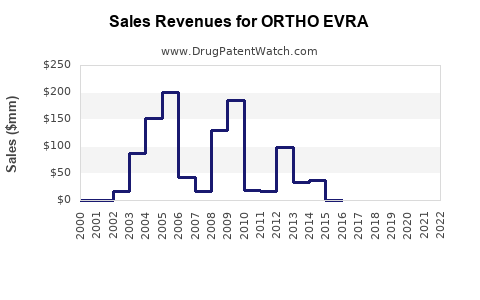
Ortho Evra generated its highest economic value during the early commercialization period, when the weekly patch format supported brand pricing and contraceptive demand was largely supplied by branded products.
A precise standalone revenue series is unavailable because Johnson & Johnson reported the product within broader pharmaceutical or women’s-health categories rather than disclosing annual Ortho Evra revenue in its public financial statements. This limits direct calculation of product-level revenue, margin and return on investment.
Commercial trajectory
| Phase |
Market condition |
Financial effect |
| Launch period |
New weekly contraceptive format with limited direct patch competition |
Premium pricing and rapid adoption potential |
| Growth period |
Broad physician awareness and convenience-driven demand |
Strong branded revenue contribution within women’s health |
| Safety scrutiny |
Higher estrogen exposure becomes a prescribing concern |
Slower growth, switching and higher legal costs |
| Generic entry |
Xulane and other lower-cost products enter |
Price erosion and loss of brand share |
| Mature market |
Patch remains available but Ortho Evra brand recedes |
Minimal or no material current revenue for the original sponsor |
The economic profile changed in three ways:
- Volume moved from the originator to generic suppliers.
- Average selling prices declined.
- The cost base shifted from commercial expansion to regulatory, legal and portfolio-management activity.
Johnson & Johnson’s current pharmaceutical growth is driven by products such as oncology, immunology, neuroscience and cardiovascular medicines, not Ortho Evra. The patch is immaterial to current consolidated revenue.
How strong is the Ortho Evra patent estate?
The estate was commercially strong during the early market period but weak as a current barrier.
Historical strengths
- First-mover position in the U.S. contraceptive patch market
- Integrated formulation and device claims
- FDA-approved weekly dosing regimen
- Manufacturing know-how involving adhesives and hormone release
- Brand recognition among prescribers and patients
Current weaknesses
- Principal exclusivity has expired or no longer prevents generic substitution
- The underlying hormones are established small molecules
- The delivery concept is technically reproducible
- Generic substitution is straightforward once FDA requirements are met
- No active Ortho Evra brand investment supports premium pricing
- The safety profile creates a disadvantage relative to lower-estrogen or non-estrogen alternatives
The remaining intellectual-property value is more likely to reside in manufacturing know-how, process consistency, adhesion performance and supply-chain control than in enforceable market exclusivity.
What generic entry risks existed for Ortho Evra?
Generic entry risk was high because the product had the characteristics favored by an ANDA pathway:
- A defined active-ingredient combination
- A standardized dosage form
- A clear reference product
- Established pharmacologic equivalence requirements
- A market with predictable contraceptive demand
- Limited clinical differentiation after approval
An ANDA applicant still had to address transdermal performance, adhesion, delivery rate, manufacturing consistency and labeling. Those requirements created execution risk, but they did not create a durable barrier comparable to a biologic, complex injectable or highly individualized delivery system.
The principal generic-launch scenarios were:
| Scenario |
Market result |
| Single generic entrant |
Moderate price reduction and rapid pharmacy substitution |
| Multiple generic entrants |
Steeper price erosion and limited brand retention |
| Supply disruption |
Temporary pricing power for available suppliers |
| Safety-driven prescribing shift |
Structural decline in the estrogen patch category |
| New differentiated patch |
Potential premium segment, but requiring new clinical and regulatory support |
What regulatory status does the Ortho Evra product have now?
The original Ortho Evra product is not the leading marketed U.S. contraceptive patch. Current prescribing and dispensing activity centers on generic norelgestromin/ethinyl estradiol systems, particularly Xulane.
The FDA-approved product category remains established. FDA labeling continues to address the same core safety issues associated with combined hormonal contraception, including thrombotic risk and contraindications.[1]
The regulatory pathway is important because a generic patch must demonstrate pharmaceutical equivalence and bioequivalence under FDA requirements for a transdermal system. FDA’s product-specific guidance and ANDA review standards can make transdermal products more complex than conventional tablets, but the category remains accessible to experienced generic manufacturers.[4]
How does Ortho Evra compare with Xulane and other contraceptive products?
| Factor |
Ortho Evra |
Xulane |
Oral contraceptives |
Long-acting contraceptives |
| Dosing frequency |
Weekly |
Weekly |
Daily |
Months to years |
| Brand status |
Legacy/discontinued commercial role |
Active generic or branded-generic role |
Predominantly generic |
Mix of branded and generic |
| Estrogen exposure concern |
Material |
Comparable class concern |
Product-specific |
Depends on product |
| Adherence advantage |
High versus daily pills |
High versus daily pills |
Lower |
Highest |
| Price position |
Historical premium |
Lower-cost |
Often lowest |
Higher upfront cost |
| Patent barrier |
Largely exhausted |
Limited current differentiation |
Product-specific |
Product-specific |
| Main commercial risk |
Brand obsolescence |
Price competition and supply |
Crowded market |
Procedure, access and reimbursement |
Xulane has the strongest direct commercial relationship to Ortho Evra because it preserves the same dosage form and active-ingredient combination. Long-acting methods pose the greatest strategic threat because they reduce adherence concerns and have high continuation rates, although they require insertion or administration by a healthcare professional.
What licensing deals affected Ortho Evra?
The product’s commercial history was primarily associated with Johnson & Johnson’s internal pharmaceutical and women’s-health operations. The major market transition involved commercialization and generic rights rather than a high-profile external licensing transaction that continues to drive value today.
Mylan’s acquisition of rights and subsequent commercialization of Xulane shifted economic participation from the originator to a generic manufacturer. The later Mylan-Upjohn combination placed Xulane within Viatris’ portfolio.
There is no current evidence that an Ortho Evra-specific licensing arrangement creates material residual revenue for Johnson & Johnson.
What patent litigation affected Ortho Evra?
Ortho Evra faced litigation related mainly to alleged inadequate warnings, thrombotic events and product safety. These cases were generally product-liability matters rather than Paragraph IV patent litigation.
The distinction matters:
- Product-liability litigation addressed alleged patient injury and disclosure.
- Paragraph IV litigation would have concerned a generic applicant’s certification that an Orange Book patent was invalid, unenforceable or not infringed.
- The market’s eventual genericization indicates that patent protection did not sustain a long-term barrier.
No current patent litigation involving the original Ortho Evra brand appears to have material influence on U.S. market access. The commercial contest has shifted to generic pricing, manufacturing capacity, reimbursement and supply reliability.
What is the revenue exposure and investment outlook for Ortho Evra?
Current revenue exposure for Johnson & Johnson is effectively immaterial. The product’s historical value was meaningful within women’s health, but it does not represent a current growth asset.
For generic manufacturers, the market remains commercially relevant but structurally limited:
- Demand is recurring but mature.
- Pricing is constrained by substitution.
- The active ingredients are well established.
- Regulatory and manufacturing complexity is higher than for simple oral solids.
- Safety concerns limit expansion of the combined hormonal patch segment.
- Supply reliability can matter more than brand marketing.
The highest-value opportunities are likely to involve differentiated transdermal delivery, lower systemic estrogen exposure, improved adhesion, longer dosing intervals or non-estrogen technology. A manufacturer relying only on the legacy Ortho Evra formulation has limited pricing power.
Key Takeaways
- Ortho Evra was FDA-approved in 2001 and introduced the weekly contraceptive patch to the U.S. mass market.
- Its active ingredients are norelgestromin and ethinyl estradiol.
- Safety concerns over higher systemic estrogen exposure weakened adoption and increased legal and regulatory pressure.
- Generic competition, led by Xulane, replaced the original brand in the U.S. market.
- The original patent estate no longer creates a material current barrier to generic entry.
- Johnson & Johnson does not disclose a current standalone Ortho Evra revenue stream.
- The product’s residual commercial value lies in the established patch category, not in the Ortho Evra brand.
- Current competitive risks include oral contraceptive generics, long-acting contraceptives, lower-estrogen products and further price erosion.
- The principal remaining barriers are transdermal manufacturing, adhesion performance, regulatory compliance and supply reliability.
- Ortho Evra-related litigation is primarily historical product-liability litigation, not an active patent dispute shaping market access.
FAQs About Ortho Evra Market and Patent Status
Is Ortho Evra still available in the United States?
Ortho Evra is no longer the principal marketed U.S. product. Xulane and other norelgestromin/ethinyl estradiol transdermal systems supply the relevant market.
Is Xulane the same as Ortho Evra?
Xulane is the generic successor to Ortho Evra and uses the same active-ingredient combination and weekly patch concept. Differences may exist in inactive ingredients, manufacturing and labeling details.
Did Ortho Evra have higher estrogen exposure than birth-control pills?
FDA labeling identified higher overall estrogen exposure compared with a typical 35-microgram ethinyl estradiol oral contraceptive. The warning affected prescribing decisions and product demand.[1]
Can a generic manufacturer launch another Ortho Evra-type patch?
Yes, subject to FDA approval, patent certification requirements, bioequivalence, transdermal delivery testing, adhesion performance and manufacturing controls. The main commercial barrier is market economics rather than an active Ortho Evra brand monopoly.
Does Ortho Evra still contribute materially to Johnson & Johnson revenue?
No. Johnson & Johnson does not report Ortho Evra as a material current revenue driver. The product has been displaced by generic contraceptive patches and newer contraceptive technologies.
References
-
U.S. Food and Drug Administration. (2023). Xulane (norelgestromin and ethinyl estradiol) transdermal system prescribing information. FDA.
-
U.S. Food and Drug Administration. (2024). Approved drug products with therapeutic equivalence evaluations: Orange Book. FDA.
-
Johnson & Johnson. (2001-2015). Annual reports and Form 10-K filings. Johnson & Johnson.
-
U.S. Food and Drug Administration. (2021). Draft guidance on norelgestromin and ethinyl estradiol transdermal system: Product-specific guidance. FDA.