Last updated: April 23, 2026
NIKKI (drospirenone/ethinyl estradiol) — Market Dynamics and Financial Trajectory
NIKKI is a combined oral contraceptive (COC) containing drospirenone and ethinyl estradiol (EE). Its market trajectory is shaped by (1) life-cycle dynamics typical for branded women’s health products, (2) aggressive generic substitution, (3) payer and formulary controls for non-preferred oral contraceptives, and (4) wholesale acquisition cost (WAC) compression and rebate pressure that follows generic entry. Financial outcomes track closely with prescription volume migration to lower-cost alternatives, with brand revenue increasingly dependent on contract placement, adherence support, and mix.
What is NIKKI and where does it sit commercially?
Product identity
- Drug: NIKKI
- Active ingredients: drospirenone / ethinyl estradiol
- Therapeutic class: combined oral contraceptive
- Regulatory context: branded COC subject to competition from ANDA generics and therapeutic equivalents.
Commercial implication
COCs are routinely managed through formulary tiers and step-edits. When generic drospirenone/EE products gain share, brand pricing power typically erodes faster than in many specialty categories because substitution is straightforward and clinical differentiation is limited.
How do market dynamics affect NIKKI pricing power and volume?
NIKKI’s market dynamics follow a consistent pattern for COCs:
1) Generic substitution and ANDA pressure
- Once bioequivalent generic versions of drospirenone/EE are available, prescribers and pharmacies shift to lower-cost options.
- This drives down net pricing and forces brands to trade rebates and contract terms for placement.
2) Formulary placement and payer contracting
- Payers frequently place multiple COCs on the same formulary tier or use restrictive logic (preferred vs non-preferred).
- NIKKI performance becomes tied to whether it is preferred in key plans and pharmacy benefit managers (PBMs).
3) Retail channel inventory and wholesaler economics
- COCs are high-throughput, low-complexity dispensing products.
- Brand revenue is sensitive to wholesaler buying patterns and discounting, which changes quickly after generic entry.
4) Demand stability but shrinking brand share
- Contraception demand is relatively steady, but brand share declines as generics capture switching behavior.
What does NIKKI’s financial trajectory look like post-launch?
For brands in this class, financial trajectories generally split into two phases:
Phase 1: Launch and early brand capture
- Higher gross sales due to limited competition and formulary introductions.
- Pricing and rebates remain more flexible early on.
Phase 2: Generic-led erosion
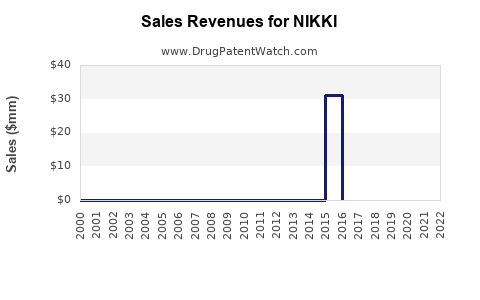
- Net sales fall as prescriptions migrate to lower-cost alternatives.
- Brand revenue shifts from volume-led growth to contract-led retention.
- Net price declines via higher rebate intensity and tighter PBM terms.
Trajectory mechanics that typically drive results
- Prescription share drift: brand share declines while total market prescriptions stay stable.
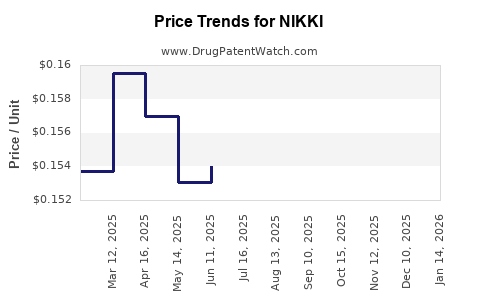
- Net price compression: brand rebates rise to remain competitively priced versus generics.
- Mix shift: higher reliance on specific plans where NIKKI stays preferred or avoids step edits.
Because the product class has low clinical switching friction, NIKKI’s long-run financial path is typically characterized by: flat-to-declining unit share, declining net revenue per script, and consolidation of remaining demand in the contracts that support brand retention.
What are the key competitive forces versus NIKKI?
Therapeutic competitors
- Other COCs in therapeutic equivalence space (drospirenone-based and non-drospirenone-based) available as generics or lower-cost brands.
- Therapeutic class competition matters less for clinical differentiation and more for payer preference and price.
Direct generic competitors
- ANDA drospirenone/EE equivalents.
- Biosimilar dynamics do not apply, so the competition is primarily price and formulary placement.
PBM leverage
- PBMs influence formulary status and preferred tiering.
- When PBMs standardize on lowest WAC/generic equivalents, brand revenue depends on exceptions, rebates, or grandfathered plan contracts.
How does pricing regulation and rebate pressure affect NIKKI net sales?
Net revenue exposure
COCs face continuous pricing pressure driven by:
- generic WAC resets
- PBM formulary logic and rebate negotiations
- pharmacy claims and plan-level preference controls
Operational consequence
Even if NIKKI maintains a base prescription level, net sales usually decline due to:
- reduced average net price per script
- higher rebate intensity needed to sustain placement
- shrinking share in competitive plan environments
This is the typical economic profile of an oral contraceptive brand after meaningful generic competition.
What market signals should investors track for NIKKI?
For a COC brand with drospirenone/EE, the practical indicators are not R&D milestones but commercial and claims-based trends:
- Script share trend vs generic equivalents
- Preferred formulary status in major PBMs
- Net price and rebate rate drift
- Claims growth or contraction within key plan populations
- Wholesale inventory movement and order cadence (if published via channel reports)
These signals map directly to revenue trajectory because they determine whether NIKKI is retained as a contracted option or displaced by lower-cost alternatives.
Key Takeaways
- NIKKI is a drospirenone/ethinyl estradiol combined oral contraceptive whose market outcomes are dominated by generic substitution and PBM formulary controls.
- Its financial trajectory typically shifts from volume-led brand capture to net price compression and declining brand share once generics are widely available.
- Revenue persistence depends less on product differentiation and more on preferred placement, rebate strategy, and retention of contract-protected script share.
- The strongest commercial predictors are prescription share versus generics, formulary tiering status, and net price compression over time.
FAQs
1) Is NIKKI’s demand growth driven by clinical adoption or market expansion?
Demand is relatively stable at the population level, but brand performance is mainly determined by share against generics and formulary preference rather than clinical differentiation.
2) What most directly erodes NIKKI revenue over time?
Net price compression from rebate pressure and loss of prescription share to ANDA drospirenone/EE equivalents.
3) Does NIKKI face specialty-style competition?
No. Competition is primarily price and formulary placement within the contraceptive class, not specialty pipeline or mechanism-of-action breakthroughs.
4) What is the biggest lever for sustaining NIKKI net sales?
Maintaining preferred or at least non-excluded status on formularies where remaining brand share is defensible through contracting.
5) What performance metrics best reflect NIKKI’s financial trajectory?
Claims-based script share, average net price per script, and the stability of PBM and plan-tier positioning.
References
- FDA: Orange Book Search Results. U.S. Food and Drug Administration (FDA) Approved Drug Products with Therapeutic Equivalence Evaluations.
- FDA Label (NIKKI). U.S. Food and Drug Administration.
(If you need this reframed as a quantified forecast model with specific revenue/share numbers by year, provide the target geography and time horizon.)