MEKINIST Drug Patent Profile
✉ Email this page to a colleague
When do Mekinist patents expire, and what generic alternatives are available?
Mekinist is a drug marketed by Novartis and is included in two NDAs. There are eight patents protecting this drug and two Paragraph IV challenges.
The generic ingredient in MEKINIST is trametinib dimethyl sulfoxide. There is one drug master file entry for this compound. One supplier is listed for this compound. Additional details are available on the trametinib dimethyl sulfoxide profile page.
DrugPatentWatch® Generic Entry Outlook for Mekinist
Mekinist was eligible for patent challenges on May 29, 2017.
By analyzing the patents and regulatory protections it appears that the earliest date
for generic entry will be March 16, 2030. This may change due to patent challenges or generic licensing.
There have been eight patent litigation cases involving the patents protecting this drug, indicating strong interest in generic launch. Recent data indicate that 63% of patent challenges are decided in favor of the generic patent challenger and that 54% of successful patent challengers promptly launch generic drugs.
Indicators of Generic Entry
AI Deep Research
Questions you can ask:
- What is the 5 year forecast for MEKINIST?
- What are the global sales for MEKINIST?
- What is Average Wholesale Price for MEKINIST?
Summary for MEKINIST
| US Patents: | 8 |
| Applicants: | 1 |
| NDAs: | 2 |
| Finished Product Suppliers / Packagers: | 1 |
| Raw Ingredient (Bulk) Api Vendors: | 1 |
| Clinical Trials: | 92 |
| Patent Applications: | 6,631 |
| Drug Prices: | Drug price information for MEKINIST |
| Patent Litigation and PTAB cases: | See patent lawsuits and PTAB cases for MEKINIST |
| What excipients (inactive ingredients) are in MEKINIST? | MEKINIST excipients list |
| DailyMed Link: | MEKINIST at DailyMed |
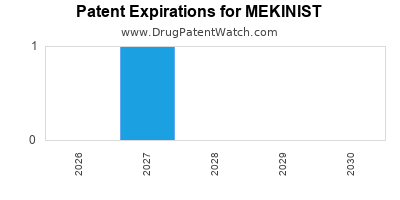

DrugPatentWatch® Estimated Loss of Exclusivity (LOE) Date for MEKINIST
Generic Entry Dates for MEKINIST*:
Constraining patent/regulatory exclusivity:
TREATMENT OF PEDIATRIC PATIENTS 1 YEAR OF AGE AND OLDER WITH LOW-GRADE GLIOMA (LGG) WITH A BRAF V600E MUTATION WHO REQUIRE SYSTEMIC THERAPY NDA:
Dosage:
SOLUTION;ORAL |
Generic Entry Dates for MEKINIST*:
Constraining patent/regulatory exclusivity:
NDA:
Dosage:
TABLET;ORAL |
*The generic entry opportunity date is the latter of the last compound-claiming patent and the last regulatory exclusivity protection. Many factors can influence early or later generic entry. This date is provided as a rough estimate of generic entry potential and should not be used as an independent source.
Recent Clinical Trials for MEKINIST
Identify potential brand extensions & 505(b)(2) entrants
| Sponsor | Phase |
|---|---|
| Erasca, Inc. | Phase 1 |
| University of Miami Sylvester Comprehensive Cancer Center | Phase 1 |
| Peter Hosein, MD | Phase 1 |
Pharmacology for MEKINIST
| Drug Class | Kinase Inhibitor |
| Mechanism of Action | Protein Kinase Inhibitors |
Paragraph IV (Patent) Challenges for MEKINIST
| Tradename | Dosage | Ingredient | Strength | NDA | ANDAs Submitted | Submissiondate |
|---|---|---|---|---|---|---|
| MEKINIST | Tablets | trametinib dimethyl sulfoxide | 1 mg | 204114 | 1 | 2026-08-31 |
| MEKINIST | Tablets | trametinib dimethyl sulfoxide | 0.5 mg and 2 mg | 204114 | 1 | 2023-09-28 |
US Patents and Regulatory Information for MEKINIST
MEKINIST is protected by eight US patents and five FDA Regulatory Exclusivities.
Based on analysis by DrugPatentWatch, the earliest date for a generic version of MEKINIST is ⤷ Start Trial.
This potential generic entry date is based on TREATMENT OF PEDIATRIC PATIENTS 1 YEAR OF AGE AND OLDER WITH LOW-GRADE GLIOMA (LGG) WITH A BRAF V600E MUTATION WHO REQUIRE SYSTEMIC THERAPY.
Generics may enter earlier, or later, based on new patent filings, patent extensions, patent invalidation, early generic licensing, generic entry preferences, and other factors.
International Patents for MEKINIST
When does loss-of-exclusivity occur for MEKINIST?
Based on analysis by DrugPatentWatch, the following patents block generic entry in the countries listed below:
Argentina
Patent: 4102
Patent: COMPRIMIDO FARMACEUTICO QUE COMPRENDE EL SOLVATO DE DIMETILSULFOXIDO DE LA N-{3-[3-CICLOPROPIL-5-(2-FLUORO-4-YODO-FENILAMINO)-6,8-DIMETIL-2,4,7-TRIOXO-3,4,6,7-TETRAHIDRO-2H-PIRIDO[4,3-D]PIRIMIDIN-1-IL]FENIL}ACETAMIDA, SU USO PARA PREPARAR UN MEDICAMENTO UTIL PARA TRATAR EL CANCER EN UN SER HUMANO Y PROCEDIMIENTO PARA PREPARAR DICHOS COMPRIMIDOS
Estimated Expiration: ⤷ Start Trial
Patent: 2185
Patent: COMPRIMIDO FARMACÉUTICO QUE COMPRENDE EL SOLVATO DE DIMETILSULFÓXIDO DE LA N-3-[3-CICLOPROPIL-5-(2-FLUORO-4-YODO-FENILAMINO)-6,8-DIMETIL-2,4,7-TRIOXO-3,4,6,7-TETRAHIDRO-2H-PIRIDO[4,3-D]PIRIMIDIN-1-IL]FENILACETAMIDA, SU USO PARA PREPARAR UN MEDICAMENTO ÚTIL PARA TRATAR EL CÁNCER EN UN SER HUMANO Y PROCEDIMIENTO PARA PREPARAR DICHOS COMPRIMIDOS
Estimated Expiration: ⤷ Start Trial
Australia
Patent: 11349422
Patent: Novel pharmaceutical composition
Estimated Expiration: ⤷ Start Trial
Brazil
Patent: 2013015602
Patent: nova composição farmacèutica
Estimated Expiration: ⤷ Start Trial
Canada
Patent: 22701
Patent: NOUVELLE COMPOSITION PHARMACEUTIQUE (NOVEL PHARMACEUTICAL COMPOSITION)
Estimated Expiration: ⤷ Start Trial
Chile
Patent: 13001779
Patent: Comprimido farmaceutico que comprende el solvato de dimetilsulfoxido de n-{3-[3-ciclopropil-5-(2-fluoro-4-yodo-fenilamino)-6,8-dimetil-2,4,7-trioxo-3,4,6,7-tetrahidro-2h-pirido[4,3-d]pirimidin-1-il]fenil}acetamida; procedimiento de preparacion; y su uso para tratar el cancer.
Estimated Expiration: ⤷ Start Trial
China
Patent: 3998041
Patent: 药物组合物 (Novel pharmaceutical composition)
Estimated Expiration: ⤷ Start Trial
Costa Rica
Patent: 130352
Patent: NUEVA COMPOSICIÓN FARMACEUTICA
Estimated Expiration: ⤷ Start Trial
Croatia
Patent: 0201409
Estimated Expiration: ⤷ Start Trial
Patent: 0240563
Estimated Expiration: ⤷ Start Trial
Patent: 0240564
Estimated Expiration: ⤷ Start Trial
Cyprus
Patent: 23376
Estimated Expiration: ⤷ Start Trial
Denmark
Patent: 54736
Estimated Expiration: ⤷ Start Trial
Patent: 59204
Estimated Expiration: ⤷ Start Trial
Patent: 59205
Estimated Expiration: ⤷ Start Trial
Dominican Republic
Patent: 013000138
Patent: NUEVA COMPOSICIÓN FARMACÉUTICA
Estimated Expiration: ⤷ Start Trial
Eurasian Patent Organization
Patent: 5198
Patent: НОВАЯ ФАРМАЦЕВТИЧЕСКАЯ КОМПОЗИЦИЯ (PHARMACEUTICAL TABLET, PROCESS FOR PREPARING THE SAME AND METHOD OF TREATING CANCER)
Estimated Expiration: ⤷ Start Trial
Patent: 1390913
Patent: ФАРМАЦЕВТИЧЕСКАЯ ТАБЛЕТКА, СПОСОБ ЕЁ ПОЛУЧЕНИЯ И СПОСОБ ЛЕЧЕНИЯ РАКА (PHARMACEUTICAL TABLET, PROCESS FOR PREPARING THE SAME AND METHOD OF TREATING CANCER)
Estimated Expiration: ⤷ Start Trial
European Patent Office
Patent: 54736
Patent: NOUVELLE COMPOSITION PHARMACEUTIQUE (NOVEL PHARMACEUTICAL COMPOSITION)
Estimated Expiration: ⤷ Start Trial
Patent: 08343
Patent: NOUVELLE COMPOSITION PHARMACEUTIQUE (NOVEL PHARMACEUTICAL COMPOSITION)
Estimated Expiration: ⤷ Start Trial
Patent: 59204
Patent: NOUVELLE COMPOSITION PHARMACEUTIQUE (NOVEL PHARMACEUTICAL COMPOSITION)
Estimated Expiration: ⤷ Start Trial
Patent: 59205
Patent: NOUVELLE COMPOSITION PHARMACEUTIQUE (NOVEL PHARMACEUTICAL COMPOSITION)
Estimated Expiration: ⤷ Start Trial
Finland
Patent: 59204
Estimated Expiration: ⤷ Start Trial
Patent: 59205
Estimated Expiration: ⤷ Start Trial
Hungary
Patent: 50788
Estimated Expiration: ⤷ Start Trial
Patent: 66525
Estimated Expiration: ⤷ Start Trial
Patent: 66526
Estimated Expiration: ⤷ Start Trial
Israel
Patent: 6855
Patent: תכשיר רוקחי (Pharmaceutical composition)
Estimated Expiration: ⤷ Start Trial
Japan
Patent: 26014
Estimated Expiration: ⤷ Start Trial
Patent: 14510704
Patent: 新規医薬組成物
Estimated Expiration: ⤷ Start Trial
Patent: 17137299
Patent: 新規医薬組成物 (NOVEL PHARMACEUTICAL COMPOSITION)
Estimated Expiration: ⤷ Start Trial
Jordan
Patent: 94
Patent: تركيبة صيدلانية جديدة (NOVEL PHARMACEUTICAL COMPOSITION)
Estimated Expiration: ⤷ Start Trial
Lithuania
Patent: 54736
Estimated Expiration: ⤷ Start Trial
Patent: 59204
Estimated Expiration: ⤷ Start Trial
Patent: 59205
Estimated Expiration: ⤷ Start Trial
Malaysia
Patent: 0501
Patent: NOVEL PHARMACEUTICAL COMPOSITION
Estimated Expiration: ⤷ Start Trial
Mexico
Patent: 13007073
Patent: NUEVA COMPOSICION FARMACEUTICA. (NOVEL PHARMACEUTICAL COMPOSITION.)
Estimated Expiration: ⤷ Start Trial
Morocco
Patent: 883
Patent: NOUVELLE COMPOSITION PHARMACEUTIQUE
Estimated Expiration: ⤷ Start Trial
New Zealand
Patent: 2157
Patent: Solid oral dosage form for treating cancer
Estimated Expiration: ⤷ Start Trial
Peru
Patent: 140040
Patent: COMPOSICION FARMACEUTICA QUE COMPRENDE UN INHIBIDOR DE LA ACTIVIDAD DE MEK
Estimated Expiration: ⤷ Start Trial
Philippines
Patent: 013501209
Patent: NOVEL PHARMACEUTICAL COMPOSITION
Estimated Expiration: ⤷ Start Trial
Poland
Patent: 54736
Estimated Expiration: ⤷ Start Trial
Patent: 59204
Estimated Expiration: ⤷ Start Trial
Patent: 59205
Estimated Expiration: ⤷ Start Trial
Portugal
Patent: 54736
Estimated Expiration: ⤷ Start Trial
Patent: 59204
Estimated Expiration: ⤷ Start Trial
Patent: 59205
Estimated Expiration: ⤷ Start Trial
Serbia
Patent: 496
Patent: NOVA FARMACEUTSKA SUPSTANCA (NOVEL PHARMACEUTICAL COMPOSITION)
Estimated Expiration: ⤷ Start Trial
Patent: 497
Patent: NOVA FARMACEUTSKA SUPSTANCA (NOVEL PHARMACEUTICAL COMPOSITION)
Estimated Expiration: ⤷ Start Trial
Singapore
Patent: 1054
Patent: NOVEL PHARMACEUTICAL COMPOSITION
Estimated Expiration: ⤷ Start Trial
Slovenia
Patent: 54736
Estimated Expiration: ⤷ Start Trial
Patent: 59204
Estimated Expiration: ⤷ Start Trial
Patent: 59205
Estimated Expiration: ⤷ Start Trial
South Africa
Patent: 1304189
Patent: NOVEL PHARMACEUTICAL COMPOSITION
Estimated Expiration: ⤷ Start Trial
South Korea
Patent: 1911109
Estimated Expiration: ⤷ Start Trial
Patent: 130130028
Patent: 신규 제약 조성물 (NOVEL PHARMACEUTICAL COMPOSITION)
Estimated Expiration: ⤷ Start Trial
Spain
Patent: 20536
Estimated Expiration: ⤷ Start Trial
Patent: 82775
Estimated Expiration: ⤷ Start Trial
Patent: 85024
Estimated Expiration: ⤷ Start Trial
Taiwan
Patent: 1249441
Patent: Novel pharmaceutical composition
Estimated Expiration: ⤷ Start Trial
Patent: 05828
Estimated Expiration: ⤷ Start Trial
Ukraine
Patent: 3158
Estimated Expiration: ⤷ Start Trial
Uruguay
Patent: 818
Patent: NUEVA COMPOSICION FARMACEUTICA
Estimated Expiration: ⤷ Start Trial
Generics may enter earlier, or later, based on new patent filings, patent extensions, patent invalidation, early generic licensing, generic entry preferences, and other factors.
See the table below for additional patents covering MEKINIST around the world.
| Country | Patent Number | Title | Estimated Expiration |
|---|---|---|---|
| Australia | 2013313050 | ⤷ Start Trial | |
| Australia | 2016244279 | ⤷ Start Trial | |
| Brazil | 112015004578 | ⤷ Start Trial | |
| Canada | 2882437 | ⤷ Start Trial | |
| China | 104582706 | ⤷ Start Trial | |
| China | 107308164 | ⤷ Start Trial | |
| Cyprus | 1124812 | ⤷ Start Trial | |
| >Country | >Patent Number | >Title | >Estimated Expiration |
Supplementary Protection Certificates for MEKINIST
| Patent Number | Supplementary Protection Certificate | SPC Country | SPC Expiration | SPC Description |
|---|---|---|---|---|
| 1761528 | C300701 | Netherlands | ⤷ Start Trial | PRODUCT NAME: TRAMETINIB, DESGEWENST IN DE VORM VAN EEN FRAMACEUTISCH AANVAARDBAAR ZOUT, HYDRAAT OF SOLVAAT DAARVAN; REGISTRATION NO/DATE: EU/1/14/931/01-06 20140702 |
| 1761528 | PA2014039 | Lithuania | ⤷ Start Trial | PRODUCT NAME: TRAMETINIBUM; REGISTRATION NO/DATE: EU/1/14/931/01-06 20140630 |
| 1761528 | CA 2014 00055 | Denmark | ⤷ Start Trial | PRODUCT NAME: TRAMETINIB, EVENTUELT I FORM AF ET FARMACEUTISK ACCEPTABELT SALT, HYDRAT ELLER SOLVAT DERAF, HERUNDER TRAMETINIBDIMETHYLSULFOXID; REG. NO/DATE: EU/1/14/931/01-06 20140630 |
| 1761528 | 14C0083 | France | ⤷ Start Trial | PRODUCT NAME: TRAMETINIB,EVENTUELLEMENT SOUS LA FORME D'UN SEL,HYDRATE OU SOLVATE PHARMACEUTIQUEMENT ACCEPTABLE DE CELUI-CI; REGISTRATION NO/DATE: EU/1/14/931 20140630 |
| 1761528 | C20140036 00120 | Estonia | ⤷ Start Trial | CHANGE OF OWNER'S ADDRESS |
| 1761528 | 1490063-3 | Sweden | ⤷ Start Trial | PRODUCT NAME: TRAMETINIB, OPTIONALLY IN THE FORM OF A PHARMACEUTICALLY ACCEPTABLE SALT, HYDRATE OR SOLVATE THEREOF; REG. NO/DATE: EU/1/14/931 20140702 |
| 1761528 | 205 5032-2014 | Slovakia | ⤷ Start Trial | PRODUCT NAME: TRAMETINIB, PRIPADNE VO FORME JEHO FARMACEUTICKY PRIJATELNEJ SOLI, HYDRATU ALEBO SOLVATU; REGISTRATION NO/DATE: EU/1/14/931 20140702 |
| >Patent Number | >Supplementary Protection Certificate | >SPC Country | >SPC Expiration | >SPC Description |
Mekinist (trametinib) Market Dynamics and Financial Trajectory: Sales Trends, Pricing Pressure, Patent Cliff Risk, and Competitive Threats
More… ↓
DrugChatter Q&A for MEKINIST
Make Better Decisions: Try a trial or see plans & pricing
Drugs may be covered by multiple patents or regulatory protections. All trademarks and applicant names are the property of their respective owners or licensors. Although great care is taken in the proper and correct provision of this service, thinkBiotech LLC does not accept any responsibility for possible consequences of errors or omissions in the provided data. The data presented herein is for information purposes only. There is no warranty that the data contained herein is error free. We do not provide individual investment advice. This service is not registered with any financial regulatory agency. The information we publish is educational only and based on our opinions plus our models. By using DrugPatentWatch you acknowledge that we do not provide personalized recommendations or advice. thinkBiotech performs no independent verification of facts as provided by public sources nor are attempts made to provide legal or investing advice. Any reliance on data provided herein is done solely at the discretion of the user. Users of this service are advised to seek professional advice and independent confirmation before considering acting on any of the provided information. thinkBiotech LLC reserves the right to amend, extend or withdraw any part or all of the offered service without notice.
ISSN: 2162-2639

Privacy and Cookies
Terms & Conditions
Site Map
DrugPatentWatch Alternatives
LOE / Major Patent Expirations 2026 - 2027
NCE-1 Patent Challenge Dates 2026 - 2027
Friedman, Yali. "DrugPatentWatch" DrugPatentWatch, thinkBiotech, 2026, www.DrugPatentWatch.com.
See Primary Research Papers Citing DrugPatentWatch