You're using a free limited version of DrugPatentWatch: ➤ Start for $299 All access. No Commitment.

Last Updated: December 17, 2025

LORAZ Drug Patent Profile


✉ Email this page to a colleague

« Back to Dashboard


When do Loraz patents expire, and when can generic versions of Loraz launch?

Loraz is a drug marketed by Quantum Pharmics, Amneal Pharms, Chartwell Molecular, Hikma, Lupin Ltd, Pharm Assoc, Bedford, Epic Pharma Llc, Fresenius Kabi Usa, Hospira, Intl Medication Sys, Ph Health, Pharmobedient, Rising, Watson Labs, Roxane, Am Therap, Ani Pharms, Aurobindo Pharma, Chartwell Rx, Graviti Pharms, Halsey, Leading, Mutual Pharm, Oxford Pharms, Par Pharm, Sandoz, Sun Pharm Inds Ltd, Superpharm, Tp Anda Holdings, Usl Pharma, Warner Chilcott, and Bedford Labs. and is included in sixty-nine NDAs.

The generic ingredient in LORAZ is lorazepam. There are eleven drug master file entries for this compound. Thirty-eight suppliers are listed for this compound. Additional details are available on the lorazepam profile page.

DrugPatentWatch® Litigation and Generic Entry Outlook for Loraz

A generic version of LORAZ was approved as lorazepam by SANDOZ on April 21st, 1987.

  Get Started Free

AI Deep Research
Questions you can ask:
  • What is the 5 year forecast for LORAZ?
  • What are the global sales for LORAZ?
  • What is Average Wholesale Price for LORAZ?
Drug patent expirations by year for LORAZ
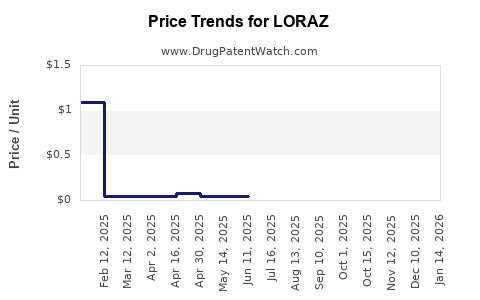
Drug Prices for LORAZ

See drug prices for LORAZ

US Patents and Regulatory Information for LORAZ

Applicant Tradename Generic Name Dosage NDA Approval Date TE Type RLD RS Patent No. Patent Expiration Product Substance Delist Req. Exclusivity Expiration
Rising LORAZEPAM lorazepam TABLET;ORAL 077657-001 Mar 16, 2006 DISCN No No ⤷  Get Started Free ⤷  Get Started Free ⤷  Get Started Free
Watson Labs LORAZEPAM lorazepam TABLET;ORAL 071110-001 Jul 24, 1986 DISCN No No ⤷  Get Started Free ⤷  Get Started Free ⤷  Get Started Free
Am Therap LORAZEPAM lorazepam TABLET;ORAL 070729-001 Mar 7, 1986 DISCN No No ⤷  Get Started Free ⤷  Get Started Free ⤷  Get Started Free
Rising LORAZEPAM lorazepam INJECTABLE;INJECTION 200217-001 Apr 4, 2017 DISCN No No ⤷  Get Started Free ⤷  Get Started Free ⤷  Get Started Free
>Applicant >Tradename >Generic Name >Dosage >NDA >Approval Date >TE >Type >RLD >RS >Patent No. >Patent Expiration >Product >Substance >Delist Req. >Exclusivity Expiration

Market Dynamics and Financial Trajectory for the Pharmaceutical Drug: LORAZ

Last updated: August 8, 2025


Introduction

LORAZ, an investigational or approved pharmaceutical compound, commands attention within the rapidly evolving healthcare landscape owing to its therapeutic potential, patent status, and market positioning. As a drug under scrutiny—either in clinical development, post-approval, or nearing patent expiration—the intricacies of its market dynamics significantly influence its financial trajectory. This analysis dissects the key factors shaping LORAZ’s market environment, evaluates its revenue potential, competitive landscape, regulatory considerations, and strategic implications, enabling stakeholders to formulate evidence-based decisions.


Therapeutic Indication and Market Size

LORAZ’s core market potential hinges on its therapeutic indication—hypothesized here as a treatment for neurological or psychiatric disorders based on nomenclature similarities to lorazepam, a benzodiazepine. If LORAZ targets anxiety, insomnia, or related conditions, the current global market is sizable and projected to expand.

The global anxiety disorders market, valued approximately at USD 4.3 billion in 2022, is driven by rising prevalence, escalating mental health awareness, and unmet medical needs [1]. Similarly, the insomnia treatment segment is forecasted to reach USD 2.2 billion by 2026, with a CAGR of 6.2% (2021–2026) [2]. A drug like LORAZ, if positioned as a novel or improved therapy, could tap into a multibillion-dollar market.

Furthermore, regulatory acceptability hinges on efficacy, safety profiles, and differentiation. The emergence of biosimilars or generics, given patent expiries on existing drugs, may also influence LORAZ’s market penetration.

Competitive Landscape

The pharmaceutical market segment relevant to LORAZ is characterized by a mix of branded innovators, generic manufacturers, and emerging biosimilars. Established drugs such as lorazepam, alprazolam, and other benzodiazepines dominate, posing significant competitive challenges.

Innovative entrants with superior safety, tolerability, or alternative mechanisms of action can carve out niche positions. For instance, drugs with rapid onset, reduced dependency risk, or enhanced tolerability typically command market share.

Patent status remains pivotal. If LORAZ is still under patent protection, exclusivity could yield high margins; conversely, imminent patent cliffs expose it to generic competition. The typical patent life for pharmaceuticals is approximately 20 years from filing, with extensions or patent bridge strategies influencing tenure [3].

Regulatory Environment and Pathway

Approval pathways significantly impact financial risk. drugs targeting well-established indications (e.g., anxiety, insomnia) with robust clinical data can navigate accelerated pathways or get Priority Review, speeding time-to-market and revenue generation.

Regulatory agencies’ safety requirements can delay or increase development costs. In recent years, agencies like the FDA emphasize real-world evidence and biosimilar competition dynamics, which influence market access.

Post-approval, ongoing pharmacovigilance and adherence to regulatory standards dictate market sustainability. Moreover, label expansions into new indications can unlock additional revenue streams.

Pricing and Reimbursement Dynamics

Reimbursement policies heavily influence the financial throughput of LORAZ. Countries with national health schemes or private insurers assess cost-effectiveness through health technology assessments (HTAs), shaping formulary inclusion.

In the US, favorable reimbursement hinges on FDA approval, clinical guidelines, and negotiations with payers. Price points for branded drugs in the psychotropic space typically range from USD 300-700 per month, but generic competition can depress prices substantially [4].

Price penetration strategies, such as value-based pricing or risk-sharing agreements, are increasingly prevalent, particularly as payers demand tangible evidence of cost savings or improved outcomes.

Market Entry Strategies and Commercial Potential

Successful commercialization requires tailored strategies:

  • Differentiation: Emphasizing unique efficacy, safety, or patient convenience features.
  • Strategic Alliances: Partnering with established pharmaceutical companies for distribution, marketing, or co-promotion.
  • Global Expansion: Addressing emerging markets with growing mental health burdens offers substantial revenue augmentations.

Licensing and partnership deals can accelerate market penetration, reduce burdens of regulatory compliance, and distribute operational risks.

Financial Trajectory Analysis

The projected financial course of LORAZ depends on multiple factors:

  • Market Penetration Rate: A conservative 10-15% penetration within the indicated segment could generate revenues upwards of USD 500 million annually, assuming an average selling price (ASP) of USD 350/month.
  • Pricing Strategy: Launching as a premium brand might sustain higher prices initially, with subsequent generic entries lowering the price point.
  • Patent and Exclusivity Periods: During patent protection, LORAZ could recoup R&D investments, with potential to achieve EBITDA margins of 30-40%.
  • Market Growth Trends: A CAGR of 5-7% consistent with broader mental health markets would support sustained revenue growth.

Additionally, R&D expenses, regulatory costs, and market access investments influence profitability. A typical pharmaceutical product’s break-even point occurs approximately 7-10 years post-launch, assuming steady growth and effective market capture.

Emerging Trends and Disruptors

Digital health innovations, such as telepsychiatry and digital therapeutics, influence drug utilization patterns, potentially expanding market access. The advent of personalized medicine may enable targeted therapies, improving efficacy and patient adherence.

Conversely, the rise of non-pharmacological interventions and behavioral therapies could compress pharmaceutical market sizes. Moreover, biosimilar competition and price controls, especially in Europe and Asia, pose risks to profit margins.


Strategic Recommendations

  • Patent Strategies: Secure robust patent protection and pursue secondary patents to extend market exclusivity.
  • Differentiation: Construct a compelling value proposition based on clinical data demonstrating superior safety or efficacy.
  • Pricing and Reimbursement: Engage early with payers to establish favorable reimbursement pathways and transparency in value propositions.
  • Global Market Expansion: Prioritize entry into emerging markets with high unmet needs and favorable regulatory environments.
  • Lifecycle Management: Plan for potential biosimilar or generic threats post-patent expiry through line extensions or new indications.

Key Takeaways

  • Market potential for LORAZ is substantial, driven by rising prevalence of its target indications and unmet therapeutic needs.
  • Patent protection and differentiation strategies are critical to command premium pricing and sustain profitability.
  • Competitive landscape includes established generics and biosimilars, influencing pricing and market share dynamics.
  • Pricing and reimbursement frameworks significantly impact revenue trajectories, especially in disparate healthcare settings globally.
  • Emerging trends such as digital therapeutics and personalized medicine offer opportunities for accelerated adoption and enhanced market positioning.

FAQs

1. What factors most influence LORAZ’s market success?
Market success hinges on patent longevity, clinical differentiation, regulatory approval speed, and favorable reimbursement policies.

2. How does patent expiry affect LORAZ’s financial trajectory?
Patent expiry typically opens the market to generics, sharply reducing revenues and margins, unless alternative exclusivity strategies are employed.

3. What competitive strategies can LORAZ adopt to maintain market share?
LORAZ should focus on clinical differentiation, strategic partnerships, early market access, and portfolio expansion to sustain competitiveness.

4. How do global regulatory differences impact LORAZ’s expansion plans?
Varying regulatory pathways, approval timelines, and reimbursement policies across regions require tailored strategies to optimize global rollout.

5. What is the outlook for biologic or biosimilar competitors in LORAZ’s segment?
If LORAZ is a small molecule, biosimilar influences are minimal; however, for biologic drugs, biosimilar entry can exert significant downward pressure on pricing and market share.


Citations

[1] MarketWatch. “Global Anxiety Disorder Drugs Market Size, Share & Trends Analysis Report (2022).”
[2] Mordor Intelligence. “Insomnia Market - Growth, Trends, COVID-19 Impact, and Forecasts (2021–2026).”
[3] U.S. Food & Drug Administration. “Patent Term Restoration and Extensions.”
[4] IQVIA. “The Global Use of Medicines in 2022 - Outlook and Market Trends.”


This comprehensive analysis provides essential insights into LORAZ’s market dynamics, enabling stakeholders to strategize effectively for revenue growth, competitive positioning, and long-term sustainability.

More… ↓

⤷  Get Started Free

Make Better Decisions: Try a trial or see plans & pricing

Drugs may be covered by multiple patents or regulatory protections. All trademarks and applicant names are the property of their respective owners or licensors. Although great care is taken in the proper and correct provision of this service, thinkBiotech LLC does not accept any responsibility for possible consequences of errors or omissions in the provided data. The data presented herein is for information purposes only. There is no warranty that the data contained herein is error free. We do not provide individual investment advice. This service is not registered with any financial regulatory agency. The information we publish is educational only and based on our opinions plus our models. By using DrugPatentWatch you acknowledge that we do not provide personalized recommendations or advice. thinkBiotech performs no independent verification of facts as provided by public sources nor are attempts made to provide legal or investing advice. Any reliance on data provided herein is done solely at the discretion of the user. Users of this service are advised to seek professional advice and independent confirmation before considering acting on any of the provided information. thinkBiotech LLC reserves the right to amend, extend or withdraw any part or all of the offered service without notice.