Last updated: May 31, 2026
LAMICTAL XR market dynamics and financial trajectory: revenue drivers, patent risk, and competitive threats
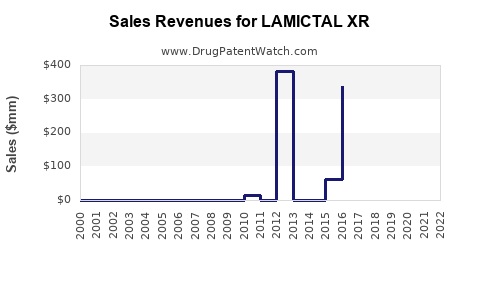
Lamictal XR (lamotrigine extended-release tablets) is an extended-release version of lamotrigine that maintains a long-running position in the U.S. anti-seizure market. The financial trajectory is shaped by (1) steady demand for brand lamotrigine across epilepsy subtypes, (2) substitution pressure from authorized and unbranded generics, (3) formulary access and contracting dynamics tied to NDC-level pricing, and (4) pipeline and competitive entry risk around extended-release and branded branded-vs-generic switches rather than primary patent-driven exclusivity alone.
Bottom line: Even with robust historical sales, LAMICTAL XR’s current market dynamics are dominated by generic erosion, pharmacy benefit manager (PBM) contracting, and physician switching. Any near-term upside depends less on innovation and more on managed-care retention, payer-specific rebates, and mix shifts (new starts versus switches, and claims tied to adherence benefits of ER dosing).
What is LAMICTAL XR and how does it fit in the lamotrigine epilepsy market?
Lamictal XR is an extended-release formulation of lamotrigine, used for epilepsy. In U.S. prescribing practice, lamotrigine is used in monotherapy and adjunctive therapy depending on patient profile, seizure type, and tolerability. Extended-release dosing is generally positioned around adherence, steadier exposure, and reduced dosing frequency versus immediate-release.
How does ER dosing change prescribing behavior versus immediate-release
- Physicians tend to consider extended-release formulations when adherence is a concern, when patients have gastrointestinal side effects or tolerability issues, or when seizure control is sensitive to consistent dosing.
- In practice, substitution from immediate-release to ER is often driven by managed-care coverage, copay and rebate structures, and pharmacy availability at the NDC level.
Market structure
- The lamotrigine market has large generic penetration in immediate-release formats.
- ER formats carry distinct payer contracting patterns because the product is not a direct “same molecule, same release profile” substitute for every patient. That creates margin and formulary leverage for the branded ER product when it retains preferred status.
What drives LAMICTAL XR revenue growth or decline: mix, pricing, and formulary access?
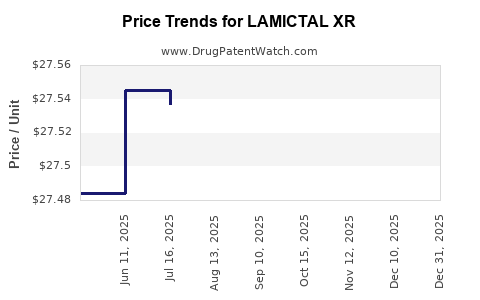
Featured snippet answer: LAMICTAL XR revenue trajectory is driven primarily by (1) the pace of generic substitution at pharmacy level, (2) formulary placement and PBM contracting (preferred vs non-preferred status), (3) rebate intensity and net price per adjusted prescription, and (4) new-patient and switch volumes into ER.
1) Net price vs gross demand
Lamotrigine brands in an older therapeutic class typically face:
- declining list price impact as payers shift to lower-cost alternatives
- increasing reliance on rebates, discounts, and channel incentives to sustain net pricing
Revenue growth, when it occurs, is usually from mix, not from unit growth.
2) Unit demand: new starts and switches
- New starts can be sustained when ER is the preferred starting option for specific payer formularies.
- Switches from immediate-release to ER typically depend on coverage rules, prior authorization triggers, and patient tolerance narratives.
3) ER-specific adherence messaging
Payer and prescriber decision-making can incorporate adherence benefits:
- fewer daily doses relative to IR regimens
- perceived stability in exposure and tolerability
These inputs do not typically stop generic erosion, but they can delay it and support a premium ER share.
4) Channel and NDC-level contracting
PBM formularies often operate at the NDC level. A brand’s commercial outcome can hinge on:
- step-therapy policies
- preferred tier placement
- copay card eligibility rules (if applicable at the time in question)
- pharmacy network incentives and mail order utilization
How fast has generic erosion historically affected LAMICTAL XR and what are the key entry pathways?
Featured snippet answer: Generic erosion happens through ANDA launches for lamotrigine extended-release equivalents and through formulary-led switching that converts ER patients to lower-cost products, reducing brand prescriptions even when some clinical rationale favors ER.
Entry pathways that affect ER brands
-
ANDA generic entry for extended-release lamotrigine
If an ANDA covers an ER product with comparable release characteristics and bioavailability, payers can switch patients on economic grounds.
-
Interchange decisions and “functional equivalence” coverage
Some payers treat ER and IR as interchangeable subject to clinical exceptions, accelerating switching.
-
Exclusivity and patent gating (where applicable)
Brand survival depends on whether meaningful patent thickets prevent generic launches for the ER formulation and/or methods of use.
Commercial effect
Generic entry typically drives:
- rapid drop in brand share in affected contracts
- slower but persistent revenue decline as new patients select generics and remaining patients are gradually switched
What is the patent estate for LAMICTAL XR and what patents protect the extended-release product?
Featured snippet answer: LAMICTAL XR’s protectable components generally align with (1) active ingredient compositions and (2) formulation and method-of-use coverage that can delay ER generic entry, while the lamotrigine molecule itself is far beyond primary composition novelty in most jurisdictions.
Because the lamotrigine IP landscape is multi-layered and the exact active patents vary by jurisdiction, the practical commercial takeaway is:
- generic risk is concentrated in patents tied to the extended-release formulation, manufacturing method, and specific dosing regimens rather than the core lamotrigine compound.
What to expect in the Orange Book style patent buckets for ER brands
In typical ER antiepileptic formulations, patent coverage clusters around:
- composition of matter for ER-specific compositions (including excipients or release-control components)
- process patents for manufacturing ER matrices/coatings
- patents for specific use in seizure indications, dosing regimens, or patient subsets
When does LAMICTAL XR lose exclusivity in the U.S., and what generic entry risks matter most?
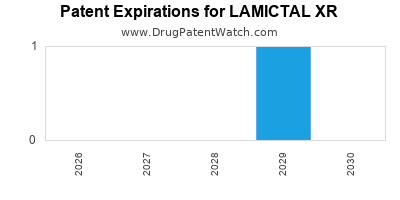
Featured snippet answer: The highest-risk period for LAMICTAL XR is when U.S. exclusivity tied to listed Orange Book patents expires or becomes vulnerable to Paragraph IV ANDA litigation. ER brands often face a wave of generic introductions shortly after the last enforceable formulation/process/method-of-use patent barrier clears.
Key exclusivity concepts for ER branded antiepileptics
- Patent expiration on listed Orange Book patents (not the same as “first generic approval” timing).
- Exclusivity from regulatory data protections (less common for line-extension ER products unless specific statutory exclusivities apply).
- Paragraph IV challenges that trigger automatic stay and litigation-driven settlements.
Commercial timing mechanics
- Patent or exclusivity clearing typically changes payer behavior immediately after launch risk becomes credible.
- A brand can maintain revenue for a limited period if it retains preferred status and its NDC is still formulary-locked while generics negotiate contracting.
What is the Paragraph IV and ANDA litigation landscape for LAMICTAL XR?
Featured snippet answer: For ER lamotrigine brands, litigation typically targets ER-specific formulation or method-of-use patents, with outcomes that control whether generics launch at-risk or after entry restrictions lift.
Litigation-to-market transmission
- A court decision favorable to the brand can block launch for years, depending on injunction scope and downstream appellate.
- Settlements (where reached) usually result in delayed generic entry until a “carve-out” date or the effective end of a settlement term.
Commercial impact by scenario
- Brand wins: slower and more limited entry; brand share can stabilize.
- Generic wins: rapid share erosion post-launch.
- Settlement: delayed entry but eventual erosion; revenue declines still occur once the settlement entry date arrives.
How does LAMICTAL XR compare with immediate-release lamotrigine brands and generics on market share and contracting?
Featured snippet answer: LAMICTAL XR often commands a premium within the lamotrigine ER segment, but it competes economically against generics as payers push lower-cost alternatives, with interchange policies and preferred tier placement determining realized performance.
Competitive comparisons that matter
- IR lamotrigine generics: usually dominate by price, especially where no clinical requirement exists for ER.
- Branded IR lamotrigine (where present in a given time window): can retain share through payer contracts, but it usually faces similar net price pressure.
Why ER pricing can hold longer
ER formulations can retain:
- patient continuity
- prescriber preference in tolerability cases
- adherence-driven mix benefits
But these factors are policy-dependent and not immune to PBM cost pressure.
What is the FDA and Orange Book status of LAMICTAL XR, and how does it shape commercial timing?
Featured snippet answer: Orange Book listings for LAMICTAL XR are the gating mechanism for generic entry because they define the patents an ANDA applicant must address. The FDA regulatory status determines the approval lane but not the exclusivity timeline; that timeline is tied to patent expiration and exclusivity.
What to look for in FDA databases (operationally)
- Orange Book-listed patents for the specific extended-release NDA/strengths
- NDA supplement history relevant to ER formulation details
- Any amendments that could affect what is considered “protected” for ER-specific products
How do manufacturing and product equivalence issues affect generic substitution for extended-release lamotrigine?
Featured snippet answer: Generic substitution risk is moderated by formulation equivalence requirements, including dissolution profile and release behavior. Even when an ANDA is approved, payer acceptance and physician adoption depend on perceived clinical equivalence and contract terms.
Where equivalence can matter
- ER release kinetics and dose-related tolerability
- switching protocols and patient monitoring requirements
- regional pharmacy stocking patterns and interchange authorization
Which companies compete with LAMICTAL XR in U.S. epilepsy formularies, and how does competitive intensity change?
Featured snippet answer: Competitive pressure comes from generic manufacturers launching ANDA products for lamotrigine ER and from PBM-driven formulary strategies that favor the lowest net cost equivalent.
How competition plays out at the pharmacy counter
- The brand’s competitive position is strongly influenced by the generic’s contracted price and coverage terms.
- If the generic is on preferred tiers with broad coverage, branded ER prescriptions decline through automatic substitution and prescriber switching.
What revenue exposure does LAMICTAL XR face under generic launch scenarios?
Featured snippet answer: The primary revenue exposure is share loss after ER generic entry and contract re-tiering, not a sudden collapse without a launch event. Revenue typically declines in waves:
- pre-launch formulary de-emphasis
- post-launch switch at pharmacies in favored networks
- residual erosion as remaining patients are converted over time
Scenario-based revenue outcome framing (market behavior)
- No generic entry for an extended period: brand stabilizes due to protected formulary positioning and ongoing new starts.
- Single generic entrant: partial share loss, often concentrated in certain channels with strong pricing.
- Multiple entrants: accelerates erosion as PBMs negotiate further price reductions and expand preferred coverage.
Key Takeaways
- LAMICTAL XR’s financial trajectory is shaped mainly by PBM contracting and generic substitution for extended-release lamotrigine, not by novelty-driven demand growth.
- ER premium can persist when the brand retains preferred formulary status, but net revenue is highly sensitive to NDC-level pricing and rebate structures.
- Patent and exclusivity timelines determine when generic threats become actionable; the commercial risk clusters around ER formulation/process/method-of-use patents rather than the core lamotrigine molecule.
- Revenue exposure typically follows a launch-driven pattern: gradual de-emphasis ahead of launch, sharper drop at launch, then continued erosion as remaining patients switch.
FAQs
- How do PBMs typically decide whether to place lamotrigine ER on preferred tiers versus generic extended-release?
- What are the most common clinical reasons physicians keep patients on lamotrigine ER after generic entry?
- How do Paragraph IV ANDA settlements usually influence the timing of generic launch for extended-release epilepsy products?
- What formulation equivalence factors can affect real-world switching from branded lamotrigine ER to generic ER?
- How does mail-order and specialty pharmacy channel mix affect LAMICTAL XR net revenue versus traditional retail?
References (APA)
- FDA. (n.d.). Orange Book: Approved Drug Products with Therapeutic Equivalence Evaluations. U.S. Food and Drug Administration. https://www.accessdata.fda.gov/scripts/cder/daf/index.cfm
- FDA. (n.d.). Drugs@FDA. U.S. Food and Drug Administration. https://www.accessdata.fda.gov/scripts/cder/daf/index.cfm