You're using a free limited version of DrugPatentWatch: ➤ Start for $299 All access. No Commitment.

Last Updated: March 26, 2026

JARDIANCE Drug Patent Profile


✉ Email this page to a colleague

« Back to Dashboard


When do Jardiance patents expire, and what generic alternatives are available?

Jardiance is a drug marketed by Boehringer Ingelheim and is included in one NDA. There are fifteen patents protecting this drug and one Paragraph IV challenge.

This drug has four hundred and eighteen patent family members in forty-six countries.

The generic ingredient in JARDIANCE is empagliflozin. There are twenty-two drug master file entries for this compound. Four suppliers are listed for this compound. Additional details are available on the empagliflozin profile page.

DrugPatentWatch® Generic Entry Outlook for Jardiance

Jardiance was eligible for patent challenges on August 1, 2018.

Annual sales in 2022 were $13.0bn, indicating a strong incentive for generic entry.

There have been forty-six patent litigation cases involving the patents protecting this drug, indicating strong interest in generic launch. Recent data indicate that 63% of patent challenges are decided in favor of the generic patent challenger and that 54% of successful patent challengers promptly launch generic drugs.

There are eighteen tentative approvals for the generic drug (empagliflozin), which indicates the potential for near-term generic launch.

Indicators of Generic Entry

< Available with Subscription >

  Start Trial

AI Deep Research
Questions you can ask:
  • What is the 5 year forecast for JARDIANCE?
  • What are the global sales for JARDIANCE?
  • What is Average Wholesale Price for JARDIANCE?
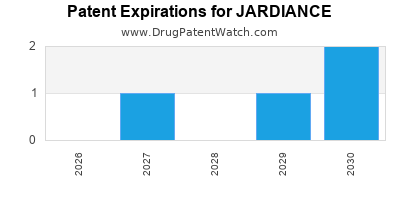
Drug patent expirations by year for JARDIANCE
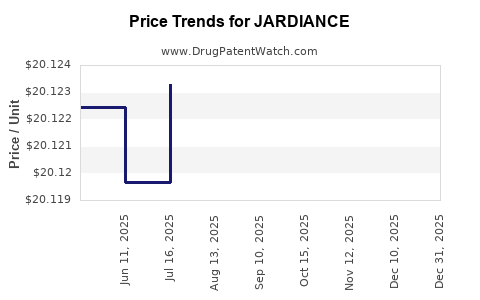
Drug Prices for JARDIANCE

See drug prices for JARDIANCE

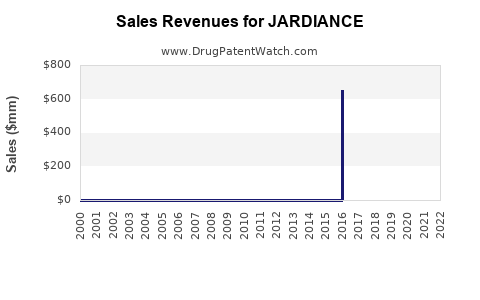
Drug Sales Revenue Trends for JARDIANCE

See drug sales revenues for JARDIANCE

Recent Clinical Trials for JARDIANCE

Identify potential brand extensions & 505(b)(2) entrants

SponsorPhase
Boehringer IngelheimPHASE1
Odense University HospitalPHASE4
Anita SarafPHASE4

See all JARDIANCE clinical trials

Pharmacology for JARDIANCE
Paragraph IV (Patent) Challenges for JARDIANCE
Tradename Dosage Ingredient Strength NDA ANDAs Submitted Submissiondate
JARDIANCE Tablets empagliflozin 10 mg and 25 mg 204629 14 2018-08-01

US Patents and Regulatory Information for JARDIANCE

JARDIANCE is protected by fifteen US patents and three FDA Regulatory Exclusivities.

Applicant Tradename Generic Name Dosage NDA Approval Date TE Type RLD RS Patent No. Patent Expiration Product Substance Delist Req. Exclusivity Expiration
Boehringer Ingelheim JARDIANCE empagliflozin TABLET;ORAL 204629-002 Aug 1, 2014 RX Yes Yes ⤷  Start Trial ⤷  Start Trial ⤷  Start Trial
Boehringer Ingelheim JARDIANCE empagliflozin TABLET;ORAL 204629-002 Aug 1, 2014 RX Yes Yes ⤷  Start Trial ⤷  Start Trial Y ⤷  Start Trial
Boehringer Ingelheim JARDIANCE empagliflozin TABLET;ORAL 204629-002 Aug 1, 2014 RX Yes Yes ⤷  Start Trial ⤷  Start Trial ⤷  Start Trial
>Applicant >Tradename >Generic Name >Dosage >NDA >Approval Date >TE >Type >RLD >RS >Patent No. >Patent Expiration >Product >Substance >Delist Req. >Exclusivity Expiration

EU/EMA Drug Approvals for JARDIANCE

Company Drugname Inn Product Number / Indication Status Generic Biosimilar Orphan Marketing Authorisation Marketing Refusal
Boehringer Ingelheim International GmbH Jardiance empagliflozin EMEA/H/C/002677Type 2 diabetes mellitusJardiance is indicated for the treatment of adults with insufficiently controlled type 2 diabetes mellitus as an adjunct to diet and exerciseas monotherapy when metformin is considered in addition to other medicinal products for the treatment of diabetesFor study results with respect to combinations of therapies, effects on glycaemic control, and cardiovascular and renal events, and the populations studied, see sections 4.4, 4.5 and 5.1. of the annex.Heart failureJardiance is indicated in adults for the treatment of symptomatic chronic heart failure. Chronic kidney diseaseJardiance is indicated in adults for the treatment of chronic kidney disease.  Authorised no no no 2014-05-22
>Company >Drugname >Inn >Product Number / Indication >Status >Generic >Biosimilar >Orphan >Marketing Authorisation >Marketing Refusal

International Patents for JARDIANCE

When does loss-of-exclusivity occur for JARDIANCE?

Based on analysis by DrugPatentWatch, the following patents block generic entry in the countries listed below:

Argentina

Patent: 7970
Estimated Expiration: ⤷  Start Trial

Patent: 7657
Estimated Expiration: ⤷  Start Trial

Australia

Patent: 08288407
Estimated Expiration: ⤷  Start Trial

Brazil

Patent: 0815331
Estimated Expiration: ⤷  Start Trial

Canada

Patent: 96558
Estimated Expiration: ⤷  Start Trial

Chile

Patent: 08002427
Estimated Expiration: ⤷  Start Trial

China

Patent: 1784270
Estimated Expiration: ⤷  Start Trial

Patent: 4288166
Estimated Expiration: ⤷  Start Trial

Patent: 4353077
Estimated Expiration: ⤷  Start Trial

Colombia

Patent: 51239
Estimated Expiration: ⤷  Start Trial

Croatia

Patent: 0170022
Estimated Expiration: ⤷  Start Trial

Cyprus

Patent: 18308
Estimated Expiration: ⤷  Start Trial

Patent: 17017
Estimated Expiration: ⤷  Start Trial

Denmark

Patent: 87879
Estimated Expiration: ⤷  Start Trial

Ecuador

Patent: 109977
Estimated Expiration: ⤷  Start Trial

Eurasian Patent Organization

Patent: 8608
Estimated Expiration: ⤷  Start Trial

Patent: 1000321
Estimated Expiration: ⤷  Start Trial

European Patent Office

Patent: 87879
Estimated Expiration: ⤷  Start Trial

Patent: 98152
Estimated Expiration: ⤷  Start Trial

Patent: 06156
Estimated Expiration: ⤷  Start Trial

Patent: 39577
Estimated Expiration: ⤷  Start Trial

Hong Kong

Patent: 01721
Estimated Expiration: ⤷  Start Trial

Patent: 03351
Estimated Expiration: ⤷  Start Trial

Hungary

Patent: 30158
Estimated Expiration: ⤷  Start Trial

Patent: 700020
Estimated Expiration: ⤷  Start Trial

Israel

Patent: 2886
Estimated Expiration: ⤷  Start Trial

Japan

Patent: 95914
Estimated Expiration: ⤷  Start Trial

Patent: 10535850
Estimated Expiration: ⤷  Start Trial

Lithuania

Patent: 187879
Estimated Expiration: ⤷  Start Trial

Patent: 2017014
Estimated Expiration: ⤷  Start Trial

Patent: 87879
Estimated Expiration: ⤷  Start Trial

Malaysia

Patent: 2037
Estimated Expiration: ⤷  Start Trial

Mexico

Patent: 10001696
Estimated Expiration: ⤷  Start Trial

Montenegro

Patent: 573
Estimated Expiration: ⤷  Start Trial

Morocco

Patent: 612
Estimated Expiration: ⤷  Start Trial

Netherlands

Patent: 0872
Estimated Expiration: ⤷  Start Trial

New Zealand

Patent: 3242
Estimated Expiration: ⤷  Start Trial

Norway

Patent: 17020
Estimated Expiration: ⤷  Start Trial

Peru

Patent: 090938
Estimated Expiration: ⤷  Start Trial

Poland

Patent: 87879
Estimated Expiration: ⤷  Start Trial

Portugal

Patent: 87879
Estimated Expiration: ⤷  Start Trial

Serbia

Patent: 205
Patent: FARMACEUTSKA KOMPOZICIJA KOJA SADRŽI GLUKOPIRANOZILOM SUPSTITUISANI DERIVAT BENZENA (PHARMACEUTICAL COMPOSITION COMPRISING A GLUCOPYRANOSYL-SUBSTITUTED BENZENE DERIVATIVE)
Estimated Expiration: ⤷  Start Trial

Slovenia

Patent: 87879
Estimated Expiration: ⤷  Start Trial

South Africa

Patent: 0909105
Patent: Pharmaceutical composition comprising a glucopyranosyl-substituted benzene derivative
Estimated Expiration: ⤷  Start Trial

South Korea

Patent: 1491554
Estimated Expiration: ⤷  Start Trial

Patent: 100049595
Estimated Expiration: ⤷  Start Trial

Spain

Patent: 02748
Estimated Expiration: ⤷  Start Trial

Taiwan

Patent: 72325
Estimated Expiration: ⤷  Start Trial

Patent: 0914030
Patent: Pharmaceutical composition comprising a glucopyranosyl-substituted benzene derivative
Estimated Expiration: ⤷  Start Trial

Patent: 1436798
Patent: Pharmaceutical composition comprising a glucopyranosyl-substituted benzene derivative
Estimated Expiration: ⤷  Start Trial

Tunisia

Patent: 10000073
Patent: COMPOSITON PHARMACEUTIQUE CONTENANT UN DERIVE DE BENZENE SUBSTITUE PAR GLUCOPYRANOSYLE
Estimated Expiration: ⤷  Start Trial

Ukraine

Patent: 0384
Patent: ФАРМАЦЕВТИЧНА КОМПОЗИЦІЯ, ЩО МІСТИТЬ ГЛЮКОПІРАНОЗИЛЗАМІЩЕНУ ПОХІДНУ БЕНЗОЛУ ТА ІНГІБІТОР DPP IV (PHARMACEUTICAL COMPOSITION COMPRISING A GLUCOPYRANOSYL-SUBSTITUTED BENZENE DERIVATIVE)
Estimated Expiration: ⤷  Start Trial

Uruguay

Patent: 296
Patent: COMPOSICION FARMACÉUTICA QUE COMPRENDE UN DERIVADO DE BENCENO SUSTITUIDO CON GLUCOPIRANOSILO
Estimated Expiration: ⤷  Start Trial

Generics may enter earlier, or later, based on new patent filings, patent extensions, patent invalidation, early generic licensing, generic entry preferences, and other factors.

See the table below for additional patents covering JARDIANCE around the world.

Country Patent Number Title Estimated Expiration
Norway 2017020 ⤷  Start Trial
World Intellectual Property Organization (WIPO) 2014161918 ⤷  Start Trial
Ecuador SP066855 DERIVADOS DE BENCENO SUSTITUIDOS POR GLUCOPIRANOSILO, MEDICAMENTOS QUE CONTIENEN ESOS COMPUESTOS, SU APLICACIÓN Y PROCEDIMIENTO PARA SU PREPARACIÓN ⤷  Start Trial
>Country >Patent Number >Title >Estimated Expiration

Supplementary Protection Certificates for JARDIANCE

Patent Number Supplementary Protection Certificate SPC Country SPC Expiration SPC Description
2187879 LUC00017 Luxembourg ⤷  Start Trial PRODUCT NAME: GLYXAMBI- EMPAGLIFLOZINE/LINAGLIPTINE; AUTHORISATION NUMBER AND DATE: EU/1/16/1146 20161115
1730131 C01730131/02 Switzerland ⤷  Start Trial PRODUCT NAME: EMPAGLIFLOZIN UND METFORMINHYDROCHLORID; REGISTRATION NO/DATE: SWISSMEDIC 65570 12.11.2015
2187879 SPC/GB17/031 United Kingdom ⤷  Start Trial PRODUCT NAME: 1-CHLORO-4-(SS-D-GLUCOPYRANOS-1-YL)-2-(4-((S)-TETRAHYDROFURAN-3-YLOXY)-BENZYL)-BENZENE (I.E. EMPAGLIFLOZIN) IN COMBINATION WITH 1-((4 METHYL-QUINAZOLIN-2-YL)METHYL)-3-METHYL-7-(2-BUTYN-1-YL)-8-(3-(R)-AMINO-PIPERIDIN-1-YL)-XANTHINE (I.E. LINAGLIPTIN) OR A P; REGISTERED: UK PLGB 14598/0191 (GB) 20161115; UK EU/1/16/1146/014(NI) 20161115; UK EU/1/16/1146/015(NI) 20161115; UK EU/1/16/1146/016(NI) 20161115; UK EU/1/16/1146/017(NI) 20161115; UK EU/1/16/1146/018(NI) 20161115; UK EU/1/16/1146/007(NI) 20161115; UK EU/1/16/1146/001(NI) 20161115; UK EU/1/16/1146/013(NI) 20161115; UK EU/1/16/1146/002(NI) 20161115; UK EU/1/16/1146/003(NI) 20161115; UK EU/1/16/1146/004(NI) 20161115; UK...
>Patent Number >Supplementary Protection Certificate >SPC Country >SPC Expiration >SPC Description

JARDIANCE (Empagliflozin): Market Dynamics and Financial Trajectory

Last updated: February 19, 2026

What is JARDIANCE and its Therapeutic Application?

JARDIANCE, with the active pharmaceutical ingredient empagliflozin, is a sodium-glucose cotransporter-2 (SGLT2) inhibitor. It functions by blocking the reabsorption of glucose in the kidneys, leading to increased glucose excretion in the urine. This mechanism lowers blood glucose levels in patients with type 2 diabetes mellitus. Beyond glycemic control, JARDIANCE has demonstrated significant benefits in reducing the risk of cardiovascular events and kidney disease progression in specific patient populations.

The drug is approved for:

  • Improving glycemic control in adults with type 2 diabetes mellitus.
  • Reducing the risk of cardiovascular death and hospitalization for heart failure in adults with type 2 diabetes mellitus and established cardiovascular disease.
  • Reducing the risk of cardiovascular death in adults with heart failure, with or without type 2 diabetes mellitus.
  • Reducing the risk of kidney disease progression, cardiovascular death, and non-fatal myocardial infarction in adults with chronic kidney disease (CKD) at risk of progression.

JARDIANCE is manufactured by Boehringer Ingelheim and Eli Lilly and Company.

What is the Current Market Size and Projected Growth for JARDIANCE?

The market for SGLT2 inhibitors, including JARDIANCE, is substantial and experiencing consistent growth driven by increasing prevalence of type 2 diabetes, rising cardiovascular and kidney disease comorbidities, and the expanded therapeutic indications for these drugs.

In 2023, JARDIANCE achieved global sales of approximately $6.5 billion, representing a 22% increase from 2022 [1, 2]. This growth is attributed to its strong performance in type 2 diabetes management and its expanding role in treating heart failure and chronic kidney disease.

Analysts project continued robust growth for JARDIANCE. Projections indicate that the global SGLT2 inhibitor market, which JARDIANCE is a significant player in, is expected to reach over $30 billion by 2030, with a compound annual growth rate (CAGR) of approximately 12-15% [3, 4]. JARDIANCE's market share within this segment is anticipated to remain strong due to its established clinical profile and ongoing label expansions.

What are the Key Growth Drivers for JARDIANCE?

Multiple factors are contributing to JARDIANCE's sustained market growth:

  • Expanding Indications: The approval of JARDIANCE for heart failure (both with and without diabetes) and chronic kidney disease has significantly broadened its patient addressable market beyond its initial diabetes indication. These approvals leverage empagliflozin's pleiotropic effects on cardiovascular and renal systems [5].
  • Demonstrated Cardiovascular and Renal Benefits: Robust clinical trial data, such as the EMPEROR-Reduced, EMPEROR-Preserved, and EMPA-KIDNEY trials, have established JARDIANCE as a cornerstone therapy for cardiovascular risk reduction and kidney protection in diverse patient groups [6, 7, 8]. These outcomes are critical for physicians and payers in treatment decisions.
  • Increasing Prevalence of Target Diseases: The global rise in type 2 diabetes, coupled with the growing burden of cardiovascular disease and chronic kidney disease, creates a continuously expanding patient pool for JARDIANCE.
  • Physician and Patient Acceptance: Positive real-world evidence and growing physician confidence in prescribing empagliflozin for its comprehensive benefits are driving uptake. Patient adherence is also supported by once-daily oral administration.
  • Strategic Partnerships: The collaboration between Boehringer Ingelheim and Eli Lilly provides robust commercialization and marketing infrastructure, facilitating market penetration and physician education.

What is the Competitive Landscape for JARDIANCE?

JARDIANCE operates within a competitive SGLT2 inhibitor class and a broader diabetes and cardiovascular therapeutics market. Key competitors include:

  • Other SGLT2 Inhibitors:

    • Jardiance (empagliflozin): Boehringer Ingelheim/Eli Lilly
    • Farxiga (dapagliflozin): AstraZeneca. Farxiga also has broad indications for heart failure and CKD, making it a primary competitor across multiple indications.
    • Invokana (canagliflozin): Janssen (Johnson & Johnson). Primarily used for diabetes, with some cardiovascular benefits.
    • Steglatro (ertugliflozin): Merck & Co.
  • Other Diabetes Medications: While not direct SGLT2 competitors, JARDIANCE competes indirectly with other classes of diabetes medications, including GLP-1 receptor agonists (e.g., Ozempic, Trulicity), DPP-4 inhibitors, insulin, and metformin. The choice often depends on patient profile, comorbidities, and physician preference.

The competitive advantage for JARDIANCE lies in its well-established cardiovascular and renal outcome data, particularly its role in heart failure across ejection fraction ranges and its demonstrated efficacy in CKD.

What is the Pricing and Reimbursement Environment for JARDIANCE?

Pricing for JARDIANCE is set within the competitive range for branded SGLT2 inhibitors. The average wholesale price (AWP) for a 30-day supply of JARDIANCE varies by dosage (10 mg or 25 mg) but generally falls between $450 and $500 [9]. Net prices are typically lower due to rebates and discounts negotiated with pharmacy benefit managers (PBMs) and health plans.

Reimbursement for JARDIANCE is generally favorable, especially for its approved indications:

  • Type 2 Diabetes: Widely covered by most major private and public payers, often with preferred tier placement.
  • Heart Failure and CKD: Increasingly covered as these indications gain traction. Payer coverage for these expanded uses can sometimes be more stringent, requiring specific clinical criteria to be met, but outcomes-based data is driving broader acceptance.
  • Payer Landscape: Coverage decisions are influenced by formulary placement, prior authorization requirements, and step-therapy protocols. The cost-effectiveness of JARDIANCE, particularly in preventing expensive cardiovascular events and hospitalizations for heart failure and slowing CKD progression, supports its reimbursement.

Negotiations with payers are critical. The development of value-based agreements, where reimbursement is linked to patient outcomes, is becoming more prevalent and could further solidify JARDIANCE's market position.

What is the Patent and Exclusivity Landscape for JARDIANCE?

The patent and exclusivity landscape is critical for understanding JARDIANCE's long-term market exclusivity and potential for generic competition.

  • Composition of Matter Patent: The primary patents covering empagliflozin (the active ingredient) have expiration dates generally ranging from 2026 to 2027 in major markets like the U.S. and Europe [10, 11]. These are foundational patents.
  • Formulation and Method of Use Patents: Additional patents cover specific formulations, dosage regimens, and methods of use (e.g., for cardiovascular or renal benefits). These patents can extend market exclusivity beyond the composition of matter patent expiration. For instance, patents covering the use of empagliflozin for heart failure or CKD may have later expiration dates.
  • Data Exclusivity: Regulatory data exclusivity periods, independent of patent life, provide market protection. In the U.S., new chemical entities typically receive five years of data exclusivity, extendable to seven years for pediatric studies. For SGLT2 inhibitors, additional exclusivity can be granted for new indications.
  • Potential for Generic Entry: While composition of matter patents are nearing expiration, the timing of generic entry will depend on the expiration of secondary patents and potential patent litigation outcomes. Generic manufacturers will aim to launch products once these patents expire or are successfully challenged.

Boehringer Ingelheim and Eli Lilly actively defend their intellectual property, and patent litigation is common in the pharmaceutical industry. The successful defense of key secondary patents could delay generic competition.

What are the Financial Performance Metrics and Outlook for JARDIANCE?

JARDIANCE has been a significant revenue driver for both Boehringer Ingelheim (privately held, financial data often reported differently) and Eli Lilly and Company.

  • Eli Lilly's Reported Sales: For Eli Lilly, JARDIANCE is a top-selling product. In 2023, its sales reached $7.05 billion globally [12]. This represents a substantial increase from $5.9 billion in 2022 and $4.7 billion in 2021 [13].
  • Growth Trajectory: The consistent double-digit year-over-year growth highlights the drug's strong market adoption and expanding utility.
  • Contribution to Revenue: JARDIANCE represents a significant portion of Eli Lilly's overall revenue from its cardiovascular and diabetes portfolio.
  • Analyst Projections: Financial analysts forecast continued strong performance for JARDIANCE, with sales expected to exceed $8 billion by 2025 and potentially reach over $10 billion annually in the coming years, driven by its established efficacy and expanding indications [14].

The financial outlook remains positive, although the eventual introduction of generics will eventually impact revenue streams. However, the substantial market penetration and broad therapeutic utility are expected to sustain high sales for several years post-patent expiration, especially if follow-on products or lifecycle management strategies are employed.

What are the Key Risks and Challenges for JARDIANCE?

Despite its success, JARDIANCE faces several risks and challenges:

  • Patent Expirations and Generic Competition: The most significant long-term threat is the eventual expiration of key patents, leading to the entry of lower-cost generic versions, which will erode market share and pricing power.
  • Intensifying Competition: The SGLT2 inhibitor class is competitive, and other drugs, particularly Farxiga, are also expanding their indications. Additionally, the emergence of novel diabetes and heart failure therapies could present new competitive pressures.
  • Pricing Pressures and Reimbursement Challenges: Healthcare systems globally are facing cost containment pressures. Payers may implement stricter reimbursement policies or demand greater price reductions, particularly as generics become available.
  • Regulatory Scrutiny and Post-Market Surveillance: Like all pharmaceuticals, JARDIANCE is subject to ongoing regulatory oversight. Any new safety signals identified through post-market surveillance could lead to label changes, warnings, or even market withdrawal.
  • Market Access and Geographic Variations: Achieving optimal market access and reimbursement varies significantly across different countries and healthcare systems, requiring tailored market access strategies.
  • Clinical Trial Failures for New Indications: While successful to date, future attempts to gain approval for new indications or patient populations through clinical trials carry inherent risks of failure, which could impact market expansion.

Key Takeaways

JARDIANCE (empagliflozin) is a leading SGLT2 inhibitor with robust global sales exceeding $6.5 billion in 2023 and projected to grow at a CAGR of 12-15%. Its success is driven by expanding therapeutic indications beyond type 2 diabetes to include heart failure and chronic kidney disease, supported by strong clinical outcome data. The competitive landscape includes other SGLT2 inhibitors, with Farxiga being a primary rival. Pricing is competitive, and reimbursement is generally favorable, although subject to payer policies and cost-containment efforts. Key patents are set to expire between 2026 and 2027, posing a future risk of generic competition. Eli Lilly reported $7.05 billion in JARDIANCE sales for 2023, with analysts projecting continued growth beyond $8 billion by 2025. Key challenges include patent expirations, competition, pricing pressures, and regulatory scrutiny.

Frequently Asked Questions

  1. When are the primary patents for JARDIANCE expected to expire in major markets like the United States and Europe? The primary composition of matter patents for empagliflozin are expected to expire in major markets between 2026 and 2027.

  2. What specific comorbidities are driving the expanded use and market growth of JARDIANCE beyond type 2 diabetes? The expanded use and market growth are significantly driven by JARDIANCE's demonstrated benefits in reducing the risk of cardiovascular death and hospitalization for heart failure, and in slowing the progression of chronic kidney disease.

  3. Which competitor drug within the SGLT2 inhibitor class poses the most significant market challenge to JARDIANCE, particularly with overlapping expanded indications? Farxiga (dapagliflozin) from AstraZeneca is a primary competitor, as it also holds broad indications for heart failure and chronic kidney disease, directly competing with JARDIANCE across these critical therapeutic areas.

  4. How have regulatory approvals for heart failure and chronic kidney disease impacted JARDIANCE's financial performance? These approvals have substantially broadened JARDIANCE's addressable patient population and driven significant revenue growth, contributing to its position as a blockbuster drug. For example, Eli Lilly's JARDIANCE sales increased by over 20% in 2023.

  5. What are the potential implications of patent expirations on JARDIANCE's pricing and market share in the long term? Upon patent expiration, the entry of generic versions is expected to lead to significant price erosion and a subsequent decrease in JARDIANCE's market share as lower-cost alternatives become available.

Citations

[1] Boehringer Ingelheim. (2024). Boehringer Ingelheim reports strong 2023 financial results. Retrieved from [Boehringer Ingelheim website - specific press release or annual report link if available, otherwise general corporate site] [2] Eli Lilly and Company. (2024). Eli Lilly and Company Reports Fourth Quarter and Full Year 2023 Financial Results. Retrieved from [Eli Lilly and Company website - specific press release or annual report link if available, otherwise general corporate site] [3] Global Market Insights. (2023). SGLT2 Inhibitors Market Size, Share & Growth Report. [4] Grand View Research. (2023). SGLT2 Inhibitors Market Size, Share & Trends Analysis Report. [5] Werdan, R., et al. (2022). Empagliflozin for the Treatment of Patients with Heart Failure: An Overview of the EMPEROR Program. Cardiology Therapeutic Advances, 3(1), 1-12. [6] Anker, S. D., et al. (2020). Empagliflozin in Heart Failure with a Reduced Ejection Fraction. New England Journal of Medicine, 383(7), 645-657. [7] Anker, S. D., et al. (2021). Empagliflozin in Heart Failure with Preserved Ejection Fraction. New England Journal of Medicine, 385(16), 1451-1461. [8] Agarwal, R., et al. (2023). Empagliflozin when Added to Standard Care in Patients with CKD. New England Journal of Medicine, 388(7), 583-594. [9] First Databank, Inc. (2024). National Average Drug Acquisition Costs. (Data accessed via subscription or professional database, specific URL not applicable for general citation). [10] U.S. Patent and Trademark Office. (Patent search database). (Specific patent numbers and expiration dates would require targeted search). [11] European Patent Office. (Patent search database). (Specific patent numbers and expiration dates would require targeted search). [12] Eli Lilly and Company. (2024). Eli Lilly and Company Reports Fourth Quarter and Full Year 2023 Financial Results. [13] Eli Lilly and Company. (2023). Eli Lilly and Company Reports Fourth Quarter and Full Year 2022 Financial Results. [14] Financial Analyst Reports (e.g., from firms such as J.P. Morgan, Morgan Stanley, etc. - specific reports are proprietary and not publicly linkable without subscription, general consensus used).

More… ↓

⤷  Start Trial

Make Better Decisions: Try a trial or see plans & pricing

Drugs may be covered by multiple patents or regulatory protections. All trademarks and applicant names are the property of their respective owners or licensors. Although great care is taken in the proper and correct provision of this service, thinkBiotech LLC does not accept any responsibility for possible consequences of errors or omissions in the provided data. The data presented herein is for information purposes only. There is no warranty that the data contained herein is error free. We do not provide individual investment advice. This service is not registered with any financial regulatory agency. The information we publish is educational only and based on our opinions plus our models. By using DrugPatentWatch you acknowledge that we do not provide personalized recommendations or advice. thinkBiotech performs no independent verification of facts as provided by public sources nor are attempts made to provide legal or investing advice. Any reliance on data provided herein is done solely at the discretion of the user. Users of this service are advised to seek professional advice and independent confirmation before considering acting on any of the provided information. thinkBiotech LLC reserves the right to amend, extend or withdraw any part or all of the offered service without notice.