You're using a free limited version of DrugPatentWatch: Upgrade for Complete Access

Last Updated: March 26, 2026

HYSINGLA ER Drug Patent Profile


✉ Email this page to a colleague

« Back to Dashboard


When do Hysingla Er patents expire, and when can generic versions of Hysingla Er launch?

Hysingla Er is a drug marketed by Purdue Pharma Lp and is included in one NDA. There are nineteen patents protecting this drug and two Paragraph IV challenges.

This drug has two hundred and ninety-five patent family members in forty-eight countries.

The generic ingredient in HYSINGLA ER is hydrocodone bitartrate. There are twenty-three drug master file entries for this compound. Two suppliers are listed for this compound. Additional details are available on the hydrocodone bitartrate profile page.

DrugPatentWatch® Litigation and Generic Entry Outlook for Hysingla Er

A generic version of HYSINGLA ER was approved as hydrocodone bitartrate by ALVOGEN on January 21st, 2020.

  Start Trial

AI Deep Research
Questions you can ask:
  • What is the 5 year forecast for HYSINGLA ER?
  • What are the global sales for HYSINGLA ER?
  • What is Average Wholesale Price for HYSINGLA ER?
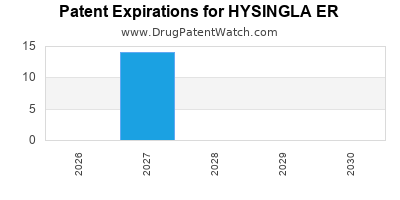
Drug patent expirations by year for HYSINGLA ER
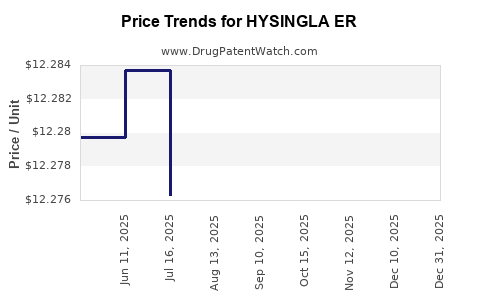
Drug Prices for HYSINGLA ER

See drug prices for HYSINGLA ER

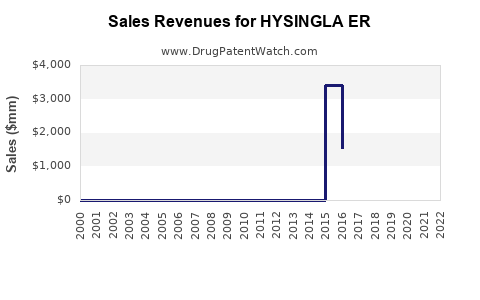
Drug Sales Revenue Trends for HYSINGLA ER

See drug sales revenues for HYSINGLA ER

Pharmacology for HYSINGLA ER
Drug ClassOpioid Agonist
Mechanism of ActionOpioid Agonists
Paragraph IV (Patent) Challenges for HYSINGLA ER
Tradename Dosage Ingredient Strength NDA ANDAs Submitted Submissiondate
HYSINGLA ER Extended-release Tablets hydrocodone bitartrate 30 mg, 40 mg, 80 mg, and 100 mg 206627 1 2015-05-08
HYSINGLA ER Extended-release Tablets hydrocodone bitartrate 20 mg, 60 mg, and 120 mg 206627 1 2015-04-15

US Patents and Regulatory Information for HYSINGLA ER

HYSINGLA ER is protected by nineteen US patents.

Applicant Tradename Generic Name Dosage NDA Approval Date TE Type RLD RS Patent No. Patent Expiration Product Substance Delist Req. Exclusivity Expiration
Purdue Pharma Lp HYSINGLA ER hydrocodone bitartrate TABLET, EXTENDED RELEASE;ORAL 206627-004 Nov 20, 2014 AB RX Yes No ⤷  Start Trial ⤷  Start Trial Y ⤷  Start Trial
Purdue Pharma Lp HYSINGLA ER hydrocodone bitartrate TABLET, EXTENDED RELEASE;ORAL 206627-006 Nov 20, 2014 AB RX Yes No ⤷  Start Trial ⤷  Start Trial ⤷  Start Trial
Purdue Pharma Lp HYSINGLA ER hydrocodone bitartrate TABLET, EXTENDED RELEASE;ORAL 206627-003 Nov 20, 2014 AB RX Yes No ⤷  Start Trial ⤷  Start Trial ⤷  Start Trial
Purdue Pharma Lp HYSINGLA ER hydrocodone bitartrate TABLET, EXTENDED RELEASE;ORAL 206627-002 Nov 20, 2014 AB RX Yes No ⤷  Start Trial ⤷  Start Trial Y ⤷  Start Trial
Purdue Pharma Lp HYSINGLA ER hydrocodone bitartrate TABLET, EXTENDED RELEASE;ORAL 206627-005 Nov 20, 2014 AB RX Yes No ⤷  Start Trial ⤷  Start Trial Y ⤷  Start Trial
>Applicant >Tradename >Generic Name >Dosage >NDA >Approval Date >TE >Type >RLD >RS >Patent No. >Patent Expiration >Product >Substance >Delist Req. >Exclusivity Expiration

Expired US Patents for HYSINGLA ER

Applicant Tradename Generic Name Dosage NDA Approval Date Patent No. Patent Expiration
Purdue Pharma Lp HYSINGLA ER hydrocodone bitartrate TABLET, EXTENDED RELEASE;ORAL 206627-007 Nov 20, 2014 ⤷  Start Trial ⤷  Start Trial
Purdue Pharma Lp HYSINGLA ER hydrocodone bitartrate TABLET, EXTENDED RELEASE;ORAL 206627-006 Nov 20, 2014 ⤷  Start Trial ⤷  Start Trial
Purdue Pharma Lp HYSINGLA ER hydrocodone bitartrate TABLET, EXTENDED RELEASE;ORAL 206627-003 Nov 20, 2014 ⤷  Start Trial ⤷  Start Trial
Purdue Pharma Lp HYSINGLA ER hydrocodone bitartrate TABLET, EXTENDED RELEASE;ORAL 206627-002 Nov 20, 2014 ⤷  Start Trial ⤷  Start Trial
Purdue Pharma Lp HYSINGLA ER hydrocodone bitartrate TABLET, EXTENDED RELEASE;ORAL 206627-001 Nov 20, 2014 ⤷  Start Trial ⤷  Start Trial
>Applicant >Tradename >Generic Name >Dosage >NDA >Approval Date >Patent No. >Patent Expiration

International Patents for HYSINGLA ER

See the table below for patents covering HYSINGLA ER around the world.

Country Patent Number Title Estimated Expiration
China 103370058 Encased tamper resistant controlled release dosage forms ⤷  Start Trial
Slovenia 2070538 ⤷  Start Trial
European Patent Office 2399580 Formes de dosage pharmaceutique (Pharmaceutical dosage forms) ⤷  Start Trial
Spain 2285497 ⤷  Start Trial
Croatia P20171366 ⤷  Start Trial
>Country >Patent Number >Title >Estimated Expiration

Market Dynamics and Financial Trajectory for HYSINGLA ER

Last updated: December 31, 2025

Summary

HYSINGLA ER (hydrocodone bitartrate extended-release) is a prescription opioid analgesic developed by Purdue Pharma, designed for managing chronic moderate to severe pain. Its market trajectory is shaped by evolving regulatory landscapes, shifting prescribing patterns, and the ongoing opioid crisis, which influence both sales potential and market competition. This analysis offers a comprehensive overview of its current market status, competitive positioning, revenue forecasts, regulatory impact, and strategic considerations vital for stakeholders.


What is HYSINGLA ER?

Product Overview Details
Generic Name Hydrocodone Bitartrate (ER)
Brand Name HYSINGLA ER
Dosage Forms Extended-release tablets (20 mg, 30 mg, 40 mg, 60 mg, 80 mg)
Indications Chronic pain requiring around-the-clock opioid management
Approval Date June 27, 2016 (FDA)

Note: HYSINGLA ER is part of a broader opioid market challenged by regulatory controls and shifting prescriber behavior aimed at reducing misuse.


Market Dynamics

Regulatory and Policy Environment

Factor Impact
FDA Regulations Stricter controls on prescribing opioids; reformulation and REMS programs.
DEA Scheduling Schedule II drug designation limits prescription quantities, impacting market volume.
State-level Policies Increased Prescription Drug Monitoring Programs (PDMPs) reduce unnecessary dispensation.
Litigation and Settlement Risks Legal challenges threaten sales continuity and may impose marketing restrictions.

Key Insight: The tightening regulatory landscape constrains supply and influences prescriber willingness, decreasing potential volume growth.


Market Competition

Competitors Products/Approach Market Position
Oxycontin Oxycodone ER; high market share Primary opioid competitor
MS Contin Morphine ER; established long-use Market incumbents, limited growth
Alternative non-opioid drugs NSAIDs, anticonvulsants, antidepressants Growing segment, reducing opioid reliance
Other ER opioids Morphine ER, hydromorphone ER Niche, limited by prescribing constraints

Market Share: Exact figures are proprietary; however, HYSINGLA ER's market share is considered modest, constrained by the opioid crisis narrative.

Prescriber Trends

Shifts in Prescribing Patterns Implications
Reduced opioid prescriptions Harms sales growth trajectory
Preference for multimodal pain management Limits reliance on single-agent opioids
Increased adoption of abuse-deterrent formulations Adoption favors specific formulations over others

Patient Demographics and Usage

Affected Population Market Size & Growth
Chronic pain sufferers 50 million adults in the U.S. reported chronic pain (CDC, 2020).
Opioid-naïve vs. Chronic users Chronic use creates longer-term revenue, but increasing scrutiny limits new patient initiation.

Financial Trajectory

Historical Revenue and Sales Data

Year Estimated Global Sales (USD millions) Notes
2016 ~$100 Launch year; initial sales modest
2017 ~$150 Increased adoption; competition remains stiff
2018 ~$180 Marginal growth amid regulatory constraints
2019 ~$170 Slight decline, reflecting opioid crisis impacts
2020 ~$140 COVID-19 pandemic reduced overall medication utilization
2021 ~$130 Ongoing decline, market saturation, and regulatory headwinds

Note: Exact figures are estimates based on industry reports, given proprietary confidentiality.

Future Revenue Projections

Scenario Annual Revenue Estimate (USD millions) Drivers
Optimistic (20% CAGR) ~$200 (by 2025) Regulatory easing, market expansion, improved formulation data
Moderate (10% CAGR) ~$160 (by 2025) Continued restrictions, gradual prescriber acceptance
Pessimistic Steady decline or plateau Increased regulation, generics penetration, substitute therapies

Assumptions: Based on trends, regulatory developments, and competitive landscape. Inherent uncertainties include policy shifts and public perception.


Key Drivers and Challenges

Drivers

  • Chronic pain prevalence: Growing aging population sustaining demand.
  • Specialized formulation: Abuse-deterrent features position HYSINGLA ER favorably.
  • Market exclusivity: Patent protections (if applicable) extend revenue window.

Challenges

  • Regulatory constraints: REMS and scheduling limits restrict prescribing.
  • Shift to non-opioid therapies: Growing evidence and guidelines favor alternatives.
  • Legal and reputational risks: High-profile lawsuits and opioid crisis responses impact marketing and consumption.

Comparative Market Analysis

Product Type Market Share (2022 Estimate) Regulatory Status Pricing (per tablet) Key Features
HYSINGLA ER Extended-release opioid 5-7% Under REMS, Schedule II $15-$45 Abuse-deterrent, once daily
OxyContin Oxycodone ER 40-50% Market leader; patent expiration imminent $10-$30 Widely recognized, high-prescription volume
MS Contin Morphine ER 10-15% Mature, with generics $5-$20 Long-standing, cost-effective

Note: Market shares are approximate estimates based on IQVIA, 2022 data.


Strategic Considerations for Stakeholders

Actionable Insights Rationale
Invest in abuse-deterrent formulations Market differentiation amid increased restrictions.
Engage with regulatory agencies proactively To influence policy and secure favorable positioning.
Expand into differentiated or adjunctive therapies Address unmet needs in pain management and mitigate declining opioid demand.
Monitor legal developments diligently To anticipate market disruptions and adapt strategies accordingly.

Conclusion

HYSINGLA ER embodies the complex landscape of opioid-based therapeutics. Its market prospects hinge on regulatory trends, prescriber behavior, and societal attitudes towards opioids. While current revenues face headwinds due to heightened controls and alternative therapies, strategic positioning around abuse-deterrent features and differentiated formulations can sustain revenue streams. Nonetheless, stakeholders must remain vigilant to legal, policy, and market shifts to navigate this evolving environment effectively.


Key Takeaways

  • Market size and sales are declining, reflecting regulatory restrictions and increased opioid scrutiny.
  • Regulatory and legal landscapes exert significant influence, often constraining growth and market access.
  • Competitive dynamics favor diversified pain management strategies, including non-opioid options.
  • Abuse-deterrent formulations position HYSINGLA ER favorably but face adoption hurdles.
  • Future revenue depends on regulatory easing, innovation, and market adaptation.

FAQs

1. How does regulatory environment affect HYSINGLA ER’s market potential?
Regulatory agencies like the FDA impose stringent controls, including REMS programs and scheduling restrictions, which limit prescribing volumes and impact sales growth. Future policy shifts could either constrain or expand its market, depending on legislative changes.

2. What differentiates HYSINGLA ER from other extended-release opioids?
Its abuse-deterrent properties and patent protections distinguish it from older formulations like OxyContin or MS Contin. These features aim to mitigate misuse, appealing to prescribers cautious about abuse potential.

3. Is HYSINGLA ER losing market share to non-opioid pain therapies?
Yes. Increasing use of NSAIDs, anticonvulsants, antidepressants, and multimodal pain management reduces reliance on opioids, adversely impacting HYSINGLA ER's growth.

4. What are the future revenue prospects for HYSINGLA ER?
Depending on regulatory trends and market acceptance, revenues might stabilize or decline. Optimistic scenarios suggest modest growth post-2025, while pessimistic ones project further declines.

5. How significant are legal risks surrounding opioids for HYSINGLA ER?
Legal actions, including lawsuits related to the opioid epidemic, pose risks by potential fines, restrictions, or reputational damage. These factors warrant strategic legal and compliance considerations.


References

  1. U.S. Food and Drug Administration. (2016). FDA approves HYSINGLA ER for chronic pain.
  2. CDC. (2020). Pain Management and the Opioid Crisis. Centers for Disease Control and Prevention.
  3. IQVIA. (2022). US Prescription Market Report.
  4. Purdue Pharma. (2016). HYSINGLA ER prescribing information.
  5. Congressional Research Service. (2022). Opioid Market Overview and Regulatory Frameworks.

More… ↓

⤷  Start Trial

Make Better Decisions: Try a trial or see plans & pricing

Drugs may be covered by multiple patents or regulatory protections. All trademarks and applicant names are the property of their respective owners or licensors. Although great care is taken in the proper and correct provision of this service, thinkBiotech LLC does not accept any responsibility for possible consequences of errors or omissions in the provided data. The data presented herein is for information purposes only. There is no warranty that the data contained herein is error free. We do not provide individual investment advice. This service is not registered with any financial regulatory agency. The information we publish is educational only and based on our opinions plus our models. By using DrugPatentWatch you acknowledge that we do not provide personalized recommendations or advice. thinkBiotech performs no independent verification of facts as provided by public sources nor are attempts made to provide legal or investing advice. Any reliance on data provided herein is done solely at the discretion of the user. Users of this service are advised to seek professional advice and independent confirmation before considering acting on any of the provided information. thinkBiotech LLC reserves the right to amend, extend or withdraw any part or all of the offered service without notice.