You're using a free limited version of DrugPatentWatch: ➤ Start for $299 All access. No Commitment.

Last Updated: March 26, 2026

FINACEA Drug Patent Profile


✉ Email this page to a colleague

« Back to Dashboard


When do Finacea patents expire, and when can generic versions of Finacea launch?

Finacea is a drug marketed by Leo Pharma As and is included in two NDAs. There are four patents protecting this drug and two Paragraph IV challenges.

This drug has one hundred and thirty-seven patent family members in twenty countries.

The generic ingredient in FINACEA is azelaic acid. There are eight drug master file entries for this compound. Eight suppliers are listed for this compound. Additional details are available on the azelaic acid profile page.

DrugPatentWatch® Litigation and Generic Entry Outlook for Finacea

A generic version of FINACEA was approved as azelaic acid by ACTAVIS LABS UT INC on November 19th, 2018.

  Start Trial

AI Deep Research
Questions you can ask:
  • What is the 5 year forecast for FINACEA?
  • What are the global sales for FINACEA?
  • What is Average Wholesale Price for FINACEA?
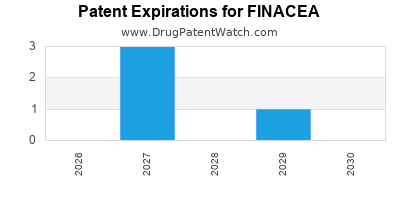
Drug patent expirations by year for FINACEA
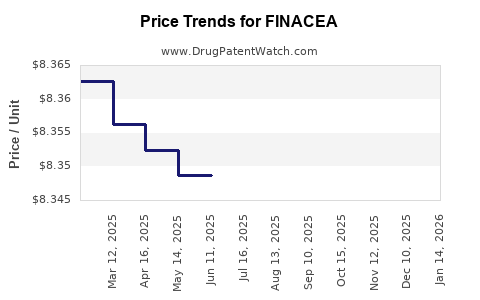
Drug Prices for FINACEA

See drug prices for FINACEA

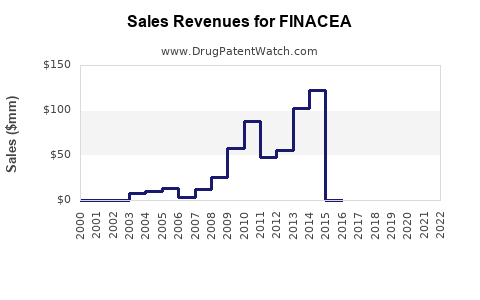
Drug Sales Revenue Trends for FINACEA

See drug sales revenues for FINACEA

Recent Clinical Trials for FINACEA

Identify potential brand extensions & 505(b)(2) entrants

SponsorPhase
Wake Forest University Health SciencesEarly Phase 1
Clinical Research Center of the CarolinasPhase 4
Perrigo CompanyPhase 3

See all FINACEA clinical trials

Pharmacology for FINACEA
Paragraph IV (Patent) Challenges for FINACEA
Tradename Dosage Ingredient Strength NDA ANDAs Submitted Submissiondate
FINACEA Topical Foam azelaic acid 15% 207071 1 2017-09-14
FINACEA Gel azelaic acid 15% 021470 1 2012-07-27

US Patents and Regulatory Information for FINACEA

FINACEA is protected by four US patents.

Applicant Tradename Generic Name Dosage NDA Approval Date TE Type RLD RS Patent No. Patent Expiration Product Substance Delist Req. Exclusivity Expiration
Leo Pharma As FINACEA azelaic acid AEROSOL, FOAM;TOPICAL 207071-001 Jul 29, 2015 RX Yes Yes ⤷  Start Trial ⤷  Start Trial Y ⤷  Start Trial
Leo Pharma As FINACEA azelaic acid AEROSOL, FOAM;TOPICAL 207071-001 Jul 29, 2015 RX Yes Yes ⤷  Start Trial ⤷  Start Trial ⤷  Start Trial
Leo Pharma As FINACEA azelaic acid AEROSOL, FOAM;TOPICAL 207071-001 Jul 29, 2015 RX Yes Yes ⤷  Start Trial ⤷  Start Trial Y ⤷  Start Trial
Leo Pharma As FINACEA azelaic acid GEL;TOPICAL 021470-001 Dec 24, 2002 AB RX Yes Yes ⤷  Start Trial ⤷  Start Trial ⤷  Start Trial
>Applicant >Tradename >Generic Name >Dosage >NDA >Approval Date >TE >Type >RLD >RS >Patent No. >Patent Expiration >Product >Substance >Delist Req. >Exclusivity Expiration

Expired US Patents for FINACEA

Applicant Tradename Generic Name Dosage NDA Approval Date Patent No. Patent Expiration
Leo Pharma As FINACEA azelaic acid AEROSOL, FOAM;TOPICAL 207071-001 Jul 29, 2015 ⤷  Start Trial ⤷  Start Trial
Leo Pharma As FINACEA azelaic acid GEL;TOPICAL 021470-001 Dec 24, 2002 ⤷  Start Trial ⤷  Start Trial
Leo Pharma As FINACEA azelaic acid AEROSOL, FOAM;TOPICAL 207071-001 Jul 29, 2015 ⤷  Start Trial ⤷  Start Trial
>Applicant >Tradename >Generic Name >Dosage >NDA >Approval Date >Patent No. >Patent Expiration

International Patents for FINACEA

When does loss-of-exclusivity occur for FINACEA?

Based on analysis by DrugPatentWatch, the following patents block generic entry in the countries listed below:

Canada

Patent: 06933
Patent: TROUSSE DE STEROIDES, COMPOSITION MOUSSANTE ET UTILISATIONS (STEROID KIT AND FOAMABLE COMPOSITION AND USES THEREOF)
Estimated Expiration: ⤷  Start Trial

Patent: 09948
Patent: TROUSSE ET COMPOSITION VASOACTIVE ET LEURS UTILISATIONS (VASOACTIVE KIT AND COMPOSITION AND USES THEREOF)
Estimated Expiration: ⤷  Start Trial

Patent: 09953
Patent: COMPOSITIONS EXPANSIBLES SACCHARIDIQUES (SACCHARIDE FOAMABLE COMPOSITIONS)
Estimated Expiration: ⤷  Start Trial

Patent: 10662
Patent: EXCIPIENT EXPANSIBLE ET COMPOSITIONS PHARMACEUTIQUES CONTENANT CELUI-CI (FOAMABLE VEHICLE AND PHARMACEUTICAL COMPOSITIONS THEREOF)
Estimated Expiration: ⤷  Start Trial

Patent: 11577
Patent: KIT ET COMPOSITION ANTIBIOTIQUES ET LEURS UTILISATIONS (ANTIBIOTIC KIT AND COMPOSITION AND USES THEREOF)
Estimated Expiration: ⤷  Start Trial

Patent: 11703
Patent: MOUSSE DE COMPOSITION TOPIQUE MODIFIANT LA SENSATION (SENSATION MODIFYING TOPICAL COMPOSITION FOAM)
Estimated Expiration: ⤷  Start Trial

Patent: 14015
Patent: COMPOSITIONS PHARMACEUTIQUES ET COSMETIQUES MOUSSANTES A BASE DE PETROLATUM, SENSIBLEMENT NON AQUEUSES ET LEURS UTILISATIONS (SUBSTANTIALLY NON-AQUEOUS FOAMABLE PETROLATUM BASED PHARMACEUTICAL AND COSMETIC COMPOSITIONS AND THEIR USES)
Estimated Expiration: ⤷  Start Trial

Generics may enter earlier, or later, based on new patent filings, patent extensions, patent invalidation, early generic licensing, generic entry preferences, and other factors.

See the table below for additional patents covering FINACEA around the world.

Country Patent Number Title Estimated Expiration
Denmark 1032379 ⤷  Start Trial
Turkey 200001393 ⤷  Start Trial
Portugal 1032379 ⤷  Start Trial
Canada 2711703 MOUSSE DE COMPOSITION TOPIQUE MODIFIANT LA SENSATION (SENSATION MODIFYING TOPICAL COMPOSITION FOAM) ⤷  Start Trial
World Intellectual Property Organization (WIPO) 2006129161 ⤷  Start Trial
World Intellectual Property Organization (WIPO) 2007039825 ⤷  Start Trial
>Country >Patent Number >Title >Estimated Expiration

FINACEA: Patent Expiries and Market Landscape

Last updated: February 19, 2026

FINACEA, a topical medication for rosacea, faces imminent patent expirations, necessitating strategic evaluation of its market trajectory and competitive positioning. The drug's current market share and revenue streams are projected to undergo significant shifts as generic alternatives become available.

What are FINACEA's Key Patents and Their Expiration Dates?

FINACEA's primary active ingredient is azelaic acid. The core patent protecting the specific formulation and therapeutic use of FINACEA as a prescription treatment for rosacea is the U.S. Patent No. 5,352,450.

  • U.S. Patent No. 5,352,450: This patent, filed on March 8, 1993, and issued on October 4, 1994, claims "Topical pharmaceutical compositions containing azelaic acid." The term of this patent is 20 years from the filing date, making its expiration date March 8, 2013.
  • Regulatory Exclusivity: In addition to patent protection, FINACEA benefited from New Chemical Entity (NCE) exclusivity. In the U.S., NCE exclusivity is generally five years from the date of approval. FINACEA (as Finacea® gel, 15%) was approved by the U.S. Food and Drug Administration (FDA) on April 26, 2002. Therefore, NCE exclusivity expired around April 26, 2007.
  • Orphan Drug Exclusivity: While azelaic acid has been used for other indications, the specific formulation and indication for rosacea did not qualify for orphan drug designation, which typically grants an additional seven years of market exclusivity.

The expiration of these key patent and regulatory exclusivities signifies the end of market exclusivity for branded FINACEA and opens the door for generic competition.

What is FINACEA's Current Market Performance?

FINACEA's market performance is characterized by its established position in the topical rosacea treatment segment, primarily driven by its prescription status and efficacy in managing inflammatory lesions and erythema.

  • Global Sales: While specific, up-to-date global sales figures for FINACEA are not publicly disclosed by Bayer (the originator), market research reports and historical financial statements of dermatology products indicate that FINACEA has generated substantial revenue. Prior to significant generic entry in some markets, annual sales were estimated to be in the tens of millions of U.S. dollars globally.
  • Market Share: In the prescription topical rosacea market, FINACEA has historically held a significant share, competing with other topical agents such as metronidazole, ivermectin, and brimonidine. Its market share has likely been impacted by the availability of generic azelaic acid products in recent years, particularly since the expiration of its U.S. patent in 2013.
  • Pricing: The pricing of branded FINACEA reflects its prescription status and research and development investment. Generic versions are typically priced at a significant discount, leading to price erosion in the overall market.
  • Geographic Distribution: FINACEA is marketed globally, with significant presence in North America, Europe, and Asia. Regulatory approvals and market penetration vary by region.

Who are FINACEA's Primary Competitors?

The competitive landscape for FINACEA includes both branded and generic pharmaceutical products, as well as other therapeutic classes for rosacea management.

Branded Competitors

These are other prescription topical treatments for rosacea that have gained market traction.

  • Soolantra® (ivermectin) Cream 1%: Developed by Galderma, Soolantra® is a topical parasiticidal agent that targets Demodex mites, a common contributor to rosacea. It is a significant competitor due to its efficacy in reducing inflammatory lesions and its once-daily dosing.
  • Mirvaso® (brimonidine) Gel 0.5%: Also by Galderma, Mirvaso® is a topical alpha-2 adrenergic agonist that works by constricting blood vessels to reduce facial redness (erythema). It targets a different symptom of rosacea than FINACEA.
  • Etabs® (metronidazole) Topical Gel/Cream: Various manufacturers produce branded versions of metronidazole topical formulations. Metronidazole is a widely used antibiotic and anti-inflammatory agent for rosacea.
  • Rosiper® (oxymetazoline) Cream 1%: Developed by Revance Therapeutics, Rosiper® is a topical alpha-1 adrenergic agonist, similar to Mirvaso®, designed to reduce persistent facial erythema.

Generic Competitors

Following the expiration of FINACEA's patents and exclusivities, generic azelaic acid formulations have entered the market.

  • Generic Azelaic Acid Gels and Creams: Multiple pharmaceutical companies now market generic versions of azelaic acid topical formulations (e.g., 15% gel, 10% cream). These products are direct substitutes for FINACEA and compete primarily on price. Examples of manufacturers include Teva Pharmaceuticals, Mylan N.V. (now Viatris), and Aurobindo Pharma.

Other Therapeutic Approaches

While not direct competitors in terms of active pharmaceutical ingredient, these represent alternative strategies for rosacea management.

  • Oral Antibiotics: Tetracyclines (e.g., doxycycline, minocycline) and macrolides are frequently prescribed for moderate to severe inflammatory rosacea.
  • Isotretinoin: Oral isotretinoin is reserved for severe or recalcitrant cases of rosacea.
  • Laser and Light Therapies: Treatments like Intense Pulsed Light (IPL) and pulsed dye laser (PDL) are used to address persistent erythema and telangiectasias.

What is the Impact of Generic Entry on FINACEA's Revenue?

The entry of generic azelaic acid products has a direct and substantial negative impact on FINACEA's revenue streams.

  • Price Erosion: Generic competition typically leads to significant price reductions in the market. Branded FINACEA, to maintain market share, may need to lower its price or rely on its established brand loyalty and physician preference. However, the price differential between branded and generic versions can be substantial, often exceeding 70-80% savings for the generic.
  • Market Share Loss: Prescribers and patients are often motivated by cost savings, leading to a shift towards generic alternatives. This results in a direct loss of market share for branded FINACEA.
  • Reduced Profit Margins: Even if FINACEA retains some market share, the need to compete with lower-priced generics will compress profit margins for the originator.
  • Shifting Reimbursement Landscape: Payers (insurance companies) often prioritize or mandate the use of generics when available, further incentivizing the switch away from branded products.
  • Exclusivity Period Impact: The period immediately following patent expiration (typically 2013 for U.S. patent '450) saw a rapid decline in branded sales as generics gained traction. The longer the patent protection period, the more sustained the revenue for the originator. For FINACEA, this loss of exclusivity has been a defining factor in its post-2013 financial trajectory.

What is the Future Market Projection for FINACEA and its Generics?

The future market for FINACEA and its generic counterparts is expected to be characterized by continued price competition and a maturing market for azelaic acid.

  • Continued Dominance of Generics: Generic azelaic acid is projected to remain the dominant force in the azelaic acid topical market. The cost-effectiveness of generics will drive their uptake.
  • Stable but Lowered Market Size: The overall market size for topical azelaic acid treatments is likely to remain relatively stable, driven by the prevalence of rosacea. However, the total revenue generated will be lower than during the branded exclusivity period due to price deflation.
  • Niche Role for Branded FINACEA: Branded FINACEA may retain a niche market share, possibly appealing to patients or physicians who prefer the established brand, have specific formulary access, or benefit from patient support programs. However, this share is expected to be considerably smaller than its historical peak.
  • Innovation in Rosacea Treatment: The development of new therapeutic modalities and novel drug delivery systems for rosacea could influence the long-term market dynamics. Companies may focus on developing more targeted or convenient treatments.
  • Emerging Markets: Growth opportunities may exist in emerging markets where generic penetration might be slower initially, but eventually, cost considerations will drive generic adoption.
  • Regulatory Landscape: Changes in regulatory policies regarding drug pricing and generic drug approval could also influence future market dynamics.

What are the Key Takeaways?

  • FINACEA's core U.S. patent expired in March 2013, with NCE exclusivity expiring in April 2007, paving the way for generic competition.
  • The market for FINACEA has transitioned from a branded, exclusive environment to a highly competitive generic landscape.
  • Generic azelaic acid products offer significant cost savings, leading to substantial price erosion and market share loss for branded FINACEA.
  • The competitive environment includes other branded rosacea treatments (ivermectin, brimonidine) and various generic formulations.
  • Future market projections indicate continued generic dominance, stable overall market volume, and a reduced role for branded FINACEA.

Frequently Asked Questions

What specific inflammatory conditions does azelaic acid, the active ingredient in FINACEA, treat?

Azelaic acid is primarily indicated for the treatment of inflammatory papules and pustules of mild to moderate rosacea. It also exhibits antimicrobial and anti-inflammatory properties.

Are there any specific advantages of branded FINACEA over generic azelaic acid products for patients?

Branded FINACEA may offer consistency in formulation, quality control, and potentially patient support programs. However, these perceived advantages often come at a significantly higher cost compared to generic alternatives.

How has the development of novel treatments for rosacea, such as ivermectin, impacted the market for azelaic acid?

Novel treatments like Soolantra® (ivermectin) have introduced new mechanisms of action and therapeutic options for rosacea, potentially diverting market share from established treatments like FINACEA. Ivermectin targets Demodex mites, a factor in rosacea pathogenesis, offering a complementary approach.

What is the typical pricing difference between branded FINACEA and its generic equivalents?

The pricing difference can vary significantly based on geography, pharmacy, and insurance coverage, but generic azelaic acid formulations typically cost 70-90% less than branded FINACEA.

Beyond prescription treatments, what over-the-counter (OTC) options exist for rosacea management that might compete indirectly with FINACEA?

While FINACEA is a prescription drug, some OTC products contain lower concentrations of azelaic acid (e.g., 10% creams) or other ingredients aimed at managing rosacea symptoms like redness or dryness. However, these OTC options are generally for milder symptoms and do not directly compete with the prescription-strength efficacy of FINACEA for inflammatory lesions.

Citations

[1] U.S. Patent No. 5,352,450. (1994). Topical pharmaceutical compositions containing azelaic acid. United States Patent and Trademark Office. [2] U.S. Food and Drug Administration. (2002, April 26). Approval Letter - Finacea Gel. Retrieved from FDA database (specific document access may vary). [3] Market research reports on the dermatology market and rosacea treatment landscape. (Specific report details are proprietary and not publicly disclosed). [4] Pharmaceutical industry financial reports and company product portfolios. (Specific data is often found in annual reports and investor presentations).

More… ↓

⤷  Start Trial

Make Better Decisions: Try a trial or see plans & pricing

Drugs may be covered by multiple patents or regulatory protections. All trademarks and applicant names are the property of their respective owners or licensors. Although great care is taken in the proper and correct provision of this service, thinkBiotech LLC does not accept any responsibility for possible consequences of errors or omissions in the provided data. The data presented herein is for information purposes only. There is no warranty that the data contained herein is error free. We do not provide individual investment advice. This service is not registered with any financial regulatory agency. The information we publish is educational only and based on our opinions plus our models. By using DrugPatentWatch you acknowledge that we do not provide personalized recommendations or advice. thinkBiotech performs no independent verification of facts as provided by public sources nor are attempts made to provide legal or investing advice. Any reliance on data provided herein is done solely at the discretion of the user. Users of this service are advised to seek professional advice and independent confirmation before considering acting on any of the provided information. thinkBiotech LLC reserves the right to amend, extend or withdraw any part or all of the offered service without notice.