You're using a free limited version of DrugPatentWatch: Upgrade for Complete Access

Last Updated: December 14, 2025

ESCITALOPRAM Drug Patent Profile


✉ Email this page to a colleague

« Back to Dashboard


When do Escitalopram patents expire, and when can generic versions of Escitalopram launch?

Escitalopram is a drug marketed by Almatica, Rising, Amneal Pharms, Antrim Pharms Llc, Aurobindo Pharma Ltd, Chartwell Molecular, Hetero Labs Ltd Iii, Macleods Pharms Ltd, Sun Pharma Canada, Accord Hlthcare, Aiping Pharm Inc, Ascent Pharms Inc, Chartwell Rx, Graviti Pharms, Hikma Pharms, Invagen Pharms, Jubilant Cadista, Novitium Pharma, Prinston Inc, Teva Pharms Usa, Torrent Pharms Ltd, and Zydus Lifesciences. and is included in twenty-five NDAs.

The generic ingredient in ESCITALOPRAM is escitalopram oxalate. There are twenty-six drug master file entries for this compound. Forty-five suppliers are listed for this compound. Additional details are available on the escitalopram oxalate profile page.

DrugPatentWatch® Litigation and Generic Entry Outlook for Escitalopram

A generic version of ESCITALOPRAM was approved as escitalopram oxalate by AMNEAL PHARMS on March 14th, 2012.

  Get Started Free

AI Deep Research
Questions you can ask:
  • What is the 5 year forecast for ESCITALOPRAM?
  • What are the global sales for ESCITALOPRAM?
  • What is Average Wholesale Price for ESCITALOPRAM?
Drug patent expirations by year for ESCITALOPRAM
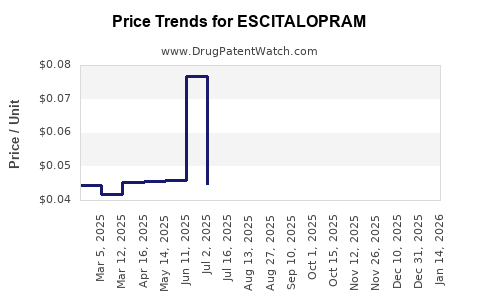
Drug Prices for ESCITALOPRAM

See drug prices for ESCITALOPRAM

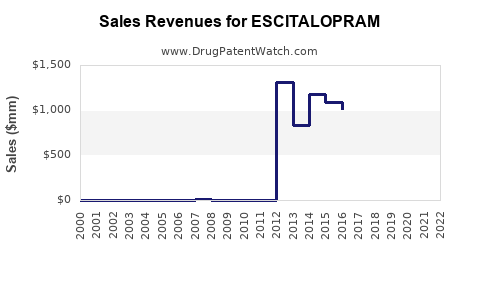
Drug Sales Revenue Trends for ESCITALOPRAM

See drug sales revenues for ESCITALOPRAM

Recent Clinical Trials for ESCITALOPRAM

Identify potential brand extensions & 505(b)(2) entrants

SponsorPhase
Cipla Ltd.PHASE2
National Institute of Allergy and Infectious Diseases (NIAID)PHASE2
Lions Forskningsfond SknePHASE2

See all ESCITALOPRAM clinical trials

Pharmacology for ESCITALOPRAM

US Patents and Regulatory Information for ESCITALOPRAM

Applicant Tradename Generic Name Dosage NDA Approval Date TE Type RLD RS Patent No. Patent Expiration Product Substance Delist Req. Exclusivity Expiration
Jubilant Cadista ESCITALOPRAM OXALATE escitalopram oxalate TABLET;ORAL 202280-003 Sep 12, 2012 AB RX No No ⤷  Get Started Free ⤷  Get Started Free ⤷  Get Started Free
Graviti Pharms ESCITALOPRAM OXALATE escitalopram oxalate TABLET;ORAL 078777-003 Sep 11, 2012 AB RX No No ⤷  Get Started Free ⤷  Get Started Free ⤷  Get Started Free
Prinston Inc ESCITALOPRAM OXALATE escitalopram oxalate TABLET;ORAL 078032-002 Aug 28, 2015 AB RX No No ⤷  Get Started Free ⤷  Get Started Free ⤷  Get Started Free
Novitium Pharma ESCITALOPRAM OXALATE escitalopram oxalate TABLET;ORAL 077550-001 May 14, 2015 DISCN No No ⤷  Get Started Free ⤷  Get Started Free ⤷  Get Started Free
Prinston Inc ESCITALOPRAM OXALATE escitalopram oxalate TABLET;ORAL 078032-003 Aug 28, 2015 AB RX No No ⤷  Get Started Free ⤷  Get Started Free ⤷  Get Started Free
>Applicant >Tradename >Generic Name >Dosage >NDA >Approval Date >TE >Type >RLD >RS >Patent No. >Patent Expiration >Product >Substance >Delist Req. >Exclusivity Expiration

Market Dynamics and Financial Trajectory for Escitalopram

Last updated: October 9, 2025


Introduction

Escitalopram, marketed under brand names such as Lexapro, is a selective serotonin reuptake inhibitor (SSRI) primarily prescribed for depression and generalized anxiety disorder. Since its approval by the U.S. Food and Drug Administration (FDA) in 2002, escitalopram has established itself as a leading therapeutic option in the mental health market. This analysis explores the evolving market landscape, key drivers, competitive dynamics, pricing trends, and future financial prospects, offering insights critical for stakeholders aiming to assess investments, clinical positioning, and strategic planning.


Market Overview

The global antidepressant market, estimated to reach USD 16.8 billion by 2026 (CAGR ~2.9%), significantly features SSRIs like escitalopram. The escalating prevalence of mental health disorders, coupled with growing social awareness and destigmatization, fuels demand. The prevalence of depression worldwide—over 264 million people according to WHO—constitutes a persistent market driver for antidepressants, including escitalopram [1].

Manufacturers such as Forest Laboratories (now part of Allergan), Lundbeck, and generic producers have aggressively competed in this space, influencing the market's volume and pricing dynamics. The product's position as a first-line treatment in depression and anxiety contributes to its sustained demand.


Market Dynamics

1. Drivers

  • Growing Mental Health Awareness: Increasing societal recognition of mental health issues expands treatment adoption. Governments and health agencies promote screening and early intervention.

  • Expanded Indications and Off-Label Use: While primarily prescribed for depression and anxiety, escitalopram’s off-label use for obsessive-compulsive disorder (OCD) and other conditions broadens its market reach.

  • Advancements in Marketing and Distribution: Digital health platforms and telemedicine expansion facilitate access to prescriptions, especially amidst the COVID-19 pandemic, further spurring sales.

  • Patent Expiry and Generic Entry: Initially protected by patent, escitalopram faced generic competition starting around 2012, leading to a significant reduction in prices and expansion in purchasing volume.

2. Challenges

  • Generic Competition and Price Erosion: The entrance of generics significantly diluted market share and profitability for brand-name formulations. For instance, in the U.S., generic versions hold over 90% market share, causing price compression [2].

  • Regulatory and Reimbursement Policies: Stringent regulations and variable reimbursement policies across regions impact market access and profitability.

  • Side Effect Profile and Alternative Therapies: The availability of newer antidepressants and psychotherapies offers substitute options, which may influence prescribing patterns.

3. Competitive Landscape

The core competition centers around generics, with key manufacturers producing bioequivalent products. Major pharmaceutical firms have also attempted to develop novel formulations (e.g., long-acting depots, combination therapies) to differentiate offerings and extend market longevity.


Pricing Trends and Financial Trajectory

Pre-Patent Expiry Period:

During its patent-protected phase (2002–2012), escitalopram commanded premium pricing, with annual sales peaking at over USD 3 billion globally in 2010–2011. The brand’s pricing strategies capitalized on clinical efficacy and physician preference, yielding high margins.

Post-Patent and Generic Entry:

Post-2012, the landscape shifted rapidly. Generics flooded the market, reducing prices by as much as 80%, with some estimates indicating a decline from USD 4–6 per tablet to as low as USD 1 or less in many regions [3].

Current and Future Trends:

  • Market Resilience: Despite price drops, volume-based sales help maintain revenue streams. The ongoing need for depression treatment sustains consistent demand.

  • Biosimilar and Formulation Innovation Pipeline: Companies are exploring extended-release formulations and combination therapies, which may command premium pricing for differentiated delivery.

  • Regional Variations: Sales dynamics diverge significantly; for instance, North America remains the largest market, whereas emerging markets exhibit growing demand driven by increasing mental health awareness.

Financial Projections:

Analysts forecast a steady decline in per-unit revenue for escitalopram due to commoditization, with global sales stabilizing around USD 1.5–2 billion annually in the next five years. Key growth drivers will include expanding indications, regional market penetration, and formulation innovations.


Strategic Implications for Stakeholders

  • Pharmaceutical Companies: Investment in formulation differentiation, pipeline expansion, and regional market penetration can offset generic price erosion.

  • Investors: While brand-name profits diminish post-patent expiry, companies with diverse portfolios or proprietary formulations may sustain profitability.

  • Healthcare Systems: Cost pressures necessitate careful formulary management, favoring generic prescribing where appropriate.

  • Regulators: Ensuring bioequivalence standards and monitoring off-label use remain critical to market integrity.


Conclusion

Escitalopram’s market and financial trajectory showcase a typical lifecycle progression in the pharmaceutical industry: rapid growth during patent protection, followed by commoditization, and hopefully, eventual mature stabilization through innovation and expanded indications. Despite significant price erosion post-generic entry, the drug’s continued demand underscores its clinical value. Strategic diversification and formulation innovation remain essential to sustain profitability in this highly competitive space.


Key Takeaways

  • The escitalopram market is driven by its established efficacy, shifting from high-margin branded sales to volume-based generics amid patent expiries.
  • Price erosion post-generic entry remains a primary challenge, but regional demand growth and formulation innovations offer pathways for sustained revenue streams.
  • The future will likely see increased focus on differentiated formulations and expanded indications to prolong market viability.
  • Stakeholders should monitor regional regulatory policies, reimbursement landscapes, and emerging competition to optimize strategic positioning.
  • Continuous innovation and diversification are vital to mitigate the financial impacts of generic competition and sustain long-term profitability.

FAQs

1. How has patent expiry affected escitalopram’s market share and pricing?
Patent expiry in 2012 led to the widespread availability of generic versions, drastically reducing prices—by up to 80%—and shifting market share from branded to generics, although overall volume sales remained steady.

2. What are the main factors influencing future sales of escitalopram?
Key factors include regional market expansion, rising mental health awareness, development of novel formulations, and broadening of approved indications.

3. Are there ongoing innovations to extend escitalopram’s market life?
Yes, companies are exploring long-acting formulations, combination therapies, and novel delivery mechanisms to differentiate products and maintain pricing power.

4. How does regional variation impact escitalopram’s revenue prospects?
Developed markets like North America dominate sales with higher pricing, whereas emerging markets show potential for growth due to increasing mental health awareness but face hurdles like pricing sensitivities and regulatory barriers.

5. What strategies can pharmaceutical companies adopt to remain competitive?
Investing in formulation innovation, expanding indications, entering emerging markets, and optimizing supply chains are critical strategies to navigate the post-patent landscape.


References

[1] World Health Organization. Depression and Other Common Mental Disorders: Global Health Estimates. WHO, 2017.
[2] FDA. Orange Book: Approved Drug Products with Therapeutic Equivalence Evaluations. 2022.
[3] IQVIA. Global Use of Medicine in 2020: Insights and Trends. 2021.

More… ↓

⤷  Get Started Free

Make Better Decisions: Try a trial or see plans & pricing

Drugs may be covered by multiple patents or regulatory protections. All trademarks and applicant names are the property of their respective owners or licensors. Although great care is taken in the proper and correct provision of this service, thinkBiotech LLC does not accept any responsibility for possible consequences of errors or omissions in the provided data. The data presented herein is for information purposes only. There is no warranty that the data contained herein is error free. We do not provide individual investment advice. This service is not registered with any financial regulatory agency. The information we publish is educational only and based on our opinions plus our models. By using DrugPatentWatch you acknowledge that we do not provide personalized recommendations or advice. thinkBiotech performs no independent verification of facts as provided by public sources nor are attempts made to provide legal or investing advice. Any reliance on data provided herein is done solely at the discretion of the user. Users of this service are advised to seek professional advice and independent confirmation before considering acting on any of the provided information. thinkBiotech LLC reserves the right to amend, extend or withdraw any part or all of the offered service without notice.