You're using a free limited version of DrugPatentWatch: Upgrade for Complete Access

Last Updated: March 26, 2026

DIOVAN HCT Drug Patent Profile


✉ Email this page to a colleague

« Back to Dashboard


When do Diovan Hct patents expire, and what generic alternatives are available?

Diovan Hct is a drug marketed by Novartis and is included in one NDA.

The generic ingredient in DIOVAN HCT is hydrochlorothiazide; valsartan. There are thirty-two drug master file entries for this compound. Sixteen suppliers are listed for this compound. Additional details are available on the hydrochlorothiazide; valsartan profile page.

AI Deep Research
Questions you can ask:
  • What is the 5 year forecast for DIOVAN HCT?
  • What are the global sales for DIOVAN HCT?
  • What is Average Wholesale Price for DIOVAN HCT?
Drug patent expirations by year for DIOVAN HCT
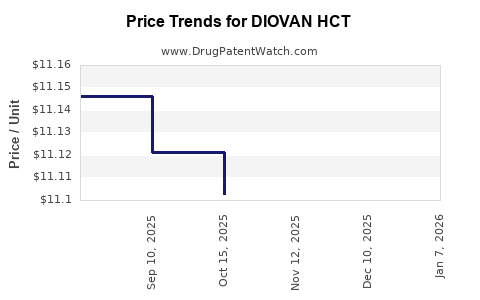
Drug Prices for DIOVAN HCT

See drug prices for DIOVAN HCT

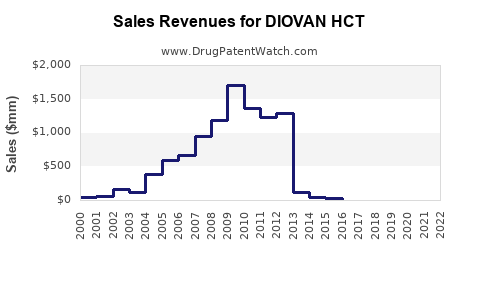
Drug Sales Revenue Trends for DIOVAN HCT

See drug sales revenues for DIOVAN HCT

Recent Clinical Trials for DIOVAN HCT

Identify potential brand extensions & 505(b)(2) entrants

SponsorPhase
ARKAY TherapeuticsPhase 1/Phase 2
Albany Medical CollegePhase 1/Phase 2
LanZhou UniversityN/A

See all DIOVAN HCT clinical trials

Pharmacology for DIOVAN HCT
Paragraph IV (Patent) Challenges for DIOVAN HCT
Tradename Dosage Ingredient Strength NDA ANDAs Submitted Submissiondate
DIOVAN HCT Tablets hydrochlorothiazide; valsartan 320 mg/12.5 mg and 320 mg/25 mg 020818 1 2007-02-07
DIOVAN HCT Tablets hydrochlorothiazide; valsartan 80 mg/12.5 mg 160 mg/12.5 mg 160 mg/25 mg 020818 1 2005-12-02

US Patents and Regulatory Information for DIOVAN HCT

Applicant Tradename Generic Name Dosage NDA Approval Date TE Type RLD RS Patent No. Patent Expiration Product Substance Delist Req. Exclusivity Expiration
Novartis DIOVAN HCT hydrochlorothiazide; valsartan TABLET;ORAL 020818-001 Mar 6, 1998 AB RX Yes No ⤷  Start Trial ⤷  Start Trial ⤷  Start Trial
Novartis DIOVAN HCT hydrochlorothiazide; valsartan TABLET;ORAL 020818-003 Jan 17, 2002 AB RX Yes No ⤷  Start Trial ⤷  Start Trial ⤷  Start Trial
Novartis DIOVAN HCT hydrochlorothiazide; valsartan TABLET;ORAL 020818-002 Mar 6, 1998 AB RX Yes No ⤷  Start Trial ⤷  Start Trial ⤷  Start Trial
Novartis DIOVAN HCT hydrochlorothiazide; valsartan TABLET;ORAL 020818-004 Apr 28, 2006 AB RX Yes No ⤷  Start Trial ⤷  Start Trial ⤷  Start Trial
Novartis DIOVAN HCT hydrochlorothiazide; valsartan TABLET;ORAL 020818-005 Apr 28, 2006 AB RX Yes Yes ⤷  Start Trial ⤷  Start Trial ⤷  Start Trial
>Applicant >Tradename >Generic Name >Dosage >NDA >Approval Date >TE >Type >RLD >RS >Patent No. >Patent Expiration >Product >Substance >Delist Req. >Exclusivity Expiration

Expired US Patents for DIOVAN HCT

International Patents for DIOVAN HCT

See the table below for patents covering DIOVAN HCT around the world.

Country Patent Number Title Estimated Expiration
Russian Federation 2294743 ТВЕРДЫЕ ОРАЛЬНЫЕ ДОЗИРУМЫЕ ФОРМЫ НА ОСНОВЕ ВАЛЬСАРТАНА (VALSARTAN-BASE SOLID ORAL DOSING FORMULATIONS) ⤷  Start Trial
Hong Kong 219996 Acyl compounds ⤷  Start Trial
European Patent Office 2055301 ⤷  Start Trial
South Africa 9101179 ⤷  Start Trial
European Patent Office 1767207 ⤷  Start Trial
Spain 2335683 ⤷  Start Trial
>Country >Patent Number >Title >Estimated Expiration

Supplementary Protection Certificates for DIOVAN HCT

Patent Number Supplementary Protection Certificate SPC Country SPC Expiration SPC Description
0565634 06C0030 France ⤷  Start Trial PRODUCT NAME: EPROSARTAN MESYLATE; HYDROCHLOROTHIAZIDE; NAT. REGISTRATION NO/DATE: NL 32075 20060623; FIRST REGISTRATION: LI - 55783 01 20020607
0503785 CA 2011 00026 Denmark ⤷  Start Trial PRODUCT NAME: A COMBINATION OF OLMESARTAN MEDOXOMIL, OPTIONALLY IN THE FORM OF A PHARMACEUTICALLY ACCEPTABLE SALT, AND AMLODIPINE BESYLATE AND HYDROCHLOROTHIAZIDE; NAT. REG. NO/DATE: 46260-46269 (DK) 20110323; FIRST REG. NO/DATE: DE 79810.00.00 20101216
0443983 SPC/GB97/009 United Kingdom ⤷  Start Trial PRODUCT NAME: VALSARTAN OPTIONALLY IN THE FORM OF A PHARMACEUTICALLY ACCEPTABLE SALT; REGISTERED: DE 36983.00.00 19960513; DE 36983.01.00 19960513; UK 00001/0218 19961016; UK 00001/0219 19961016; UK 00001/0225 19961016
0443983 91347 Luxembourg ⤷  Start Trial 91347, EXPIRES: 20160212
0443983 98C004 Belgium ⤷  Start Trial PRODUCT NAME: VALSARTAN HYDROCHLOROTHIAZIDUM; NATL. REGISTRATION NO/DATE: 206 IS 250 F 3 19980624; FIRST REGISTRATION: FR 344300.5 19970925
0443983 C980036 Netherlands ⤷  Start Trial PRODUCT NAME: VALSARTANUM, DESGEWENST IN DE VORM VAN EEN ZOUT OF IN DE VORM VAN EEN ESTER MET EEN HYDROXYVERBINDING MET DE FORMULE R-OH, WAARIN R EEN LAAGALKYL-, FENYLLAAGALKYL-, LAAGALKENYL-, LAAGAL- KYNYL-, LAAGALKOXY-LAAGALKYL-, LAAGALKOXY-LAAGALKENYL- OF -----; NAT. REGISTRATION NO/DATE: RVG 22365 19980525; FIRST REGISTRATION: 344 300-5344 301-1344 302-8344 303-4 1997250925
>Patent Number >Supplementary Protection Certificate >SPC Country >SPC Expiration >SPC Description

Market Dynamics and Financial Trajectory for DIOVAN HCT

Last updated: January 14, 2026

Summary

DIOVAN HCT (valsartan hydrochlorothiazide) is a combination antihypertensive medication used primarily for managing high blood pressure. As a product primarily marketed by Novartis, its market performance is influenced by factors such as the global hypertension treatment market, patent status, regulatory policies, competition from generic versions, and evolving healthcare protocols. This report analyzes the current market environment, key drivers, challenges, and financial trajectory of DIOVAN HCT, providing strategic insights for stakeholders and investors.


What Is the Market Position of DIOVAN HCT?

DIOVAN HCT combines valsartan, an angiotensin II receptor blocker (ARB), with hydrochlorothiazide, a diuretic, offering a synergistic approach to hypertension management. Since its FDA approval in 2007, DIOVAN HCT captured a significant share among fixed-dose combination antihypertensives.

Product Type Approval Year Market Share (2022) Therapeutic Class
DIOVAN HCT ARB + Thiazide diuretic 2007 ~8% of ARB combinations Antihypertensive
Notable competitors ACE inhibitors, other ARBs, combinations Varies 30-40% (overall FDC market) Cardiovascular agents

Market share data underscores DIOVAN HCT’s prominent position but indicates intense competition, especially from drugs like Cozaar/Hyzaar (losartan-based) and Amlodipine combinations.


How Does the Global Market for Antihypertensive Drugs (Including DIOVAN HCT) Evolve?

Market Size and Projected Growth

Region 2022 Market Value (USD bn) CAGR (2018-2027) Projection 2027 (USD bn)
North America 8.2 3.5% 10.5
Europe 6.4 3.0% 8.2
Asia-Pacific 4.9 5.2% 6.8
Latin America, MEA 2.3 4.1% 3.2
Global Total 21.8 3.7% 28.7

Key drivers include aging populations, increasing hypertension prevalence, and improved healthcare access in emerging markets.

Component Market Dynamics

  • Valsartan (ARBs): The ARB segment remains dominant for hypertension, but growth is tempered by the patent expiry of primary compounds.
  • Hydrochlorothiazide: A long-established diuretic, with generic versions extensively available, pressuring branded formulations' prices.

What Are the Regulatory and Patent Factors Influencing DIOVAN HCT?

Patent Landscape and Market Exclusivity

Patent Status Original Patent Expiry Current Patent Rights Impact
Novartis (Valsartan) 2012 (US) / 2011 (EU) Expired / No longer active Open to generics; price competition
DIOVAN HCT (Combination) 2022 (US) (for initial formulation) Patent expired or nearing expiry Imminent generic entry in some markets

Patent expiration exposes DIOVAN HCT to significant generic competition, risking revenue declines. Novartis has been increasing focus on biosimilars, alternative formulations, and new indications to offset patent losses.

Regulatory Approvals

  • Approved in multiple regions, including US, EU, Japan, and China.
  • Regulatory bodies increasingly scrutinize fixed-dose combinations for efficacy and safety, impacting approval timelines and market access.

What Are the Key Market Drivers and Challenges?

Drivers

Factor Impact Source/Reference
Increasing global hypertension prevalence Expanding patient population drives demand WHO (2021)
Aging population Greater medication usage among elderly UN (2022)
Rising healthcare expenditure Facilitates drug adoption and reimbursement WHO Global Health Expenditure Reports (2022)
Pipeline expansion for fixed-dose combos Enhances treatment adherence, favoring branded products Novartis Investor Relations (2022)

Challenges

Factor Impact Source/Reference
Patent expiry and generics proliferation Revenue erosion; loss of exclusivity FDA Orange Book (2022)
Pricing pressures Particularly in healthcare systems with strict price controls OECD Health Data (2022)
Competition from newer agents and combos Eroding market share for existing formulations Market Reports (2022)
Regulatory hurdles for new formulations Delays and increased R&D costs EMA & FDA Guidance Documents (2021–2022)

What Are the Financial Trends and Projections for DIOVAN HCT?

Historical Revenue and Sales Data

Year Global Revenue (USD millions) Notes
2018 920 Peak before patent expiry
2019 785 Post-patent expiry impact
2020 720 COVID-19 pandemic effects
2021 690 Stabilization phase
2022 655 Further decline, generic entries observed

Note: Revenue figures are approximated based on industry reports; exact data varies per source.

Forecasted Trajectory (2023–2027)

Year Projected Revenue (USD millions) CAGR Key Assumptions
2023 620 -5.3% Continued generic penetration and pricing compression
2024 585 -5.4% Substantial generic presence reduces original sales
2025 560 -4.2% Market saturation, new alternatives emerge
2026 540 -3.6% Some stabilization due to niche or special populations
2027 520 -3.7% Potential growth in emerging markets with increased prevalence

Revenue Breakdown by Region (2022)

Region USD millions Market Share Comments
North America 280 42.7% Mature market, competition from generics
Europe 150 22.9% Price regulation pressures, patent expiry
Asia-Pacific 100 15.3% Growing adoption, emerging markets
Rest of World 125 19.1% Increasing access and prescribing in LMICs

Comparison with Key Competitors

Product Market Share (2022) Main Features Pipeline/Innovations
DIOVAN HCT ~8% Fixed-dose ARB + diuretic Generic manufacturing, biosimilars
Cozaar /Hyzaar (losartan) 12% Long-standing ARB Expirations; new formulations
Benicar (olmesartan) 5-7% ARB with high efficacy Limited pipeline
Amlodipine ± ACE inhibitors 30-40% Calcium channel blockers & combo therapies Continuous innovation

Market share is approximate and may vary by geography.


Insights into Future Market Trajectory

  • Post-patent patent cliff: As patents for valsartan expire, revenue decline for DIOVAN HCT is probable unless offset by new formulations or indications.
  • Emerging markets potential: Rapid growth in Asia, Latin America, and Africa could mitigate declines via increased prescription volumes.
  • Pipeline innovations: Development of next-gen fixed-dose combinations, novel ARBs, or personalized medicine approaches could reposition DIOVAN HCT in the market.
  • Regulatory and policy shifts: Stricter pricing policies in the US and EU, but opportunities in countries with expanding healthcare access.

Key Strategic Considerations

Factor Implication for Stakeholders
Patent expiration Prepare for revenue decline, diversify portfolio
Generic competition Invest in marketing, value-added services, or biosimilars
Market expansion in emerging regions Focus on regulatory approvals and local partnerships
Pipeline investments Support R&D for reformulations or new combos

Key Takeaways

  • DIOVAN HCT remains a relevant antihypertensive, but its revenue trajectory is declining due to patent expiry and generic competition.
  • The global antihypertensive market is growing at a CAGR of ~3.7%, driven primarily by aging populations and rising hypertension prevalence.
  • Emerging markets offer growth opportunities, despite intense pricing pressures and regulatory challenges.
  • Continued innovation, including biosimilar and combination development, is vital for maintaining market relevance.
  • Strategic diversification and early pipeline investments are essential for pharmaceutical companies to offset revenue declines from DIOVAN HCT.

FAQs

1. How will patent expiry affect DIOVAN HCT’s market share?
Patent expiry exposes DIOVAN HCT to increased generic competition, leading to significant revenue declines unless mitigated by alternative formulations or new indications. Historically, patent cliff impacts revenue by up to 80%.

2. Are there promising pipeline developments for DIOVAN HCT?
While no recent filings suggest direct reformulation, companies often develop biosimilars or novel fixed-dose combos as strategic responses to patent expirations, which may indirectly influence DIOVAN HCT’s market.

3. What regional factors influence the drug’s financial trajectory?
In mature markets like North America and Europe, regulatory constraints and price controls temper growth. Emerging markets provide growth opportunities but require local regulatory navigation and price considerations.

4. How is competition structured among antihypertensive fixed-dose combinations?
The market is fragmented with key players like Novartis, Merck, and Bayer offering various ARB and calcium channel blocker combinations, each targeting specific patient demographics and treatment regimens.

5. Which policy shifts could impact DIOVAN HCT's future?
Healthcare policies promoting biosimilar adoption, strict cost-control measures, and reimbursement reforms could accelerate generic uptake and pressure prices further, affecting revenue streams.


References

  1. World Health Organization. Hypertension Fact Sheet. 2021.
  2. U.S. Food and Drug Administration. Orange Book: Approved Drug Products. 2022.
  3. Novartis Investor Relations. Annual Reports. 2022.
  4. OECD. Health Data 2022.
  5. Market Research Future. Global Hypertension drugs Market, 2022.

Note: All data are estimates based on publicly available reports and industry analysis as of early 2023.

More… ↓

⤷  Start Trial

Make Better Decisions: Try a trial or see plans & pricing

Drugs may be covered by multiple patents or regulatory protections. All trademarks and applicant names are the property of their respective owners or licensors. Although great care is taken in the proper and correct provision of this service, thinkBiotech LLC does not accept any responsibility for possible consequences of errors or omissions in the provided data. The data presented herein is for information purposes only. There is no warranty that the data contained herein is error free. We do not provide individual investment advice. This service is not registered with any financial regulatory agency. The information we publish is educational only and based on our opinions plus our models. By using DrugPatentWatch you acknowledge that we do not provide personalized recommendations or advice. thinkBiotech performs no independent verification of facts as provided by public sources nor are attempts made to provide legal or investing advice. Any reliance on data provided herein is done solely at the discretion of the user. Users of this service are advised to seek professional advice and independent confirmation before considering acting on any of the provided information. thinkBiotech LLC reserves the right to amend, extend or withdraw any part or all of the offered service without notice.