Last updated: July 27, 2025
Introduction
Betamethasone dipropionate is a potent synthetic corticosteroid used primarily in dermatology to treat inflammatory and pruritic skin conditions such as eczema, psoriasis, and dermatitis. Its therapeutic efficacy combined with its versatility has sustained steady demand, yet the drug's market landscape is shaped by regulatory, technological, and societal factors. This report offers an in-depth analysis of the current market dynamics and financial trajectories surrounding betamethasone dipropionate, providing insight for industry stakeholders and investors.
Pharmacological Profile and Competitive Landscape
Betamethasone dipropionate belongs to the class of high-potency topical steroids, acting through glucocorticoid receptor-mediated anti-inflammatory pathways. The drug’s efficacy, along with its relatively favorable safety profile when used appropriately, positions it as a standard-of-care treatment across many dermatological indications.
The competitive landscape comprises both brand-name formulations and numerous generic equivalents. Major pharmaceutical companies such as Pfizer, Mylan, and Sandoz lead the generic segment, benefitting from patent expirations and increased manufacturing capacities. The entry of generics has exerted downward pressure on wholesale and retail drug prices, impacting overall revenue potential for original manufacturers.
Market Drivers
Rising Dermatological Disease Prevalence
An increasing prevalence of dermatological conditions, particularly psoriasis and eczema, continues to expand the market for topical corticosteroids. Urbanization, pollution, climate change, and lifestyle-related factors contribute to this rise. According to the Global Burden of Disease Study, skin disorders account for approximately 1.9% of the total global disease burden, driving consistent demand for effective corticosteroid therapies like betamethasone dipropionate [1].
Advances in Topical Drug Delivery Technologies
Innovations such as nanoemulsion formulations, enhanced penetration systems, and combination therapies increase therapeutic efficacy and patient adherence. Pharmaceutical R&D investments focusing on improving bioavailability and reducing side effects bolster the value proposition of betamethasone dipropionate products.
Expanding Regulatory Approvals
Emerging markets, including Asia-Pacific, Latin America, and Africa, have witnessed increased regulatory approvals for corticosteroid formulations, facilitating geographical expansion and revenue diversification. The easing of regulatory pathways in these regions correlates with potential sales growth, especially where dermatology awareness and healthcare infrastructure are improving.
Healthcare Digitalization and Telemedicine
The proliferation of telemedicine services accelerates prescription and compliance for topical treatments. Digital platforms enable remote monitoring, facilitating more consistent medication use and expanding market access for betamethasone dipropionate formulations.
Market Challenges
Regulatory and Safety Concerns
The potent nature of betamethasone dipropionate raises concerns about long-term adverse effects such as skin atrophy, hypothalamic-pituitary-adrenal (HPA) suppression, and systemic absorption. Regulatory agencies like the FDA and EMA enforce strict labeling and usage guidelines, which can limit prescribing and impact sales volumes. Ongoing safety concerns may also prompt increased scrutiny and regulations, adding uncertainties.
Generic Competition and Price Erosion
Patents on innovative formulations have expired or are expiring, intensifying generic competition. Price erosion due to commoditization challenges revenue streams, especially in price-sensitive markets. Consequently, profit margins for manufacturers are under constant pressure.
Market Saturation in Developed Countries
In mature markets such as North America and Europe, the market for betamethasone dipropionate is approaching saturation. The incremental growth primarily hinges on new formulation approvals or novel combination products, which face substantial regulatory and clinical trial hurdles.
Patient Preference and Healthcare Policy Shifts
Shift toward steroid-sparing therapies and biologics for severe cases impacts the market magnitude for topical corticosteroids. Additionally, healthcare reforms favoring cost-effective treatments and generic substitution policies may limit expenditure on branded formulations.
Financial Trajectory and Revenue Forecasts
Historical Market Performance
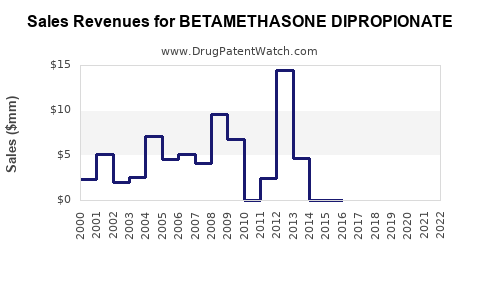
Between 2018 and 2022, the global corticosteroid market, including betamethasone dipropionate, exhibited compound annual growth rates (CAGR) of approximately 2.5%, driven largely by emerging markets and new formulation launches [2]. Patent expiries and the proliferation of generics in developed markets contributed to revenue stabilization and margin compression.
Projected Growth and Market Size
Market analysts project the global topical corticosteroids market to reach USD 4.8 billion by 2027, registering a CAGR of 3.2%, with betamethasone dipropionate accounting for a significant share due to its high potency and wide indications [3]. The Asia-Pacific region is forecasted to witness the highest growth (CAGR ~5%), propelled by rising dermatological disease burden and improved healthcare access.
Revenue Breakdown by Region and Segment
-
North America: Dominant market (>40%) due to high disease prevalence, advanced healthcare infrastructure, and brand loyalty. Revenue growth slowed in recent years, primarily driven by generics' price competition.
-
Europe: Stable markets with moderate growth; regulatory strictness influences the pace of new product introductions.
-
Asia-Pacific & Rest of World: Rapid expansion owing to increasing healthcare investments, market liberalization, and rising awareness.
Impact of Patent Expirations
Patent expirations for certain formulations between 2017 and 2021 prompted significant generic entry, leading to a decrease in average selling prices (ASPs). Consequently, successful market players focus on cost-effective manufacturing, forming strategic alliances for distribution, and developing novel formulations to justify premium pricing. This dynamic impacts overall revenue trajectories, demanding agility in business models.
Cost Structures and Investment Trends
Manufacturing costs are increasingly influenced by raw material prices (e.g., corticosteroid active pharmaceutical ingredients), regulatory compliance expenses, and innovations in formulation technology. Pharmaceutical companies are investing heavily in R&D to develop combination therapies and improved delivery platforms, aligning with personalized treatment paradigms. These investments, while elevating upfront costs, are vital for long-term market share preservation.
Regulatory and Market Outlook
Regulatory bodies are emphasizing safety data, especially concerning long-term topical corticosteroid use. The European Medicines Agency (EMA) and U.S. Food and Drug Administration (FDA) are updating guidelines, influencing labeling, prescribing practices, and formulations approved for market. These constraints may moderate the growth trajectory but also create opportunities for value-added formulations and combination drugs.
Emerging markets are set to be the primary growth engines due to expanding healthcare infrastructure, increasing disease prevalence, and demand for affordable generics. Strategic positioning in these regions—including local partnerships and regulatory navigation—is vital for companies aiming to capitalize on future market expansion.
Key Takeaways
-
Market Fundamentals Remain Steady: Rising dermatological disease burden sustains demand, but growth is modulated by generics, safety concerns, and market saturation in developed countries.
-
Price Competition Challenges Revenue: The proliferation of generics has led to declining ASPs, necessitating cost optimization and innovation to maintain profitability.
-
Innovation Offers Growth Opportunities: Formulation improvements, combination therapies, and targeted delivery systems represent critical avenues for differentiation and premium pricing.
-
Geographical Diversification is Crucial: Expanding into emerging markets offers high growth potential, offsetting stagnation elsewhere.
-
Regulatory Landscape Shapes Strategies: Adherence to evolving safety standards, labeling regulations, and approved indications influences market access and revenue potential.
Conclusion
The financial trajectory of betamethasone dipropionate is characterized by steady demand met with intense competitive pressures. Navigating patent expirations, safety regulations, and market saturation requires strategic innovation and geographic expansion. While near-term growth may be tempered by pricing pressures, long-term prospects hinge on pharmaceutical innovation, market diversification, and adherence to safety standards. Companies that successfully adapt to these dynamics will position themselves favorably within this resilient segment of dermatological therapies.
FAQs
1. How does patent expiration impact the betamethasone dipropionate market?
Patent expirations lead to increased generic entry, resulting in price reductions and increased competition. This diminishes revenue margins for original patent holders but expands access through more affordable options, overall shaping the market's competitive landscape.
2. What are the primary drivers of growth in emerging markets for betamethasone dipropionate?
Increased disease prevalence, improved healthcare infrastructure, regulatory approvals, and affordability of generics drive growth. Rising awareness of skin conditions and expanding dermatology services further support market penetration.
3. Are there safety concerns that could limit the use of betamethasone dipropionate?
Yes, long-term or overuse of high-potency corticosteroids can cause skin atrophy, HPA axis suppression, and other adverse effects. Regulatory agencies enforce strict labeling and usage guidelines to mitigate these risks.
4. What role does innovation play in the future financial viability of betamethasone dipropionate?
Formulation advances, such as enhanced delivery systems and combination therapies, can command premium pricing, improve efficacy, and reduce side effects, thereby supporting revenue growth amid competitive pressures.
5. How might regulatory shifts influence market dynamics?
Stricter safety and efficacy requirements may delay new formulations' approval, restrict indications, or necessitate additional clinical trials, potentially increasing costs and limiting market expansion opportunities.
References
[1] GBD 2017 Disease and Injury Incidence and Prevalence Collaborators. "Global, regional, and national incidence, prevalence, and years lived with disability for 301 causes of death, 1990–2017." Lancet. 2018;392(10159):1789-1858.
[2] MarketWatch. "Corticosteroids Market Size, Share & Trends Analysis Report." 2022.
[3] Grand View Research. "Topical Corticosteroids Market Size, Share & Trends Analysis." 2021.