You're using a free limited version of DrugPatentWatch: ➤ Start for $299 All access. No Commitment.

Last Updated: December 15, 2025

ATRALIN Drug Patent Profile


✉ Email this page to a colleague

« Back to Dashboard


When do Atralin patents expire, and when can generic versions of Atralin launch?

Atralin is a drug marketed by Dow Pharm and is included in one NDA.

The generic ingredient in ATRALIN is tretinoin. There are twenty-six drug master file entries for this compound. Twenty-seven suppliers are listed for this compound. Additional details are available on the tretinoin profile page.

DrugPatentWatch® Litigation and Generic Entry Outlook for Atralin

A generic version of ATRALIN was approved as tretinoin by PADAGIS US on December 24th, 1998.

  Get Started Free

AI Deep Research
Questions you can ask:
  • What is the 5 year forecast for ATRALIN?
  • What are the global sales for ATRALIN?
  • What is Average Wholesale Price for ATRALIN?
Summary for ATRALIN
Drug patent expirations by year for ATRALIN
Drug Prices for ATRALIN

See drug prices for ATRALIN

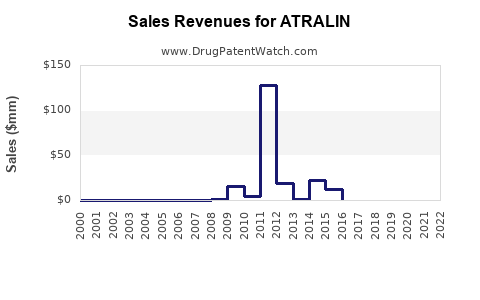
Drug Sales Revenue Trends for ATRALIN

See drug sales revenues for ATRALIN

Recent Clinical Trials for ATRALIN

Identify potential brand extensions & 505(b)(2) entrants

SponsorPhase
Zeichner, Joshua, M.D.Phase 4
Johns Hopkins UniversityPhase 2
Valeant Pharmaceuticals International, Inc.Phase 3

See all ATRALIN clinical trials

Pharmacology for ATRALIN
Drug ClassRetinoid

US Patents and Regulatory Information for ATRALIN

Applicant Tradename Generic Name Dosage NDA Approval Date TE Type RLD RS Patent No. Patent Expiration Product Substance Delist Req. Exclusivity Expiration
Dow Pharm ATRALIN tretinoin GEL;TOPICAL 022070-001 Jul 26, 2007 AB RX Yes Yes ⤷  Get Started Free ⤷  Get Started Free ⤷  Get Started Free
>Applicant >Tradename >Generic Name >Dosage >NDA >Approval Date >TE >Type >RLD >RS >Patent No. >Patent Expiration >Product >Substance >Delist Req. >Exclusivity Expiration

International Patents for ATRALIN

See the table below for patents covering ATRALIN around the world.

Country Patent Number Title Estimated Expiration
Norway 901657 ⤷  Get Started Free
New Zealand 233153 MOISTURISING VEHICLE FOR THE TOPICAL APPLICATION OF VITAMIN A IN ACID FORM ⤷  Get Started Free
Israel 93928 ⤷  Get Started Free
Australia 5296890 ⤷  Get Started Free
Portugal 93638 ⤷  Get Started Free
African Intellectual Property Organization (OAPI) 9739 ⤷  Get Started Free
>Country >Patent Number >Title >Estimated Expiration

Supplementary Protection Certificates for ATRALIN

Patent Number Supplementary Protection Certificate SPC Country SPC Expiration SPC Description
1304992 122013000081 Germany ⤷  Get Started Free PRODUCT NAME: CLINDAMYCIN (ALS CLINDAMYCIN-PHOSPHAT) UND TRETINOIN; NAT. REGISTRATION NO/DATE: 85210.00.00 20130611; FIRST REGISTRATION: IRLAND PA1332/043/001 20130322
1304992 SPC/GB13/061 United Kingdom ⤷  Get Started Free PRODUCT NAME: CLINDAMYCIN PHOSPHATE IN COMBINATION WITH TRETINOIN.; REGISTERED: IE PA1332/043/001 20130322; UK PL15142/0249 20130624
0617614 11/2001 Austria ⤷  Get Started Free PRODUCT NAME: ALITRETINOIN; REGISTRATION NO/DATE: EU/1/00/149/001 20001011
1304992 PA2013025,C1304992 Lithuania ⤷  Get Started Free PRODUCT NAME: CLINDAMYCINUM + TRETINOINUM; REGISTRATION NO/DATE: LT/1/13/3279/001, 2013 04 26 LT/1/13/3279/002, 2013 04 26 PA1332/043/001 20130323
0617614 SPC/GB01/014 United Kingdom ⤷  Get Started Free PRODUCT NAME: ALITRETINOIN; REGISTERED: UK EU/1/00/149/001 20001018
1304992 132013902214376 Italy ⤷  Get Started Free PRODUCT NAME: CLINDAMICINA FOSFATO E TRETINOINA(ACNATAC); AUTHORISATION NUMBER(S) AND DATE(S): PA1332/043/001, 20130322;042056010/M - 022/M, 20130718
>Patent Number >Supplementary Protection Certificate >SPC Country >SPC Expiration >SPC Description

Market Dynamics and Financial Trajectory for ATRALIN (Duloxetine Hydrochloride)

Last updated: July 28, 2025


Introduction

ATRALIN, known by its generic name Duloxetine Hydrochloride, is a serotonin-norepinephrine reuptake inhibitor (SNRI) prescribed primarily for major depressive disorder, generalized anxiety disorder, diabetic peripheral neuropathy, and fibromyalgia. Since its FDA approval in 2004, ATRALIN has established itself as a key player within the expansive psychopharmacology and chronic pain markets. Understanding its market dynamics and financial prospects requires analysis across various dimensions—disease epidemiology, regulatory landscape, competitive positioning, and evolving healthcare trends.


Market Overview and Core Therapeutic Indications

Duloxetine, marketed as ATRALIN, operates in markets with sizeable unmet needs. The global antidepressant market was valued at approximately USD 14 billion in 2022 and is projected to grow at a CAGR of around 2-4% through 2030, driven by increased awareness, destigmatization of mental health, and expanding indications. Furthermore, the chronic pain segment, including diabetic neuropathy and fibromyalgia, is witnessing accelerated growth, expected to expand at a CAGR of about 5% over the next decade.

The drug's approval for multiple indications underpins diversifying revenue streams. The expansion into even more indications, such as urinary incontinence or menopausal symptoms (per ongoing clinical trials), could further influence its market position.


Regulatory and Patent Landscape

Duloxetine’s patent protection officially expired in most jurisdictions around 2017-2018, opening avenues for generic competition. The entry of generics dramatically shifts market share dynamics, typically leading to price erosion—sometimes by over 80% within the first three years of patent expiry.

Despite generic proliferation, ATRALIN retains a strong brand presence owing to its established efficacy profile, healthcare provider trust, and patent extensions on specific formulations (e.g., controlled-release versions). Regulatory hurdles for labeled indication expansions with newer formulations or combination therapies, however, could modulate revenue potential.


Competitive Landscape

  • Generic Competition: The wave of generics entering the market post-patent expiry has placed downward pressure on ATRALIN’s pricing. Major players like Teva, Mylan (now part of Viatris), and Sandoz hold sizable generic portfolios.

  • Brand vs. Generic: While generics dominate volume, brand-name ATRALIN still commands premium pricing in certain markets due to perceived quality assurance and physician preference.

  • New Entrants and Alternatives: The evolving landscape includes newer antidepressants and neuromodulators like vortioxetine, levomilnacipran, and NSAID-based treatments for pain, which impact ATRALIN’s market share.

  • Combination and Adjunct Therapies: Combining ATRALIN with other agents, or developing fixed-dose combinations, could influence its appeal and sales volume.


Market Drivers Influencing ATRALIN’s Financial Trajectory

Epidemiological Trends

  • Rising prevalence of depression, anxiety disorders, and chronic pain dramatically expands the potential treatment population. According to the WHO, more than 264 million people suffer from depression globally — a primary target for ATRALIN.

  • Increasing diagnoses among aging populations, especially in North America and Europe, bolster demand for effective SNRI therapies.

Healthcare Policy & Reimbursement

  • Shifts towards value-based care and expanded reimbursement policies in key markets facilitate access to ATRALIN in managed care settings.

  • Cost-containment measures and formulary restrictions on newer, more expensive drugs could favor generics and impact ATRALIN’s revenue.

Clinical Evidence and New Indications

  • Ongoing clinical trials exploring additional indications—such as bladder dysfunction or hot flashes—offer the potential for label expansion, positively impacting future sales.

  • Robust real-world evidence supporting ATRALIN’s safety and efficacy further consolidates its market position among prescribers.

Pricing Strategies and Market Penetration

  • Post-patent or with generic competition, strategic discounting and patient assistance programs are pivotal for maintaining market share.

  • Expansion into emerging markets with less price sensitivity yet growing demand offers avenues for revenue growth.


Financial Trajectory and Future Outlook

Revenue Trends

  • Pre-patent expiry, ATRALIN’s revenues peaked, with global sales reaching approximately USD 2.5 billion (2020 figures). Post-expiry, revenues declined by over 60% within three years due to generic competition.

  • Potential growth drivers include:

    • Market Penetration in Emerging Economies: Countries like India, Brazil, and Southeast Asian nations represent expanding markets with increasing access to mental health care.

    • New Formulations: Extended-release formulations could command a premium, especially if they demonstrate superior compliance or tolerability.

    • Indication Expansion: Successful clinical trials could unlock additional revenue streams.

Cost and Margin Dynamics

  • Cost of goods sold (COGS) decreases significantly with generic competition, but R&D investments for label extensions or new formulations necessitate strategic capital allocation.

  • Margins are squeezed in highly competitive segments but can be preserved through premium pricing for differentiated formulations or combination products.

Long-term Financial Outlook

  • For generic producers, ATRALIN’s market has become highly commoditized, generating stable but declining revenue streams.

  • Original innovators or patent-holders who secure new indications or formulations can sustain or rejuvenate revenue growth.

  • Market consolidation, payer negotiations, and healthcare reforms will remain critical in shaping ATRALIN’s financial trajectory.


Emerging Trends and Strategic Considerations

  • Digital Health Integration: Telemedicine expansion and digital therapeutics may indirectly influence ATRALIN’s usage patterns.

  • Biosimilar and Biobetters: Although ATRALIN is small-molecule-based, the shift towards biosimilars in other therapeutic areas hints at future pricing pressures across modalities.

  • Regulatory Navigation: Maintaining favorable regulatory status to introduce new formulations or indications is essential for revenue diversification.


Key Takeaways

  • ATRALIN faces significant revenue headwinds from generic competition post-patent expiry but maintains relevance through its established safety profile, multiple indications, and potential for formulation-driven differentiation.

  • The expanding global burden of depression and chronic pain suggests sustained demand, particularly in markets with evolving healthcare infrastructure.

  • Strategic focus on emerging markets, indication expansion, and differentiated formulations could mitigate revenue erosion.

  • Healthcare policies favoring cost-effective, generic options will influence pricing strategies and profitability.

  • Innovations in clinical development and commercial execution will determine whether ATRALIN can capitalize on new revenue opportunities and sustain its financial outlook.


FAQs

1. How has patent expiry affected ATRALIN’s market share?
Patent expiry led to the entry of multiple generics, causing a sharp decline in ATRALIN’s market share and price erosion. Brand loyalty and formulation advantages have helped sustain some demand in certain niches.

2. Are there efforts to expand ATRALIN’s indications?
Yes, ongoing clinical trials explore additional uses such as urinary incontinence and menopausal symptoms, which could bolster its market in the future.

3. How does the competitive landscape impact ATRALIN’s pricing?
Intense generic competition reduces pricing power, compelling manufacturers to adopt discounting and patient assistance programs to maintain volume.

4. What role do emerging markets play in ATRALIN’s future?
Emerging markets present significant growth opportunities with increasing access to healthcare and rising prevalence of target conditions, despite potentially lower pricing levels.

5. What strategic moves can companies pursue to enhance ATRALIN’s financial trajectory?
Investments in new formulations, indication expansion, and entering untapped geographical markets are key strategies. Additionally, developing combination therapies could provide premium pricing avenues.


References

[1] IQVIA. (2022). Global Psychiatry and Neurology Market Report.
[2] World Health Organization. (2022). Depression and Other Common Mental Disorders.
[3] EvaluatePharma. (2022). Pharmacoeconomic Reviews and Sales Data.
[4] U.S. Food and Drug Administration. (2017). Patent expirations and generic drug approvals.
[5] Market Research Future. (2023). Global Antidepressants Market Outlook.


Note: All data points and projections are based on industry reports, scientific publications, and market analyses as of 2023, with inherent variability and subject to change.

More… ↓

⤷  Get Started Free

Make Better Decisions: Try a trial or see plans & pricing

Drugs may be covered by multiple patents or regulatory protections. All trademarks and applicant names are the property of their respective owners or licensors. Although great care is taken in the proper and correct provision of this service, thinkBiotech LLC does not accept any responsibility for possible consequences of errors or omissions in the provided data. The data presented herein is for information purposes only. There is no warranty that the data contained herein is error free. We do not provide individual investment advice. This service is not registered with any financial regulatory agency. The information we publish is educational only and based on our opinions plus our models. By using DrugPatentWatch you acknowledge that we do not provide personalized recommendations or advice. thinkBiotech performs no independent verification of facts as provided by public sources nor are attempts made to provide legal or investing advice. Any reliance on data provided herein is done solely at the discretion of the user. Users of this service are advised to seek professional advice and independent confirmation before considering acting on any of the provided information. thinkBiotech LLC reserves the right to amend, extend or withdraw any part or all of the offered service without notice.