Last updated: April 24, 2026
What drives the amphetamine market?
Amphetamine is an established central nervous system (CNS) stimulant with demand shaped more by controlled-substance regulation, medical practice patterns, and payer coverage than by new clinical innovation. The market dynamics differ materially by geography and by product category (immediate-release vs extended-release; mono-ingredient amphetamine vs combination products that use amphetamine salts).
Demand anchors
- Indications: Attention-deficit/hyperactivity disorder (ADHD) and narcolepsy. (Clinical use also spans off-label indications in some jurisdictions, but spend is concentrated in labeled indications.)
- Patient throughput: ADHD and narcolepsy prevalence sets the addressable patient pool; dose titration and adherence determine sustained demand.
- Formulation preference: Extended-release dosing patterns reduce dosing frequency and typically align with payer coverage criteria, which shifts mix toward longer-duration products when they are reimbursed.
Supply-side constraints
- Active ingredient availability: As a regulated chemical commodity and API, amphetamine supply is sensitive to manufacturing capacity, regulatory compliance, and licensing.
- Control frameworks: Tight scheduling and monitoring influence distribution channels and can constrain parallel supply in some markets.
- Generic competition: Where approvals allow, generics compress pricing versus branded offerings, while shortages or supply disruptions can re-expand pricing temporarily.
Competitive structure
- Therapeutic-class competition: Amphetamine competes indirectly with methylphenidate-class stimulants and with non-stimulant ADHD therapies (e.g., atomoxetine and others) via formulary placement.
- Substitutability: Clinical interchangeability depends on symptom control, tolerability, and payer policies, which affects switching and maintenance prescribing.
Payer and reimbursement dynamics
- Formulary access: Reimbursement pathways for stimulants tend to rely on prior authorization, step edits, or quantity limits in certain health systems.
- Price mechanics: In cash-pay markets and in lower reimbursement settings, affordability can shift utilization toward generics or smaller package sizes.
Where is the financial trajectory heading?
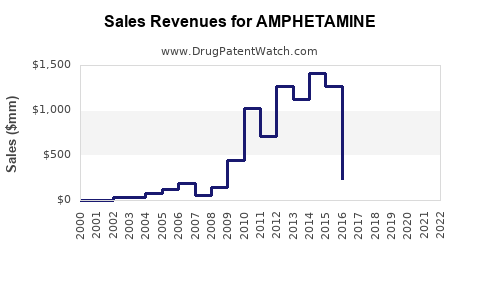
For a well-established generic drug substance like amphetamine, the financial trajectory is typically a mix of (1) declining unit prices with generic erosion, (2) stable or growing volume where prevalence and prescribing rise, and (3) episodic volatility from controlled-substance supply constraints and regulatory tightening.
Baseline: mature product economics
- Maturity effect: Most major markets have long-established stimulant prescribing patterns. New demand is incremental and driven by prevalence, guideline adherence, and screening intensity rather than by step-change clinical differentiation.
- Generic price compression: As generics gain share, revenue growth usually comes from volume, not unit price.
- Formulation mix: Revenue can stabilize if extended-release formulations retain higher pricing relative to immediate-release, even as generics enter.
Volatility: supply and policy-driven swings
- Shortage risk: In controlled-substance markets, supply interruptions can lead to short-term price and volume distortions (lost supply volume during shortages, followed by catch-up demand).
- Regulatory enforcement intensity: Adjustments in prescribing rules, distribution monitoring, or import controls can alter channel availability and prescribing behavior.
What investors and planners typically model
- Volume trend: Patient pool growth and persistence (adherence and treatment continuation).
- Mix: Extended-release share and branded vs generic share.
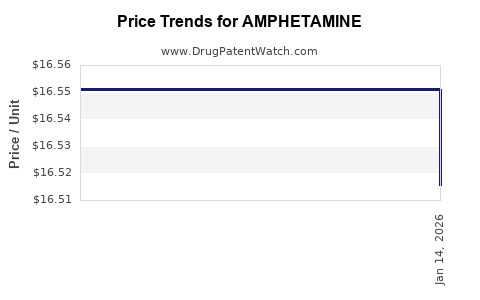
- Price trend: Weighted average net price after rebates/discounts and distribution compliance costs.
- Incidents: Discrete events tied to manufacturing disruptions or regulatory changes.
How does the amphetamine market differ by product format?
Amphetamine’s commercial profile varies by dosage form. Extended-release and immediate-release formulations often behave differently in payer placement and patient adherence.
Format-by-format commercial behavior
| Category |
Typical demand driver |
Pricing pressure |
Volatility sensitivity |
| Immediate-release |
Short dosing regimens, clinical flexibility |
Higher generic compression in mature markets |
Medium (substitution during supply events) |
| Extended-release |
Once-daily routines, adherence |
Still faces generics, but mix can support net price |
Medium to high if supply constraints disrupt preferred options |
| Combination products (where relevant) |
Broader formulary inclusion via fixed-dose regimens |
Depends on molecule and exclusivity status |
Medium |
How do regulation and compliance affect revenue?
Amphetamine is regulated as a controlled substance in most jurisdictions. That affects both access and transaction costs.
Key compliance channels that shape economics
- Prescribing controls: Limits on quantities and monitoring increase administrative burden and can constrain rapid switching.
- Distribution controls: Secure distribution reduces effective throughput during supply shocks.
- Licensing and procurement: Import or manufacturer eligibility can become a bottleneck, impacting effective availability.
Net financial impact
Regulation does not typically reduce long-run demand for stimulants in high-prevalence indications, but it can:
- reduce the speed of supply normalization after disruptions,
- increase compliance costs,
- and shift mix toward products that are consistently available.
What macro factors move amphetamine utilization?
ADHD screening and treatment practices
- Increased screening and earlier diagnosis generally support volume growth for ADHD-related prescribing.
- Guideline adoption in pediatric and adult psychiatry can increase persistence and adherence, supporting sustained demand.
Labor force and education cycles
- ADHD diagnosis and treatment can correlate with policy and schooling practices that affect identification and referral. The impact is indirect but can influence long-run volume.
Substitution dynamics with other ADHD treatments
- When payers narrow coverage to certain categories, stimulants can lose share to other classes, or vice versa.
- Shortages in one class can temporarily transfer demand to another, altering quarterly revenue patterns.
Is amphetamine a growth story or a cash-flow story?
For most established markets, amphetamine behaves more like a cash-flow and share-maintenance asset than a high-growth product:
- Growth is incremental: Volume growth depends on diagnosis and persistence rather than breakthrough innovation.
- Price is mean-reverting: Generic competition drives net price down over time.
- Returns come from supply reliability and mix: Companies with consistent availability and payer positioning can protect market share even as unit economics erode.
What should be tracked to forecast financial trajectory?
A practical forecast for amphetamine should track leading indicators that translate into revenue.
Leading indicators
- Prescription volume: New starts and continuations by formulation and strength.
- Formulary status changes: Prior authorization edits and tier placement by payer.
- Net price and rebate structure: Changes in discounting and payer contracts.
- Supply chain events: Manufacturing interruptions, distribution constraints, and import restrictions.
- Substitution flow: Switching between amphetamine products, methylphenidate products, and non-stimulants.
Lagging indicators
- Claims data: Refill patterns and persistence.
- Channel inventory: Signals shortage risk and catch-up demand.
- Wholesale-to-retail timing: Controlled substances can show inventory building before market incidents resolve.
How does amphetamine compare with other ADHD stimulant markets?
Amphetamine’s financial behavior tracks the stimulant class more than it tracks novel drug economics:
- Similar risks: Generic erosion, payer formulary pressure, supply shocks from controlled-substance logistics.
- Similar drivers: ADHD prevalence, screening intensity, and prescribing practice shifts.
- Different constraints: Specific compliance and distribution requirements for amphetamine can lead to sharper localized supply gaps.
Key Takeaways
- Amphetamine’s market dynamics are dominated by controlled-substance regulation, stable therapeutic demand for ADHD and narcolepsy, and generic-driven price compression.
- Financial trajectory in most mature markets is usually cash-flow oriented: volume and mix drive performance, while unit pricing trends toward mean reversion.
- The main sources of quarter-to-quarter volatility are supply constraints and payer/formulary policy changes, not clinical pipeline events.
- Forecasting should focus on prescription volume, formulation mix (immediate vs extended-release), payer coverage, net pricing, and supply chain continuity.
FAQs
1) Does generic competition reduce amphetamine revenue long-term?
Yes in most markets where generics hold sustained access, because net pricing typically declines as branded share erodes and competitive pricing normalizes.
2) What most affects amphetamine demand: prevalence or policy?
Both. Prevalence and screening drive the patient pool, while prescribing controls, payer formulary rules, and authorization requirements influence realized utilization and continuity.
3) Are extended-release products generally more resilient financially?
Often. Extended-release tends to keep better adherence and may hold favorable payer positioning, which can support net revenue versus immediate-release even under generic pressure.
4) Why can amphetamine show sudden revenue swings?
Controlled-substance supply disruptions and distribution bottlenecks can cause short-term lost volume, followed by catch-up demand as supply normalizes.
5) Is amphetamine competing with non-stimulants or mainly with other stimulants?
Mainly other stimulants within formularies, but non-stimulants can take share when payers restrict stimulant access, require step edits, or when clinical tolerability shifts prescribing patterns.
References
[1] U.S. Drug Enforcement Administration. Schedules of Controlled Substances (amphetamine and related substances). (DEA webpage).
[2] World Health Organization. WHO Model List of Essential Medicines (psychostimulants and CNS stimulants context). (WHO webpage).
[3] FDA. Drug Safety and Controlled Substance/ADHD labeling information relevant to amphetamine-based products. (FDA webpages).
[4] National Institutes of Health. Amphetamine: pharmacology and clinical use references (ADHD and narcolepsy). (NIH/NLM resources).