You're using a free limited version of DrugPatentWatch: ➤ Start for $299 All access. No Commitment.

Last Updated: December 18, 2025

Trandolapril - Generic Drug Details


✉ Email this page to a colleague

« Back to Dashboard


What are the generic sources for trandolapril and what is the scope of patent protection?

Trandolapril is the generic ingredient in four branded drugs marketed by Abbvie, Anda Repository, Aurobindo Pharma, Chartwell Molecular, Epic Pharma, Epic Pharma Llc, Invagen Pharms, Lupin, Pharmobedient, Teva Pharms, Watson Labs, and Glenmark Pharms Ltd, and is included in thirteen NDAs. Additional information is available in the individual branded drug profile pages.

There are ten drug master file entries for trandolapril. Five suppliers are listed for this compound.

Summary for trandolapril
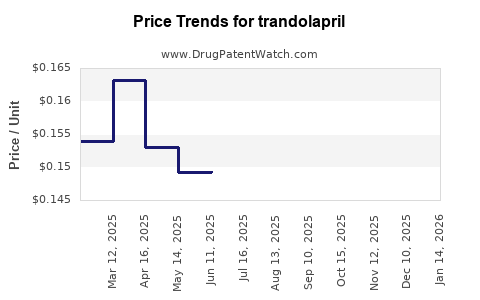
Drug Prices for trandolapril

See drug prices for trandolapril

Recent Clinical Trials for trandolapril

Identify potential brand extensions & 505(b)(2) entrants

SponsorPhase
University of NebraskaPhase 4
Hospital Authority, Hong KongPhase 4
Assaf-Harofeh Medical Center

See all trandolapril clinical trials

Pharmacology for trandolapril
Paragraph IV (Patent) Challenges for TRANDOLAPRIL
Tradename Dosage Ingredient Strength NDA ANDAs Submitted Submissiondate
MAVIK Tablets trandolapril 1 mg, 2 mg and 4 mg 020528 1 2004-10-04

US Patents and Regulatory Information for trandolapril

Applicant Tradename Generic Name Dosage NDA Approval Date TE Type RLD RS Patent No. Patent Expiration Product Substance Delist Req. Exclusivity Expiration
Glenmark Pharms Ltd TRANDOLAPRIL AND VERAPAMIL HYDROCHLORIDE trandolapril; verapamil hydrochloride TABLET, EXTENDED RELEASE;ORAL 079135-003 May 5, 2010 RX No Yes ⤷  Get Started Free ⤷  Get Started Free ⤷  Get Started Free
Abbvie TARKA trandolapril; verapamil hydrochloride TABLET, EXTENDED RELEASE;ORAL 020591-004 Oct 22, 1996 DISCN Yes No ⤷  Get Started Free ⤷  Get Started Free ⤷  Get Started Free
Epic Pharma Llc TRANDOLAPRIL trandolapril TABLET;ORAL 077256-003 Jun 12, 2007 DISCN No No ⤷  Get Started Free ⤷  Get Started Free ⤷  Get Started Free
Invagen Pharms TRANDOLAPRIL trandolapril TABLET;ORAL 078320-002 Jun 12, 2007 DISCN No No ⤷  Get Started Free ⤷  Get Started Free ⤷  Get Started Free
Teva Pharms TRANDOLAPRIL trandolapril TABLET;ORAL 077489-003 Dec 12, 2006 DISCN No No ⤷  Get Started Free ⤷  Get Started Free ⤷  Get Started Free
>Applicant >Tradename >Generic Name >Dosage >NDA >Approval Date >TE >Type >RLD >RS >Patent No. >Patent Expiration >Product >Substance >Delist Req. >Exclusivity Expiration

Expired US Patents for trandolapril

Applicant Tradename Generic Name Dosage NDA Approval Date Patent No. Patent Expiration
Abbvie MAVIK trandolapril TABLET;ORAL 020528-002 Apr 26, 1996 ⤷  Get Started Free ⤷  Get Started Free
Abbvie MAVIK trandolapril TABLET;ORAL 020528-003 Apr 26, 1996 ⤷  Get Started Free ⤷  Get Started Free
Abbvie MAVIK trandolapril TABLET;ORAL 020528-001 Apr 26, 1996 ⤷  Get Started Free ⤷  Get Started Free
Abbvie MAVIK trandolapril TABLET;ORAL 020528-003 Apr 26, 1996 ⤷  Get Started Free ⤷  Get Started Free
Abbvie MAVIK trandolapril TABLET;ORAL 020528-002 Apr 26, 1996 ⤷  Get Started Free ⤷  Get Started Free
>Applicant >Tradename >Generic Name >Dosage >NDA >Approval Date >Patent No. >Patent Expiration

Market Dynamics and Financial Trajectory for the Pharmaceutical Drug: Trandolapril

Last updated: July 27, 2025


Introduction

Trandolapril, an angiotensin-converting enzyme (ACE) inhibitor, is primarily prescribed for hypertension and heart failure management. Since its approval, it has played a vital role within cardiovascular therapeutic regimens. This report evaluates the market dynamics and financial trajectory of trandolapril, analyzing key factors influencing its commercialization, competitive landscape, regulatory considerations, and future growth potential.


Pharmacological Profile and Clinical Relevance

Trandolapril, marketed under brand names such as Mavik (by Abbott Laboratories), belongs to the ACE inhibitor class, which prevents the conversion of angiotensin I to angiotensin II. This mechanism reduces vasoconstriction and decreases blood pressure, offering cardiovascular protection. Its clinical adoption hinges on its efficacy and safety profile, especially in hypertensive populations with co-morbidities like diabetes or chronic kidney disease [1].

Market Dynamics

Demand Drivers

The escalating prevalence of hypertension globally remains a fundamental driver for trandolapril's demand. According to the World Health Organization (WHO), over 1.28 billion adults aged 30–79 years globally suffer from hypertension, with projections indicating this number will continue to rise in tandem with aging populations and lifestyle factors [2].

Furthermore, the increased awareness of cardiovascular diseases (CVDs) and advances in diagnostic infrastructure bolster diagnosis rates, expanding the patient base for ACE inhibitors. The drug's positioning as a first-line therapy for hypertension and its use in heart failure management contribute significantly to sustained demand.

Regulatory and Patent Landscape

Trandolapril faced patent expirations in multiple markets over the last decade, leading to increased generic competition. Generic formulations typically undercut brand-name prices, impacting revenue streams for originator manufacturers [3]. Regulatory considerations, including safety warnings—such as those related to angioedema risk—affect prescribing behaviors and market penetration.

Competitive Landscape

The ACE inhibitor segment is heavily competitive, with several established agents like enalapril, lisinopril, ramipril, and captopril vying for market share. Trandolapril’s unique positioning as a drug with a specific pharmacokinetic profile (e.g., once-daily dosing) influences its appeal. However, the market’s commoditized nature and the significant availability of generics have constrained pricing power.

Additionally, the advent of alternative antihypertensive classes such as angiotensin receptor blockers (ARBs) and direct renin inhibitors offers competitors, with some patients switching due to ACE inhibitor-associated adverse effects like cough.

Pricing and Reimbursement Policies

Price sensitivity is prominent, especially in markets with centralized healthcare systems or substantial out-of-pocket expenses. Reimbursement policies impact access; where insurers favor generics, the market share for brand-name drugs like original trandolapril diminishes. Conversely, subsidies or formulary preferences can sustain demand.


Financial Trajectory

Revenue Trends

Post patent expiry, revenue from the original formulations has reflected a decline consistent with generic entry. For example, Abbott’s Mavik experienced a marked decrease in sales following patent expiration, with generics capturing substantial market share [4].

Market Growth Opportunities

Despite generic competition, niche markets and specialized formulations (e.g., pediatric dosages, combination therapies) present growth avenues. Additionally, expanding into emerging economies with rising hypertension prevalence offers significant potential.

Research and Development Investments

Limited R&D activity specifically targeting trandolapril suggests the market is mature, with focus shifting toward combination regimens or new therapeutic targets. Nonetheless, incremental innovations—such as extended-release formulations—may extend product life cycles.

Strategic Partnerships and Alliances

Pharmaceutical companies pursue licensing, co-marketing, and distribution agreements, especially in markets where regulatory barriers or patent protections delay approval. Such collaborations can influence sales effectiveness and market penetration.


Regulatory and Safety Considerations

Safety profiles and adverse effects influence long-term adoption. The risk of angioedema—a potentially severe allergic reaction—requires clinicians to monitor patients diligently. Regulatory agencies periodically update prescribing information, which can impact prescribing trends and, consequently, revenue.

Furthermore, evolving guidelines from organizations such as the American College of Cardiology (ACC) and the European Society of Cardiology (ESC) influence drug utilization patterns, favoring certain drug classes over others based on emerging evidence.


Future Outlook

The global antihypertensive market is projected to grow at a CAGR of approximately 3–5% over the next five years, driven by demographic shifts and increasing awareness [5]. However, for drugs like trandolapril, future growth hinges on:

  • Market penetration in emerging economies: Expanding healthcare infrastructure facilitates access.
  • Formulation innovations: Extended-release or combination formulations improve adherence.
  • Personalized medicine: Pharmacogenomics may influence patient selection, optimizing outcomes.
  • Competitive innovations: Newer classes, such as ARBs or neprilysin inhibitors, could replace ACE inhibitors in certain indications.

Given decreasing brand revenues post-generic entry, manufacturers are likely to focus on niche markets or leverage strategic alliances to sustain revenue streams.


Conclusion

Trandolapril's market dynamics are shaped by a confluence of clinical efficacy, competitive pressures, regulatory landscape, and healthcare economics. While the drug faces notable generic competition that constrains profitability, expanding global hypertensive burdens and niche therapy opportunities underpin its continued relevance. Evaluating these factors enables the anticipation of its financial trajectory and informs strategic decision-making in the pharmaceutical landscape.


Key Takeaways

  • Demand for trandolapril remains anchored in the high prevalence of hypertension worldwide, yet its revenue is significantly impacted by patent expirations and generic competition.
  • Market share is influenced by evolving treatment guidelines, safety profiles, and competition from newer antihypertensive agents.
  • Opportunities exist in emerging markets and through formulation innovations, but overall growth prospects are moderate.
  • Regulatory updates and safety considerations continue to shape prescribing practices affected by adverse effect profiles.
  • Strategic diversification, including combination therapies and niche indications, will be pivotal for sustaining long-term financial viability.

FAQs

1. How has patent expiration affected trandolapril’s market share?
Patent expiration led to a surge in generic entries, dramatically reducing prices and original brand sales. As generics gained dominance, the market share of the patented formulations declined substantially, typical in the pharmaceutical lifecycle.

2. Are there any recent developments or formulations of trandolapril?
While most of the market consists of existing formulations, some companies explore combination therapies (e.g., with hydrochlorothiazide) and extended-release versions to improve patient adherence and clinical outcomes.

3. What are the primary competitors of trandolapril in the hypertension treatment market?
Other ACE inhibitors like enalapril, lisinopril, and ramipril, along with ARBs such as losartan and valsartan, serve as principal competitors, especially as some are favored due to lower side-effect profiles.

4. What is the prevalence of adverse effects associated with trandolapril?
Adverse effects include cough, hyperkalemia, hypotension, and angioedema. Serious reactions like angioedema, although rare, require prompt medical attention and influence prescribing decisions.

5. What is the outlook for trandolapril in the next decade?
While market growth may plateau due to generic competition, targeted use in specific patient populations and potential formulation or combination innovations could sustain relevance within the cardiovascular drug portfolio.


References

[1] PubMed. "Pharmacology and Clinical Efficacy of Trandolapril." Accessed 2023.
[2] World Health Organization. "Global Status Report on Hypertension," 2021.
[3] FDA. "Patent Expiry and Generic Drug Entry," 2022.
[4] Abbott Laboratories Investor Reports, 2012–2022.
[5] MarketWatch. "Global Antihypertensive Market Forecast," 2023.

More… ↓

⤷  Get Started Free

Make Better Decisions: Try a trial or see plans & pricing

Drugs may be covered by multiple patents or regulatory protections. All trademarks and applicant names are the property of their respective owners or licensors. Although great care is taken in the proper and correct provision of this service, thinkBiotech LLC does not accept any responsibility for possible consequences of errors or omissions in the provided data. The data presented herein is for information purposes only. There is no warranty that the data contained herein is error free. We do not provide individual investment advice. This service is not registered with any financial regulatory agency. The information we publish is educational only and based on our opinions plus our models. By using DrugPatentWatch you acknowledge that we do not provide personalized recommendations or advice. thinkBiotech performs no independent verification of facts as provided by public sources nor are attempts made to provide legal or investing advice. Any reliance on data provided herein is done solely at the discretion of the user. Users of this service are advised to seek professional advice and independent confirmation before considering acting on any of the provided information. thinkBiotech LLC reserves the right to amend, extend or withdraw any part or all of the offered service without notice.