Last updated: February 19, 2026
Executive Summary
Ibandronate sodium, a bisphosphonate medication, primarily targets osteoporosis and related bone disorders. Its market performance is shaped by patent expiries, generic competition, evolving treatment guidelines, and the prevalence of target diseases. The drug's financial trajectory is characterized by initial patent-protected sales, subsequent revenue erosion due to generic entry, and potential market stabilization driven by established efficacy and formulary placement.
What is Ibandronate Sodium and its Therapeutic Applications?
Ibandronate sodium is a nitrogen-containing bisphosphonate used in the treatment and prevention of osteoporosis. It functions by inhibiting osteoclast activity, thereby reducing bone resorption and increasing bone mineral density. Its primary indications include:
- Treatment of postmenopausal osteoporosis [1].
- Prevention of skeletal-related events in patients with bone metastases from breast cancer [1].
- Treatment of osteoporosis in men [1].
- Treatment of glucocorticoid-induced osteoporosis [1].
The drug is available in oral and intravenous formulations. Oral formulations are typically administered monthly, while intravenous injections are given quarterly. This dosing regimen is a key differentiating factor compared to other bisphosphonates.
What are the Key Market Drivers for Ibandronate Sodium?
The market for ibandronate sodium is influenced by several factors:
- Prevalence of Osteoporosis: The aging global population and increasing awareness of osteoporosis drive demand for effective treatments. In the U.S. alone, an estimated 10 million individuals aged 50 and over have osteoporosis, and another 44 million have low bone mass, placing them at increased risk [2].
- Patent Expiries and Generic Competition: The expiry of key patents has led to the introduction of multiple generic versions of ibandronate sodium. This has significantly lowered prices and increased accessibility, but also intensified competition among manufacturers.
- Treatment Guidelines and Physician Prescribing Habits: Inclusion in clinical practice guidelines for osteoporosis management influences physician prescribing patterns. The established efficacy and safety profile of bisphosphonates, including ibandronate, supports their continued use.
- Cost-Effectiveness: Generic ibandronate sodium offers a cost-effective treatment option, particularly for healthcare systems and patients facing cost pressures. This can lead to preferential formulary placement and increased market share for generic products.
- Alternative Therapies: The market is influenced by the development and adoption of newer osteoporosis therapies, such as anabolic agents and monoclonal antibodies, which may offer different efficacy or safety profiles. However, the long-standing track record and low cost of bisphosphonates maintain their relevance.
What is the Patent Landscape for Ibandronate Sodium?
The patent landscape for ibandronate sodium has evolved significantly, impacting market exclusivity and generic entry.
- Original Patents: The foundational patents for ibandronate sodium were held by Roche. These patents covered the compound itself and its therapeutic uses.
- Patent Expiry: Key patents expired in the mid-2010s in major markets such as the United States and Europe. For example, U.S. Patent No. 4,927,854, which claimed the compound, expired in 2008, but subsequent patents and extensions may have provided further protection for specific formulations or uses.
- Generic Entry: Following patent expiries, numerous generic manufacturers entered the market, introducing bioequivalent versions of ibandronate sodium. This led to a sharp decline in the market share and revenue of the branded product.
- Evergreening Strategies: While less pronounced for older drugs like ibandronate sodium, pharmaceutical companies may employ strategies to extend market exclusivity through new formulation patents, combination therapy patents, or method-of-use patents. However, the primary driver for ibandronate sodium’s market is now generic competition.
How Has Generic Competition Impacted Ibandronate Sodium Sales?
The entry of generic ibandronate sodium has had a profound impact on sales.
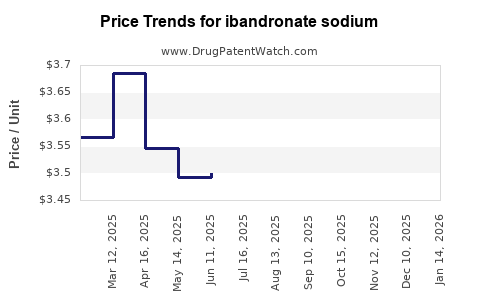
- Price Erosion: The introduction of multiple generic competitors has led to significant price reductions for ibandronate sodium. This is a common phenomenon after patent expiry, as generics compete on price to gain market share.
- Market Share Shift: The branded product's market share has been substantially eroded by generics. Physicians and pharmacies often switch to lower-cost generic alternatives unless there is a specific clinical reason or formulary restriction.
- Revenue Decline for Branded Manufacturer: Roche, the original innovator, experienced a substantial decline in revenue from the branded ibandronate sodium product (Boniva) following patent expiry and the subsequent influx of generics. For instance, sales of Boniva significantly decreased in the years following its peak, as generic versions became widely available [3].
- Increased Volume for Generics: While the overall market value may have decreased due to price reductions, the total volume of ibandronate sodium prescribed has likely remained substantial or even increased due to its affordability and established efficacy.
What is the Current Market Size and Financial Projection for Ibandronate Sodium?
Quantifying the precise current market size and future financial trajectory for ibandronate sodium is complex due to the fragmented nature of the generic market. However, key trends can be identified:
- Market Value: The global market value for ibandronate sodium, while lower than its peak branded sales, remains significant due to the high volume of prescriptions for osteoporosis treatment. Precise figures are difficult to ascertain as they are aggregated within broader bisphosphonate market data.
- Dominance of Generics: The market is overwhelmingly dominated by generic manufacturers. Pricing is highly competitive, with price points determined by bidding processes and supply agreements with wholesalers and pharmacy benefit managers (PBMs).
- Stable but Low Revenue: For individual generic manufacturers, the revenue generated from ibandronate sodium is likely to be stable but at a lower margin compared to branded products. Success depends on manufacturing efficiency, supply chain management, and securing contracts with large purchasers.
- Limited Growth Potential for Branded Product: The branded ibandronate sodium product has minimal future growth potential due to the established generic competition. Its sales are likely to continue a downward trend or stabilize at low levels.
- Future Projections: Projections for the ibandronate sodium market are characterized by steady demand driven by the persistent prevalence of osteoporosis. Revenue is expected to remain tied to generic pricing dynamics, with incremental growth or decline depending on cost-containment strategies and the introduction of any new generic competitors or supply chain disruptions. The market is unlikely to see substantial growth beyond its current established therapeutic role.
What are the Key Competitive Factors in the Ibandronate Sodium Market?
The competitive landscape for ibandronate sodium is characterized by:
- Price: This is the primary competitive factor. Generic manufacturers compete aggressively on price to secure market share.
- Availability and Supply Chain Reliability: Consistent and reliable supply is crucial. Manufacturers with robust supply chains can secure long-term contracts.
- Manufacturing Costs: Efficient and low-cost manufacturing processes are essential for profitability in the generic market.
- Formulation Offerings: While the active pharmaceutical ingredient (API) is the same, variations in tablet strength, dosage forms (e.g., monthly oral, quarterly IV), and excipients can influence a manufacturer's market position.
- Regulatory Compliance: Adherence to strict regulatory standards (e.g., FDA, EMA) for manufacturing and quality control is a baseline requirement.
- Market Access and Payer Negotiations: Securing favorable formulary placement with PBMs and other payers is critical for widespread prescription.
What are the Risks and Challenges for Ibandronate Sodium Manufacturers?
Manufacturers of ibandronate sodium face several risks and challenges:
- Intense Price Competition: The highly competitive generic market can lead to razor-thin profit margins, making profitability dependent on high sales volumes and operational efficiency.
- Regulatory Scrutiny: Pharmaceutical manufacturing is subject to ongoing regulatory oversight. Any quality issues or manufacturing disruptions can lead to significant financial penalties and reputational damage.
- Supply Chain Disruptions: Reliance on global supply chains for raw materials and intermediates can lead to vulnerability from geopolitical events, natural disasters, or trade disputes.
- Emergence of Superior Therapies: While ibandronate sodium remains a viable option, the development of novel osteoporosis treatments with improved efficacy, safety, or convenience could lead to a gradual shift in treatment paradigms, reducing demand for older bisphosphonates over the long term.
- Physician and Patient Adherence: Although ibandronate sodium has a convenient monthly oral dosing regimen, patient adherence to osteoporosis medications remains a challenge, impacting overall treatment outcomes and market penetration.
- Reimbursement Pressures: Healthcare payers are continually seeking to control costs, which can lead to increased pressure on drug pricing and formulary restrictions.
Key Takeaways
Ibandronate sodium has transitioned from a patent-protected branded product to a highly competitive generic market. Its continued demand is driven by the high prevalence of osteoporosis, while its financial trajectory is defined by aggressive price competition among generic manufacturers. Manufacturers' success hinges on cost efficiency, supply chain reliability, and securing favorable market access. The market is stable but offers limited growth potential, with long-term prospects influenced by the development of superior therapeutic alternatives.
Frequently Asked Questions
-
What is the primary difference between branded ibandronate sodium and its generic versions?
The primary difference is in branding, marketing, and price. Generic versions are bioequivalent to the branded product, meaning they have the same active ingredient, dosage form, strength, route of administration, quality, performance characteristics, and intended use.
-
Which companies are the major generic manufacturers of ibandronate sodium?
The market includes a wide range of generic pharmaceutical companies. Major players often include companies like Teva Pharmaceuticals, Mylan (now Viatris), Accord Healthcare, and numerous others that specialize in generic drug production. Specific market shares fluctuate.
-
How does the quarterly intravenous formulation of ibandronate sodium compare to the monthly oral formulation in the market?
The quarterly intravenous formulation offers convenience for patients who have difficulty adhering to oral regimens or experience gastrointestinal side effects. While it may command a slightly higher price point per dose due to administration costs, the monthly oral formulation is generally more widely prescribed due to its lower per-dose cost and ease of use for a larger patient population.
-
What is the expected long-term impact of newer osteoporosis therapies on ibandronate sodium sales?
Newer therapies, such as anabolic agents (e.g., abaloparatide, romosozumab) and selective estrogen receptor modulators (SERMs), offer alternative mechanisms of action and potentially different efficacy or safety profiles. These may capture market share for specific patient populations, particularly those with severe disease or who are unresponsive to bisphosphonates. However, the cost-effectiveness and established track record of bisphosphonates like ibandronate sodium ensure their continued use in first-line and second-line treatment for many patients.
-
Are there any ongoing patent disputes or exclusivities related to ibandronate sodium?
Given the primary patents expired years ago, significant ongoing patent disputes that would restore market exclusivity for the original compound are unlikely. However, companies may hold patents on specific formulations, manufacturing processes, or combination therapies that could offer limited protection or create niche market segments. These are generally less impactful than original compound patents.
Citations
[1] Ibandronate Sodium. (n.d.). Drugs.com. Retrieved from https://www.drugs.com/mtm/ibandronate-sodium.html
[2] Osteoporosis. (n.d.). National Osteoporosis Foundation. Retrieved from https://www.bonehealthandosteoporosis.org/patients/a-z-information/osteoporosis/
[3] Roche. (2012). Roche Annual Report 2011. Retrieved from https://www.roche.com/dam/jcr:93012c48-269c-445c-9630-a262816b6354/en/Roche_Annual_Report_2011.pdf (Note: Specific financial data for Boniva sales decline would be within this or subsequent annual reports from Roche).