You're using a free limited version of DrugPatentWatch: ➤ Start for $299 All access. No Commitment.

Last Updated: December 11, 2025

Fentanyl - Generic Drug Details


✉ Email this page to a colleague

« Back to Dashboard


What are the generic drug sources for fentanyl and what is the scope of patent protection?

Fentanyl is the generic ingredient in twenty-five branded drugs marketed by Janssen Pharms, Actavis Labs Ut Inc, Difgen Pharms, Kindeva, Lavipharm Labs, Mayne Pharma, Mylan Technologies, Noven, Specgx Llc, Zydus Pharms, Btcp Pharma, Adalvo, Abbott, Fresenius Kabi Usa, Hikma, Hospira, Watson Labs, Dr Reddys, Rising, Exela Pharma, Dr Reddys Labs Sa, Cephalon, Sentynl Theraps Inc, Actavis Labs Fl Inc, Par Pharm, and The Medicines Co, and is included in thirty-four NDAs. There are twenty-one patents protecting this compound and one Paragraph IV challenge. Additional information is available in the individual branded drug profile pages.

Fentanyl has thirty-three patent family members in seventeen countries.

There are thirty-one drug master file entries for fentanyl. Eight suppliers are listed for this compound. There are two tentative approvals for this compound.

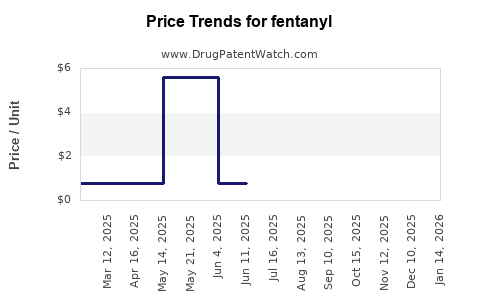
Drug Prices for fentanyl

See drug prices for fentanyl

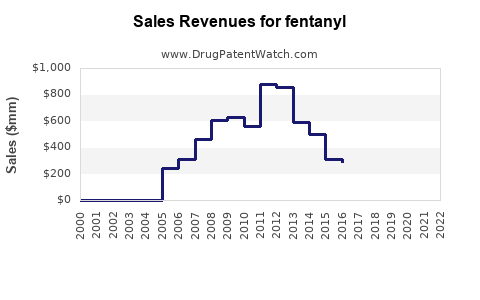
Drug Sales Revenue Trends for fentanyl

See drug sales revenues for fentanyl

Recent Clinical Trials for fentanyl

Identify potential brand extensions & 505(b)(2) entrants

SponsorPhase
Montefiore Medical CenterPHASE3
Wake Forest University Health SciencesPHASE4
Chinese University of Hong KongNA

See all fentanyl clinical trials

Generic filers with tentative approvals for FENTANYL
Applicant Application No. Strength Dosage Form
⤷  Get Started Free⤷  Get Started FreeEQ 0.05MG BASE/MLINJECTABLE;INJECTION
⤷  Get Started Free⤷  Get Started Free800MCGTABLET;BUCCAL
⤷  Get Started Free⤷  Get Started Free600MCGTABLET;BUCCAL

The 'tentative' approval signifies that the product meets all FDA standards for marketing, and, but for the patents / regulatory protections, it would approved.

Pharmacology for fentanyl
Drug ClassOpioid Agonist
Mechanism of ActionFull Opioid Agonists
Medical Subject Heading (MeSH) Categories for fentanyl
Paragraph IV (Patent) Challenges for FENTANYL
Tradename Dosage Ingredient Strength NDA ANDAs Submitted Submissiondate
SUBSYS Sublingual Spray fentanyl 0.1 mg/spray, 0.2 mg/spray, 0.6 mg/spray, 0.8 mg/spray, 1.2 mg/spray, 1.6 mg/spray 202788 1 2017-12-07
SUBSYS Sublingual Spray fentanyl 0.4 mg/spray 202788 1 2017-05-22

US Patents and Regulatory Information for fentanyl

Applicant Tradename Generic Name Dosage NDA Approval Date TE Type RLD RS Patent No. Patent Expiration Product Substance Delist Req. Exclusivity Expiration
Zydus Pharms FENTANYL-12 fentanyl FILM, EXTENDED RELEASE;TRANSDERMAL 209655-001 Jan 24, 2023 DISCN No No ⤷  Get Started Free ⤷  Get Started Free ⤷  Get Started Free
Btcp Pharma SUBSYS fentanyl SPRAY;SUBLINGUAL 202788-006 Aug 30, 2012 DISCN Yes No ⤷  Get Started Free ⤷  Get Started Free Y ⤷  Get Started Free
Cephalon FENTORA fentanyl citrate TABLET;BUCCAL, SUBLINGUAL 021947-003 Sep 25, 2006 DISCN Yes No ⤷  Get Started Free ⤷  Get Started Free Y ⤷  Get Started Free
Dr Reddys FENTANYL CITRATE PRESERVATIVE FREE fentanyl citrate INJECTABLE;INJECTION 074917-001 Feb 3, 1998 DISCN No No ⤷  Get Started Free ⤷  Get Started Free ⤷  Get Started Free
Cephalon FENTORA fentanyl citrate TABLET;BUCCAL, SUBLINGUAL 021947-002 Sep 25, 2006 DISCN Yes No ⤷  Get Started Free ⤷  Get Started Free Y ⤷  Get Started Free
Btcp Pharma SUBSYS fentanyl SPRAY;SUBLINGUAL 202788-007 Aug 30, 2012 DISCN Yes No ⤷  Get Started Free ⤷  Get Started Free Y ⤷  Get Started Free
Rising SUBLIMAZE PRESERVATIVE FREE fentanyl citrate INJECTABLE;INJECTION 016619-001 Approved Prior to Jan 1, 1982 AP RX Yes Yes ⤷  Get Started Free ⤷  Get Started Free ⤷  Get Started Free
>Applicant >Tradename >Generic Name >Dosage >NDA >Approval Date >TE >Type >RLD >RS >Patent No. >Patent Expiration >Product >Substance >Delist Req. >Exclusivity Expiration

Expired US Patents for fentanyl

Applicant Tradename Generic Name Dosage NDA Approval Date Patent No. Patent Expiration
Janssen Pharms DURAGESIC-50 fentanyl FILM, EXTENDED RELEASE;TRANSDERMAL 019813-003 Aug 7, 1990 ⤷  Get Started Free ⤷  Get Started Free
Janssen Pharms DURAGESIC-75 fentanyl FILM, EXTENDED RELEASE;TRANSDERMAL 019813-002 Aug 7, 1990 ⤷  Get Started Free ⤷  Get Started Free
Janssen Pharms DURAGESIC-100 fentanyl FILM, EXTENDED RELEASE;TRANSDERMAL 019813-001 Aug 7, 1990 ⤷  Get Started Free ⤷  Get Started Free
Janssen Pharms DURAGESIC-50 fentanyl FILM, EXTENDED RELEASE;TRANSDERMAL 019813-003 Aug 7, 1990 ⤷  Get Started Free ⤷  Get Started Free
Janssen Pharms DURAGESIC-25 fentanyl FILM, EXTENDED RELEASE;TRANSDERMAL 019813-004 Aug 7, 1990 ⤷  Get Started Free ⤷  Get Started Free
>Applicant >Tradename >Generic Name >Dosage >NDA >Approval Date >Patent No. >Patent Expiration

EU/EMA Drug Approvals for fentanyl

Company Drugname Inn Product Number / Indication Status Generic Biosimilar Orphan Marketing Authorisation Marketing Refusal
Kyowa Kirin Holdings B.V. PecFent fentanyl EMEA/H/C/001164PecFent is indicated for the management of breakthrough pain in adults who are already receiving maintenance opioid therapy for chronic cancer pain. Breakthrough pain is a transitory exacerbation of pain that occurs on a background of otherwise controlled persistent pain.Patients receiving maintenance opioid therapy are those who are taking at least 60 mg of oral morphine daily, at least 25 micrograms of transdermal fentanyl per hour, at least 30 mg of oxycodone daily, at least 8 mg of oral hydromorphone daily or an equi-analgesic dose of another opioid for a week or longer. Authorised no no no 2010-08-31
Takeda Pharma A/S Instanyl fentanyl EMEA/H/C/000959Instanyl is indicated for the management of breakthrough pain in adults already receiving maintenance opioid therapy for chronic cancer pain. Breakthrough pain is a transitory exacerbation of pain that occurs on a background of otherwise controlled persistent pain. Patients receiving maintenance opioid therapy are those who are taking at least 60 mg of oral morphine daily, at least 25 micrograms of transdermal fentanyl per hour, at least 30 mg oxycodone daily, at least 8 mg of oral hydromorphone daily or an equianalgesic dose of another opioid for a week or longer. Authorised no no no 2009-07-20
Teva B.V. Effentora fentanyl EMEA/H/C/000833Effentora is indicated for the treatment of breakthrough pain (BTP) in adults with cancer who are already receiving maintenance opioid therapy for chronic cancer pain., , BTP is a transitory exacerbation of pain that occurs on a background of otherwise controlled persistent pain., , Patients receiving maintenance opioid therapy are those who are taking at least 60 mg of oral morphine daily, at least 25 micrograms of transdermal fentanyl per hour, at least 30 mg of oxycodone daily, at least 8 mg of oral hydromorphone daily or an equianalgesic dose of another opioid for a week or longer. , Authorised no no no 2008-04-04
Incline Therapeutics Europe Ltd Ionsys fentanyl EMEA/H/C/002715Ionsys is indicated for the management of acute moderate to severe post-operative pain in adult patients. Withdrawn no no no 2015-11-18
Eli Lilly and Company Limited  Recuvyra fentanyl EMEA/V/C/002239For the control of pain associated with orthopaedic and soft tissue surgery in dogs. Withdrawn no no no 2011-10-06
Janssen-Cilag International NV Ionsys fentanyl EMEA/H/C/000612Management of acute moderate to severe post-operative pain for use in a hospital setting only Withdrawn no no no 2006-01-24 2008-07-25
>Company >Drugname >Inn >Product Number / Indication >Status >Generic >Biosimilar >Orphan >Marketing Authorisation >Marketing Refusal

International Patents for fentanyl

Country Patent Number Title Estimated Expiration
Japan 5241514 ⤷  Get Started Free
Canada 2698749 AEROSOL SUBLINGUAL DE FENTANYL (SUBLINGUAL FENTANYL SPRAY) ⤷  Get Started Free
Slovenia 1976521 ⤷  Get Started Free
Portugal 1976521 ⤷  Get Started Free
Japan 2009528272 ⤷  Get Started Free
Portugal 2180844 ⤷  Get Started Free
World Intellectual Property Organization (WIPO) 2007087431 ⤷  Get Started Free
>Country >Patent Number >Title >Estimated Expiration

Supplementary Protection Certificates for fentanyl

Patent Number Supplementary Protection Certificate SPC Country SPC Expiration SPC Description
0836511 CA 2006 00019 Denmark ⤷  Get Started Free PRODUCT NAME: FENTANYL HYDROCHLORID
1635783 300653 Netherlands ⤷  Get Started Free PRODUCT NAME: FENTANYL IN ELKE DOOR HET BASISOCTROOI BESCHERMDE VERSCHIJNINGSVORM; REGISTRATION NO/DATE: EU/1/10/644/001-004 20100906
1635783 CA 2014 00016 Denmark ⤷  Get Started Free PRODUCT NAME: FENTANYL I EN HVILKEN SOM HELST AF DE FORMER, DER ER BESKYTTET AF GRUNDPATENTET; REG. NO/DATE: EU/1/10/644/001-006 20100831
0383579 C960030 Netherlands ⤷  Get Started Free PRODUCT NAME: REMIFENTANYLUM, DESGEWENST IN DE VORM VAN EEN ZUURADDITIE-ZOUT, IN HET BIJZONDER HET HYDROCHLORIDE; NAT. REGISTRATION NO/DATE: RVG 20601 - RVG 20603 19961015; 36335.00.00, 36335.01.00, 36335.02.00 19960517
1769785 C300521 Netherlands ⤷  Get Started Free PRODUCT NAME: FENTANYL; REG NO/DATE: EU/2/11/127/001 20111006
1635783 122014000024 Germany ⤷  Get Started Free PRODUCT NAME: FENTANYL IN ALLEN DEM SCHUTZ DES GRUNDPATENTS UNTERLIEGENDEN FORMEN; REGISTRATION NO/DATE: EU/1/10/644/001-004 20100831
0901368 C300523 Netherlands ⤷  Get Started Free PRODUCT NAME: FENTANYL; REGISTRATION NO/DATE: EU/2/11/127/001 20111006
>Patent Number >Supplementary Protection Certificate >SPC Country >SPC Expiration >SPC Description

Market Dynamics and Financial Trajectory for Fentanyl: An In-Depth Analysis

Last updated: July 27, 2025


Introduction

Fentanyl, a synthetic opioid approximately 50 to 100 times more potent than morphine, has garnered significant attention due to its dual role as a critical pain management medication and a substance of abuse linked to a soaring opioid crisis. Its complex market dynamics, driven by clinical utility, regulatory scrutiny, illicit trafficking, and evolving treatment paradigms, shape its economic trajectory. This analysis explores these factors, projecting the fiscal outlook within an increasingly regulated and volatile landscape.


Pharma Market Overview of Fentanyl

Fentanyl, marketed across various formulations—injectable, transdermal patches, lozenges, and nasal sprays—domains primarily in acute and chronic pain management, particularly among cancer patients and post-surgical care. Major pharmaceutical companies such as Johnson & Johnson (via Janssen), Teva Pharmaceuticals, and Sandoz have historically dominated the legitimate market segment, supported by extensive distribution networks and R&D pipelines.

The global fentanyl market was valued at approximately USD 2.3 billion in 2021, with projections suggesting a compound annual growth rate (CAGR) of around 7% through 2028 [1]. This growth parallels broader trends in analgesic demand, advancements in drug delivery systems, and increasing adoption in anesthetic procedures. Nevertheless, the market faces a multifaceted threat landscape, including regulatory hurdles and illicit manufacturing, which markedly influence its financial trajectory.


Market Drivers

1. Clinical Demand and Therapeutic Efficacy

Fentanyl remains a frontline agent in pain management due to its high potency, rapid onset, and versatility. Its applications extend to anesthesia, managing breakthrough pain in cancer patients, and as part of multimodal pain control strategies. As global populations age and the prevalence of chronic pain escalates, demand for potent analgesics sustains growth. The WHO and American Medical Association continue to endorse fentanyl formulations under strict medical supervision, reinforcing market stability.

2. Innovation in Delivery Systems

Recent advancements in drug delivery are expanding fentanyl's therapeutic reach. Innovations like long-acting transdermal patches (e.g., Duragesic), nasal sprays, and buccal systems enhance compliance and therapeutic efficacy, opening avenues for increased revenue. R&D investments target minimally invasive, abuse-deterrent formulations, promising resilience against misuse while supporting market expansion.

3. Regulatory Frameworks and Patent Protections

Stringent regulatory controls aim to balance accessibility with abuse mitigation. Patents on novel formulations and abuse-deterrent technologies (e.g., embedded aversive agents or physical barriers) allow pharmaceutical firms to maintain exclusivity, fostering revenue streams. However, patent expirations are likely to introduce generic competition, potentially constraining profit margins.


Market Challenges and Risks

1. Illicit Use and OD Epidemic

Fentanyl's proliferation in illegal markets remains the defining challenge. The Drug Enforcement Administration (DEA) estimates that illicitly manufactured fentanyl accounts for approximately 60% of opioid overdose deaths in the U.S. alone [2]. As criminal entities use clandestine labs to produce fentanyl analogues, the risk of adverse events escalates, prompting regulatory agencies to enforce tighter controls on prescriptions, which could curtail legitimate sales and impact revenues.

2. Regulatory and Legislative Constraints

Governments worldwide, especially in North America and Europe, have enacted laws to curb opioid abuse. These include prescribing limits, enhanced tracking systems (e.g., Prescription Drug Monitoring Programs), and scheduling classifications (e.g., Schedule II in the U.S.). While these measures reduce misuse, they can also impede legitimate market growth, affecting long-term sales potential.

3. Public and Political Sentiment

Increasing public awareness and political pressure to combat the opioid crisis have led to restrictive policies that slow market expansion. The backlash against opioids, driven by high-profile overdose incidents, influences regulatory landscapes, and limits promotional activities for new fentanyl formulations.

4. Competition from Alternative Therapies

The rise of non-opioid pain management options, including cannabinoids, nerve blocks, and non-addictive analgesics, threaten fentanyl's market share. Additionally, developments in non-addictive therapeutics may diminish the reliance on opioids altogether, transforming the landscape in favor of safer options.


Illicit Market Influence on Financial Trajectory

The illegal fentanyl trade profoundly disrupts the legitimate pharmaceutical sector. Illicit fentanyl production in countries like China and Mexico leverages clandestine manufacturing facilities, often circumventing regulatory oversight, leading to inflated supply and suppressed legitimate market prices. This illicit influx depresses legal sales, hampers profitability, and escalates risks for manufacturers and healthcare providers involved in supply chain management.

Conversely, law enforcement efforts to dismantle clandestine labs and the implementation of border controls impact the clandestine trade but often result in a reactive rather than proactive effect, as traffickers innovate in synthesis and distribution networks. The net effect on financial performance includes increased compliance costs and heightened liability concerns.


Regulatory Trajectory and its Financial Implications

Regulatory agencies globally are tightening controls over supply chains, prescribing stricter coding, monitoring, and reporting requirements. The U.S. DEA’s reclassification of fentanyl-related substances to a higher schedule exemplifies this trend. Such regulation:

  • Increases compliance costs for legitimate manufacturers and distributors.
  • Delays in approval processes for new formulations, impacting revenue streams.
  • Fosters market exclusivity for innovator firms willing to invest in abuse-resistant products, potentially encouraging premium pricing strategies.

Pharmaceutical companies investing in abuse-proof formulations—such as abuse-deterrent formulations (ADFs)—can derive a competitive advantage and command higher margins. Market forecasts indicate that the ADF segment of fentanyl might grow at an annual rate exceeding 10%, driven by regulatory mandates and market demand [3].


Emerging Opportunities and Market Outlook

1. Non-Addictive Analgesic Development

Investments in developing non-addictive alternatives could redefine pain management, potentially reducing reliance on fentanyl. While promising, these innovations are still in early stages, and widespread adoption may take years, thereby constraining near-term market growth.

2. Biosimilars and Generics

Awaiting patent expirations, generic manufacturers are poised to enter the market, potentially leading to price erosion. However, companies that pioneer abuse-deterrent and delivery innovation can sustain premium pricing.

3. Geographical Expansion

Regions with burgeoning healthcare infrastructure, such as Asia-Pacific, present significant growth opportunities. Governments investing in palliative care and surgical capacities increase demand, assuming regulatory harmonization.

4. Digital and Data-Driven Monitoring

Integration of digital health tools for prescription monitoring can reduce misuse, secure legitimate sales, and reinforce brand trust, contributing to sustained revenues.


Financial Outlook Summary

The overarching financial trajectory for fentanyl is characterized by:

  • Stable, moderate growth supported by legitimate medical use, with CAGR estimates around 5-7% in the coming five years.
  • Revenue shifts driven by patent protections, formulation innovations, and regulatory compliance costs.
  • Potential declines or stagnation in key markets if illicit trafficking remains unmitigated or regulatory frameworks tighten further.
  • Expansion prospects in emerging markets, where healthcare infrastructure investments drive demand.
  • The profitability of firms heavily investing in abuse-deterrent technologies and novel delivery systems will likely see an increase.

However, the volatile interplay of regulatory, legal, and illicit factors necessitates vigilant scenario planning for pharmaceutical investors and stakeholders.


Key Takeaways

  • Fentanyl's legitimate market sustains steady growth due to its clinical efficacy and ongoing innovation in delivery systems, with projected CAGR of approximately 7%.
  • The illegal fentanyl trade poses a significant risk to OEM revenues, complicating market stability and elevating compliance costs.
  • Regulatory tightening aims to curb abuse but may limit growth opportunities; firms investing in abuse-deterrent formulations can capitalize on favorable policies.
  • Emerging markets, particularly in Asia and Latin America, present scalable demand, subject to regulatory and infrastructural developments.
  • Continued R&D in non-addictive alternatives remains crucial but will likely influence demand against fentanyl in the long term.

FAQs

1. How does illicit fentanyl production impact legitimate pharmaceutical markets?
Illicit fentanyl undermines legitimate sales by flooding markets with cheap, unregulated supply, which depresses prices and complicates efforts to control distribution. It also increases legal and compliance costs for manufacturers who must implement stricter controls and monitoring.

2. What innovations are influencing fentanyl's market trajectory?
Abuse-deterrent formulations, novel delivery systems (e.g., non-invasive patches, nasal sprays), and digital prescription monitoring tools are driving growth while aiming to reduce misuse, thus shaping the financial outlook favorably for responsible manufacturers.

3. How do regulatory policies affect fentanyl’s profitability?
Stringent regulations increase compliance costs and may delay product approvals, reducing short-term revenue but strengthening market exclusivity for innovative, abuse-resistant formulations, potentially leading to premium pricing opportunities.

4. What are the growth prospects in emerging markets?
Rapid infrastructural development, increased healthcare access, and expanding surgical and palliative care services make emerging markets attractive for legitimate fentanyl sales, though success depends on regulatory integration and addressing illicit trafficking risks.

5. Will non-opioid pain therapeutics replace fentanyl?
While research into non-addictive analgesics is advancing, these alternatives are unlikely to fully substitute fentanyl in the immediate future due to its potent efficacy. Long-term, such innovations could reduce fentanyl dependence, impacting its market share.


References

[1] MarketWatch, "Global Fentanyl Market Size, Share & Trends," 2022.
[2] DEA National Drug Threat Assessment, 2022.
[3] IQVIA, "Analgesic Market Report," 2022.

More… ↓

⤷  Get Started Free

Make Better Decisions: Try a trial or see plans & pricing

Drugs may be covered by multiple patents or regulatory protections. All trademarks and applicant names are the property of their respective owners or licensors. Although great care is taken in the proper and correct provision of this service, thinkBiotech LLC does not accept any responsibility for possible consequences of errors or omissions in the provided data. The data presented herein is for information purposes only. There is no warranty that the data contained herein is error free. We do not provide individual investment advice. This service is not registered with any financial regulatory agency. The information we publish is educational only and based on our opinions plus our models. By using DrugPatentWatch you acknowledge that we do not provide personalized recommendations or advice. thinkBiotech performs no independent verification of facts as provided by public sources nor are attempts made to provide legal or investing advice. Any reliance on data provided herein is done solely at the discretion of the user. Users of this service are advised to seek professional advice and independent confirmation before considering acting on any of the provided information. thinkBiotech LLC reserves the right to amend, extend or withdraw any part or all of the offered service without notice.