You're using a free limited version of DrugPatentWatch: Upgrade for Complete Access

Last Updated: December 12, 2025

Dantrolene sodium - Generic Drug Details


✉ Email this page to a colleague

« Back to Dashboard


What are the generic drug sources for dantrolene sodium and what is the scope of patent protection?

Dantrolene sodium is the generic ingredient in four branded drugs marketed by Endo Operations, Elite Labs Inc, Impax Labs, Eagle Pharms, Eugia Pharma Speclts, Hikma, and Uswm, and is included in eight NDAs. There is one patent protecting this compound. Additional information is available in the individual branded drug profile pages.

Dantrolene sodium has eight patent family members in five countries.

There are five drug master file entries for dantrolene sodium. Twelve suppliers are listed for this compound.

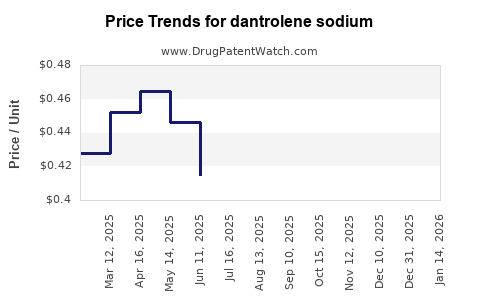
Drug Prices for dantrolene sodium

See drug prices for dantrolene sodium

Recent Clinical Trials for dantrolene sodium

Identify potential brand extensions & 505(b)(2) entrants

SponsorPhase
Beth Israel Deaconess Medical CenterPhase 2
National Institute of Diabetes and Digestive and Kidney Diseases (NIDDK)Phase 1/Phase 2
Washington University School of MedicinePhase 1/Phase 2

See all dantrolene sodium clinical trials

Pharmacology for dantrolene sodium
Medical Subject Heading (MeSH) Categories for dantrolene sodium

US Patents and Regulatory Information for dantrolene sodium

Applicant Tradename Generic Name Dosage NDA Approval Date TE Type RLD RS Patent No. Patent Expiration Product Substance Delist Req. Exclusivity Expiration
Elite Labs Inc DANTROLENE SODIUM dantrolene sodium CAPSULE;ORAL 076686-003 Oct 24, 2005 AB RX No No ⤷  Get Started Free ⤷  Get Started Free ⤷  Get Started Free
Endo Operations DANTRIUM dantrolene sodium CAPSULE;ORAL 017443-003 Approved Prior to Jan 1, 1982 AB RX Yes No ⤷  Get Started Free ⤷  Get Started Free ⤷  Get Started Free
Impax Labs DANTROLENE SODIUM dantrolene sodium CAPSULE;ORAL 076856-003 Mar 1, 2005 AB RX No No ⤷  Get Started Free ⤷  Get Started Free ⤷  Get Started Free
>Applicant >Tradename >Generic Name >Dosage >NDA >Approval Date >TE >Type >RLD >RS >Patent No. >Patent Expiration >Product >Substance >Delist Req. >Exclusivity Expiration

Expired US Patents for dantrolene sodium

Applicant Tradename Generic Name Dosage NDA Approval Date Patent No. Patent Expiration
Eagle Pharms RYANODEX dantrolene sodium FOR SUSPENSION;INTRAVENOUS 205579-001 Jul 22, 2014 8,685,460 ⤷  Get Started Free
Endo Operations DANTRIUM dantrolene sodium CAPSULE;ORAL 017443-001 Approved Prior to Jan 1, 1982 3,415,821 ⤷  Get Started Free
Eagle Pharms RYANODEX dantrolene sodium FOR SUSPENSION;INTRAVENOUS 205579-001 Jul 22, 2014 9,884,044 ⤷  Get Started Free
>Applicant >Tradename >Generic Name >Dosage >NDA >Approval Date >Patent No. >Patent Expiration

Market Dynamics and Financial Trajectory for Dantrolene Sodium

Last updated: August 4, 2025

Introduction

Dantrolene sodium, a muscle relaxant primarily used to treat malignant hyperthermia and spasticity associated with multiple sclerosis and cerebral palsy, has maintained a distinct market position over recent decades. Its journey reflects complex market forces, regulatory pathways, clinical adoption, and emerging competition. This analysis delineates the key drivers shaping its market dynamics and forecasts its financial trajectory through 2030.


Market Overview and Product Profile

Dantrolene sodium was first introduced in the 1960s, honored for its action on skeletal muscle calcium channels, which inhibits excessive calcium release, thereby reducing muscle contractions. Primarily marketed under brand names like Dantrium, it also faces new challenges as generic formulations gain prominence. Its clinical indications are relatively niche but crucial in acute settings—malignant hyperthermia crises—and chronic management of spasticity, expanding its utility but limiting widespread use.

Market Size and Growth Trends

The global market for dantrolene sodium has exhibited modest growth, driven by increasing awareness of malignant hyperthermia and surge in neurorehabilitation needs. As per data from Mordor Intelligence, the global muscle relaxants market, which includes dantrolene, was valued at approximately USD 1.5 billion in 2021 and is projected to grow at a CAGR of ~4% till 2026. Dantrolene’s specific segment represents a smaller fraction, estimated at around USD 150–200 million globally.

Key Market Drivers

  1. Rising Incidence of Malignant Hyperthermia: Although rare (estimated incidence of 1 in 5,000 to 50,000 anesthesia cases), the severe, potentially fatal nature of malignant hyperthermia amplifies the importance of preparedness and availability of dantrolene, fueling steady demand. Hospitals worldwide, especially in developed nations, maintain stockpiles.

  2. Increased Use in Neurorehabilitation: The rising prevalence of stroke and multiple sclerosis, particularly in aging populations, amplifies the need for spasticity management drugs, including dantrolene. Growing awareness of its efficacy supports continued prescription.

  3. Escalation of Surgical Procedures: An uptick in outpatient and inpatient surgeries, especially in emerging markets where anesthesia protocols are evolving, sustains demand for emergency muscle relaxants like dantrolene.

  4. Regulatory Endorsements and Guidelines: Incorporation into clinical protocols by anesthesiology societies enhances its credibility and use in therapeutic settings, further stabilizing market demand.


Market Challenges

  1. Limited Indications and Competition: Dantrolene's core indications are narrowly defined, restricting expansion. Competing agents for spasticity management, such as baclofen, tizanidine, and botulinum toxins, provide alternative pathways, sometimes replacing dantrolene.

  2. Manufacturing Constraints & Supply Chain Issues: Dantrolene's complex formulation processes and the necessity for stable storage conditions pose manufacturing hurdles. Notably, shortages have occurred historically due to production issues, impacting availability and pricing.

  3. Price Sensitivity and Generic Competition: Patent expiries and the availability of low-cost generics suppress revenues, especially in price-sensitive regions.

  4. Regulatory Limitations: Some countries lack formal approval or designated guidelines for dantrolene use beyond safety measures, hindering market penetration.


Emerging Trends and Opportunities

  1. Genetic Testing and Personalized Medicine: Advances enabling preoperative genetic screening for malignant hyperthermia susceptibility could influence demand forecasts, leading to more targeted high-risk population use.

  2. New Formulations Development: Exploring inhalable or sustained-release formulations could expand clinical utility—though currently sparse.

  3. Biotechnology and Novel Agents: Competition from newer agents with better side-effect profiles could threaten traditional dantrolene pathways. Conversely, innovations in delivery methods or combination therapies could open new niche markets.

  4. Market expansion in Developing Countries: Increasing healthcare infrastructure and surgical volumes, along with government initiatives, can enhance access and usage.


Financial Trajectory Forecast (2023-2030)

Given current market conditions, the financial outlook for dantrolene sodium remains cautiously optimistic. The generally flat demand is expected to be marginally refined by demographic and procedural growths, coupled with supply chain stabilization.

  • Revenue Projections: Industry estimates project a compound annual growth rate (CAGR) of approximately 2-3% over the next decade, influenced by demand stability in developed regions and incremental expansion in emerging markets.

  • Pricing Trends: Price erosion due to generic competition will likely continue, with average prices decreasing by 1-2% annually in developed markets. However, the strategic introduction of specialized formulations or formulations for niche markets could stabilize margins.

  • Regulatory Impact: Any new approval for indications such as neurodegenerative diseases or mitochondrial disorders could buoy revenues. Conversely, questionable regulatory approvals or restrictions could dampen growth.

  • Supply and Manufacturing Factors: Anticipated investments in manufacturing capacity that address past shortages may reduce volatility, positively impacting financial stability.


Regulatory and Market Entry Considerations

Historically, the regulatory pathway for dantrolene has been straightforward owing to its long-standing clinical use. Nonetheless, the evolving landscape with newer agents necessitates strategic positioning, particularly in emerging markets where regulatory standards are evolving. Companies will need to ensure compliance with local guidelines and optimize supply chain logistics to exploit market opportunities effectively.


Competitive Landscape

Major players include both brand-name holders like Merck (Dantrium) and numerous generic manufacturers. The mature market, characterized by commoditized products, pressures margins but offers steady income streams. Potential entrants are limited due to the drug’s niche status and the high costs associated with manufacturing and regulatory compliance.


Market Outlook Summary

The healing pace of the dantrolene market is tempered by its niche application, but stabilized demand driven by anesthesia practices and neurorehabilitation needs sustains its value. Convoluted supply chains and generic pricing pressures, however, necessitate strategic manufacturing and marketing efforts. The future landscape suggests moderate growth, with opportunities rooted in technological innovation and market expansion in less penetrated regions.


Key Takeaways

  • Demand for dantrolene sodium remains stable, anchored by its critical role in malignant hyperthermia management and spasticity treatment.
  • Market growth prospects hinge on demographic shifts, surgical procedure rates, and clinical advances, promising steady but moderate expansion.
  • Generic competition and manufacturing challenges suppress revenue potential, emphasizing the importance of supply chain robustness and cost management.
  • Emerging medical trends, such as personalized medicine, could open targeted utilization pathways, influencing long-term financial outcomes.
  • Strategic market expansion into developing countries and innovations in formulation could buffer revenue stagnation and foster incremental growth.

FAQs

1. What are the primary clinical indications for dantrolene sodium?
Dantrolene is chiefly used for malignant hyperthermia episodes and management of spasticity arising from neurological conditions like multiple sclerosis and cerebral palsy.

2. How does generic competition impact dantrolene's market value?
The availability of low-cost generics drives prices downward, constraining profit margins and reducing revenues for brand-name manufacturers.

3. Are there new therapeutic uses on the horizon for dantrolene?
While research explores its potential in mitochondrial disorders and neurodegenerative diseases, no widespread regulatory approvals currently exist beyond its established indications.

4. What supply chain issues have historically affected dantrolene?
Manufacturing complexity and stability requirements have occasionally caused shortages, adversely affecting availability and revenue streams.

5. How significant is the market for dantrolene in emerging economies?
Market potential is considerable, driven by increasing healthcare infrastructure, surgical procedures, and awareness, offering growth opportunities despite affordability challenges.


Sources
[1] Mordor Intelligence, “Muscle Relaxants Market - Growth, Trends, and Forecast (2021-2026)”
[2] U.S. Food and Drug Administration, “Dantrium (Dantrolene Sodium) Drug Label and Safety Data”
[3] European Medicines Agency, “Market Authorization for Dantrolene”
[4] GlobalData, “Pharmaceutical Market Analysis for Neuromuscular Drugs”
[5] Clinical Trials and Published Research, “Emerging Uses of Dantrolene in Neurodegenerative Disorders”

More… ↓

⤷  Get Started Free

Make Better Decisions: Try a trial or see plans & pricing

Drugs may be covered by multiple patents or regulatory protections. All trademarks and applicant names are the property of their respective owners or licensors. Although great care is taken in the proper and correct provision of this service, thinkBiotech LLC does not accept any responsibility for possible consequences of errors or omissions in the provided data. The data presented herein is for information purposes only. There is no warranty that the data contained herein is error free. We do not provide individual investment advice. This service is not registered with any financial regulatory agency. The information we publish is educational only and based on our opinions plus our models. By using DrugPatentWatch you acknowledge that we do not provide personalized recommendations or advice. thinkBiotech performs no independent verification of facts as provided by public sources nor are attempts made to provide legal or investing advice. Any reliance on data provided herein is done solely at the discretion of the user. Users of this service are advised to seek professional advice and independent confirmation before considering acting on any of the provided information. thinkBiotech LLC reserves the right to amend, extend or withdraw any part or all of the offered service without notice.