Last updated: August 3, 2026
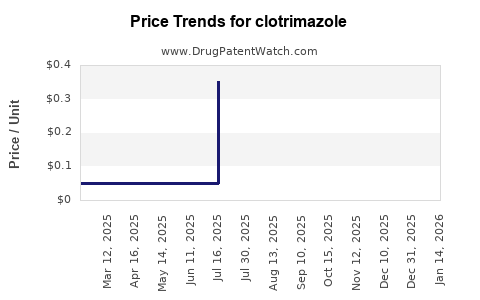
Clotrimazole is a mature, low-cost antifungal with broad generic availability and minimal remaining patent protection. Its commercial market is driven by volume, retail distribution, private-label products, and regional demand rather than exclusivity or premium pricing. The United States market is split between over-the-counter topical and vaginal products and prescription oral troches. Revenue growth is limited, while manufacturer economics depend on manufacturing scale, retailer access, supply reliability, and formulation differentiation.
What is the current market position of clotrimazole?
Clotrimazole is an imidazole antifungal used primarily for superficial fungal infections and selected mucosal infections. Its principal indications include:
- Tinea pedis, or athlete's foot
- Tinea cruris, or jock itch
- Tinea corporis, or ringworm
- Cutaneous candidiasis
- Vaginal candidiasis
- Oropharyngeal candidiasis through prescription lozenges
The product is sold in creams, solutions, lotions, powders, vaginal tablets, vaginal creams, and oral troches. Topical products generally contain 1% clotrimazole. Vaginal formulations commonly contain 1%, 2%, or 10% strengths depending on the dosage form and treatment duration.
Clotrimazole competes in a highly fragmented antifungal market against:
- Miconazole
- Terbinafine
- Ketoconazole
- Econazole
- Butenafine
- Nystatin
- Tolnaftate
Terbinafine and butenafine often command higher retail prices because of perceived speed of treatment and brand positioning. Miconazole has strong retail distribution in vaginal antifungal products. Clotrimazole remains competitive where low price, broad availability, and established physician familiarity matter.
How large is the clotrimazole market?
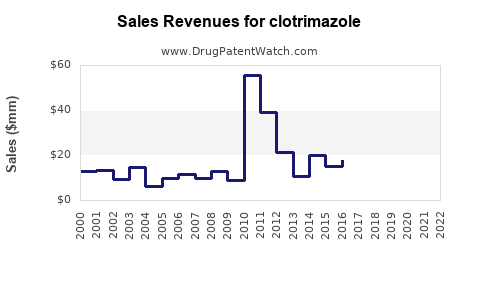
There is no single public financial disclosure for global clotrimazole sales because the product is sold by numerous generic manufacturers, contract manufacturers, pharmacy chains, and private-label distributors. Most manufacturers do not report clotrimazole revenue separately.
The market has four commercial characteristics:
| Market characteristic |
Effect on clotrimazole economics |
| Mature generic status |
Removes originator-level pricing power |
| OTC distribution |
Expands consumer access but increases retailer and private-label competition |
| Low-cost manufacturing |
Supports broad geographic availability |
| Product fragmentation |
Divides sales among many manufacturers and dosage forms |
The largest commercial pools are likely topical dermatology and vaginal antifungal products. Oral troches represent a smaller market and are primarily relevant to prescription channels, institutional purchasing, and patients requiring local oral treatment.
Clotrimazole revenue is therefore better assessed through unit volume, retail shelf presence, private-label contracts, and country-level registrations than through a single global sales figure. The financial trajectory is structurally flat to modestly declining in mature markets, with growth potential concentrated in emerging markets, pharmacy-led self-care, and combination or differentiated formulations.
What drives clotrimazole market demand?
OTC self-care and pharmacy substitution
Topical and vaginal clotrimazole products benefit from self-diagnosis and pharmacy access. Consumers often select products based on price, treatment duration, retailer availability, and familiarity with the active ingredient.
Private-label products can reduce consumer acquisition costs. Retailers may substitute branded products with store-brand clotrimazole when the active ingredient, strength, dosage form, and treatment duration are equivalent.
High disease prevalence
Superficial fungal infections are common and recurrent. Warm climates, occupational exposure, sports participation, diabetes, obesity, antibiotic use, and immunosuppression support continuing demand.
The product is particularly well positioned in countries where:
- OTC antifungal access is common
- Prescription coverage is limited
- Generic medicines dominate pharmacy sales
- Tropical or humid conditions increase dermatophyte infections
- Local manufacturers have established dermatology distribution
Treatment-duration competition
Clotrimazole competes against shorter-course products. Terbinafine may receive preference for dermatophyte infections because of shorter treatment regimens. Miconazole and clotrimazole remain relevant in vaginal products, where consumers compare one-day, three-day, and seven-day courses.
Shorter treatment duration can support premium pricing, but it also creates a commercial trade-off. Clotrimazole's low unit price and broad availability offset some of the perceived convenience advantage of newer or differently formulated agents.
When did clotrimazole lose exclusivity?
Clotrimazole lost meaningful market exclusivity decades ago. The molecule was developed in the 1960s and became widely available through generic and OTC channels during the late twentieth century.
| Milestone |
Commercial significance |
| 1960s |
Clotrimazole developed as an imidazole antifungal |
| 1970s |
U.S. prescription and topical products entered the market |
| 1980s-1990s |
Broader generic and international availability |
| 1990s onward |
OTC and private-label competition expanded |
| Current market |
No originator-style exclusivity or premium patent position |
The core compound is well outside any meaningful composition-of-matter patent term. The commercial question is no longer whether competitors can enter. It is whether a manufacturer can secure distribution, maintain quality compliance, and differentiate a product sufficiently to protect margin.
What patents protect clotrimazole products?
No active, commercially material composition-of-matter patent estate protects clotrimazole as a molecule. The product's principal patent barriers expired long ago.
Potential residual IP categories include:
- Specific creams, gels, sprays, or foams
- Particle-size or crystallinity specifications
- Solubilized or stabilized formulations
- Combination products
- Applicator systems
- Packaging and delivery systems
- Manufacturing processes
- Formulation patents covering another active ingredient used with clotrimazole
These rights generally have limited market effect because competing manufacturers can sell conventional clotrimazole creams, solutions, powders, vaginal tablets, and troches without practicing a narrow formulation claim.
How strong is the clotrimazole patent estate?
The patent estate is weak from an exclusivity perspective.
| Patent category |
Current strength |
| Core compound patent |
Expired |
| Conventional topical cream |
Generally unprotected by enforceable exclusivity |
| Vaginal tablet |
Limited practical protection |
| Oral troche |
Limited practical protection |
| Combination products |
Potentially relevant only to specific combinations |
| Manufacturing process |
Potentially relevant but usually design-around capable |
| Delivery device |
Product-specific and narrow |
Formulation patents may still affect a particular branded product, but they do not recreate molecule-level exclusivity. A competitor can usually enter with a different formulation, dosage strength, excipient system, or delivery device.
What is the Orange Book status of clotrimazole?
Clotrimazole does not have a meaningful current Orange Book patent position comparable with modern branded drugs. The Orange Book is relevant primarily to approved prescription products, including prescription oral troches and certain historical formulations. OTC clotrimazole products marketed under the FDA OTC monograph system are generally not dependent on Orange Book patent listings.
The commercial implications are:
- No current Orange Book patent listing is expected to block ordinary generic topical entry.
- Paragraph IV litigation is not a central market risk.
- OTC monograph compliance, product listing, labeling, quality, and manufacturing controls are more important than patent certification.
- Prescription products may require abbreviated approval or other FDA pathways depending on the dosage form and reference product.
FDA OTC antifungal requirements are set out in the relevant monograph regulations, including provisions for active ingredients, concentrations, indications, labeling, and dosage forms (21 C.F.R. pt. 333).
Are there Paragraph IV challenges to clotrimazole?
No major, commercially material Paragraph IV campaign is associated with conventional clotrimazole products. The molecule's age and generic status make a late-stage patent challenge unnecessary in most cases.
A Paragraph IV dispute could arise if a company developed:
- A newly approved prescription formulation
- A combination product with active patents
- A proprietary delivery system
- A novel dosage form with unexpired formulation claims
Such a dispute would concern the specific product patents, not clotrimazole itself.
What FDA regulatory status applies to clotrimazole?
Clotrimazole has multiple regulatory routes depending on dosage form and indication.
OTC products
Topical and vaginal products can be marketed under applicable FDA OTC monograph requirements when they satisfy the specified active-ingredient, strength, labeling, and manufacturing conditions. Products must comply with current good manufacturing practice requirements and FDA labeling rules.
Common OTC formats include:
- Cream
- Solution
- Lotion
- Powder
- Vaginal tablet
- Vaginal cream
Prescription products
Clotrimazole oral troches, historically marketed under products such as Mycelex Troche, are prescription products used for local treatment of oropharyngeal candidiasis. Prescription status reflects dosage form, clinical use, and regulatory history rather than patent exclusivity.
FDA approval of a prescription clotrimazole product does not prevent broad competition from OTC topical or vaginal products because those products address different sites of infection and routes of administration.
What formulation patents protect clotrimazole?
Conventional formulations have low defensibility. A formulation can have commercial value if it improves adherence, stability, application, residence time, or patient acceptability.
Potentially differentiating formulations include:
Topical delivery systems
Foams, sprays, gels, and non-greasy creams can improve cosmetic acceptability. These formats may support higher retail pricing, but their patent value depends on the specificity and enforceability of the claims.
Vaginal delivery
Single-dose tablets, mucoadhesive systems, soft-gel capsules, and extended-release formulations can compete on convenience. The commercial benefit is strongest where consumers value one-day treatment or reduced application frequency.
Combination formulations
Clotrimazole may be combined with corticosteroids or other agents. Combination products can address inflammation and fungal infection together, but they introduce additional regulatory, safety, and patent considerations. Clotrimazole-betamethasone products are materially different from single-agent clotrimazole and should be analyzed as separate products.
Oral troches
Troche manufacturing, taste, dissolution, and stability can create product-specific barriers. These are manufacturing and quality barriers rather than durable molecule-level exclusivity.
Which companies compete in clotrimazole?
The competitive field includes multinational consumer-health companies, generic pharmaceutical companies, regional manufacturers, and pharmacy retailers. Competition is country-specific because brand ownership, OTC status, product registration, and distribution rights vary by jurisdiction.
Typical competitor groups include:
- Large generic manufacturers
- Consumer-health companies
- Regional dermatology companies
- Contract manufacturers
- Supermarket and pharmacy private-label suppliers
- Hospital and institutional suppliers
Brand leadership is fragmented. A company may have strong market share in one country while having little presence in another. Local registration, pharmacy relationships, and supply continuity often matter more than global brand recognition.
How does clotrimazole compare with competing antifungals?
| Product |
Main advantage |
Main commercial limitation |
| Clotrimazole |
Low price, broad availability, multiple dosage forms |
Mature product with limited differentiation |
| Miconazole |
Strong vaginal and topical presence |
Heavy generic and branded competition |
| Terbinafine |
Shorter treatment perception for dermatophytes |
Higher price and narrower use profile |
| Butenafine |
Product differentiation and convenient dosing |
Smaller global distribution footprint |
| Nystatin |
Established candidiasis use |
Less suitable for some dermatophyte infections |
| Ketoconazole |
Established topical history |
Safety and regulatory concerns are more relevant for systemic use |
| Tolnaftate |
Low-cost topical option |
Narrower efficacy profile |
Clotrimazole is strongest where price and availability drive purchasing. Terbinafine is stronger in treatment-duration positioning. Miconazole is a close competitor in vaginal products and pharmacy self-care.
What licensing deals affect clotrimazole?
Clotrimazole has no widely recognized current licensing structure comparable with patented specialty drugs or biologics. Historical brand, distribution, and manufacturing agreements may exist at the country or product level, but they generally do not create a global barrier to entry.
Commercial agreements are more likely to concern:
- Private-label supply
- Contract manufacturing
- Regional distribution
- Pharmacy-chain sourcing
- Brand acquisitions
- Product registrations
- Combination-product rights
The economic value of such agreements depends on volume commitments and channel access rather than patent royalties.
What patent litigation affects clotrimazole?
No major active patent litigation is central to the conventional clotrimazole market. The litigation profile is low because:
- The core molecule is long off patent.
- Conventional dosage forms are widely established.
- Generic entry does not depend on defeating a strong current patent estate.
- OTC products are largely governed by monograph compliance.
- Formulation patents are narrow and easier to design around than composition patents.
Product-liability, quality, labeling, and manufacturing disputes present greater operational risk than patent litigation.
What generic entry risks exist for clotrimazole?
Generic entry risk is already fully realized. The relevant risk for incumbent manufacturers is reverse: additional suppliers can erode volume and pricing.
Price erosion
Retail and pharmacy buyers can switch suppliers when products are therapeutically equivalent. Manufacturers with high fixed costs or weak purchasing scale may face margin compression.
Supply-chain competition
The active pharmaceutical ingredient is widely available. Competitive advantage can come from validated suppliers, regulatory compliance, packaging capacity, and consistent delivery. Supply interruptions can temporarily shift share but rarely create durable pricing power.
Retailer bargaining power
Large pharmacy and retail chains can use multiple suppliers and private-label sourcing to negotiate lower prices.
Regulatory enforcement
Failure to comply with OTC labeling, quality, stability, contamination controls, or current good manufacturing practice requirements can result in recalls and loss of channel access.
What are the financial prospects for clotrimazole?
Clotrimazole is a volume business with limited pricing power. Its financial profile can be summarized as follows:
| Financial factor |
Outlook |
| Unit demand |
Stable, with regional growth |
| Average selling price |
Flat or declining in mature markets |
| Gross margin |
Dependent on scale and channel mix |
| R&D requirement |
Low for conventional products |
| Regulatory expense |
Moderate for ongoing compliance |
| Patent expense |
Low |
| Marketing requirement |
Low for generic products; higher for branded OTC products |
| Cash-flow profile |
Potentially stable at scale |
| Growth ceiling |
Limited without formulation or geographic expansion |
The best returns are available to manufacturers that already have:
- Low-cost production
- Established pharmacy distribution
- High-volume private-label contracts
- Existing regulatory registrations
- Integrated packaging operations
- Strong presence in emerging markets
A company entering solely with a conventional clotrimazole cream would face limited differentiation and likely compete on price. A stronger investment case would require a protected or differentiated delivery system, a high-growth geography, a major retail contract, or a combination product with a distinct clinical and commercial rationale.
What is the geographic outlook for clotrimazole?
Demand is strongest where fungal infections are prevalent and generic or OTC treatment is widely accepted. Opportunities may exist in:
- South and Southeast Asia
- Latin America
- Middle East and North Africa
- Sub-Saharan Africa
- Selected Eastern European markets
Geographic expansion depends on local registration, import requirements, pharmacopoeial standards, reimbursement, pharmacy channels, and local manufacturing rules.
The United States is commercially mature. Western Europe is also mature but retains demand through pharmacy and OTC channels. Emerging markets may offer higher unit growth, but pricing is lower and currency, tender, and distribution risks are greater.
What manufacturing and intellectual-property barriers affect clotrimazole?
Manufacturing barriers are practical rather than proprietary. They include:
- Consistent API sourcing
- Particle-size control
- Content uniformity
- Cream and gel homogeneity
- Vaginal tablet dissolution
- Troche taste and mechanical strength
- Stability in hot and humid climates
- Packaging integrity
- Microbial control
- Regulatory documentation
These barriers can delay entry or cause quality failures, but they do not usually prevent competition. A manufacturer with robust quality systems can enter the conventional market without needing access to proprietary technology.
Key Takeaways
- Clotrimazole is a mature generic and OTC antifungal with no meaningful remaining molecule-level exclusivity.
- Conventional topical, vaginal, and oral products face broad competition and limited pricing power.
- The United States market is commercially mature and fragmented among generic, private-label, and consumer-health suppliers.
- No major current Paragraph IV campaign or patent litigation is central to the product.
- Formulation, delivery, packaging, and combination-product patents may affect individual products but do not protect the overall clotrimazole market.
- Financial performance depends on manufacturing scale, retail access, geographic reach, and supply reliability.
- Emerging markets offer the clearest volume-growth opportunity, while mature markets provide more stable but lower-growth cash flow.
- A new entrant would need a cost advantage, major distribution agreement, differentiated dosage form, or geographic niche to achieve attractive returns.
FAQs
Is clotrimazole still a profitable pharmaceutical product?
It can be profitable at high manufacturing volume and low cost. Profitability is generally modest for undifferentiated products because generic and private-label competition limits pricing.
Does clotrimazole have biosimilar risk?
No. Clotrimazole is a small-molecule drug, not a biologic. Biosimilar regulation does not apply. Its competitive risk comes from generic and OTC substitution.
Can a company obtain a new patent on a clotrimazole formulation?
A company may obtain patent protection for a novel formulation, delivery system, manufacturing process, or combination if the claims satisfy patentability requirements. The patent would protect the claimed product, not clotrimazole generally.
Is clotrimazole included in the FDA OTC antifungal monograph?
Clotrimazole is recognized in FDA's OTC antifungal regulatory framework for specified topical and vaginal uses, subject to applicable conditions for formulation, concentration, labeling, and manufacturing (21 C.F.R. pt. 333).
Does clotrimazole face competition from terbinafine?
Yes. Terbinafine is a major competitor in topical treatment of dermatophyte infections and often has stronger treatment-duration positioning. Clotrimazole remains competitive on price, availability, and breadth of dosage forms.
References
-
Code of Federal Regulations. (2024). 21 C.F.R. Part 333: Topical antimicrobial drug products for over-the-counter human use. U.S. Government Publishing Office.
-
U.S. Food and Drug Administration. (2024). Approved drug products with therapeutic equivalence evaluations: The Orange Book. U.S. Department of Health and Human Services. https://www.fda.gov/drugs/drug-approvals-and-databases/approved-drug-products-therapeutic-equivalence-evaluations-orange-book
-
U.S. Food and Drug Administration. (2024). Drugs@FDA: FDA-approved drugs. U.S. Department of Health and Human Services. https://www.accessdata.fda.gov/scripts/cder/daf/
-
National Library of Medicine. (2024). DailyMed: Clotrimazole drug labels. U.S. National Library of Medicine. https://dailymed.nlm.nih.gov/
-
World Health Organization. (2023). WHO model list of essential medicines, 23rd list. World Health Organization. https://www.who.int/publications/i/item/WHO-MHP-HPS-EML-2023.02