You're using a free limited version of DrugPatentWatch: Upgrade for Complete Access

Last Updated: March 26, 2026

Acetylcysteine - Generic Drug Details


✉ Email this page to a colleague

« Back to Dashboard


What are the generic sources for acetylcysteine and what is the scope of patent protection?

Acetylcysteine is the generic ingredient in eight branded drugs marketed by Cumberland Pharms, Eugia Pharma, Exela Pharma, Fresenius Kabi Usa, Glenmark Pharms Inc, Onesource Specialty, Regcon Holdings, Rising, Sagent Pharms Inc, Somerset Theraps Llc, Zydus Pharms, Alvogen, Am Regent, Conba Usa, Hospira, Roxane, Apothecon, DEY, Arbor Pharms Llc, Galephar, and Mead Johnson, and is included in thirty-two NDAs. There are six patents protecting this compound and one Paragraph IV challenge. Additional information is available in the individual branded drug profile pages.

Acetylcysteine has nineteen patent family members in eleven countries.

There are three drug master file entries for acetylcysteine. Fourteen suppliers are listed for this compound. There is one tentative approval for this compound.

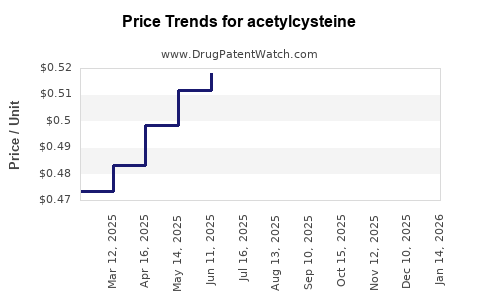
Drug Prices for acetylcysteine

See drug prices for acetylcysteine

Recent Clinical Trials for acetylcysteine

Identify potential brand extensions & 505(b)(2) entrants

SponsorPhase
University of ArizonaPHASE2
Banner University Medical CenterPHASE2
Open Source Pharma FoundationPHASE3

See all acetylcysteine clinical trials

Generic filers with tentative approvals for ACETYLCYSTEINE
Applicant Application No. Strength Dosage Form
⤷  Start Trial⤷  Start Trial6GM/30ML (200MG/ML)INJECTABLE;INTRAVENOUS

The 'tentative' approval signifies that the product meets all FDA standards for marketing, and, but for the patents / regulatory protections, it would approved.

Medical Subject Heading (MeSH) Categories for acetylcysteine
Paragraph IV (Patent) Challenges for ACETYLCYSTEINE
Tradename Dosage Ingredient Strength NDA ANDAs Submitted Submissiondate
ACETADOTE Injection acetylcysteine 200 mg/mL, 30 mL vials 021539 3 2012-04-04

US Patents and Regulatory Information for acetylcysteine

Applicant Tradename Generic Name Dosage NDA Approval Date TE Type RLD RS Patent No. Patent Expiration Product Substance Delist Req. Exclusivity Expiration
Exela Pharma ACETYLCYSTEINE acetylcysteine SOLUTION;INHALATION, ORAL 205643-001 Nov 1, 2023 DISCN No No ⤷  Start Trial ⤷  Start Trial ⤷  Start Trial
Am Regent ACETYLCYSTEINE acetylcysteine SOLUTION;INHALATION, ORAL 072489-001 Jul 28, 1995 AN RX No Yes ⤷  Start Trial ⤷  Start Trial ⤷  Start Trial
Arbor Pharms Llc CETYLEV acetylcysteine TABLET, EFFERVESCENT;ORAL 207916-001 Jan 29, 2016 DISCN Yes No ⤷  Start Trial ⤷  Start Trial ⤷  Start Trial
Apothecon MUCOMYST acetylcysteine SOLUTION;INHALATION, ORAL 013601-001 Approved Prior to Jan 1, 1982 DISCN Yes No ⤷  Start Trial ⤷  Start Trial ⤷  Start Trial
Glenmark Pharms Inc ACETYLCYSTEINE acetylcysteine INJECTABLE;INTRAVENOUS 213693-001 Feb 3, 2022 AP RX No No ⤷  Start Trial ⤷  Start Trial ⤷  Start Trial
Arbor Pharms Llc CETYLEV acetylcysteine TABLET, EFFERVESCENT;ORAL 207916-002 Jan 29, 2016 DISCN Yes No ⤷  Start Trial ⤷  Start Trial ⤷  Start Trial
>Applicant >Tradename >Generic Name >Dosage >NDA >Approval Date >TE >Type >RLD >RS >Patent No. >Patent Expiration >Product >Substance >Delist Req. >Exclusivity Expiration

Expired US Patents for acetylcysteine

Applicant Tradename Generic Name Dosage NDA Approval Date Patent No. Patent Expiration
Cumberland Pharms ACETADOTE acetylcysteine INJECTABLE;INTRAVENOUS 021539-001 Jan 23, 2004 ⤷  Start Trial ⤷  Start Trial
>Applicant >Tradename >Generic Name >Dosage >NDA >Approval Date >Patent No. >Patent Expiration

International Patents for acetylcysteine

Country Patent Number Title Estimated Expiration
China 103038356 Acetycysteine compositions and methods of use thereof ⤷  Start Trial
European Patent Office 1928449 COMPOSITION D'ACETYLCYSTEINE ET SES UTILISATIONS (ACETYLCYSTEINE COMPOSITION AND USES THEREFOR) ⤷  Start Trial
Australia 2006282030 Acetylcysteine composition and uses therefor ⤷  Start Trial
South Korea 101408336 ⤷  Start Trial
Hong Kong 1123972 乙酰半胱氨酸組合物及其用途 (ACETYLCYSTEINE COMPOSITION AND USES THEREFOR) ⤷  Start Trial
World Intellectual Property Organization (WIPO) 2012012640 ⤷  Start Trial
>Country >Patent Number >Title >Estimated Expiration

Acetylcysteine Market Dynamics and Financial Trajectory

Last updated: February 19, 2026

Acetylcysteine (NAC), a cysteine derivative, holds established therapeutic roles in mucolytic treatment and acetaminophen overdose reversal. Its market performance is influenced by established indications, emerging research, and generic competition.

What is Acetylcysteine and Its Primary Therapeutic Applications?

Acetylcysteine is an antioxidant and mucolytic agent. Its primary therapeutic applications are:

  • Mucolytic Agent: NAC breaks disulfide bonds in mucoproteins, reducing mucus viscosity. It is administered via inhalation for respiratory conditions such as chronic obstructive pulmonary disease (COPD), cystic fibrosis, and bronchitis [1].
  • Acetaminophen Antidote: NAC is the standard treatment for acetaminophen (paracetamol) poisoning. It replenishes hepatic glutathione stores, which are depleted by the toxic metabolite N-acetyl-p-benzoquinone imine (NAPQI) [2].

What is the Current Market Size and Projected Growth for Acetylcysteine?

The global acetylcysteine market was valued at approximately $800 million in 2023. The market is projected to grow at a compound annual growth rate (CAGR) of 4.5% from 2024 to 2030. This growth is driven by an increasing prevalence of respiratory diseases, the rising incidence of acetaminophen overdose, and ongoing research into new therapeutic applications.

What are the Key Market Drivers for Acetylcysteine?

Key market drivers include:

  • Rising Incidence of Respiratory Diseases: An aging global population and increased exposure to air pollution contribute to a higher incidence of COPD, asthma, and other chronic respiratory conditions. These conditions necessitate mucolytic treatments, boosting demand for acetylcysteine. The World Health Organization estimates that COPD affects 251 million people globally [3].
  • Increasing Cases of Acetaminophen Overdose: Acetaminophen is widely available over-the-counter, leading to accidental or intentional overdoses. This drives consistent demand for NAC as the primary antidote. In the United States, acetaminophen overdose is a leading cause of acute liver failure [4].
  • Expanding Research into New Indications: NAC is being investigated for potential benefits in psychiatric disorders (e.g., obsessive-compulsive disorder, addiction), neurological conditions, and as an adjuvant therapy in oncology. Positive outcomes in clinical trials could unlock new market segments.
  • Generic Availability and Affordability: The widespread availability of generic acetylcysteine products makes it an accessible treatment option, particularly in emerging economies, thereby supporting volume growth.

What are the Primary Restraints and Challenges in the Acetylcysteine Market?

Primary market restraints and challenges include:

  • Intense Generic Competition: The acetylcysteine market is highly fragmented with numerous generic manufacturers. This leads to significant price erosion and limits the pricing power of individual companies.
  • Development of Alternative Therapies: For mucolytic indications, newer or more targeted therapies are emerging, potentially posing a competitive threat. Similarly, alternative antidotes for acetaminophen overdose could emerge, although NAC remains the gold standard.
  • Regulatory Hurdles for New Indications: Obtaining regulatory approval for new therapeutic uses of acetylcysteine requires extensive clinical trials, which are time-consuming and costly.
  • Limited Patent Expirations: Many core patents for acetylcysteine have long expired, with the focus now shifting to newer formulations or specific delivery methods.

What is the Competitive Landscape for Acetylcysteine Manufacturers?

The competitive landscape is characterized by a mix of large pharmaceutical companies and numerous smaller generic manufacturers. Key players in the acetylcysteine market include:

  • Grup ACGS (Spain): A significant producer of acetylcysteine APIs and finished dosage forms.
  • Sanofi S.A. (France): Markets acetylcysteine under brands like Mucomyst.
  • Valeant Pharmaceuticals International, Inc. (now Bausch Health Companies Inc.) (Canada): Has a presence in the mucolytic market with acetylcysteine-containing products.
  • Chiesi Farmaceutici S.p.A. (Italy): Offers acetylcysteine formulations for respiratory indications.
  • Exeltis (part of Cheplapharm Arzneimittel GmbH) (Germany): A producer of generic acetylcysteine.
  • Teva Pharmaceutical Industries Ltd. (Israel): A major player in the global generics market, including acetylcysteine.

The market is competitive, with pricing and product availability being key differentiators among generic manufacturers.

What is the Regulatory Environment Affecting Acetylcysteine?

The regulatory environment for acetylcysteine is primarily governed by national drug regulatory agencies such as the U.S. Food and Drug Administration (FDA), the European Medicines Agency (EMA), and others globally.

  • Approval for Existing Indications: Manufacturers must adhere to Good Manufacturing Practices (GMP) and demonstrate bioequivalence for generic versions of established acetylcysteine products.
  • New Indication Approval: For novel applications, extensive preclinical and clinical data supporting safety and efficacy are required, following rigorous review processes.
  • Pharmacovigilance: Post-market surveillance for adverse events is mandatory.

What is the Impact of Intellectual Property on the Acetylcysteine Market?

The impact of intellectual property (IP) on the acetylcysteine market is limited for the original molecule due to patent expiries. However, IP strategies are now focused on:

  • New Formulations: Patents may cover novel delivery systems (e.g., sustained-release formulations, specific inhalation devices) that improve patient compliance or efficacy.
  • New Therapeutic Uses: Patents can be obtained for the use of acetylcysteine in treating specific diseases or conditions not previously recognized. These patents provide market exclusivity for the intended use.
  • Combination Therapies: Patents may cover formulations combining acetylcysteine with other active pharmaceutical ingredients.
  • Manufacturing Processes: Novel or improved manufacturing processes for acetylcysteine API can be patented.

What is the Financial Outlook and Investment Potential for Acetylcysteine?

The financial outlook for acetylcysteine is stable, driven by its essential role in established medical treatments.

  • Revenue Streams: Revenue is primarily generated from the sale of both branded and generic oral, intravenous, and inhalation formulations. The demand for NAC as an antidote ensures a consistent, albeit volume-driven, revenue stream.
  • Profit Margins: Profit margins on generic acetylcysteine are generally lower compared to patented drugs due to intense competition. However, manufacturers of specialized formulations or those with strong distribution networks can achieve higher margins.
  • Investment Considerations: Investment in the acetylcysteine market is likely to yield steady, albeit moderate, returns. Companies focusing on expanding manufacturing capacity for essential generic APIs, developing novel formulations with improved patient outcomes, or successfully navigating regulatory pathways for new indications may present attractive investment opportunities. Research into its potential in areas like neuroprotection or psychiatric disorders warrants monitoring for potential upside.

What are the Key Regional Market Dynamics for Acetylcysteine?

Key regional market dynamics for acetylcysteine include:

  • North America: The largest market, driven by high healthcare expenditure, established protocols for acetaminophen overdose management, and a strong demand for respiratory therapies.
  • Europe: A significant market with a strong emphasis on respiratory health and the availability of various acetylcysteine formulations. Regulatory harmonization within the EU influences market access.
  • Asia-Pacific: The fastest-growing market, fueled by increasing healthcare awareness, rising disposable incomes, a growing patient base for respiratory diseases, and a large generic drug manufacturing sector.
  • Latin America and Middle East & Africa: These regions present growth opportunities due to improving healthcare infrastructure and increasing access to essential medicines, including acetylcysteine.

Key Takeaways

  • Acetylcysteine's market is anchored by its critical role in mucolytic therapy and acetaminophen overdose reversal.
  • The market is projected for steady growth at a CAGR of 4.5% through 2030, propelled by increasing respiratory illness prevalence and overdose incidents.
  • Intense generic competition and the expiry of core patents cap pricing power and profit margins for many manufacturers.
  • Future growth opportunities lie in novel formulations, expanded therapeutic indications backed by robust clinical research, and penetration into emerging markets.
  • Intellectual property is now focused on specific delivery methods, new uses, and manufacturing process improvements rather than the molecule itself.

Frequently Asked Questions

  1. Are there any new patented formulations of acetylcysteine that offer significant advantages over existing generics? While numerous patents exist for novel formulations, significant clinical advantages that displace established generic options have been limited. Research is ongoing for specialized delivery systems or combination products, but broad market disruption from new formulations remains a developing area.

  2. What is the primary risk associated with investing in a generic acetylcysteine manufacturer? The primary risk is intense price competition and the potential for margin erosion due to oversupply or aggressive pricing by competitors. Dependency on a single product without diversification also poses a risk.

  3. How significant is the potential for acetylcysteine in treating psychiatric disorders? Research into NAC's role in psychiatric disorders, including OCD and addiction, is promising but largely in early to mid-stage clinical trials. Regulatory approval for these indications is not guaranteed and would require substantial evidence of efficacy and safety.

  4. What impact do fluctuating raw material costs have on acetylcysteine production? Fluctuations in the cost of precursor chemicals for acetylcysteine synthesis can impact production costs. However, for high-volume generic production, manufacturers often secure long-term supply contracts to mitigate this risk.

  5. Does the regulatory status of acetylcysteine vary significantly between major markets like the US and Europe? While the core therapeutic indications are generally recognized across major markets, specific approved dosages, formulations, and labeling may differ due to distinct regulatory review processes and requirements by agencies like the FDA and EMA.

Citations

[1] Malloy, J. P., & DeKoven, M. K. (2023). Acetylcysteine. In StatPearls. StatPearls Publishing. Retrieved from https://www.ncbi.nlm.nih.gov/books/NBK563214/

[2] Varghese, J., & Ramakrishnan, G. (2023). Acetaminophen Toxicity. In StatPearls. StatPearls Publishing. Retrieved from https://www.ncbi.nlm.nih.gov/books/NBK557594/

[3] World Health Organization. (2023, May 3). Chronic obstructive pulmonary disease (COPD). WHO. Retrieved from https://www.who.int/news-room/fact-sheets/detail/chronic-obstructive-pulmonary-disease-(copd)

[4] National Institute of Diabetes and Digestive and Kidney Diseases. (2023, July 28). Liver Failure. NIDDK. Retrieved from https://www.niddk.nih.gov/health-information/liver-disease/liver-failure

More… ↓

⤷  Start Trial

Make Better Decisions: Try a trial or see plans & pricing

Drugs may be covered by multiple patents or regulatory protections. All trademarks and applicant names are the property of their respective owners or licensors. Although great care is taken in the proper and correct provision of this service, thinkBiotech LLC does not accept any responsibility for possible consequences of errors or omissions in the provided data. The data presented herein is for information purposes only. There is no warranty that the data contained herein is error free. We do not provide individual investment advice. This service is not registered with any financial regulatory agency. The information we publish is educational only and based on our opinions plus our models. By using DrugPatentWatch you acknowledge that we do not provide personalized recommendations or advice. thinkBiotech performs no independent verification of facts as provided by public sources nor are attempts made to provide legal or investing advice. Any reliance on data provided herein is done solely at the discretion of the user. Users of this service are advised to seek professional advice and independent confirmation before considering acting on any of the provided information. thinkBiotech LLC reserves the right to amend, extend or withdraw any part or all of the offered service without notice.