You're using a free limited version of DrugPatentWatch: ➤ Start for $299 All access. No Commitment.

Last Updated: December 15, 2025

Ferric citrate - Generic Drug Details


✉ Email this page to a colleague

« Back to Dashboard


What are the generic drug sources for ferric citrate and what is the scope of patent protection?

Ferric citrate is the generic ingredient in one branded drug marketed by Keryx Biopharms and is included in one NDA. There are three patents protecting this compound. Additional information is available in the individual branded drug profile pages.

Ferric citrate has one hundred and twenty-two patent family members in twenty-three countries.

There are six drug master file entries for ferric citrate. Two suppliers are listed for this compound.

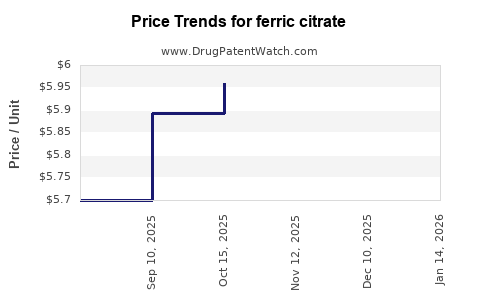
Drug Prices for ferric citrate

See drug prices for ferric citrate

DrugPatentWatch® Estimated Loss of Exclusivity (LOE) Date for ferric citrate
Generic Entry Date for ferric citrate*:
Constraining patent/regulatory exclusivity:
Dosage:
TABLET;ORAL

*The generic entry opportunity date is the latter of the last compound-claiming patent and the last regulatory exclusivity protection. Many factors can influence early or later generic entry. This date is provided as a rough estimate of generic entry potential and should not be used as an independent source.

Recent Clinical Trials for ferric citrate

Identify potential brand extensions & 505(b)(2) entrants

SponsorPhase
Akebia TherapeuticsPhase 3
USRC Kidney ResearchPhase 3
Akebia Therapeutics Inc.Phase 4

See all ferric citrate clinical trials

Pharmacology for ferric citrate

US Patents and Regulatory Information for ferric citrate

Applicant Tradename Generic Name Dosage NDA Approval Date TE Type RLD RS Patent No. Patent Expiration Product Substance Delist Req. Exclusivity Expiration
Keryx Biopharms AURYXIA ferric citrate TABLET;ORAL 205874-001 Sep 5, 2014 RX Yes Yes ⤷  Get Started Free ⤷  Get Started Free ⤷  Get Started Free
Keryx Biopharms AURYXIA ferric citrate TABLET;ORAL 205874-001 Sep 5, 2014 RX Yes Yes ⤷  Get Started Free ⤷  Get Started Free Y ⤷  Get Started Free
Keryx Biopharms AURYXIA ferric citrate TABLET;ORAL 205874-001 Sep 5, 2014 RX Yes Yes ⤷  Get Started Free ⤷  Get Started Free ⤷  Get Started Free
>Applicant >Tradename >Generic Name >Dosage >NDA >Approval Date >TE >Type >RLD >RS >Patent No. >Patent Expiration >Product >Substance >Delist Req. >Exclusivity Expiration

Expired US Patents for ferric citrate

International Patents for ferric citrate

Country Patent Number Title Estimated Expiration
China 105055446 Method of reversing, preventing, delaying or stabilizing soft tissue calcification ⤷  Get Started Free
China 101253186 Ferric organic compounds, uses thereof and methods of making same ⤷  Get Started Free
Japan 4964585 ⤷  Get Started Free
Japan 2017036289 慢性腎疾患の治療法 (METHOD OF TREATING CHRONIC KIDNEY DISEASE) ⤷  Get Started Free
Japan 2014240405 慢性腎疾患の治療法 (METHOD OF TREATING CHRONIC KIDNEY DISEASE) ⤷  Get Started Free
South Korea 20140016438 FERRIC CITRATE DOSAGE FORMS ⤷  Get Started Free
>Country >Patent Number >Title >Estimated Expiration

Market Dynamics and Financial Trajectory for Ferric Citrate

Last updated: July 28, 2025

Introduction

Ferric citrate, a pharmaceutical compound primarily indicated for iron deficiency anemia in patients with chronic kidney disease (CKD), has emerged as a significant player within the nephrology and anemia management sectors. Its unique mechanism as both a phosphate binder and iron supplement positions it prominently in nephrologic treatment paradigms. This report delineates the market dynamics shaping ferric citrate’s commercial landscape and forecasts its financial trajectory amid evolving healthcare trends, competitive forces, and regulatory considerations.

Market Overview and Indications

Ferric citrate’s principal approval ecosystem spans the United States, European Union, and select Asian markets, where it is primarily prescribed for:

  • Iron deficiency anemia in CKD patients (both on dialysis and non-dialysis-dependent).
  • Hyperphosphatemia management in CKD, leveraging its phosphate-binding capacity.

The dual functionality—simultaneous reduction of serum phosphate and correction of anemia—offers clinicians a streamlined therapeutic approach, appealing to nephrologists and clinicians managing CKD patients.

Market Drivers

Growing CKD and Anemia Prevalence

Global CKD prevalence is rising—estimated at over 850 million individuals worldwide—with anemia affecting approximately 50% of this population (source: WHO)[1]. The aging demographic and increasing rates of diabetes and hypertension accelerate CKD incidence, bolstering demand for treatments like ferric citrate.

Shift Toward Oral, Combination Therapies

Ferric citrate’s oral administration offers advantages over injectable iron therapies, including reduced administration costs and improved patient compliance. Its dual role in phosphate management and anemia correction streamlines treatment regimens, aligning with personalized medicine trends.

Regulatory Approvals and Expanding Indications

Initial approval by the U.S. FDA in 2016 for iron deficiency anemia in CKD patients on dialysis catalyzed market entry. Subsequent approvals and clinical evidence supporting its use in non-dialysis-dependent CKD patients have expanded its market scope, fueling growth.

Healthcare Policy and Reimbursement Trends

Reimbursement frameworks increasingly favor oral therapies that reduce hospitalization rates and invasive procedures. Ferric citrate’s potential to decrease reliance on erythropoiesis-stimulating agents (ESAs) and injectable iron aligns with value-based care initiatives, enhancing its market attractiveness.

Market Challenges

Competitive Landscape

Ferric citrate faces competition primarily from:

  • Other phosphate binders: Sevelamer, lanthanum carbonate, and calcium-based binders.
  • Iron therapies: Intravenous iron formulations and newer oral iron agents.
  • Erythropoiesis-stimulating agents (ESAs): For anemia management, especially in dialysis-dependent populations.

While ferric citrate’s oral formulation and dual action confer differentiation, clinicians often consider efficacy, safety profile, and cost when selecting therapies.

Safety and Tolerability Concerns

Gastrointestinal side effects, such as nausea and constipation, may influence patient adherence. Long-term safety data continue to shape prescribing practices and market acceptance.

Regulatory and Reimbursement Barriers

Differential reimbursement policies across regions affect market penetration. Stringent regulatory evaluations for new indications may delay broader adoption.

Financial Trajectory and Market Projections

Market Size and Revenue Estimates

The global iron deficiency anemia therapeutics market was valued at approximately USD 16.5 billion in 2022, with the phosphate binder segment comprising a significant portion of CKD-related therapy revenues (source: IBISWorld)[2]. Ferric citrate, accounting for roughly 8-12% of phosphate binder sales in key markets, is projected to grow at a compound annual growth rate (CAGR) of 8-10% over the next five years, driven by:

  • Increasing CKD prevalence.
  • Expanded approvals for non-dialysis populations.
  • Growth in emerging markets.

Forecasted Revenue Trends

In the United States, ferric citrate’s revenues are expected to reach USD 800–1 billion annually by 2028, assuming continued uptake and favorable reimbursement policies. In Europe and Asia, incremental growth will depend on regulatory approvals and healthcare infrastructure developments.

Factors Influencing Growth

  • Pipeline developments: Emerging formulations with improved tolerability could expand market share.
  • Pricing strategies: Competitive pricing and bundling with other CKD treatments will influence penetration.
  • Clinical Guidelines: Adoption of updated CKD management guidelines endorsing ferric citrate’s role will accelerate prescribing trends.

Regulatory and Scientific Landscape

Ongoing clinical trials evaluating ferric citrate’s efficacy in various CKD stages and anemia severity will bolster evidence-based use, influencing regulatory decisions and reimbursement approvals. Real-world evidence demonstrating reductions in healthcare costs and improved patient outcomes will further entrench its market position.

Regional Market Dynamics

United States

Leading market, driven by early approval, robust insurance coverage, and high CKD prevalence. Growth is buoyed by expanded indications and clinician familiarity.

Europe

Market expansion hinges on obtaining EMA approval, with focus on cost-effectiveness analyses and integration into national formularies.

Asia-Pacific

Rapid CKD prevalence increase, coupled with rising healthcare expenditure, presents significant growth opportunities. Regulatory pathways are evolving, with some countries approving ferric citrate for localized indications.

Strategic Implications for Stakeholders

  • Pharmaceutical companies should prioritize clinical development for broader indications and real-world studies demonstrating cost savings.
  • Payers will scrutinize long-term economic benefits versus costs.
  • Clinicians will weigh efficacy, safety, and patient adherence when integrating ferric citrate into treatment protocols.

Key Takeaways

  • The global ferric citrate market is poised for steady growth, driven by rising CKD prevalence, demand for oral therapies, and its dual phosphate management and anemia correction capabilities.
  • Competitive pressures from existing phosphate binders and iron therapies necessitate differentiation through efficacy, safety, and cost-effectiveness.
  • Regional variations in regulatory environments and healthcare policies influence market penetration and revenue projections.
  • Expansion into non-dialysis CKD populations and emerging markets offers significant upside, contingent upon clinical validation and favorable reimbursement frameworks.
  • Strategic investments in clinical research and real-world evidence generation will be pivotal in cementing ferric citrate’s market position.

FAQs

1. What makes ferric citrate distinct from other phosphate binders?
Ferric citrate offers dual functionality: managing hyperphosphatemia and treating iron deficiency anemia through oral administration, reducing the need for injectable iron or ESA therapies and streamlining treatment regimens.

2. How is the global prevalence of CKD influencing ferric citrate’s market?
The rising prevalence of CKD globally directly increases the demand for phosphate binders and anemia treatments, positioning ferric citrate favorably as a dual-action therapy.

3. What are the primary challenges limiting ferric citrate’s market growth?
Key challenges include competition from established phosphate binders, safety and tolerability concerns, regional regulatory hurdles, and reimbursement disparities.

4. Which regions are expected to see the fastest growth in ferric citrate sales?
Emerging markets in Asia-Pacific and expanding indications within Europe are projected to see rapid market growth, driven by increasing CKD burden and favorable regulatory progression.

5. What role will future clinical trials play in shaping the market trajectory?
Ongoing and future trials confirming efficacy, safety, and cost-effectiveness will facilitate regulatory approvals for broader indications, enhance clinician confidence, and promote wider adoption.


References

[1] World Health Organization. (2021). Global CKD burden.
[2] IBISWorld. (2023). Phosphate Binders and Iron Therapies Market Report.

More… ↓

⤷  Get Started Free

Make Better Decisions: Try a trial or see plans & pricing

Drugs may be covered by multiple patents or regulatory protections. All trademarks and applicant names are the property of their respective owners or licensors. Although great care is taken in the proper and correct provision of this service, thinkBiotech LLC does not accept any responsibility for possible consequences of errors or omissions in the provided data. The data presented herein is for information purposes only. There is no warranty that the data contained herein is error free. We do not provide individual investment advice. This service is not registered with any financial regulatory agency. The information we publish is educational only and based on our opinions plus our models. By using DrugPatentWatch you acknowledge that we do not provide personalized recommendations or advice. thinkBiotech performs no independent verification of facts as provided by public sources nor are attempts made to provide legal or investing advice. Any reliance on data provided herein is done solely at the discretion of the user. Users of this service are advised to seek professional advice and independent confirmation before considering acting on any of the provided information. thinkBiotech LLC reserves the right to amend, extend or withdraw any part or all of the offered service without notice.