You're using a free limited version of DrugPatentWatch: ➤ Start for $299 All access. No Commitment.

Last Updated: December 17, 2025

Drug Sales Trends for DIPHENHYDRAMINE HYDROCHLORIDE


✉ Email this page to a colleague
« Back to Dashboard


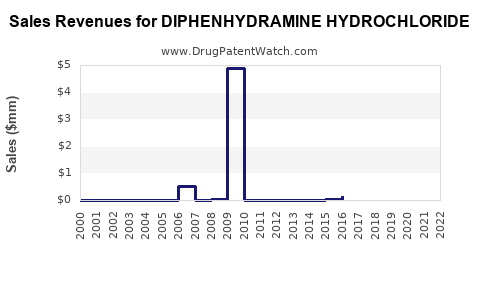
Drug Sales Revenue Trends for DIPHENHYDRAMINE HYDROCHLORIDE
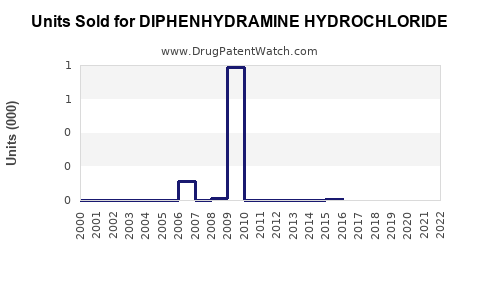
Drug Units Sold Trends for DIPHENHYDRAMINE HYDROCHLORIDE

Annual Sales Revenues and Units Sold for DIPHENHYDRAMINE HYDROCHLORIDE

These sales figures are drawn from a US national survey of drug expenditures
Drug Name Revenues (USD) Units Year
DIPHENHYDRAMINE HYDROCHLORIDE ⤷  Get Started Free ⤷  Get Started Free 2022
DIPHENHYDRAMINE HYDROCHLORIDE ⤷  Get Started Free ⤷  Get Started Free 2021
DIPHENHYDRAMINE HYDROCHLORIDE ⤷  Get Started Free ⤷  Get Started Free 2020
DIPHENHYDRAMINE HYDROCHLORIDE ⤷  Get Started Free ⤷  Get Started Free 2019
>Drug Name >Revenues (USD) >Units >Year

Market Analysis and Sales Projections for Diphenhydramine Hydrochloride

Last updated: July 28, 2025


Introduction

Diphenhydramine hydrochloride, a first-generation antihistamine, remains a cornerstone in the treatment of allergy symptoms, motion sickness, and common cold symptoms. Its over-the-counter (OTC) availability and well-established safety profile sustain its broad utilization globally. This analysis explores the current market landscape, key drivers, competitive environment, regulatory factors, and future sales projections for diphenhydramine hydrochloride.


Market Overview

Global Drug Market Context
The antihistamine segment forms a significant portion of the global OTC medication industry, valued at approximately USD 8 billion in 2022, with a compound annual growth rate (CAGR) of around 4% (1). Diphenhydramine constitutes roughly 35–40% of this category, driven by its wide usage in allergy relief and sleep aid formulations.

Key Markets and Demographics

  • The North American market dominates, accounting for nearly 45% of global sales, attributable to high OTC consumption and mature healthcare infrastructure (2).
  • Europe contributes approximately 25%, with Latin America and Asia-Pacific rapidly expanding segments due to increased healthcare awareness and urbanization (3).

Prescription vs. OTC Status
While primarily available OTC, diphenhydramine is sometimes prescription-listed in certain jurisdictions for specific indications, such as pediatric sleep disorders. The OTC status ensures high accessibility, fueling consistent demand.


Market Drivers

1. Ubiquity in Consumer Healthcare
Diphenhydramine’s proven efficacy in allergy relief, sleep management, and cold symptom treatment guarantees steady demand. Its dual role as an antihistamine and sleep aid uniquely positions it in consumer preferences.

2. Aging Population and Allergic Conditions
Growing prevalence of allergic diseases, especially among the elderly, broadens the user base. The CDC reports that approximately 20% of Americans suffer from allergic rhinitis, stimulating consistent OTC sales (4).

3. Expanded Formulations and Combinations
Product innovation, including combination drugs for multi-symptom relief and formulation adaptations (e.g., fast-dissolving tablets), enhances consumer appeal and increases sales volume.

4. Regulatory Environment
Supportive regulations for OTC availability, particularly in North America and Europe, sustain steady market access and growth prospects.


Market Challenges

  • Safety Concerns: Potential anticholinergic side effects, especially in older adults, have prompted regulatory scrutiny. Some jurisdictions impose age restrictions or warnings, possibly constraining sales growth (5).
  • Market Saturation: High penetration in mature markets limits aggressive growth; innovation and expanding indications are thus vital for future expansion.
  • Generic Competition: The entry of numerous generic manufacturers depresses prices and profit margins, impacting overall revenue.

Competitive Landscape

Major Players

  • Johnson & Johnson (Benadryl)
  • McNeil Consumer Healthcare (Equate, Tylenol formulations)
  • GlaxoSmithKline (Allergy medications)
  • Local generic manufacturers across Asia-Pacific and Latin America

Market Dynamics
Price competition among generics is intense, leading to standardized pricing. Brand dominance persists primarily due to consumer loyalty and marketing, though generics capture significant market share due to affordability.


Regulatory Factors

United States
The FDA approves diphenhydramine OTC formulations, with ongoing evaluations focusing on vulnerable populations. The recent attention to anticholinergic burden has led to risk communication but has not significantly restricted access (6).

Europe
Managed under the European Medicines Agency (EMA), with select restrictions based on age and medical conditions, ensuring ongoing market stability.

Emerging Markets
In Asia and Latin America, regulatory frameworks are evolving, often with less restrictive OTC policies, providing growth opportunities but also necessitating compliance navigation.


Sales Projections (2023–2030)

Baseline Scenario
Assuming consistent demand in mature markets, moderate growth in emerging regions, and sustained form of OTC availability:

Year Projected Global Sales (USD billion) CAGR Remarks
2023 3.5 Current estimate
2024 3.64 4% Continued demand, minor market expansion
2025 3.78 4% Increased formulations and awareness
2026 3.93 4% Entry into new markets, regulatory adaptation
2027 4.09 4% Growing awareness, aging populations
2028 4.25 4% Expansion in Asia-Pacific
2029 4.41 4% New combination products, formulations
2030 4.58 4% Mature markets plateau, emerging markets grow

Factors Influencing Projections

  • Introduction of new formulations or delivery methods (e.g., transdermal patches, nasal sprays) potentially increasing demand.
  • Regulatory restrictions may temper growth, particularly in elderly populations or where safety concerns dominate.
  • Competitive pressure from newer antihistamines with fewer sedative effects could impact sales (~loratadine, cetirizine).

Conclusion

Diphenhydramine hydrochloride maintains a vital position in the global OTC therapeutic landscape. While facing competitive and regulatory challenges, its entrenched consumer recognition and adaptation through innovative formulations underpin steady long-term sales. Significant growth potential exists in emerging markets driven by expanding healthcare infrastructure and increasing allergy prevalence, provided regulatory environments evolve favorably.


Key Takeaways

  • The global diphenhydramine hydrochloride market is projected to grow at approximately 4% annually through 2030, reaching nearly USD 4.58 billion.
  • North America remains the dominant market owing to high OTC use and consumer familiarity, though emerging markets offer substantial growth avenues.
  • Innovation in formulations and expanding indications are critical to maintaining competitive advantage.
  • Regulatory scrutiny related to safety in vulnerable populations may impact sales trajectories, necessitating careful compliance.
  • Price competition among generics requires strategic focus on branding and differentiated formulations to sustain profitability.

FAQs

1. What factors most significantly influence diphenhydramine hydrochloride sales?
Demand driven by allergy prevalence, consumer preferences for OTC products, regulatory environment, and formulation innovations primarily influence sales. Market saturation and competition from newer antihistamines also play critical roles.

2. How do regulatory restrictions affect its market potential?
Restrictions aimed at vulnerable populations, such as the elderly, can reduce accessible user base and impose label requirements, potentially slowing market growth. However, widespread OTC availability remains a key enabler.

3. What growth opportunities exist in emerging markets?
Rising healthcare awareness, increasing allergy diagnoses, urbanization, and expanding OTC distribution channels make Asia-Pacific and Latin America promising regions for growth.

4. How does competition from newer antihistamines impact diphenhydramine sales?
Newer antihistamines (loratadine, cetirizine) offer non-sedating profiles, appealing to consumers seeking fewer side effects. This competition pressures diphenhydramine to innovate and differentiate through formulations and indications.

5. Are there any recent regulatory or safety developments affecting its market?
Yes. The FDA highlights anticholinergic risks, especially among older adults, leading to label updates and warnings. Such developments may curtail use in specific populations but have not significantly restricted OTC availability overall.


References

  1. MarketWatch, "Antihistamines Market Size & Share," 2022.
  2. IQVIA, "Global OTC Market Trends," 2022.
  3. European Pharmaceutical Market Reports, 2022.
  4. CDC, "Allergic Rhinitis Statistics," 2022.
  5. U.S. FDA, "Safety Communications on Anticholinergic Use," 2021.
  6. EMA, "Guidelines on OTC Medications," 2022.

More… ↓

⤷  Get Started Free

Make Better Decisions: Try a trial or see plans & pricing

Drugs may be covered by multiple patents or regulatory protections. All trademarks and applicant names are the property of their respective owners or licensors. Although great care is taken in the proper and correct provision of this service, thinkBiotech LLC does not accept any responsibility for possible consequences of errors or omissions in the provided data. The data presented herein is for information purposes only. There is no warranty that the data contained herein is error free. We do not provide individual investment advice. This service is not registered with any financial regulatory agency. The information we publish is educational only and based on our opinions plus our models. By using DrugPatentWatch you acknowledge that we do not provide personalized recommendations or advice. thinkBiotech performs no independent verification of facts as provided by public sources nor are attempts made to provide legal or investing advice. Any reliance on data provided herein is done solely at the discretion of the user. Users of this service are advised to seek professional advice and independent confirmation before considering acting on any of the provided information. thinkBiotech LLC reserves the right to amend, extend or withdraw any part or all of the offered service without notice.