Share This Page
Drug Sales Trends for diovan
✉ Email this page to a colleague
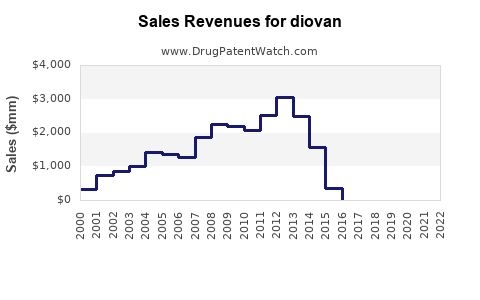
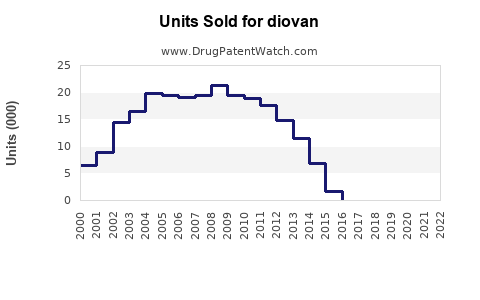
Annual Sales Revenues and Units Sold for diovan
| Drug Name | Revenues (USD) | Units | Year |
|---|---|---|---|
| DIOVAN | ⤷ Start Trial | ⤷ Start Trial | 2022 |
| DIOVAN | ⤷ Start Trial | ⤷ Start Trial | 2021 |
| DIOVAN | ⤷ Start Trial | ⤷ Start Trial | 2020 |
| >Drug Name | >Revenues (USD) | >Units | >Year |
Market Analysis and Sales Projections for DIOVAN (Valsartan)
DIOVAN (valsartan) is an angiotensin II receptor blocker (ARB) prescribed primarily for hypertension and heart failure management. Its global market dynamics are driven by prevalence rates of cardiovascular diseases, regulatory approvals, and competitive landscape.
Market Overview
Global Market Size
- The global ARB market was valued at approximately USD 16 billion in 2022.
- DIOVAN's market share has historically ranged between 20-25% within the ARB class, equating to a share value of USD 3.2-4 billion as of recent data.
Geographic Distribution
- The United States accounts for roughly 35% of ARB sales, with Europe contributing another 25%.
- Emerging markets in Asia and Latin America are experiencing rapid growth due to increasing healthcare infrastructure and hypertension prevalence.
Prescription Trends
- DIOVAN's prescriptions have grown steadily, with a CAGR of approximately 3-5% globally over the past five years.
- Patent expiration in multiple markets, including the US (2018), has led to increased generic competition, impacting sales volume but reducing pricing.
Competitive Landscape
- DIOVAN faces competition from generic valsartan, other ARBs like losartan and olmesartan, and combination therapies.
- Market shifts post-2018 saw generic versions, lowering prices by 50-70% depending on the region.
Sales Drivers and Risks
Drivers
- Rising hypertension prevalence, forecasted to reach 1.39 billion globally by 2030.
- Expanding adoption in heart failure and post-myocardial infarction therapy.
- Patent expiry leading to affordable generic alternatives.
Risks
- Regulatory challenges and recalls related to valsartan contamination (e.g., nitrosamine impurities).
- Patent protections expiring in key markets, reducing premium pricing.
- Competition from new drug classes, including SGLT2 inhibitors and novel antihypertensives.
Sales Projections (2023-2027)
| Year | Estimated Market Share | Global Sales (USD billion) | Comments |
|---|---|---|---|
| 2023 | 15-20% | 1.5-2.0 billion | Post-patent expiry, generic dominance, price pressure |
| 2024 | 12-18% | 1.2-1.8 billion | Continued generic penetration, slight market share decline |
| 2025 | 10-15% | 1.0-1.5 billion | Market stabilization, increased competition from new ARBs |
| 2026 | 8-12% | 0.8-1.2 billion | Margins under pressure, generic saturation |
| 2027 | 6-10% | 0.6-1.0 billion | Market contraction expected as alternatives gain favor |
Key Factors Impacting Future Sales
- Patent Expiries: Major markets have seen patent losses, increasing generic sales, though branded DIOVAN retains a preference in certain select markets for its brand reputation and formulation stability.
- Market Penetration of Generics: The majority of sales now originate from generics, which have reduced pricing but expanded volume.
- New Therapeutics: Emerging drugs with superior efficacy or fewer side effects may replace traditional ARBs, impacting sales trajectories.
- Regulatory Environment: Ongoing monitoring of manufacturing standards and safety concerns remains critical, especially following past contamination issues.
Conclusion
DIOVAN's market share is declining due to patent expirations and increased generic competition. Despite this, the drug maintains a significant volume in markets where branded medications are preferred. Future sales are projected to decrease gradually but may stabilize with strategic branding, differentiated formulations, or expanded indications.
Key Takeaways
- The global ARB market was valued at USD 16 billion in 2022, with DIOVAN accounting for approximately USD 3.2-4 billion pre-patent expiry.
- Patent losses have shifted sales toward generics, reducing prices but increasing volume.
- Sales are expected to decline from USD 1.5-2 billion in 2023 to around USD 0.6-1 billion by 2027, reflecting increased competition.
- Major growth drivers include the rising prevalence of hypertension and expanding markets in Asia and Latin America.
- Risks include safety concerns, regulatory actions, and the rise of new antihypertensive therapies.
FAQs
-
What factors primarily influence DIOVAN's market share?
Patent status, regulatory safety issues, competitive generic pricing, and emerging drug options affect its market share. -
How has patent expiration impacted sales?
It introduced generic versions, leading to a significant price decrease but increased volume early on. Over time, the branded DIOVAN market share has declined. -
What regions offer the most growth opportunities?
Asia-Pacific and Latin America demonstrate the fastest growth due to rising hypertension rates and improving healthcare access. -
Are there ongoing regulatory concerns about DIOVAN?
Yes. Past contamination issues with nitrosamines have led to recalls and increased regulatory scrutiny. -
What therapeutic areas could expand DIOVAN's use cases?
Expanding indications into heart failure and kidney protection could offset declines tied to hypertension marketing.
References
- IQVIA, "Global ARB Market Report," 2022.
- FDA, "Valsartan Recall and Safety Notices," 2018-2022.
- WHO, "Cardiovascular Disease Statistics," 2023.
More… ↓
