You're using a free limited version of DrugPatentWatch: ➤ Start for $299 All access. No Commitment.

Last Updated: December 12, 2025

Drug Sales Trends for CIPRO


✉ Email this page to a colleague

« Back to Dashboard


Payment Methods and Pharmacy Types for CIPRO (2006)

Revenues by Pharmacy Type

Pharmacy Type Revenues
MAIL-ORDER $141,439
INSIDE ANOTHER STORE $8,118,664
[disabled in preview] $9,575,589
This preview shows a limited data set
Subscribe for full access, or try a Trial

Units Sold by Pharmacy Type

Pharmacy Type Units
MAIL-ORDER 13,194
INSIDE ANOTHER STORE 53,472
[disabled in preview] 107,507
This preview shows a limited data set
Subscribe for full access, or try a Trial

Revenues by Payment Method

Payment Method Revenues
MEDICAID $681,670
MEDICARE $10,097,053
[disabled in preview] $6,613,271
This preview shows a limited data set
Subscribe for full access, or try a Trial
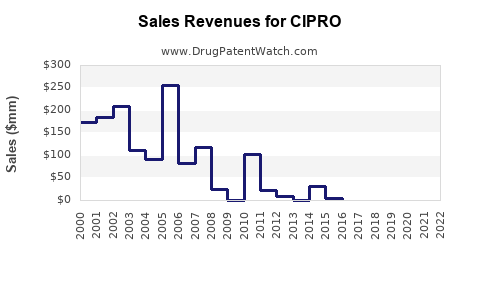
Drug Sales Revenue Trends for CIPRO
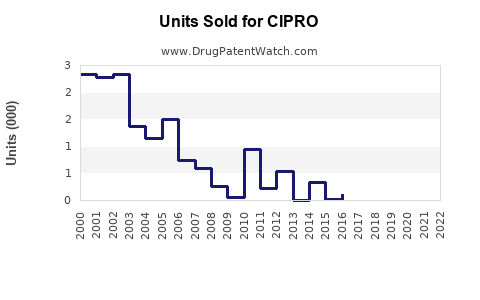
Drug Units Sold Trends for CIPRO

Market Analysis and Sales Projections for CIPRO (Ciprofloxacin)

Last updated: July 28, 2025

Introduction

CIPRO, the brand name for ciprofloxacin, is a broad-spectrum fluoroquinolone antibiotic primarily used to treat a variety of bacterial infections, including urinary tract infections, respiratory tract infections, gastrointestinal infections, and skin infections. Since its approval in the late 1980s, CIPRO has established a notable presence within the antibiotic market, with stable demand driven by its efficacy and broad-spectrum activity. This analysis explores current market dynamics, competitive landscape, regulatory environment, and future sales projections for CIPRO.

Market Overview

The global antibiotic market is expected to grow at a compound annual growth rate (CAGR) of 3.5% through 2028, bolstered by increasing infectious disease prevalence, expanding healthcare infrastructure in emerging markets, and ongoing efforts to combat antimicrobial resistance. Ciprofloxacin remains a significant product within this market, attributed to its widespread use in both hospital and outpatient settings.

The drug's primary sales channels include hospitals, clinics, and retail pharmacies. Originally positioned as a first-line therapy for various bacterial infections, CIPRO’s market share has experienced fluctuations due to evolving clinical guidelines and antibiotic resistance trends. Nevertheless, it retains a substantial share in the fluoroquinolone segment.

Market Drivers

Increased Incidence of Bacterial Infections

Growing prevalence of urinary tract infections, salmonellosis, and respiratory infections sustains demand for ciprofloxacin. The CDC reports that urinary tract infections affect over 50% of women at some point in their lives, empowering demand for broad-spectrum antibiotics like CIPRO.

Expanding Age Demographics

An aging global population, with heightened susceptibility to infections, supports steady consumption of antibiotics globally, particularly in outpatient care.

Enteric and Traveler’s Diarrhea

CIPRO’s efficacy against diarrheal diseases, especially in travelers’ medicine, positions it as a preferred option in travel clinics and settings with high incidences of enteric infections.

Antimicrobial Resistance (AMR) Surveillance and Usage Patterns

Although rising resistance limits some applications, CIPRO remains relevant when resistance profiles are favorable. Ongoing surveillance and stewardship programs influence prescribing practices, but current data suggest sustained, albeit moderated, usage.

Competitive Landscape

Key Players

  • Bayer AG (original patent holder, now generic formulations)
  • Teva Pharmaceuticals
  • Mylan
  • Sandoz
  • Sun Pharmaceutical Industries

The landscape is heavily dominated by generic manufacturers, reducing CIPRO’s pricing and profit margins but ensuring widespread availability. The patent expiry in the early 2000s catalyzed a surge in generic versions, contributing to a price decline but expanding access.

Market Challenges

  • Antimicrobial Resistance: Rising resistance rates, especially in hospitalized settings, diminish CIPRO’s efficacy, prompting shifts to alternative agents.
  • Regulatory Restrictions: The FDA has issued warnings on fluoroquinolones, including CIPRO, citing risks of tendinitis and neuropsychiatric effects, leading to reduced indications.
  • Patient and Physician Preferences: Increasing preference for narrow-spectrum antibiotics and a focus on antibiotic stewardship impact demand.

Regulatory Environment

Regulatory agencies globally, notably the FDA (U.S.) and EMA (Europe), are tightening prescribing restrictions for fluoroquinolones. The FDA’s 2016 and 2018 warnings about serious side effects led to revised prescribing guidelines, restricting CIPRO’s use to specific cases where benefits outweigh risks.

In emerging markets, regulatory barriers are relatively lax, leading to variable consumption patterns. Intellectual property statuses influence market access, with generic proliferation reducing barriers in many regions.

Sales Projections

Historical Sales Data

From 2015 to 2020, CIPRO’s global sales experienced modest fluctuations, reflective of resistance patterns and regulatory pressure. In 2020, global sales were estimated at approximately $0.7 billion, primarily driven by North American and European markets.

Forecast Assumptions

Future sales projections consider:

  • Continued generic penetration leading to low retail prices
  • Moderate growth in developing markets owing to infection prevalence
  • Regulatory restrictions reducing prescribing in high-income markets
  • Antibiotic stewardship initiatives discouraging broad-spectrum antibiotic use

Projected Market Trend (2023-2028)

Based on current market trends, global CIPRO sales are projected to decline modestly at a CAGR of -1.2%. Total sales are anticipated to reach approximately $0.64 billion in 2028, with regional dynamics as follows:

  • North America: Market contraction due to stringent guidelines, sales forecasted at ~$0.25 billion in 2028.
  • Europe: Similar regulatory impact, with sales stabilizing around ~$0.12 billion.
  • Asia-Pacific: Growing infection rates coupled with limited stewardship influence suggest a slight increase, reaching ~$0.20 billion.
  • Rest of the World: Stable or declining, depending on regulatory and economic factors.

Impact of Developing Markets

The Asia-Pacific region is expected to represent approximately 31% of total CIPRO sales by 2028, driven by increasing healthcare infrastructure and infection rates. However, competition from newer antibiotics and global resistance patterns may cap growth.

Revenue Breakdown by Indication

Urinary tract infections and gastrointestinal infections account for over 60% of CIPRO sales. Resistance development reduces efficacy, leading to a shift towards alternative therapies, especially in hospital settings.

Strategic Opportunities and Risks

Opportunities

  • Innovative Formulations: Efforts to develop extended-release formulations or combination therapies could renew interest.
  • New Indications: Investigating efficacy against emerging bacterial strains might expand applications.
  • Market Penetration in Underserved Regions: Increasing access and education in developing countries could sustain sales.

Risks

  • Antibiotic Resistance: Accelerating resistance diminishes CIPRO’s utility.
  • Regulatory Actions: Stricter warnings and restrictions can significantly curtail prescribing.
  • Emergence of Alternatives: Development of newer antibiotics with better safety profiles risks replacing CIPRO.

Conclusion

While CIPRO remains a historically significant antibiotic, its long-term market prospects face headwinds due to resistance, regulatory restrictions, and evolving clinical practices. Projected modest decline in global sales reflects these factors, with potential stabilization in emerging markets. Strategic focus on stewardship, formulary positioning, and innovation may help prolong its market relevance.


Key Takeaways

  • CIPRO’s global sales are forecasted to decline slightly, averaging a -1.2% CAGR through 2028, driven by regulatory restrictions and resistance issues.
  • Market growth will largely depend on developing countries, where infection prevalence is rising and regulatory oversight remains less strict.
  • Resistance and safety concerns are primary challenges; adherence to stewardship programs is crucial for sustained usage.
  • Generic manufacturers dominate the market, maintaining low prices and broad access but limiting profit margins for branded formulations.
  • Potential innovations or expanded indications could provide growth avenues amid an overall declining trend.

FAQs

Q1: What are the main factors impacting CIPRO sales globally?
Resistance development, regulatory restrictions, prescribing guidelines, and emerging alternative antibiotics primarily influence CIPRO sales.

Q2: Which regions are expected to maintain the highest CIPRO sales?
Developing markets in Asia-Pacific and Latin America will likely sustain the highest growth due to increased infection prevalence and limited regulation.

Q3: How has antibiotic resistance affected CIPRO’s market share?
Resistance has led to reduced efficacy in certain infections, restricting CIPRO’s use and diminishing its market share in some indications, especially in hospital settings.

Q4: Are there any upcoming innovations for CIPRO?
Currently, no significant pipeline innovations are confirmed; however, formulations enhancing safety or efficacy could extend its lifecycle.

Q5: How do regulatory warnings influence future CIPRO sales?
Warnings about serious side effects prompt tighter prescribing restrictions, decreasing demand, particularly in high-income countries with strict regulatory oversight.


Sources:

  1. CDC. Antibiotic Resistance Threats in the United States, 2019
  2. EvaluatePharma. (2022). Global Antibiotics Market Report
  3. FDA Drug Safety Communications, 2016 & 2018
  4. Market research reports from IQVIA and GlobalData

More… ↓

⤷  Get Started Free

Make Better Decisions: Try a trial or see plans & pricing

Drugs may be covered by multiple patents or regulatory protections. All trademarks and applicant names are the property of their respective owners or licensors. Although great care is taken in the proper and correct provision of this service, thinkBiotech LLC does not accept any responsibility for possible consequences of errors or omissions in the provided data. The data presented herein is for information purposes only. There is no warranty that the data contained herein is error free. We do not provide individual investment advice. This service is not registered with any financial regulatory agency. The information we publish is educational only and based on our opinions plus our models. By using DrugPatentWatch you acknowledge that we do not provide personalized recommendations or advice. thinkBiotech performs no independent verification of facts as provided by public sources nor are attempts made to provide legal or investing advice. Any reliance on data provided herein is done solely at the discretion of the user. Users of this service are advised to seek professional advice and independent confirmation before considering acting on any of the provided information. thinkBiotech LLC reserves the right to amend, extend or withdraw any part or all of the offered service without notice.