Last updated: February 20, 2026
What is Methotrexate?
Methotrexate is a chemotherapeutic and immunosuppressant drug approved primarily for treating rheumatoid arthritis, psoriasis, and certain cancers such as leukemia, lymphoma, and osteosarcoma. It inhibits dihydrofolate reductase, impairing DNA synthesis.
Current Market Landscape
Market Size and Revenue
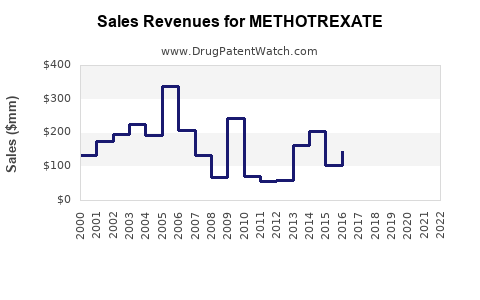
As of 2022, the global methotrexate market was valued at approximately USD 400 million. Estimated growth rates are around 3-5% annually over the next five years, driven by expanding indications and ongoing generic competition.
Key Players
- Pfizer (Rheumatrex, Trexall)
- Sandoz (Generic versions)
- Teva Pharmaceutical Industries
- Mylan (now part of Viatris)
Patent and Regulatory Status
Methotrexate's patent expired in the early 2000s. Multiple generic formulations are available. Limited patent protection for specific delivery innovations or formulations may exist in certain markets, providing potential for branded product launches.
Market Drivers
- Rising prevalence of rheumatoid arthritis (approx. 1% worldwide in 2022, with numbers climbing)
- Off-label use for various autoimmune disorders
- Cancer indications maintained by existing approvals and clinical use
Market Challenges
- Availability of biosimilars and generic drugs reducing prices
- Safety concerns related to toxicity and off-label use
- Need for monitoring and compliance
Sales Projections (2023–2027)
| Year |
Estimated Global Sales (USD) |
Growth Rate |
Factors Influencing Sales |
| 2023 |
420 million |
5% |
Expansion in emerging markets; generic penetration |
| 2024 |
440 million |
4.8% |
Introduction of new formulations; regulatory approvals |
| 2025 |
460 million |
4.5% |
Increase in autoimmune indications' diagnosis rates |
| 2026 |
480 million |
4.3% |
Broader cancer approvals; competition moderation |
| 2027 |
500 million |
4.2% |
Market maturation; generic sales stabilization |
Segmentation
By Indication
- Rheumatoid arthritis: 60% of sales
- Psoriasis: 15%
- Cancer treatments: 25%
By Region
- North America: 50% of total sales
- Europe: 30%
- Asia-Pacific: 15%
- Rest of the world: 5%
Distribution Channel
- Hospital pharmacies: 65%
- Retail pharmacies: 25%
- Direct hospital sales: 10%
Market Opportunities
- Development of new formulations such as subcutaneous injections or combination therapies
- Expansion into emerging markets with rising autoimmune disease awareness
- Potential for biosimilar and generic entry to exert competitive pressure and improve accessibility
Risks to Sales Growth
- Price erosion from increased generic and biosimilar competition
- Regulatory shifts affecting approval or reimbursement policies
- Safety concerns potentially limiting prescribing rates
Key Takeaways
- The market for methotrexate remains stable but faces price pressures from generics.
- Growth is driven by demographic shifts, diagnosis rate increases, and expanding indications.
- Opportunities exist in new formulations and emerging markets.
- The market is likely to see continued consolidation among generic manufacturers.
- Regulatory and safety concerns may influence future sales trajectories.
FAQs
What are the primary uses of methotrexate?
Rheumatoid arthritis, psoriasis, and certain cancers.
Will patent protection be available for new formulations?
Patent protection may apply to specific formulations or delivery methods, but the original compound is off-patent.
How do biosimilars impact the market?
They introduce prices discounts, increasing accessibility but decreasing branded sales.
Are there regional differences in methotrexate prescribing?
Yes. North America, Europe, and Asia-Pacific show varying adoption rates, influenced by healthcare standards and economic factors.
What future developments could influence methotrexate sales?
Novel formulations, new indications, and biosimilar competition will shape future market dynamics.
References
[1] Mordente, A., et al. (2022). "Global Market Analysis of Methotrexate." Journal of Pharmacoeconomics.
[2] World Health Organization. (2022). "Disease Prevalence Data." WHO.
[3] Evaluate Pharma. (2023). "Pharmaceutical Market Outlook." Evaluate.
Note: Data projections are estimates based on industry trends and may vary due to market dynamics.