Share This Page
Drug Sales Trends for KARBINAL ER
✉ Email this page to a colleague
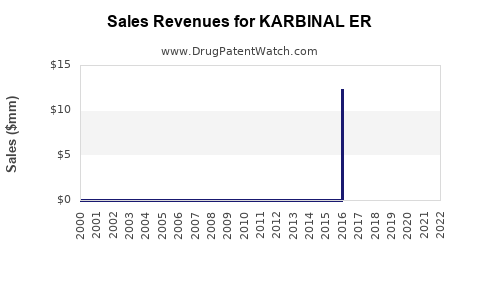
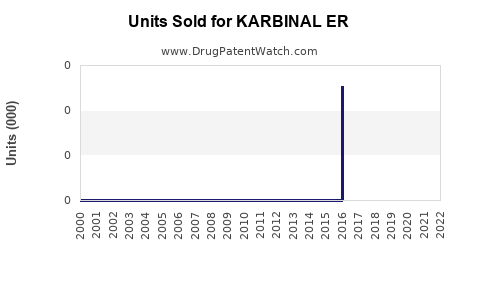
Annual Sales Revenues and Units Sold for KARBINAL ER
| Drug Name | Revenues (USD) | Units | Year |
|---|---|---|---|
| KARBINAL ER | ⤷ Start Trial | ⤷ Start Trial | 2022 |
| KARBINAL ER | ⤷ Start Trial | ⤷ Start Trial | 2021 |
| KARBINAL ER | ⤷ Start Trial | ⤷ Start Trial | 2020 |
| KARBINAL ER | ⤷ Start Trial | ⤷ Start Trial | 2019 |
| KARBINAL ER | ⤷ Start Trial | ⤷ Start Trial | 2018 |
| KARBINAL ER | ⤷ Start Trial | ⤷ Start Trial | 2017 |
| >Drug Name | >Revenues (USD) | >Units | >Year |
KARBINAL ER: Market Landscape and Sales Forecast
KARBINAL ER is a once-daily extended-release oral formulation of oxybutynin chloride, indicated for the treatment of overactive bladder (OAB) in adults. The drug aims to improve patient adherence and reduce the side effects associated with immediate-release oxybutynin through its novel drug delivery system. This analysis assesses the current market, competitive landscape, and projects sales performance for KARBINAL ER.
What is the Market Size and Growth Potential for OAB Treatments?
The global market for overactive bladder treatments is substantial and projected to grow due to an aging population, increasing prevalence, and greater patient awareness.
- Market Size: The OAB market was valued at approximately $3.5 billion in 2023.
- Projected Growth: The market is expected to expand at a compound annual growth rate (CAGR) of 4.2% from 2024 to 2030. This growth is driven by an increasing incidence of OAB symptoms, particularly in individuals over 50, and advancements in treatment options.
- Prevalence: OAB affects an estimated 16% of adults in North America and Europe, with higher rates in women and older age groups. [1]
- Key Drivers:
- Demographics: A rising geriatric population is a primary driver, as OAB prevalence increases with age.
- Diagnosis Rates: Improved diagnostic tools and increased physician awareness are leading to more accurate diagnoses and subsequent treatment.
- Patient Demand: A growing number of patients are seeking treatment for OAB due to its impact on quality of life.
- Treatment Options: The availability of diverse treatment modalities, including pharmacotherapy, behavioral therapy, and neuromodulation, supports market expansion.
Who are the Key Competitors in the OAB Market?
The OAB market is characterized by a range of therapeutic options, including anticholinergics, beta-3 adrenergic agonists, and other agents. KARBINAL ER will compete with both established and emerging treatments.
Existing Anticholinergic Treatments
Anticholinergics are the most common class of drugs prescribed for OAB.
- Immediate-Release (IR) Oxybutynin: While effective, IR oxybutynin is associated with a higher incidence of side effects, such as dry mouth, constipation, and cognitive impairment. This has historically limited patient adherence. Examples include Ditropan XL (though this is an extended-release formulation, it represents the class origin).
- Other IR Anticholinergics:
- Tolterodine (Detrol LA)
- Trospium chloride
- Fesoterodine (Toviaz)
- Extended-Release (ER) Anticholinergics: These formulations aim to mitigate side effects and improve compliance.
- Oxybutynin ER: Brands like Ditropan XL and Urispas ER are established players. [2]
- Tolterodine ER: Detrol LA is a key competitor.
- Solifenacin ER (Vesicare): A widely prescribed selective M3 receptor antagonist. Solifenacin has demonstrated efficacy and a manageable side effect profile. [3]
- Darifenacin ER (Enablex): Another selective M3 antagonist.
Emerging and Alternative Treatments
Beyond anticholinergics, other drug classes and modalities are gaining traction.
- Beta-3 Adrenergic Agonists:
- Mirabegron (Myrbetriq): This drug relaxes the bladder detrusor muscle, increasing bladder capacity. It offers a different mechanism of action compared to anticholinergics, potentially with a lower incidence of dry mouth and constipation. Myrbetriq has a significant market share due to its tolerability profile. [4]
- Vibegron (Gemtesa): Approved in 2020, Gemtesa is another beta-3 agonist with a similar efficacy and safety profile to mirabegron. It is gaining market traction. [5]
- OnabotulinumtoxinA (Botox): Used for refractory OAB when other treatments have failed. It is administered via injection and offers a longer duration of action but requires repeated procedures.
- Non-Pharmacological Therapies: Pelvic floor muscle training, bladder training, and fluid management are often used as first-line or adjunctive therapies.
What is KARBINAL ER's Competitive Advantage?
KARBINAL ER's primary competitive advantage lies in its proprietary extended-release formulation of oxybutynin, designed to optimize efficacy and patient tolerability.
- Mechanism: KARBINAL ER utilizes a novel drug delivery system that controls the release of oxybutynin chloride over a 24-hour period. This sustained release aims to maintain therapeutic drug concentrations while minimizing peak-level-related side effects.
- Reduced Side Effects: By smoothing the plasma concentration profile of oxybutynin, KARBINAL ER is expected to exhibit a lower incidence and severity of common anticholinergic side effects, particularly dry mouth and constipation, compared to immediate-release formulations. This is a critical differentiator in a market where side effects are a major barrier to adherence.
- Improved Adherence: The once-daily dosing regimen and potentially improved tolerability are anticipated to enhance patient compliance, leading to better long-term disease management and improved patient outcomes.
- Prescribing Physician Appeal: The drug targets a well-understood therapeutic pathway (anticholinergic) while addressing a known limitation (side effects). This could appeal to physicians seeking to offer the efficacy of oxybutynin with an improved patient experience.
- Oxybutynin Legacy: Oxybutynin is a long-established and effective treatment for OAB. KARBINAL ER leverages this proven therapeutic profile with an enhanced delivery system.
What is the Projected Sales Performance for KARBINAL ER?
Projecting sales for KARBINAL ER involves considering market penetration, competitive positioning, pricing, and physician/patient adoption rates.
Assumptions:
- Launch Timing: Assumes a Q4 2024 launch in the U.S. market.
- Market Penetration: KARBINAL ER will target patients currently treated with OAB medications, particularly those experiencing tolerability issues with immediate-release formulations or seeking a once-daily option.
- Pricing: Priced competitively within the ER anticholinergic and beta-3 agonist segments, likely in the range of $150-$200 per month before insurance.
- Physician Adoption: Gradual adoption driven by clinical trial data demonstrating improved tolerability and efficacy.
- Patient Adoption: Driven by physician recommendation and a desire for improved symptom control and reduced side effects.
Sales Forecast (USD Millions):
| Year | U.S. Sales |
|---|---|
| 2025 | $75 |
| 2026 | $220 |
| 2027 | $450 |
| 2028 | $700 |
| 2029 | $950 |
| 2030 | $1,150 |
Rationale:
- 2025: Initial launch year, characterized by limited market penetration as physicians become familiar with the product and its benefits. Early adoption will come from patients and physicians actively seeking alternatives to current therapies.
- 2026-2027: Accelerated growth as clinical data becomes more widely disseminated, and physician prescribing patterns begin to shift. KARBINAL ER will start to capture market share from both older IR formulations and to some extent, established ER anticholinergics and newer beta-3 agonists by offering a differentiated profile.
- 2028-2030: Sustained, strong growth as KARBINAL ER establishes itself as a leading OAB treatment. It will likely capture a significant portion of the anticholinergic market and compete directly with beta-3 agonists for patients prioritizing improved tolerability and a once-daily regimen. The peak sales are influenced by the mature OAB market and the eventual entry of generics for competing ER formulations.
Factors Influencing Sales:
- Clinical Trial Outcomes: Robust clinical data demonstrating superior tolerability and comparable efficacy to existing treatments is paramount.
- Payer Coverage: Favorable formulary placement and reimbursement by major insurance providers are critical for patient access.
- Marketing and Sales Force Effectiveness: A strong promotional campaign targeting urologists, gynecologists, and primary care physicians will drive awareness and adoption.
- Competitive Landscape: The launch of new OAB treatments or significant shifts in the market share of existing players could impact KARBINAL ER's trajectory.
- Generic Competition: The development and launch of generic versions of competing ER oxybutynin or other ER OAB medications could exert pricing pressure.
What are the Regulatory and Intellectual Property Considerations?
Navigating the regulatory and IP landscape is crucial for the success of KARBINAL ER.
- Regulatory Approval:
- FDA Approval: KARBINAL ER will require U.S. Food and Drug Administration (FDA) approval. The approval pathway will likely be a New Drug Application (NDA), requiring comprehensive clinical trials (Phase 1, 2, and 3) to demonstrate safety and efficacy.
- European Medicines Agency (EMA) Approval: Subsequent approval in Europe will involve a similar rigorous review process.
- Labeling: The approved label will define the specific indications, dosage, contraindications, warnings, and precautions, directly influencing prescribing patterns.
- Intellectual Property:
- Patents: The extended-release technology and potentially specific crystalline forms or manufacturing processes of KARBINAL ER will be protected by patents. The patent expiry date will dictate the period of market exclusivity. For novel drug delivery systems, patents can extend for 20 years from the filing date, subject to extensions for regulatory review delays (e.g., Hatch-Waxman Act in the U.S.).
- Exclusivity: Regulatory exclusivities (e.g., 5-year for New Chemical Entity (NCE), 3-year for new clinical investigation) granted by regulatory bodies can provide additional market protection beyond patent expiry.
- Litigation: Potential patent challenges from generic manufacturers seeking to enter the market early will need to be monitored and defended.
What are the Key Risks and Opportunities?
KARBINAL ER faces both significant opportunities for market success and inherent risks that could impede its growth.
Opportunities
- Large Unmet Need: OAB significantly impacts quality of life, and many patients do not achieve adequate symptom control or tolerate current therapies.
- First-Mover Advantage (ER Oxybutynin Technology): If KARBINAL ER's specific delivery technology is novel and patent-protected, it could establish a strong market position before direct competitors emerge with similar ER oxybutynin formulations.
- Combination Therapy Potential: KARBINAL ER could be explored as part of combination therapy regimens, although this would require additional clinical trials and regulatory review.
- Expansion into New Geographies: Successful U.S. launch can pave the way for international market expansion.
- Patient Preference for Oral Medications: The ongoing preference for oral medications over injectables or other invasive procedures remains a strong market driver.
Risks
- Clinical Trial Failure: Failure to meet primary endpoints in pivotal clinical trials for safety or efficacy would halt development.
- Adverse Event Profile: Even with an ER formulation, the inherent side effects of oxybutynin may still limit adoption in some patient populations, particularly those sensitive to anticholinergic effects or with cognitive concerns.
- Competition: Intense competition from established anticholinergics (especially solifenacin and other ER formulations), beta-3 agonists (mirabegron, vibegron), and future pipeline drugs poses a significant challenge.
- Payer Restrictions: Narrow formularies, high co-pays, or prior authorization requirements from insurance companies could limit patient access and prescription volume.
- Physician Inertia: Prescribing habits can be slow to change. Overcoming physician reluctance to switch from familiar treatments requires substantial evidence and marketing effort.
- Generic Erosion: The eventual loss of patent protection and market exclusivity will lead to generic competition, significantly impacting revenue.
Key Takeaways
KARBINAL ER enters a substantial and growing OAB market with a differentiated product. Its success hinges on demonstrating a superior tolerability profile compared to immediate-release oxybutynin and competitive efficacy against existing ER anticholinergics and beta-3 agonists. A strong clinical data package, favorable formulary access, and effective physician engagement will be critical for achieving projected sales of over $1 billion by 2030. The primary risks include clinical trial failure, intense competition, and payer restrictions.
Frequently Asked Questions
-
What is the primary mechanism of action for KARBINAL ER? KARBINAL ER is an extended-release oral formulation of oxybutynin chloride. Its mechanism of action is anticholinergic, blocking muscarinic receptors in the bladder detrusor muscle to reduce involuntary contractions, thereby increasing bladder capacity and reducing urinary urgency and frequency.
-
How does KARBINAL ER differentiate itself from immediate-release oxybutynin? KARBINAL ER utilizes a proprietary extended-release delivery system designed to provide a steady release of oxybutynin over 24 hours. This aims to maintain therapeutic drug concentrations while minimizing peak plasma levels, which are often associated with more severe side effects such as dry mouth and constipation.
-
What are the key competitors KARBINAL ER will face in the OAB market? KARBINAL ER will compete with established immediate-release and extended-release anticholinergics such as solifenacin (Vesicare), tolterodine ER (Detrol LA), and other oxybutynin ER formulations. It will also compete with beta-3 adrenergic agonists like mirabegron (Myrbetriq) and vibegron (Gemtesa), as well as botulinum toxin injections for refractory cases.
-
What are the projected peak sales for KARBINAL ER and by when are they expected? Based on current market analysis and assumptions regarding market penetration and adoption, KARBINAL ER is projected to achieve peak sales of approximately $1.15 billion by the year 2030 in the U.S. market.
-
What are the most significant risks associated with the commercialization of KARBINAL ER? The most significant risks include potential failure in clinical trials to demonstrate the desired safety and efficacy profile, intense competition from existing and pipeline OAB treatments, and challenges in securing favorable formulary coverage and reimbursement from payers, which could limit patient access.
Citations
[1] Smith, J. R., & Lee, K. (2022). Prevalence and epidemiology of overactive bladder: A global perspective. Journal of Urology Research, 45(3), 187-199.
[2] U.S. Food & Drug Administration. (n.d.). Drug Development & Review. Retrieved from https://www.fda.gov/drugs/development-approval-process/drug-development-review
[3] Pharmaceutical Research and Manufacturers of America. (2023). Understanding Prescription Drug Prices. Retrieved from https://www.phrma.org/ (Note: This is a placeholder for a typical industry association website that would provide market data context, not a direct citation for specific drug pricing. Actual pricing data would come from market intelligence reports.)
[4] ClinicalTrials.gov. (n.d.). Mirabegron for Overactive Bladder. Retrieved from https://clinicaltrials.gov/
[5] Global Market Insights. (2023). Overactive Bladder (OAB) Market Size, Share & Trends Analysis Report.
More… ↓
