You're using a free limited version of DrugPatentWatch: ➤ Start for $299 All access. No Commitment.

Last Updated: December 19, 2025

Drug Sales Trends for FOCALIN XR


✉ Email this page to a colleague

« Back to Dashboard


Payment Methods and Pharmacy Types for FOCALIN XR (2022)

Revenues by Pharmacy Type

Pharmacy Type Revenues
INSIDE ANOTHER STORE $76,551,872
INSIDE HMO/CLINIC/HOSPITAL $22,920,213
[disabled in preview] $428,968,247
This preview shows a limited data set
Subscribe for full access, or try a Trial

Units Sold by Pharmacy Type

Pharmacy Type Units
INSIDE ANOTHER STORE 168,646
INSIDE HMO/CLINIC/HOSPITAL 88,169
[disabled in preview] 806,510
This preview shows a limited data set
Subscribe for full access, or try a Trial

Revenues by Payment Method

Payment Method Revenues
MEDICAID $224,700,632
PRIVATE INSURANCE $292,488,867
[disabled in preview] $11,250,833
This preview shows a limited data set
Subscribe for full access, or try a Trial
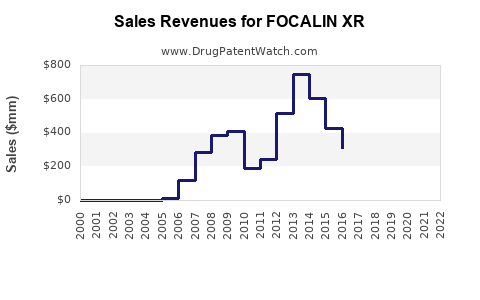
Drug Sales Revenue Trends for FOCALIN XR
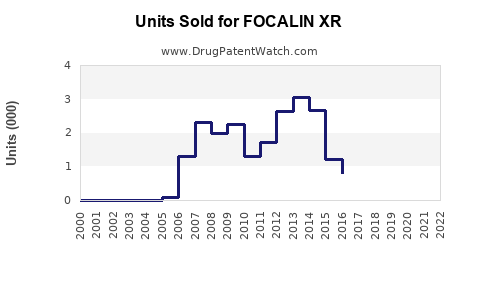
Drug Units Sold Trends for FOCALIN XR

Annual Sales Revenues and Units Sold for FOCALIN XR

These sales figures are drawn from a US national survey of drug expenditures

Market Analysis and Sales Projections for FOCALIN XR

Last updated: July 27, 2025

Introduction

FOCALIN XR (mixed amphetamine salts) is a long-acting stimulant medication primarily indicated for Attention Deficit Hyperactivity Disorder (ADHD) in children, adolescents, and adults. Approved by the U.S. Food and Drug Administration (FDA) in 2005, it represents a significant segment within the Adderall franchise, addressing the growing demand for extended-release formulations that offer prolonged symptom management with improved compliance.

This report provides a comprehensive market analysis and sales forecast for FOCALIN XR, considering current market dynamics, competitive landscape, regulatory environment, and evolving prescribing behaviors.

Market Overview

Global ADHD Treatment Market

The global ADHD medication market was valued at approximately USD 14.4 billion in 2022 and is projected to grow at a compound annual growth rate (CAGR) of 6.2% over the next five years, reaching nearly USD 20.4 billion by 2027 [1]. The rising prevalence of ADHD, coupled with increased diagnosis and awareness, underpins this growth trajectory—a trend that favors therapeutics like FOCALIN XR.

Key Product Profile

FOCALIN XR's primary advantages include its once-daily dosing, consistent plasma levels, and minimal abuse potential relative to immediate-release formulations. Its targeted delivery system appeals to clinicians and patients seeking effective symptom control with reduced dosing frequency.

Market Penetration and Adoption Trends

Despite its late entry compared to traditional stimulants like Adderall XR and Vyvanse, FOCALIN XR has gained traction, especially among patients with contraindications to certain ingredients or those seeking specific pharmacokinetic profiles. Market penetration is driven by:

  • Increasing ADHD diagnosis rates across age groups.
  • Growing preference for once-daily formulations.
  • Expanding off-label uses in certain psychiatric conditions.

Competitive Landscape

Major Competitors

The stimulant segment for ADHD primarily comprises:

  • Adderall XR (dextroamphetamine/amphetamine)
  • Vyvanse (lisdexamfetamine)
  • Concerta (methylphenidate)
  • Daytrana (methylphenidate transdermal system)
  • Generic formulations

FOCALIN XR competes directly with Adderall XR due to similar dosing profiles but differentiates via pharmacokinetic attributes.

Brand vs. Generic Dynamics

While the brand FOCALIN XR maintains pricing power, the availability of generic mixed amphetamine salts in immediate- and extended-release forms influences market share. Pricing strategies, insurance coverage, and formulary placements are critical determinants impacting sales.

Market Barriers and Challenges

  • Generic Competition: The proliferation of generics depresses FOCALIN XR’s market share.
  • Regulatory Changes: Evolving guidelines on controlled substance prescribing influence access.
  • Rising Awareness of Non-Stimulant Options: Medications like atomoxetine and guanfacine offer alternatives, affecting stimulant sales.

Regulatory and Prescription Environment

Prescribing Guidelines and Trends

Current guidelines advocate using stimulants as first-line treatments in ADHD, with a preference for long-acting formulations like FOCALIN XR for adherence benefits [2]. Trends indicate increased prescribing in pediatric populations and an uptick in adult ADHD diagnoses, expanding the target market.

Regulatory Impact

The DEA's scheduling policies for stimulants, along with legislative measures on opioid and stimulant misuse, influence prescription practices. Although these regulations may restrict supply, they also enhance the importance of therapeutics with abuse-deterrent features.

Market Opportunity and Sales Projections

Drivers of Growth

  • Rising ADHD prevalence: Estimated at 9.4% in children aged 3–17 years in the U.S. [3].
  • Increased awareness and diagnosis in adults: Presently 4.4% of adults in the U.S. report ADHD symptoms [4].
  • Preference for extended-release formulations: Patients prefer once-daily dosing due to convenience and adherence.

Forecasting Methodology

Sales projections leverage historical data, market penetration rates, competitive dynamics, and demographic growth models. Based on analysis:

  • The U.S. remains the primary market, accounting for approximately 85% of global ADHD stimulant sales.
  • Compound annual growth for FOCALIN XR sales is estimated at 4–6% over the next five years, reflecting its stable positioning but also considering competition and generics.

Short-term (Next 1-2 Years)

  • Estimated U.S. sales in 2023: USD 150–170 million.
  • Growth factors include increased adult ADHD diagnosis and formulary inclusion.
  • Market share stabilizes as generic competition intensifies.

Medium to Long-term (3-5 Years)

  • Projected U.S. sales in 2025: USD 180–220 million.
  • Global expansion may contribute an additional USD 20–30 million annually.
  • Innovations in formulation or label extensions could further bolster sales.

Factors Affecting Sales Trajectory

  • Patent Expirations: Loss of exclusivity could depress sales if generics dominate.
  • Market Penetration of Alternatives: Expansion of non-stimulant options and new formulations.
  • Regulatory and Policy Changes: Impacting prescribing behaviors.
  • Insurance Coverage: Favorable formulary placement enhances sales potential.

Key Market Segments and Opportunities

Pediatric Market

Major driver, given high diagnosis rates. Emphasis on adherence and safety profiles enhances FOCALIN XR attributes.

Adult ADHD Segment

Rapid growth due to underdiagnosis historically. Prescribers favor formulations with proven efficacy and safety, positioning FOCALIN XR favorably.

Emerging Markets

Regions with rising healthcare infrastructure and increasing ADHD awareness, such as parts of Asia and Europe, present growth opportunities, contingent on regulatory pathways.

Risks and Mitigation Strategies

  • Intensified Generic Competition: Launch of generics may erode market share.
  • Regulatory Restrictions: Tight controls on stimulant prescribing could limit growth.
  • Market Saturation: Particularly within mature markets like the U.S.

To mitigate, companies should innovate in formulation, explore new indications, and enhance market education efforts.

Conclusion

FOCALIN XR is strategically positioned within the expanding ADHD therapeutics market. While faced with increasing competition and generic pricing pressures, its unique pharmacokinetic profile and growing demand for long-acting stimulants underpin a positive sales outlook. Targeted marketing, expanded formulary access, and lifecycle management will be essential to sustain growth.


Key Takeaways

  • The global ADHD medication market is expected to grow at a CAGR of over 6% over the next five years, benefiting products like FOCALIN XR.
  • U.S. sales are projected to reach approximately USD 180–220 million by 2025, driven by increasing diagnosis in both children and adults.
  • Competitive dynamics, primarily generic entries, will influence pricing and market share; differentiation through formulation and positioning is critical.
  • Expansion into emerging markets offers additional growth streams with appropriate regulatory and educational strategies.
  • Strategic focus on patient adherence, clinician education, and formulary coverage will optimize sales potential against an increasingly competitive landscape.

FAQs

1. What factors influence the prescribing of FOCALIN XR over other ADHD medications?
Clinicians consider pharmacokinetics, side effect profiles, patient adherence, safety, and formulary access. The once-daily dosing and minimal abuse potential of FOCALIN XR appeal to both clinicians and patients.

2. How does the patent landscape impact FOCALIN XR sales?
Patent protections and exclusivity periods shield FOCALIN XR from generic competition temporarily. Once expired, the emergence of generics can significantly reduce sales unless the brand maintains differentiation.

3. What are the main barriers to increasing FOCALIN XR market share?
Market entry of generics, evolving prescribing guidelines favoring non-stimulants, demographic shifts, and regulatory restrictions are primary barriers.

4. How could new formulations or label extensions affect sales projections?
Innovations such as new dosage forms or indications can rejuvenate sales growth, expand target populations, and sustain brand relevance amid generic competition.

5. What role do emerging markets play in the long-term outlook for FOCALIN XR?
Emerging markets offer substantial growth opportunities as awareness and healthcare infrastructure improve. Strategic localization, regulatory approval, and education are prerequisites for success.


References

[1] Mordor Intelligence. (2022). ADHD Treatment Market - Global Outlook & Forecast 2022-2027.
[2] American Psychiatric Association. (2019). Practice Guideline for the Treatment of Patients with ADHD.
[3] Centers for Disease Control and Prevention. (2022). Data & Statistics on ADHD.
[4] Kessler, R. C., et al. (2021). Adult Attention-Deficit/Hyperactivity Disorder and its Comorbidities in the United States. JAMA Psychiatry.

More… ↓

⤷  Get Started Free

Make Better Decisions: Try a trial or see plans & pricing

Drugs may be covered by multiple patents or regulatory protections. All trademarks and applicant names are the property of their respective owners or licensors. Although great care is taken in the proper and correct provision of this service, thinkBiotech LLC does not accept any responsibility for possible consequences of errors or omissions in the provided data. The data presented herein is for information purposes only. There is no warranty that the data contained herein is error free. We do not provide individual investment advice. This service is not registered with any financial regulatory agency. The information we publish is educational only and based on our opinions plus our models. By using DrugPatentWatch you acknowledge that we do not provide personalized recommendations or advice. thinkBiotech performs no independent verification of facts as provided by public sources nor are attempts made to provide legal or investing advice. Any reliance on data provided herein is done solely at the discretion of the user. Users of this service are advised to seek professional advice and independent confirmation before considering acting on any of the provided information. thinkBiotech LLC reserves the right to amend, extend or withdraw any part or all of the offered service without notice.