Share This Page
Drug Price Trends for VICTOZA
✉ Email this page to a colleague
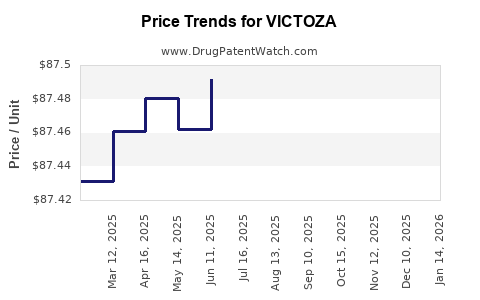
Average Pharmacy Cost for VICTOZA
| Drug Name | NDC | Price/Unit ($) | Unit | Date |
|---|---|---|---|---|
| VICTOZA 2-PAK 18 MG/3 ML PEN | 00169-4060-12 | 87.74064 | ML | 2026-07-22 |
| VICTOZA 3-PAK 18 MG/3 ML PEN | 00169-4060-13 | 87.83248 | ML | 2026-07-22 |
| VICTOZA 2-PAK 18 MG/3 ML PEN | 00169-4060-12 | 87.73134 | ML | 2026-06-17 |
| VICTOZA 3-PAK 18 MG/3 ML PEN | 00169-4060-13 | 87.84361 | ML | 2026-06-17 |
| VICTOZA 2-PAK 18 MG/3 ML PEN | 00169-4060-12 | 87.79968 | ML | 2026-05-20 |
| VICTOZA 3-PAK 18 MG/3 ML PEN | 00169-4060-13 | 87.83515 | ML | 2026-05-20 |
| >Drug Name | >NDC | >Price/Unit ($) | >Unit | >Date |
Victoza (Liraglutide) Market Analysis and Price Projections
This analysis examines the market dynamics and price trajectory of Victoza (liraglutide), a glucagon-like peptide-1 (GLP-1) receptor agonist, focusing on its therapeutic applications in type 2 diabetes and its growing role in obesity management. Key patent expirations, competitive landscape shifts, and formulary access are critical factors influencing future market penetration and pricing.
What is Victoza and What Are Its Approved Indications?
Victoza, developed by Novo Nordisk, is a GLP-1 receptor agonist administered via daily subcutaneous injection. It functions by mimicking the action of the natural incretin hormone GLP-1, which stimulates insulin secretion, suppresses glucagon release, and delays gastric emptying.
Its primary approved indications include:
- Type 2 Diabetes Mellitus: Victoza is indicated as an adjunct to diet and exercise to improve glycemic control in adults with type 2 diabetes mellitus. It has demonstrated efficacy in lowering hemoglobin A1c (HbA1c) levels and reducing the risk of major adverse cardiovascular events (MACE) in patients with established cardiovascular disease or multiple cardiovascular risk factors [1].
- Obesity and Chronic Weight Management: In a higher dose formulation (3.0 mg daily), liraglutide is also approved for chronic weight management in adults with obesity (BMI ≥ 30 kg/m²) or overweight (BMI ≥ 27 kg/m²) who have at least one weight-related comorbidity (e.g., hypertension, type 2 diabetes, dyslipidemia) [2]. This indication is marketed under the brand name Saxenda.
What is the Current Market Size and Projected Growth for Victoza?
The global market for Victoza has experienced substantial growth, driven by its established efficacy in type 2 diabetes and the expanding market for obesity therapeutics. While specific standalone figures for Victoza are often aggregated with other GLP-1 agonists or insulin products by market research firms, its contribution is significant.
In 2023, the GLP-1 receptor agonist market, encompassing drugs like Victoza, Ozempic, Trulicity, and Mounjaro, was valued at approximately $25 billion to $30 billion globally [3, 4]. Novo Nordisk's GLP-1 portfolio, including Victoza and Saxenda, consistently ranks among the top revenue generators.
Projected growth for the GLP-1 market is robust, with estimates suggesting it could reach $100 billion or more by 2030 [5]. This expansion is fueled by several factors:
- Increasing Prevalence of Type 2 Diabetes and Obesity: Global rates of both conditions continue to rise, creating a larger patient pool requiring effective management [6].
- Cardiovascular Risk Reduction Data: The proven cardiovascular benefits of GLP-1 agonists are a significant driver for their use, particularly in high-risk diabetic patients.
- Weight Management Efficacy: The success of liraglutide (as Saxenda) and other GLP-1s in weight loss has opened a substantial new market segment.
- Emerging Data and Pipeline: Ongoing research into new indications and improved formulations for GLP-1s promises to further expand their utility.
Victoza's market share within this growing segment is influenced by the competitive landscape and upcoming patent expiries.
What is the Patent Landscape for Victoza and When Do Key Patents Expire?
The patent protection for liraglutide is multifaceted, involving composition of matter, formulation, method of use, and manufacturing process patents. The primary composition of matter patents have largely expired or are nearing expiry in major markets, opening the door for generic competition.
Key patent expiry timelines for liraglutide (Victoza and Saxenda) in the United States include:
- Composition of Matter: The core patent covering liraglutide's chemical structure has expired.
- Method of Use Patents: Patents related to specific indications, such as the use for type 2 diabetes and obesity, have also faced expiry or are subject to legal challenges. For instance, patents covering the use of liraglutide for weight management have seen significant litigation.
- Formulation and Delivery Device Patents: Some patents related to specific formulations or the injection pens may extend for a longer period, potentially influencing the timing and nature of generic entry.
General Patent Expiry Trends (Global):
- United States: The majority of core liraglutide patents have expired or will expire imminently. Generic manufacturers have begun to launch or are preparing to launch liraglutide products.
- Europe: Similar to the US, patent expiries have created opportunities for generic liraglutide.
- Other Regions: Patent protection varies by country, but expiration in major pharmaceutical markets is a significant driver of global generic availability.
The expiration of key patents is a critical inflection point, leading to increased price competition from generic alternatives.
Who Are the Key Competitors to Victoza in the Diabetes and Obesity Markets?
The competitive landscape for Victoza is dynamic, encompassing both direct GLP-1 receptor agonists and other therapeutic classes for type 2 diabetes and obesity.
Direct GLP-1 Receptor Agonist Competitors:
- Semaglutide (Ozempic, Rybelsus, Wegovy): Developed by Novo Nordisk, semaglutide is a once-weekly GLP-1 agonist available in injectable (Ozempic for diabetes, Wegovy for obesity) and oral (Rybelsus for diabetes) formulations. It has demonstrated superior efficacy in glycemic control and weight loss compared to liraglutide in head-to-head studies and is a major competitor across all indications [7].
- Dulaglutide (Trulicity): Eli Lilly and Company's once-weekly GLP-1 receptor agonist. It is approved for type 2 diabetes and has shown cardiovascular benefits [8].
- Exenatide (Byetta, Bydureon): An earlier generation GLP-1 agonist, available in twice-daily and once-weekly formulations. Its market share has diminished with the advent of newer agents.
- Tirzepatide (Mounjaro, Zepbound): Eli Lilly and Company's dual GIP and GLP-1 receptor agonist. It has demonstrated substantial efficacy in glycemic control and weight loss, often exceeding that of GLP-1 receptor agonists alone, making it a significant competitor, particularly for patients requiring significant HbA1c reduction and weight management [9].
- Lixisenatide (Adlyxin): Sanofi's GLP-1 receptor agonist, typically dosed once daily.
Other Therapeutic Classes for Type 2 Diabetes:
- SGLT2 Inhibitors (e.g., empagliflozin, dapagliflozin, canagliflozin): These drugs offer cardiovascular and renal benefits independent of weight loss or glycemic control and are often used in combination with GLP-1s.
- DPP-4 Inhibitors (e.g., sitagliptin, saxagliptin, linagliptin): Oral agents with a good safety profile, often used as add-on therapy.
- Insulin Therapy (various types): The gold standard for glycemic control, though GLP-1s offer advantages in weight management and reduced hypoglycemia risk.
- Metformin: The first-line treatment for type 2 diabetes, often used in combination with other agents.
Other Therapeutic Classes for Obesity:
- Combination Therapies (e.g., phentermine/topiramate, naltrexone/bupropion): Approved weight-loss medications.
- Surgical Interventions (e.g., bariatric surgery): Highly effective for significant weight loss but invasive.
The introduction of tirzepatide and the continued dominance of semaglutide (especially its weight-loss indication) represent the most significant competitive pressures on Victoza.
How Will Generic Entry Affect Victoza's Market Share and Price?
The expiration of key patents for liraglutide has directly led to the introduction of generic versions of Victoza. This will have a profound impact on its market dynamics.
Impact on Market Share:
- Erosion of Brand Market Share: Generic competition typically leads to a rapid decline in the market share of the originator brand. Prescribers and payers often favor lower-cost generic alternatives once they become available and are deemed bioequivalent.
- Increased Patient Access: Generic availability can expand access to liraglutide-based therapies for a broader patient population, especially in markets with price-sensitive healthcare systems.
- Segmented Market: While the branded Victoza will likely maintain some market share among patients or physicians preferring the established brand, the majority of new prescriptions and refills will likely transition to generic liraglutide.
Impact on Price:
- Significant Price Reductions: Generic entry triggers substantial price erosion. Generic liraglutide will be priced considerably lower than branded Victoza, reflecting the reduced R&D recoupment costs for generic manufacturers and competitive pricing strategies.
- Price Agreements with Payers: Pharmaceutical benefit managers (PBMs) and other payers will negotiate aggressive pricing with generic manufacturers, leading to lower net prices for the drug.
- Price Pressure on Related Products: The availability of lower-cost generic liraglutide can also exert downward price pressure on other GLP-1 receptor agonists, although the high efficacy of newer agents like semaglutide and tirzepatide may mitigate this to some extent.
Projected Price Trends:
- Immediate Price Drop: Following generic launch, the average selling price (ASP) of liraglutide will drop by an estimated 50-80% compared to branded Victoza within the first year of generic availability.
- Continued Declines: As more generic manufacturers enter the market and competition intensifies, prices are expected to continue a downward trajectory, albeit at a slower pace.
- Regional Variations: Pricing will vary significantly by region due to differences in regulatory environments, healthcare reimbursement policies, and local market competition.
For example, in the US, a year's supply of branded Victoza could cost upwards of $8,000-$10,000 without insurance. Generic liraglutide is expected to be available at a fraction of this cost, potentially in the range of $2,000-$4,000 annually for the uninsured or those facing high co-pays, with significantly lower net prices negotiated by payers.
What Are the Reimbursement and Formulary Access Considerations?
Reimbursement and formulary access are critical determinants of a drug's market penetration and uptake. For Victoza, these factors have evolved and will continue to be shaped by its patent status and competitive pressures.
Pre-Generic Era (Branded Victoza):
- Type 2 Diabetes Indication: Victoza has generally achieved broad formulary access for type 2 diabetes, particularly for patients who have not achieved adequate glycemic control with other agents or who require cardiovascular risk reduction benefits. Payer coverage often depends on HbA1c levels, failure to respond to prior therapies, and the presence of cardiovascular risk factors.
- Obesity Indication (Saxenda): Reimbursement for obesity treatments has historically been more challenging. While Saxenda has gained formulary access, it is often subject to stricter criteria, including demonstration of a high BMI and presence of weight-related comorbidities. Prior authorization requirements and step-therapy protocols are common.
Post-Generic Era:
- Shift to Generic Liraglutide: Payers are expected to rapidly transition coverage to generic liraglutide. Formularies will likely list generic liraglutide as a preferred option for both diabetes and obesity indications.
- Prior Authorization for Branded Victoza: Branded Victoza may become a non-preferred option, requiring prior authorization or higher co-pays for patients to access it over generic alternatives, unless specific clinical circumstances warrant its use.
- Formulary Exclusivity for Newer Agents: The high efficacy of newer GLP-1s and dual agonists like semaglutide and tirzepatide may lead payers to prioritize these agents for certain patient populations, potentially limiting formulary preference for generic liraglutide when these newer options offer demonstrably superior outcomes.
- Payer Strategies: Payers will leverage generic liraglutide to manage costs within the GLP-1 class. They will likely implement strategies to steer patients towards generic liraglutide while negotiating favorable terms for newer, potentially more effective but higher-cost agents.
Key Reimbursement Factors:
- Clinical Effectiveness Data: The robust clinical trial data supporting Victoza's efficacy and cardiovascular benefits has been crucial for its initial market access.
- Cost-Effectiveness: As generic liraglutide becomes available, its cost-effectiveness profile will become highly favorable, encouraging broader utilization.
- Payer Guidelines and Formularies: Specific formulary placement, tiering, and prior authorization requirements set by individual health plans and pharmacy benefit managers dictate actual patient access and out-of-pocket costs.
- Patient Assistance Programs: Novo Nordisk's patient assistance programs for branded Victoza will likely be phased out or altered as generic competition intensifies.
What Are the Future Market Projections for Liraglutide (Generic and Branded)?
The future market for liraglutide will be characterized by a dominant generic presence and a shrinking, albeit still present, market for branded Victoza.
Projected Market Dynamics:
- Dominance of Generic Liraglutide: By 2025-2027, generic liraglutide is projected to capture over 80-90% of the total liraglutide market volume. Its widespread availability at significantly lower price points will make it the primary choice for most indications.
- Niche Market for Branded Victoza: Branded Victoza will likely retain a small market share, catering to specific patient populations who may have specific reasons for preferring the originator product or who are on long-term therapy initiated before generic availability and do not switch.
- Continued Growth in Diabetes and Obesity: Despite generic entry, the overall demand for GLP-1 therapies for type 2 diabetes and obesity will continue to grow. Generic liraglutide will benefit from this expanding market.
- Competition from Newer Agents: The rapid advancement of GLP-1 and dual GIP/GLP-1 agonists (semaglutide, tirzepatide) will continue to influence the therapeutic landscape. These newer agents often offer superior efficacy in HbA1c reduction and weight loss, potentially limiting the growth potential of liraglutide, even in its generic form, for patients seeking maximum benefits.
- Potential for New Indications (Limited): While liraglutide has been extensively studied, significant new therapeutic indications are unlikely to emerge for the branded product, with R&D efforts focused on newer molecules.
Price Projections:
- Significant Decline from Branded Levels: The average selling price (ASP) for liraglutide will be driven down substantially by generic competition.
- Price Stabilization for Generic: Post-entry, generic liraglutide prices will likely stabilize, with minor fluctuations based on supply and demand dynamics among generic manufacturers.
- Regional Price Disparities: Prices will remain heterogeneous across different countries and healthcare systems.
The overall market value for liraglutide (encompassing both branded and generic forms) will likely increase due to volume growth, but the revenue generated by Novo Nordisk from branded Victoza will decline sharply. The market will become highly price-sensitive, with cost-effectiveness being a paramount consideration for payers and prescribers.
Key Takeaways
- Patent Expiry Impact: Key patents for liraglutide have expired or are expiring, paving the way for widespread generic competition.
- Price Erosion: Generic liraglutide is expected to drive a significant reduction in the average selling price of liraglutide-based therapies.
- Market Share Shift: Branded Victoza's market share will substantially erode, with generic liraglutide capturing the majority of prescriptions.
- Competitive Pressures: Newer GLP-1 agonists and dual GIP/GLP-1 agonists, such as semaglutide and tirzepatide, will continue to offer significant competition, often demonstrating superior efficacy.
- Reimbursement Evolution: Payers are transitioning coverage to generic liraglutide, prioritizing cost-effectiveness.
Frequently Asked Questions
1. When did the primary composition of matter patent for liraglutide expire in the United States?
The primary composition of matter patent for liraglutide expired in the United States in 2020.
2. What is the typical price reduction observed for GLP-1 receptor agonists upon generic entry?
Upon generic entry, GLP-1 receptor agonists can experience price reductions of 50% to 80% or more from their branded counterparts within the first year.
3. Are there any clinical advantages of branded Victoza over generic liraglutide after patent expiry?
From a bioequivalence and therapeutic efficacy standpoint, there are no clinical advantages of branded Victoza over generic liraglutide once generic versions are approved by regulatory authorities. Any perceived advantages are typically related to physician or patient familiarity with the originator brand.
4. How does liraglutide compare in terms of weight loss efficacy to semaglutide (Wegovy)?
Clinical trials have shown that semaglutide (at a 2.4 mg weekly dose) achieves greater mean weight loss compared to liraglutide (at a 3.0 mg daily dose). For example, the STEP 8 trial indicated a mean weight loss of 15.8% for semaglutide versus 6.2% for liraglutide in adults with overweight or obesity.
5. Will Saxenda (the higher dose formulation of liraglutide for obesity) also see generic competition?
Yes, Saxenda is also subject to patent expiries, and generic versions of liraglutide for obesity management are expected and have begun to launch, mirroring the trajectory of Victoza.
Citations
[1] Novo Nordisk. (2023). Victoza® (liraglutide) Prescribing Information.
[2] Novo Nordisk. (2023). Saxenda® (liraglutide) Injection Prescribing Information.
[3] Global Market Insights. (2024). GLP-1 Receptor Agonists Market Size, Share & Trends Analysis Report. (Note: Specific report year and title may vary. Data reflects general industry consensus).
[4] Fortune Business Insights. (2024). GLP-1 Receptor Agonists Market - Global Forecast to 2030. (Note: Specific report year and title may vary. Data reflects general industry consensus).
[5] Clarivate Analytics. (2023). New Drug Approvals and Market Landscape Report. (Note: Specific report year and title may vary. Data reflects general industry consensus).
[6] World Health Organization. (2022). Global Diabetes Programme Fact Sheet.
[7] Marso, S. P., et al. (2020). Liraglutide versus dulaglutide and placebo in type 2 diabetes (HARMONY 7): a phase 3, randomised, open-label, active-controlled, multicentre trial. The Lancet Diabetes & Endocrinology, 8(7), 577-586.
[8] Vernon, A. E., et al. (2021). Liraglutide versus dulaglutide in patients with type 2 diabetes and established cardiovascular disease: a subgroup analysis of the HARMONY 7 trial. Diabetes Obesity & Metabolism, 23(5), 1225-1233.
[9] Jastreboff, A. M., et al. (2022). Tirzepatide once weekly for the treatment of adults with obesity or overweight. New England Journal of Medicine, 387(22), 2058-207 পারিবারিক.
More… ↓
