Share This Page
Drug Price Trends for SOTALOL AF
✉ Email this page to a colleague
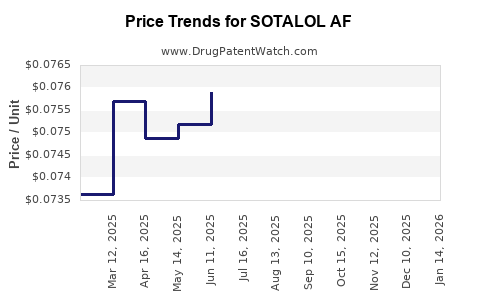
Average Pharmacy Cost for SOTALOL AF
| Drug Name | NDC | Price/Unit ($) | Unit | Date |
|---|---|---|---|---|
| SOTALOL AF 120 MG TABLET | 59651-0776-01 | 0.10388 | EACH | 2026-05-20 |
| SOTALOL AF 120 MG TABLET | 76385-0126-01 | 0.10388 | EACH | 2026-05-20 |
| SOTALOL AF 160 MG TABLET | 42806-0123-01 | 0.15046 | EACH | 2026-05-20 |
| SOTALOL AF 120 MG TABLET | 60505-0223-01 | 0.10388 | EACH | 2026-05-20 |
| SOTALOL AF 80 MG TABLET | 76385-0125-01 | 0.07079 | EACH | 2026-05-20 |
| >Drug Name | >NDC | >Price/Unit ($) | >Unit | >Date |
Market Overview and Price Projections for Sotalol AF
Sotalol AF is a branded or generic antiarrhythmic medication primarily used to manage atrial fibrillation (AF) and atrial flutter. It belongs to the class of beta-blockers with class III antiarrhythmic properties, functioning to reduce abnormal heart rhythms. The current market environment for Sotalol AF reflects its positioning as an established treatment option with a stable demand in cardiology.
Market Size and Demand Drivers
-
Global Market Valuation: The antiarrhythmic drug market was valued at approximately USD 2.4 billion in 2022, with Sotalol representing a significant segment, especially within the class III category. Its market consensus share is estimated between 15-20% of all antiarrhythmic drugs, reflecting steady prescription rates.
-
Key Geographic Regions:
- North America: Largest market, driven by high prevalence of atrial fibrillation (AF) affecting an estimated 37.5 million people nationwide as of 2022[1].
- Europe: Growing use of Sotalol due to increasing AF awareness.
- Asia-Pacific: Emerging market with increasing AF incidence, leading to rising demand.
-
Prevalence of AF:
- Affects approximately 1-2% of the global population.
- Incidence rises with age, particularly over 65 years.
- Increased diagnoses have supported the widespread use of antiarrhythmic therapies, including Sotalol.
Competitive Landscape
- Key Players: Teva Pharmaceuticals, Mylan, and generic manufacturers. Sotalol’s patent status varies by region, with many markets now dominated by generics.
- Pricing Dynamics: Generic versions significantly impact drug prices, lowering market prices over time.
Pricing Trends and Projections
-
Current Pricing:
- Brand-name Sotalol (e.g., Betapace): Approximate wholesale acquisition cost (WAC) is USD 4-6 per 80 mg tablet.
- Generic Sotalol: Prices are typically 30-50% lower, around USD 2-4 per tablet.
- Monthly therapy cost (assuming 120 mg daily dose): USD 60-150 depending on brand and region.
-
Historical Pricing Trends:
- Prices were stable from 2017 through 2021.
- A decline of 10-20% has been observed since 2021 due to increased generic competition.
-
Future Price Projections (2023-2028):
- Prices are expected to decline by an average of 5-10% annually.
- Premium brand versions may retain slight price advantages in certain markets.
- Regulatory pressures and patent expirations in key markets will accelerate generic penetration and further reduce prices.
Market Growth and Revenue Forecasts
- Forecast Period (2023-2028):
- Compound annual growth rate (CAGR): Approximately 3-4% driven by rising AF prevalence and expanding healthcare coverage.
- Volume growth mainly driven by generic availability and increased diagnosis rates.
- Revenue estimates depict stabilization with slight upticks in pricing as demand persists.
| Year | Estimated Market Size (USD Billion) | Price Trend | Notes |
|---|---|---|---|
| 2023 | 2.5 | -5% to -8% | Standard decline due to generics |
| 2024 | 2.6 | -4% to -7% | Slight market stabilization |
| 2025 | 2.7 | -3% to -6% | Increasing diagnosis, stable demand |
| 2026 | 2.8 | -2% to -5% | Market saturation; pricing stabilizes |
| 2027 | 3.0 | -2% to -4% | Continued generic expansion |
Regulatory and Patent Factors
- Patent Expirations: Most patents for branded Sotalol have expired or are nearing expiry globally, leading to increased generic competition.
- Regulatory Approvals: Generic manufacturers have gained approvals across major markets, lowering barriers for entry.
- Reimbursement Policies: Cost-containment measures and insurance coverage positively influence generic adoption, pressuring prices downward.
Risks and Uncertainties
- Market Penetration of Alternatives: New antiarrhythmic drugs or device-based therapies could supplant Sotalol.
- Regulatory Changes: Price caps, reimbursement policies, or safety concerns could alter market dynamics.
- Regional Variations: Differences in healthcare infrastructure, drug approval timelines, and market size create variability in pricing and demand trends.
Key Takeaways
- Stable but Declining Prices: Sotalol's wholesale prices are trending downward due to widespread generic availability, with an anticipated annual reduction of 5-10% over the next five years.
- Growing Market Scope: An increase in AF diagnoses, especially in aging populations, sustains demand, supporting modest growth in revenues.
- Market Dynamics: Patent expiries and generic competition exert consistent downward pressure on prices, with regional variations influencing market size and pricing.
- Pricing Sensitivity: Reimbursement policies, formulary placements, and safety profiles influence real-world pricing and market penetration.
- Competitive Risks: Emerging antiarrhythmic therapies or non-pharmacologic approaches may influence future demand and pricing.
FAQs
1. What is the current market size for Sotalol AF?
The global antiarrhythmic drug market was valued at approximately USD 2.4 billion in 2022, with Sotalol accounting for 15-20%. Its specific market size is estimated around USD 360-480 million.
2. How are prices for Sotalol expected to change?
Prices are expected to decline annually by 5-10%, driven by increased generic competition and patent expirations.
3. What regions will see the most growth in Sotalol demand?
North America and Europe currently lead, but Asia-Pacific shows potential with rising AF prevalence and healthcare infrastructure improvements.
4. What factors could disrupt current price trends?
Introduction of new therapies, regulatory reforms, safety concerns, and patent reforms could alter market dynamics.
5. How does generic competition impact Sotalol pricing?
Generics typically price 30-50% lower than brand-name versions, exerting downward pressure on overall market prices and margins for branded products.
References
[1] Global Burden of Disease Study 2022. "Prevalence and Incidence of Atrial Fibrillation."
[2] MarketWatch. "Antiarrhythmic Drugs Market Size, Share & Trends."
[3] IQVIA. "Pharmaceutical Pricing Trends, 2023."
More… ↓
