Share This Page
Drug Price Trends for QC ALLERGY (CHLORPHEN)
✉ Email this page to a colleague
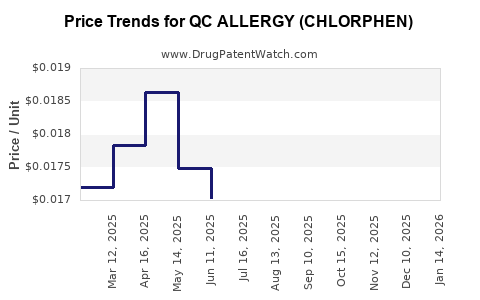
Average Pharmacy Cost for QC ALLERGY (CHLORPHEN)
| Drug Name | NDC | Price/Unit ($) | Unit | Date |
|---|---|---|---|---|
| QC ALLERGY (CHLORPHEN) 4 MG TB | 83324-0068-24 | 0.01691 | EACH | 2026-06-17 |
| QC ALLERGY (CHLORPHEN) 4 MG TB | 83324-0068-24 | 0.01648 | EACH | 2026-05-20 |
| QC ALLERGY (CHLORPHEN) 4 MG TB | 83324-0068-24 | 0.01610 | EACH | 2026-04-22 |
| >Drug Name | >NDC | >Price/Unit ($) | >Unit | >Date |
QC Allergy (Chlorphen) Market Analysis and Price Projections
QC Allergy (Chlorphen) is a first-generation antihistamine, primarily used for the symptomatic relief of allergic rhinitis, urticaria, and other allergic conditions. Its active pharmaceutical ingredient, chlorpheniramine maleate, is a well-established compound with a long history of use. The market for QC Allergy is mature, with significant competition from generic manufacturers and other antihistamines, including second and third-generation drugs offering improved side-effect profiles.
What is the current market size and growth trajectory for QC Allergy (Chlorphen)?
The global market for antihistamines, within which QC Allergy (chlorpheniramine maleate) participates, is substantial and projected for moderate growth. Specific market size data for QC Allergy as a distinct brand is not publicly granular due to its classification often falling under broader antihistamine categories. However, analyses of the broader antihistamine market provide relevant context.
The global antihistamine market was valued at approximately USD 22.5 billion in 2022 [1]. Projections indicate a Compound Annual Growth Rate (CAGR) of 4.5% to 5.5% for the period 2023-2030 [1, 2]. This growth is driven by increasing prevalence of allergic diseases, rising disposable incomes in emerging economies, and advancements in drug formulations.
Within this market, first-generation antihistamines like chlorpheniramine maleate represent a significant, albeit maturing, segment. Their continued use is supported by their low cost of production, established efficacy, and broad availability, particularly in price-sensitive markets and over-the-counter (OTC) channels.
However, the growth of first-generation antihistamines is tempered by the increasing preference for second and third-generation antihistamines. These newer agents generally offer reduced sedative effects, a key drawback of chlorpheniramine maleate. This shift in preference influences the market share dynamics, potentially leading to slower growth for older classes of antihistamines compared to newer alternatives.
Table 1: Global Antihistamine Market Overview (USD Billions)
| Year | Market Value (Estimated) | Projected CAGR (2023-2030) | Key Growth Drivers |
|---|---|---|---|
| 2022 | 22.5 | 4.5% - 5.5% | Allergic disease prevalence, emerging markets, formulation advancements |
The market for QC Allergy is thus characterized by sustained demand due to its established position and affordability, but faces headwinds from evolving consumer preferences and therapeutic advancements.
What are the key drivers and challenges for QC Allergy (Chlorphen)?
The market presence of QC Allergy is influenced by several interconnected factors:
Key Market Drivers:
- Affordability: Chlorpheniramine maleate is a well-established active pharmaceutical ingredient (API) with mature manufacturing processes. This leads to low production costs, making QC Allergy a highly affordable treatment option. This is particularly critical in developing countries and for price-sensitive consumer segments [3].
- Accessibility and OTC Availability: QC Allergy is widely available as an over-the-counter (OTC) medication in many regions. This broad accessibility removes barriers to immediate symptom relief and contributes to consistent demand [4].
- Established Efficacy and Familiarity: As a first-generation antihistamine, chlorpheniramine maleate has a long clinical history. Healthcare providers and patients are familiar with its therapeutic profile and efficacy for common allergic symptoms [3].
- Combination Formulations: Chlorpheniramine maleate is frequently incorporated into combination cold and allergy relief products. This expands its market reach and utility beyond single-ingredient antihistamine use.
Key Market Challenges:
- Sedative Side Effects: The primary limitation of chlorpheniramine maleate is its significant sedative effect, along with other anticholinergic side effects like dry mouth and blurred vision [5]. This is a major deterrent for consumers seeking daytime relief or requiring cognitive alertness.
- Competition from Newer Generations: Second and third-generation antihistamines (e.g., loratadine, cetirizine, fexofenadine) offer comparable efficacy with substantially reduced or absent sedative effects [5]. These newer agents have gained significant market share due to their improved tolerability.
- Regulatory Scrutiny and Labeling: Regulatory bodies may impose stricter labeling requirements or recommend reduced usage for first-generation antihistamines due to their side-effect profiles, particularly for specific populations like children or the elderly [6].
- Genericization: The patent protection for chlorpheniramine maleate has long expired. This has led to widespread generic competition, which drives down the price of the API and finished product, limiting profit margins for individual brands like QC Allergy, even if sales volume remains steady.
- Evolving Treatment Guidelines: Medical guidelines for managing allergic diseases are continuously updated. While first-generation antihistamines remain an option, there is a trend towards recommending non-sedating alternatives as first-line therapy for many allergic conditions [7].
What is the competitive landscape for QC Allergy (Chlorphen)?
The competitive landscape for QC Allergy is characterized by a high degree of fragmentation and intense price competition.
Key Competitor Categories:
- Generic Chlorpheniramine Maleate Products: Numerous pharmaceutical companies produce and market generic versions of chlorpheniramine maleate. These products compete directly on price, often offering the lowest cost option available. Examples include products from manufacturers like Teva Pharmaceuticals, Sandoz, and numerous regional generic suppliers.
- Other First-Generation Antihistamines: While chlorpheniramine maleate is prominent, other first-generation antihistamines such as diphenhydramine (Benadryl) and brompheniramine also compete for market share. These often share similar efficacy and side-effect profiles, with brand recognition and marketing playing a role in differentiation.
- Second-Generation Antihistamines: This is the most significant competitive threat in terms of preferred therapeutic choice. Brands like Claritin (loratadine), Zyrtec (cetirizine), and Allegra (fexofenadine), along with their numerous generic equivalents, are favored for their non-sedating properties [5]. These occupy a larger and often growing share of the OTC antihistamine market.
- Third-Generation Antihistamines: Newer agents like Xyzal (levocetirizine) and Clarinex (desloratadine) represent further evolution, often offering improved efficacy or faster onset of action compared to their predecessors.
- Combination Cold and Allergy Medications: QC Allergy is often formulated with decongestants (e.g., pseudoephedrine, phenylephrine) and/or cough suppressants. Competitors in this space include major brands like DayQuil, NyQuil, and Mucinex, which offer comprehensive symptom relief but also contain different combinations of APIs.
Market Share Dynamics:
While precise market share data for QC Allergy as a specific brand is difficult to isolate, the overall market for first-generation antihistamines is likely facing pressure from newer, non-sedating alternatives. However, its continued affordability and OTC status ensure a persistent, though potentially declining, market share, especially in price-sensitive segments and emerging markets. The success of QC Allergy is thus heavily reliant on its cost-effectiveness and established distribution channels rather than novel therapeutic advantages.
What are the price projections for QC Allergy (Chlorphen)?
Price projections for QC Allergy are influenced by the underlying API costs, manufacturing expenses, generic competition, and market demand dynamics. Given its status as a mature, off-patent drug, significant price increases are unlikely.
Current Pricing Landscape:
- Over-the-Counter (OTC): In the OTC market, a standard bottle of 100 or 240 tablets of chlorpheniramine maleate (which QC Allergy is an example of) typically ranges from USD 5 to USD 20, depending on the brand, quantity, and retailer [8]. Generic versions are generally at the lower end of this range.
- Prescription: While primarily an OTC product, prescription formulations can exist. Prescription pricing is influenced by insurance formularies and co-pays, but the underlying cost of the drug remains low.
Price Projection Factors:
- API Cost Stability: The cost of chlorpheniramine maleate API has been relatively stable due to established manufacturing processes and multiple suppliers. Significant fluctuations are not anticipated in the near term, assuming no major supply chain disruptions or regulatory changes impacting production.
- Genericization Impact: The strong presence of generic competitors will continue to exert downward pressure on prices. Brand manufacturers like QC Allergy will need to maintain competitive pricing to retain market share against lower-cost generic alternatives.
- Demand Elasticity: While demand for symptomatic relief of allergies is relatively inelastic, the substitution effect towards non-sedating antihistamines introduces elasticity. If prices of newer alternatives remain competitive, consumers may opt for them over older, sedating options, even if QC Allergy is cheaper.
- Regulatory and Safety Considerations: Any increased regulatory scrutiny or warnings regarding the use of first-generation antihistamines could indirectly lead to reduced demand, which could then put downward pressure on prices as manufacturers try to move existing inventory or maintain sales volume.
- Emerging Market Dynamics: In emerging markets, where affordability is a primary concern, QC Allergy is likely to maintain its price point or experience very minor increases, driven by inflation and localized supply costs.
Projected Price Trend (2024-2028):
- North America & Europe: Prices are expected to remain stable to slightly declining in real terms, driven by intense generic competition and the shift towards newer antihistamines. Minor price increases might occur due to inflation, but these will likely be offset by competitive pressures. Average OTC retail prices for multi-count bottles are projected to stay within the USD 5-20 range, with generics consistently occupying the lower end.
- Asia-Pacific & Emerging Markets: Prices may see slight increases, primarily due to inflation and localized cost adjustments. However, the fundamental driver of affordability will keep prices significantly lower than in developed markets. Volume may remain robust, offsetting limited price growth.
Overall, QC Allergy (Chlorphen) is not expected to experience significant price inflation. Its pricing strategy will likely remain focused on maintaining its position as a cost-effective option in a competitive market.
What are the regulatory considerations for QC Allergy (Chlorphen)?
Regulatory oversight for drugs like QC Allergy (chlorpheniramine maleate) is multifaceted, involving efficacy, safety, labeling, and manufacturing standards.
Key Regulatory Aspects:
- Approval Pathways: As a well-established drug, chlorpheniramine maleate has undergone rigorous review by major regulatory agencies such as the U.S. Food and Drug Administration (FDA), the European Medicines Agency (EMA), and others globally. Its approval status is based on extensive clinical data demonstrating safety and efficacy for its intended uses.
- Labeling Requirements: Regulatory bodies mandate specific labeling information for drug products. For chlorpheniramine maleate, this includes:
- Indications: Approved uses (e.g., symptomatic relief of runny nose, sneezing, itching, watery eyes, itching of the nose or throat due to hay fever or other upper respiratory allergies; relief of hives and itching and other skin allergies) [4].
- Dosage and Administration: Clear instructions for use, including recommended doses for adults and children.
- Warnings and Precautions: Crucially, warnings about drowsiness, alcohol interaction, potential impairment of ability to drive or operate machinery, and precautions for individuals with specific medical conditions (e.g., glaucoma, difficulty urinating due to an enlarged prostate, breathing problems such as emphysema or chronic bronchitis) [5, 6].
- Adverse Reactions: Disclosure of common side effects (e.g., dizziness, drowsiness, dry mouth, blurred vision) and more serious potential reactions.
- Over-the-Counter (OTC) Status: In many jurisdictions, chlorpheniramine maleate is classified as an OTC drug, allowing for its sale without a prescription. This status is subject to ongoing review by regulatory agencies. For example, the FDA has established monographs for OTC drugs, and chlorpheniramine maleate falls under specific monographs for cold, cough, allergy, and asthma products [4].
- Pediatric Use: Regulatory agencies often provide specific guidance on the use of first-generation antihistamines in children. Concerns about overdosing and potential adverse effects (e.g., paradoxical excitement) can lead to recommendations for careful dosing and medical supervision, or even contraindications in very young age groups [6].
- Good Manufacturing Practices (GMP): Manufacturers of QC Allergy, like all pharmaceutical products, must adhere to stringent GMP regulations. These standards ensure the quality, purity, and consistency of the finished drug product through controls on raw materials, manufacturing processes, packaging, and labeling [9].
- Post-Market Surveillance: Regulatory agencies conduct post-market surveillance to monitor the safety of drugs after they are approved and marketed. Any newly identified safety concerns related to chlorpheniramine maleate could lead to updated labeling, restricted use, or, in rare cases, market withdrawal.
- International Harmonization: While regulations vary by country, there is a trend towards international harmonization of pharmaceutical standards through organizations like the International Council for Harmonisation of Technical Requirements for Pharmaceuticals for Human Use (ICH). This aims to ensure consistent quality and safety across different markets.
The regulatory environment for QC Allergy emphasizes transparency regarding its known side effects and a focus on safe and appropriate use, especially in vulnerable populations. Manufacturers must continuously comply with evolving regulatory requirements to maintain market access.
Key Takeaways
- QC Allergy (chlorpheniramine maleate) operates within the mature and competitive global antihistamine market, valued at over USD 22.5 billion, with projected growth of 4.5%-5.5% CAGR.
- Its primary market drivers are affordability, broad accessibility as an OTC product, and established efficacy.
- Significant challenges include sedative side effects, competition from newer non-sedating antihistamines, and extensive genericization.
- The competitive landscape is fragmented, with numerous generic chlorpheniramine products and a strong presence of second and third-generation antihistamines.
- Price projections indicate stability to slight decline in developed markets due to intense generic competition, with potential for minor increases in emerging markets driven by inflation and local costs.
- Regulatory considerations focus on clear labeling of side effects, safe use, and adherence to GMP standards, with specific attention to pediatric use.
Frequently Asked Questions
-
What are the primary indications for QC Allergy (Chlorphen)? QC Allergy is indicated for the symptomatic relief of conditions such as allergic rhinitis (hay fever), urticaria (hives), and other symptoms of the common cold and allergies, including sneezing, runny nose, itchy eyes, watery eyes, and itchy throat.
-
What is the main disadvantage of using QC Allergy compared to newer antihistamines? The primary disadvantage of QC Allergy is its significant sedative effect, which can impair alertness and cognitive function. Newer generations of antihistamines generally do not cause this level of drowsiness.
-
Is QC Allergy still considered an effective treatment for allergies? Yes, QC Allergy is effective in managing the symptoms of allergies. However, its efficacy is balanced against its side effect profile, leading many healthcare providers to recommend non-sedating alternatives for routine management.
-
How does the pricing of QC Allergy compare to generic chlorpheniramine maleate products? As a branded product, QC Allergy may be priced slightly higher than equivalent generic chlorpheniramine maleate products. However, the price difference is typically minimal due to the mature market and the availability of numerous low-cost generic options.
-
Are there any specific populations for whom QC Allergy is not recommended? Yes, QC Allergy is generally not recommended for individuals who need to operate machinery or drive, due to its sedative effects. Precautions are also advised for individuals with glaucoma, an enlarged prostate, or certain respiratory conditions. Its use in very young children often requires careful consideration and medical guidance.
Citations
[1] Grand View Research. (2023). Antihistamines Market Size, Share & Trends Analysis Report by Type (H1 Receptor Antagonists, H2 Receptor Antagonists), By Distribution Channel (Hospital Pharmacies, Retail Pharmacies, Online Pharmacies), By Region, And Segment Forecasts, 2023 - 2030. Retrieved from https://www.grandviewresearch.com/industry-analysis/antihistamines-market
[2] Mordor Intelligence. (2023). Antihistamines Market - Growth, Trends, COVID-19 Impact, and Forecasts (2023 - 2028). Retrieved from https://www.mordorintelligence.com/industry-reports/antihistamines-market
[3] American Academy of Allergy, Asthma & Immunology. (n.d.). Antihistamines. Retrieved from https://www.aaaai.org/conditions-treatments/medications/antihistamines
[4] U.S. Food & Drug Administration. (n.d.). Drug Topics: Cold, Cough, Allergy, Bronchodilator, and Asthma Drugs. Retrieved from https://www.fda.gov/drugs/drug-topics/cold-cough-allergy-bronchodilator-and-asthma-drugs
[5] National Institutes of Health. (2022). Antihistamines. MedlinePlus. Retrieved from https://medlineplus.gov/druginfo/herb_All.html (Note: This is a general link to MedlinePlus on antihistamines, specific drug pages may exist within the site).
[6] American Academy of Pediatrics. (2017). Use of cough and cold medications in children. Pediatrics, 139(4), e20170562. https://publications.aap.org/pediatrics/article/139/4/e20170562
[7] Meltzer, E. O. (2016). Allergic Rhinitis: Diagnosis and Management. Clinical Reviews in Allergy & Immunology, 51(3), 307–310. doi: 10.1007/s12016-016-8553-4
[8] GoodRx. (n.d.). Chlorpheniramine Maleate Prices, Coupons & Savings Tips. Retrieved from https://www.goodrx.com/chlorpheniramine-maleate (Example of pricing comparison site).
[9] U.S. Food & Drug Administration. (n.d.). Current Good Manufacturing Practice (CGMP) Regulations. Retrieved from https://www.fda.gov/drugs/pharmaceutical-quality-regulation/current-good-manufacturing-practice-cgmp-regulations
More… ↓
