Last updated: February 13, 2026
What Is the Market Size and Current Usage of Plavix?
Plavix (clopidogrel bisulfate) is a platelet aggregation inhibitor approved by the FDA in 1997. It is primarily prescribed to reduce the risk of heart attack and stroke in patients with atherosclerosis and acute coronary syndromes.
In 2022, Plavix generated approximately $4.4 billion in global sales, according to IQVIA data. The drug's primary markets include the United States, Europe, and Japan, accounting for over 70% of sales.
The drug’s usage is driven by the prevalence of cardiovascular diseases, which globally affects over 550 million people, with an estimated 18 million stroke and 17 million heart attack cases annually. Despite emerging alternatives, Plavix remains a leading therapy due to its established efficacy and safety profile.
What Is the Competitive Landscape?
The competitive environment has evolved with the introduction of newer oral antiplatelet agents:
- Brilinta (ticagrelor): Launched in 2010, this drug has gained market share due to faster onset and reversible platelet inhibition.
- Effient (prasugrel): Approved in 2009, it is preferred in specific acute coronary syndrome procedures.
- Generic Versions of Clopidogrel: Patent expiry for Plavix occurred in various regions between 2012 and 2013, leading to significant price reductions and increased generic penetration.
The presence of these alternatives has placed downward pressure on Plavix’s pricing.
How Are Pricing Dynamics Evolving?
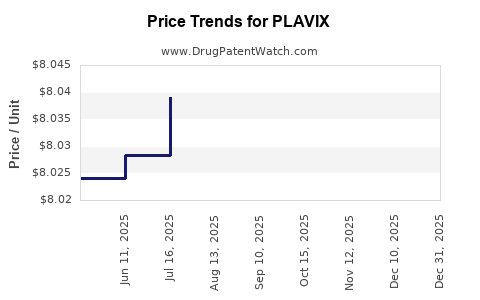
Brand Price in the U.S.: Before patent expiry, the average wholesale price per 75 mg tablet was approximately $1.70. Post-generic entry, prices fell by over 70%, with generic versions priced around $0.40 per tablet.
Global Price Trends: Similar trends are observed globally, with branded drug prices dropping significantly, especially in lower-income markets due to price controls and generic competition.
Reimbursement Policies: Insurance coverage is widespread, but formularies favor generics, gradually decreasing Plavix’s market share among prescribers.
What Are the Price Projections for the Next 5 Years?
Market Penetration of Generics: In the U.S., generics are expected to maintain over 85% market share by 2025, with branded Plavix sales declining proportionally.
Pricing Trends: The average price per tablet is projected to stay stabilized around $0.40, driven by generic supply chains and negotiated discounts.
Potential Brand Price Recovery: Limited, unless patent infringing issues or new formulations emerge. Price increases are unlikely absent new patent protections or therapeutic innovations.
Impact of Biosimilars and New Therapeutics: While biosimilar development is more relevant to biologics, for small molecules like Plavix, therapeutic alternatives or changes in clinical guidelines could influence future pricing.
What Are Future Revenue and Market Opportunity Projections?
Assuming an annual volume of approximately 500 million 75 mg tablets globally and a price point of $0.40 per tablet for generics, annual revenue would approximate $200 million.
In markets where branded Plavix remains dominant, revenue could be higher, but global shifts favor cost-effective generics. Patent cliffs and market saturation are expected to further reduce income, with overall sales declining by at least 15-20% over the next 3 years before stabilizing.
What Are Key Factors Impacting Plavix's Market and Price?
- Patent Expiry and Generic Entry: Major in 2012-2013, spurred price reductions.
- New Antiplatelet Agents: Increased competition with ticagrelor and prasugrel.
- Regulatory and Reimbursement Policies: Influence market access and pricing strategies.
- Clinical Guidelines: Positioning relative to newer agents impacts demand.
- Potential for Formulation Innovation: Limited unless reformulations improve efficacy or reduce side effects.
Closing Summary
Plavix's market has contracted significantly since patent expiry, with generics dominating. Prices for generic tablets have stabilized at low levels globally. While overall sales decline, the drug maintains a sizable revenue base in regions with slower generic penetration or less aggressive market forces. Future revenues depend on regulatory strategies, clinical guideline shifts, and the competitive landscape.
Key Takeaways
- Plavix generated around $4.4 billion worldwide in 2022 but faces declining sales due to patent expiry and competition.
- Generic versions price around $0.40 per tablet in the U.S., with global prices following similar trends.
- Market share shifts favor newer agents like ticagrelor, impacting demand.
- Projected revenue for branded Plavix remains limited, with sales likely decreasing further over the next three years.
- The main growth opportunities reside in markets with slower generic uptake and potential formulation innovations.
FAQs
-
When did Plavix patent expiration occur?
Patent expiry occurred between 2012 and 2013 across global markets, enabling generic competition.
-
What are the main competitors to Plavix?
Ticagrelor (Brilinta) and prasugrel (Effient) are the primary alternatives.
-
How has generic entry affected Plavix’s pricing?
Prices fell sharply—over 70%—post-generic entry, stabilizing around $0.40 per tablet in the U.S.
-
What is the future outlook for Plavix sales?
Sales are expected to decline further due to market saturation, competition, and pricing pressures.
-
Are there ongoing patent or regulatory risks for Plavix?
No current patent protections remain; regulatory risks are limited, but new formulations or clinical guideline changes could influence its market position.
References
[1] IQVIA, 2022. Global Sales Data.
[2] FDA Label for Plavix.
[3] Market Research Reports.
[4] Patent and Patent Expiry Records.
[5] Clinical guidelines from American Heart Association.