Share This Page
Drug Price Trends for MIRVASO
✉ Email this page to a colleague
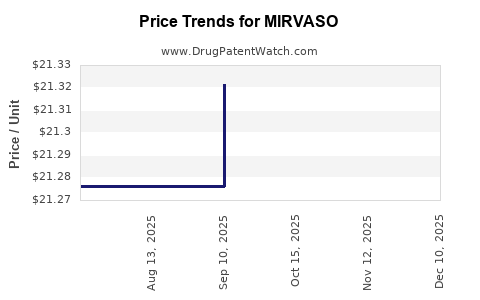
Average Pharmacy Cost for MIRVASO
| Drug Name | NDC | Price/Unit ($) | Unit | Date |
|---|---|---|---|---|
| MIRVASO 0.33% GEL PUMP | 00299-5980-35 | 21.46607 | GM | 2026-07-22 |
| MIRVASO 0.33% GEL PUMP | 00299-5980-35 | 21.43511 | GM | 2026-06-17 |
| MIRVASO 0.33% GEL PUMP | 00299-5980-35 | 21.44600 | GM | 2026-05-20 |
| MIRVASO 0.33% GEL PUMP | 00299-5980-35 | 21.44600 | GM | 2026-04-22 |
| >Drug Name | >NDC | >Price/Unit ($) | >Unit | >Date |
What is MIRVASO?
Mirvaso (brimonidine) topical gel 0.33% is approved by the FDA for the treatment of facial erythema of rosacea in adults. It acts as a selective alpha-2 adrenergic receptor agonist, reducing redness by constricting superficial facial blood vessels. The drug was approved in 2013, with a branded patent expiry date forecasted around 2028, subject to patent term adjustments and potential patent litigation.
How Competitive Is MIRVASO in the Topical Rosacea Market?
The rosacea field has several treatment options, including topical metronidazole, ivermectin, azelaic acid, and oral therapies like doxycycline. MIRVASO's niche focuses on redness reduction, differentiating it from anti-inflammatory treatments.
Market share data indicate that MIRVASO has achieved a modest but growing share within the rosacea treatment segment. As of 2022, sales were approximately $150 million globally, with the US accounting for the majority. The market growth is driven by increased rosacea prevalence, estimated at 5% to 10% of the adult population, and rising awareness.
Patent and Regulatory Landscape
MIRVASO's primary patent covers formulation and method of use, expiring around 2028. Patent litigation or the entry of biosimilars can influence pricing and market competition. The FDA granted exclusivity until 2018, but this applies only to certain formulations.
The introduction of compounded brimonidine formulations poses a minor threat to branded sales, especially if compounded products meet quality standards and reduce costs.
Price and Cost Dynamics
Initial pricing for MIRVASO was approximately $640 for a 30g tube, consistent with other high-cost topical therapies. Post-expiration of patent protections, generic brimonidine formulations are expected to enter the market at significantly lower prices, estimated around $50–$150 per 30g tube based on existing generics.
Pricing discounts and managed care negotiations influence net prices, with retail prices decreasing over time due to increased competition and payer pressure.
Future Price Projections
Assuming patent expiration in 2028 and potential entry of generics, the following scenario is projected:
| Year | Estimated Average Retail Price (USD) | Key Factors |
|---|---|---|
| 2023 | $640 | Market exclusivity remains; branded sales dominate |
| 2025 | $550 | Slight price reductions due to payer negotiations |
| 2027 | $400 | Patent expiry approaches; increased market anticipation |
| 2028+ | $50–$150 | Entry of generics increases competition and price erosion |
These estimates incorporate known patent timelines, market trends, and historical data on generic entry in dermatology.
Market Growth and Investment Outlook
Given the target demographic increasing awareness and rosacea's high prevalence, MIRVASO's sales are projected to grow modestly until patent expiry. Post-2028, generics are likely to dominate sales, reducing the brand's revenue significantly.
Market forecasts suggest the overall topical rosacea market will expand at a compound annual growth rate (CAGR) of about 4% between 2022 and 2030, driven by demographic shifts and patient demand for targeted therapies.
Key competitor medications include:
- Metronidazole (gel and cream)
- Ivermectin (cream)
- Azelaic acid (gel)
These therapies, often less expensive, will intensify pricing pressures on MIRVASO.
Regulatory and Pricing Policy Implications
Pricing strategies are sensitive to evolving healthcare policies emphasizing cost containment. The U.S. Medicaid and Medicare programs push for negotiated prices for high-cost drugs, influencing overall market dynamics.
In Europe, pricing varies by country but generally aligns with health technology assessments and cost-effectiveness analyses, often resulting in lower prices than in the U.S.
Summary of Market Drivers and Risks
- Growing rosacea prevalence supports market expansion.
- Patent expiration around 2028 will introduce low-cost generics.
- Brand loyalty and formulary placements influence current pricing.
- Regulatory changes and patent litigation can extend exclusivity or accelerate generic entry.
- Payer pressure for cost-effective options limits price growth for MIRVASO pre-generic entry.
Key Takeaways
- MIRVASO's US sales peaked around 2022 at ~$150 million.
- Its primary patent shields profitability until approximately 2028.
- Post-2028, prices are expected to decline sharply following generic entry, with prices falling to $50–$150 per tube.
- Market growth is steady, driven by rosacea prevalence, but revenue for the brand is expected to decline sharply after patent expiry.
- Competition from established generics and lower-cost options will constrain pricing and market share.
FAQs
Q1: When does MIRVASO's patent expire?
A1: Patent protections are expected to expire around 2028, with potential extensions or challenges influencing actual expiry.
Q2: How much can prices decline after patent expiry?
A2: Prices may fall from approximately $640 to $50–$150 per 30g tube, aligning with prices of generic brimonidine products.
Q3: Are there approved generic versions of MIRVASO?
A3: No approved generics as of 2023, but several manufacturers may seek approval following patent expiration.
Q4: What factors could delay generics' market entry?
A4: Patent litigation, regulatory delays, or settlement agreements can postpone generic approval.
Q5: How does insurance coverage influence MIRVASO's pricing?
A5: Payer negotiations and formulary placements reduce net prices and influence prescribing patterns.
References
- U.S. Food and Drug Administration. (2013). Mirvaso (brimonidine) gel, for topical use.
- IQVIA. (2022). Dermatology product sales data.
- MarketResearch.com. (2022). Topical rosacea treatments market analysis.
- FDA Patent database. (2022). Patent timeline for brimonidine formulations.
- GlobalData. (2022). Prescription trends and price projections for dermatology drugs.
More… ↓
