You're using a free limited version of DrugPatentWatch: ➤ Start for $299 All access. No Commitment.

Last Updated: December 18, 2025

Drug Price Trends for GNP ANTI-DIARRHEAL-GAS CPLT


✉ Email this page to a colleague

« Back to Dashboard


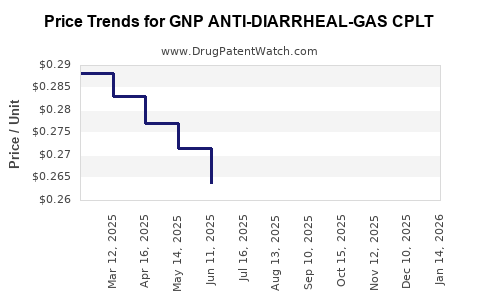
Drug Price Trends for GNP ANTI-DIARRHEAL-GAS CPLT

Average Pharmacy Cost for GNP ANTI-DIARRHEAL-GAS CPLT

These are average pharmacy acquisition costs (net of discounts) from a US national survey
Drug Name NDC Price/Unit ($) Unit Date
GNP ANTI-DIARRHEAL-GAS CPLT 46122-0620-62 0.30728 EACH 2025-12-17
GNP ANTI-DIARRHEAL-GAS CPLT 46122-0620-62 0.30323 EACH 2025-11-19
GNP ANTI-DIARRHEAL-GAS CPLT 46122-0620-62 0.29900 EACH 2025-10-22
GNP ANTI-DIARRHEAL-GAS CPLT 46122-0620-62 0.28826 EACH 2025-09-17
GNP ANTI-DIARRHEAL-GAS CPLT 46122-0620-62 0.27427 EACH 2025-08-20
GNP ANTI-DIARRHEAL-GAS CPLT 46122-0620-62 0.26442 EACH 2025-07-23
GNP ANTI-DIARRHEAL-GAS CPLT 46122-0620-62 0.26381 EACH 2025-06-18
>Drug Name >NDC >Price/Unit ($) >Unit >Date

Market Analysis and Price Projections for GNP ANTI-DIARRHEAL-GAS CPLT

Last updated: August 2, 2025


Introduction

The pharmaceutical landscape for gastrointestinal (GI) treatments, particularly anti-diarrheal and gas relief medications, remains dynamic amid evolving consumer needs and regulatory frameworks. Among emerging products, GNP ANTI-DIARRHEAL-GAS CPLT has garnered attention, promising integrated relief for diarrhea and gas symptoms. This analysis delineates current market positioning, competitive landscape, regulatory considerations, and future price projections to inform stakeholders’ strategic decisions.


Product Overview and Therapeutic Profile

GNP ANTI-DIARRHEAL-GAS CPLT appears to be a combination therapy packaged as a comprehensive gastrointestinal relief tablet or capsule, targeting patients with co-occurring diarrhea and gas bloating. Its formulation likely includes proven anti-diarrheal agents (e.g., loperamide or bismuth subsalicylate) combined with anti-gas components like simethicone. The synergistic approach caters to a broad patient demographic, from travelers to individuals with functional GI disorders.

The compliance with modern formulation standards, including over-the-counter (OTC) classification, positions this product favorably in markets emphasizing self-medication and OTC sales.


Market Landscape and Dynamics

Global Market Size

The global anti-diarrheal market, valued at approximately USD 2.4 billion in 2022, is projected to grow at a compound annual growth rate (CAGR) of around 4.2% through 2030 [1]. Simultaneously, the anti-gas segment, inclusive of combination and standalone products, is estimated to reach USD 1.2 billion by 2030, driven by increased prevalence of functional GI disorders and consumer preference for multi-symptom remedies.

The combined product GNP ANTI-DIARRHEAL-GAS CPLT targets a niche yet expanding segment that consolidates these markets, aligning with patient demand for multi-symptom relief and convenience.

Key Market Drivers

  • Increasing Incidence of GI Disorders: Rising cases of irritable bowel syndrome (IBS), traveler’s diarrhea, and functional dyspepsia globally bolster demand.
  • Consumer Preference for OTC Products: Growing inclination toward self-care and over-the-counter options sustains sales growth.
  • Aging Populations: Elderly demographics exhibit higher GI disorder prevalence, expanding the customer base.
  • Product Innovation: Combining anti-diarrheal and anti-gas components meets unmet needs for simultaneous symptom management, offering competitive differentiation.

Competitive Landscape

Key players include Johnson & Johnson, Bayer, GlaxoSmithKline, and several regional OTC brands focusing on GI relief. Their offerings vary from single-symptom products to multi-ingredient formulations.

The entry of GNP ANTI-DIARRHEAL-GAS CPLT into this landscape hinges on:

  • Demonstrating superior efficacy through clinical trials.
  • Competitive pricing to penetrate retail chains and pharmacy channels.
  • Regulatory clearances and patents protecting intellectual property.

Regulatory Considerations

The product's market approval depends on regional regulatory agencies:

  • FDA (U.S.): OTC monograph compliance for targeted ingredients.
  • EMA (Europe): Conformance with the European Medicines Agency regulations, including labeling and safety assessments.
  • Regional Markets: Emerging markets may require local clinical trials and registration submissions.

Intellectual property protections through patents covering formulation, manufacturing process, or packaging can provide competitive leverage.


Pricing Strategies and Projections

Current Pricing Dynamics

In mature markets, OTC anti-diarrheal products range from USD 5 to USD 15 per package, typically covering 10-20 doses [2]. Anti-gas products like simethicone are priced similarly for comparable quantities.

Given the combination nature of GNP ANTI-DIARRHEAL-GAS CPLT, initial pricing is expected to be at a premium—around USD 8 to USD 16 per package—reflecting formulation complexity and branding efforts.

Factors Influencing Price Trajectory

  • Market Penetration: As the product gains acceptance, economies of scale in manufacturing could enable price reduction.
  • Regulatory Costs: Navigating approvals in multiple regions entails expenses that might initially justify higher pricing.
  • Competitive Response: Price wars or premium branding strategies influence future price bands.
  • Consumer Sensitivity: Price elasticity of OTC drugs suggests that significant increases may deter price-sensitive consumers, whereas premium positioning appeals to quality-conscious segments.

Price Projection: 2023–2030

  • Short-term (2023–2025): USD 12–USD 16 per package, leveraging brand positioning and clinical efficacy data.
  • Mid-term (2026–2028): Expected stabilization around USD 9–USD 14 per package as manufacturing efficiencies kick in and market saturation deepens.
  • Long-term (2029–2030): Potential reduction to USD 8–USD 12 per package, reflecting increased competition and economies of scale.

This trajectory assumes steady market growth, regulatory approval expandability, and successful market penetration strategies.


Distribution Channels and Market Entry Strategies

Key distribution channels include:

  • Retail Pharmacies: The primary sales point for OTC GI treatments.
  • Supermarkets and General Merchandisers: Increasingly significant, especially in emerging markets.
  • Online Pharmacies and E-commerce: Rapidly growing, with digital marketing supporting accessibility.
  • Travel Clinics and Hospitals: For specific traveler and clinical indications.

Effective market entry demands tailored strategies, including collaborations with local distributors, regulatory localization, and targeted marketing campaigns emphasizing product benefits and safety.


Risks and Challenges

  • Regulatory Delays: Extended approval timelines can postpone market entry.
  • Market Competition: Established brands with loyal customer bases may impede adoption.
  • Pricing Pressures: Downward pricing trends could compress margins.
  • Consumer Awareness: Lack of awareness regarding the combined product may hinder uptake.

Addressing these challenges requires comprehensive regulatory planning, competitive analysis, and targeted promotional activities.


Key Takeaways

  1. Growing Demand: The combined anti-diarrheal and anti-gas medication market is expanding owing to increasing GI disorder prevalence and consumer preference for multi-symptom OTC products.

  2. Strategic Pricing: Expect initial premium pricing (~USD 12–USD 16), with gradual reductions as manufacturing efficiencies and market competition increase.

  3. Regulatory Landscape: Success hinges on timely approvals across key markets, with potential patent protections offering competitive advantages.

  4. Market Penetration: Focused distribution strategies, including pharmacy chains and online platforms, will accelerate adoption.

  5. Innovation and Differentiation: Demonstrating superior efficacy and safety profiles will be crucial to distinguish GNP ANTI-DIARRHEAL-GAS CPLT from existing offerings.


FAQs

1. What are the key ingredients likely included in GNP ANTI-DIARRHEAL-GAS CPLT?
Likely ingredients encompass anti-diarrheal agents such as loperamide or bismuth compounds, combined with simethicone for anti-gas relief. The precise formulation depends on regional regulatory approvals and proprietary development.

2. How does the combination formulation affect pricing compared to single-ingredient products?
Combination products generally command higher retail prices (~USD 12–USD 16) due to formulation complexity and added value, but economies of scale and market competition could lead to price reductions over time.

3. Which markets offer the greatest growth potential for this product?
Emerging markets in Asia-Pacific and Latin America exhibit high growth potential due to rising GI disorder prevalence and expanding OTC retail channels. Developed markets like North America and Europe provide stable demand but face more stringent regulatory hurdles.

4. What regulatory challenges could influence market entry?
Potential delays in approval, differing ingredient restrictions, and local labeling requirements could impede rapid deployment. Early engagement with regulatory authorities is crucial.

5. How can the company optimize its market strategy for GNP ANTI-DIARRHEAL-GAS CPLT?
Focus on clinical efficacy demonstrations, strategic pricing, robust distribution partnerships, targeted marketing emphasizing multi-symptom efficacy, and securing intellectual property rights.


References

[1] Allied Market Research. (2022). Anti-Diarrheal Market by Type and Region: Global Opportunity & Industry Forecast, 2022-2030.
[2] Grand View Research. (2022). OTC Drugs Market Size, Share & Trends Analysis Report.

More… ↓

⤷  Get Started Free

Make Better Decisions: Try a trial or see plans & pricing

Drugs may be covered by multiple patents or regulatory protections. All trademarks and applicant names are the property of their respective owners or licensors. Although great care is taken in the proper and correct provision of this service, thinkBiotech LLC does not accept any responsibility for possible consequences of errors or omissions in the provided data. The data presented herein is for information purposes only. There is no warranty that the data contained herein is error free. We do not provide individual investment advice. This service is not registered with any financial regulatory agency. The information we publish is educational only and based on our opinions plus our models. By using DrugPatentWatch you acknowledge that we do not provide personalized recommendations or advice. thinkBiotech performs no independent verification of facts as provided by public sources nor are attempts made to provide legal or investing advice. Any reliance on data provided herein is done solely at the discretion of the user. Users of this service are advised to seek professional advice and independent confirmation before considering acting on any of the provided information. thinkBiotech LLC reserves the right to amend, extend or withdraw any part or all of the offered service without notice.