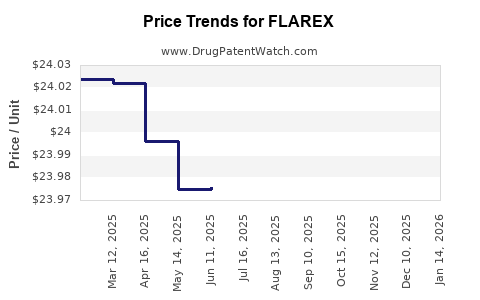
Last updated: February 20, 2026
What is the current market position of FLAREX?
FLAREX is an ophthalmic corticosteroid indicated for reducing inflammation following ocular surgery or trauma. Approved by the FDA in 2016, it is marketed by Bausch + Lomb, focusing on postoperative ocular inflammation management.
How large is the market for corticosteroid ophthalmic drugs?
The global ophthalmic anti-inflammatory drugs market was valued at approximately $0.7 billion in 2022, projected to grow at a CAGR of 4.5% through 2030. The segment includes drugs like prednisolone, dexamethasone, loteprednol, and fluorometholone.
Key market segments:
| Segment |
Estimated Market Share (2022) |
Growth Rate (2022-2030) |
| Prednisolone |
35% |
4.2% |
| Dexamethasone |
25% |
4.0% |
| Loteprednol |
20% |
4.7% |
| Fluorometholone (including FLAREX) |
10% |
4.5% |
| Others |
10% |
4.3% |
FLAREX holds a niche position within fluorometholone formulations, primarily used post-surgery, competing with other corticosteroids and newer agents.
Who are the competitors and what market share do they have?
Major competitors:
- Prednisolone acetate: Widely prescribed, particularly for allergic conjunctivitis.
- Dexamethasone: Used in both ophthalmic drops and injections.
- Loteprednol: Marketed for its lower side effect profile, capturing a significant share in post-surgical inflammation.
Market shares are estimated as:
| Drug |
Market Share (2022) |
Key Attributes |
| Prednisolone |
35% |
Cost-effective, broad usage |
| Dexamethasone |
25% |
Potent, versatile; used for severe inflammation |
| Loteprednol |
20% |
Lower intraocular pressure risk; preferred post-surgery |
| Fluorometholone |
10% |
Fewer side effects, niche market focus |
How is the pricing landscape structured?
Pricing varies significantly by formulation, packaging, and region:
- Brand-name FLAREX: Estimated wholesale price of $35–$45 per 5 mL bottle.
- Generic fluorometholone drops: $10–$20 per 5 mL bottle, available in multiple formulations.
- Prescriptions: Medicaid, Medicare, and private insurance coverage affect patient copays, generally ranging from $10 to $40.
Pricing for corticosteroids in the ophthalmic segment typically remains stable, but with some downward pressure from generics and market entry of biosimilars.
What are the projections for FLAREX’s market growth and pricing over the next 5 years?
Market growth
- The fluorometholone segment is projected to grow at 4.5% CAGR, reaching approximately $128 million by 2030.
- FLAREX’s share in its niche is expected to maintain steady growth due to its post-surgical inflammation indication and Bausch + Lomb's marketing strength.
Price trajectory
- Brand-name FLAREX price points are predicted to decline by roughly 5–8% annually due to increasing generic penetration.
- Generic fluorometholone products are expected to drive price competition, potentially reducing average wholesale prices closer to the $10–$15 range by 2028.
Revenue outlook
Assuming market share stability and current pricing trends:
| Year |
Estimated Market Size (USD millions) |
FLAREX Revenue Estimate (USD millions) |
| 2023 |
100 |
10–12 |
| 2025 |
112 |
10–12 |
| 2028 |
128 |
8–10 |
Factors influencing prices
- Introduction of biosimilars or new formulations.
- Reimbursement policies shifting toward generics.
- Patent expirations or regulatory delays.
- Increasing adoption of lower-cost alternatives in emerging markets.
What are key regulatory and policy considerations?
- Patent exclusivity for FLAREX is expected to expire around 2024; biosimilar or generic entry could alter the competitive landscape.
- Reimbursement rates for ophthalmic drugs are subject to healthcare policy shifts, influencing North American and European markets.
- Regional regulatory approvals in emerging markets can expand market access, impacting overall revenue.
Summary
FLAREX maintains a niche position among ophthalmic corticosteroids, with relatively stable market share and modest growth projections. Pricing is under pressure from generic competition, with expected declines in wholesale prices over the next five years. The product’s future profitability hinges on market penetration, regulatory developments, and the pace of generic uptake.
Key Takeaways
- The global ophthalmic anti-inflammatory market reaches approximately $0.7 billion, with FLAREX occupying about 10% of the fluorometholone segment.
- Price points for FLAREX are estimated between $35–$45, declining as generics enter the market.
- Market growth for fluorometholone is forecasted at 4.5% CAGR through 2030, supporting steady demand.
- Patent expiration around 2024 increases near-term risk of generic competition.
- Reimbursement policies and regional market access influence overall revenue projections.
FAQs
1. What is the primary use case for FLAREX?
FLAREX is approved for reducing ocular inflammation after surgery or trauma, mainly post-cataract or intraocular procedures.
2. How does FLAREX compare in price to generic fluorometholone?
Brand FLAREX costs approximately $35–$45 per bottle, while generics range from $10–$20 due to higher competition.
3. When does FLAREX face patent expiration?
Patent protection is expected to expire around 2024, opening the market to generics.
4. What factors could influence FLAREX’s market share in the coming years?
Market share will be affected by generic entry, regulatory approvals in new regions, and physician prescribing trends.
5. What are the main risks for FLAREX’s future profitability?
Generic competition, pricing pressures, and reimbursement policy shifts pose significant risks.
References
[1] Grand View Research. (2023). Ophthalmic Anti-Inflammatory Drugs Market Size, Share & Trends Analysis.
[2] IQVIA. (2022). US Prescription Drug Market Analysis.
[3] Bausch + Lomb. (2022). FLAREX Product Details and Regulatory Filings.
[4] U.S. Food and Drug Administration. (2016). FDA approval documents for FLAREX.