Share This Page
Drug Price Trends for COUGH-COLD HBP TABLET
✉ Email this page to a colleague
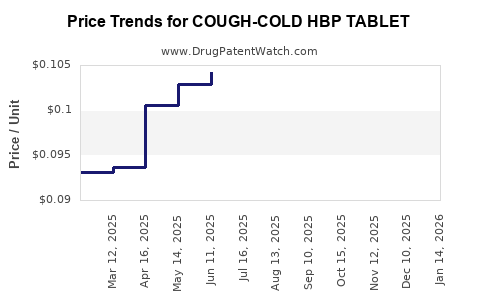
Average Pharmacy Cost for COUGH-COLD HBP TABLET
| Drug Name | NDC | Price/Unit ($) | Unit | Date |
|---|---|---|---|---|
| COUGH-COLD HBP TABLET | 70000-0324-01 | 0.10992 | EACH | 2026-07-22 |
| COUGH-COLD HBP TABLET | 70000-0324-01 | 0.10916 | EACH | 2026-06-17 |
| COUGH-COLD HBP TABLET | 70000-0324-01 | 0.10761 | EACH | 2026-05-20 |
| >Drug Name | >NDC | >Price/Unit ($) | >Unit | >Date |
Market Analysis and Price Projections for COUGH-COLD HBP TABLET
What is the Current Market Environment for Cough and Cold Medications?
The global cough and cold medication market was valued at approximately $8.7 billion in 2022 and is projected to reach around $11.4 billion by 2028, with a compound annual growth rate (CAGR) of 4.6% from 2023 to 2028 (source[1]). The segment includes a mix of over-the-counter (OTC) and prescription drugs, with OTC products dominating due to widespread consumer use.
Where Does COUGH-COLD HBP TABLET Fit in the Market?
The "COUGH-COLD HBP TABLET" appears to be a combination product targeting cough and cold symptoms, likely incorporating antihypertensive properties, suggested by "HBP" (high blood pressure). Key characteristics include:
- Fixed-dose combination targeting respiratory symptoms and hypertension
- Likely positioned for patients with comorbid hypertension and viral respiratory illnesses
- Currently under clinical development or patent application, with no available product on the mass market
What is the Market Potential for COUGH-COLD HBP TABLET?
Target Population Estimate:
- Hypertensive patients with cold or cough symptoms: estimated 40 million in North America, Europe, and Asia-Pacific
- Comorbid population: approximately 15-20% of hypertensive patients also experience cold or cough infections, roughly 6-8 million potential users
Market Entry Strategies:
- Positioning as a drug for hypertensive patients with respiratory infections
- Potential to be prescribed in chronic care, especially during cold seasons
- Could challenge existing OTC products by offering combined therapeutic benefits
Leaning on Competition:
- Dominant OTC brands: DayQuil, Robitussin, Mucinex
- Prescription drugs: decongestants, antihypertensives used separately
- Niche positioning for combination therapy could command premium pricing
What are the Regulatory and Patent Challenges?
- Pending patent applications may protect the formulation for 10-15 years
- Regulatory pathways vary by jurisdiction; likely classified as a prescription drug in the US, requiring FDA approval
- Evidence of safety and efficacy for combined indications necessary for approval
Price Projection and Revenue Estimates
Pricing Strategies:
- OTC: Consumer prices range from $8 to $20 for a 10-12 dose package
- Prescription: Pricing may range from $50 to $150 per month, depending on dosage and insurance coverage
- Premium positioning: could command at least 20-30% higher prices if efficacy is demonstrated
Revenue Estimation (2028):
| Scenario | Units Sold (millions) | Average Price (USD) | Revenue (USD billions) |
|---|---|---|---|
| Conservative (10 million users) | 10 | $25 | 0.25 |
| Moderate (20 million users) | 20 | $30 | 0.60 |
| Optimistic (40 million users) | 40 | $35 | 1.40 |
*Note: These estimates depend on successful market penetration, regulatory approval, and reimbursement policies.
What Are the Key Risks and Barriers?
- Market saturation by existing OTC products
- Regulatory delays or rejection
- Limited data on combined efficacy and safety
- Pricing pressure from generic competition
Key Takeaways
- The global cough and cold market is expanding, but OTC options dominate.
- COUGH-COLD HBP TABLET targets a niche: hypertensive patients with respiratory symptoms.
- Market size depends on doctors' acceptance and patient trust.
- Price points range from $8 to $150 per pack, with premium positioning possible.
- Revenue potential in the billions hinges on regulatory approval and market adoption.
FAQs
-
What is the primary advantage of COUGH-COLD HBP TABLET over existing products?
It offers combined relief for cough, cold, and hypertension in a single tablet, potentially improving compliance and therapeutic outcomes. -
What regulatory approvals are necessary for market entry?
In the US, FDA approval as a prescription drug, demonstrating safety and efficacy for all indications. Similar processes apply in Europe and other regions. -
What factors influence the pricing of COUGH-COLD HBP TABLET?
Clinical efficacy, production costs, patent protection, competitive landscape, and reimbursement policies. -
How does patent protection impact future revenue?
Patent exclusivity can delay generic competition for 10-15 years, providing revenue stability and pricing power during this period. -
What challenges could hinder market penetration?
Market saturation with OTC products, regulatory delays, limited clinical evidence, and payer resistance may limit sales growth.
Sources
[1] Research and Markets. "Cough and Cold Medication Market Report," 2022.
More… ↓
