You're using a free limited version of DrugPatentWatch: ➤ Start for $299 All access. No Commitment.

Last Updated: April 1, 2026

Drug Price Trends for BUTALBITAL-ACETAMINOPHEN-CAFFEINE-CODEINE


✉ Email this page to a colleague
« Back to Dashboard


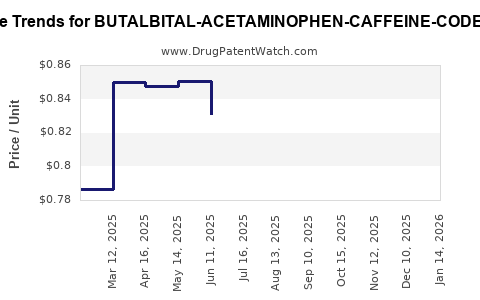
Drug Price Trends for BUTALBITAL-ACETAMINOPHEN-CAFFEINE-CODEINE

Average Pharmacy Cost for BUTALBITAL-ACETAMINOPHEN-CAFFEINE-CODEINE

These are average pharmacy acquisition costs (net of discounts) from a US national survey
Drug Name NDC Price/Unit ($) Unit Date
BUTALBITAL-ACETAMINOPHEN-CAFFEINE-CODEINE 50-325-40-30 MG CP 51991-0073-01 0.87845 EACH 2026-03-18
BUTALBITAL-ACETAMINOPHEN-CAFFEINE-CODEINE 50-300-40-30 MG CP 00054-0650-25 5.12888 EACH 2026-03-18
BUTALBITAL-ACETAMINOPHEN-CAFFEINE-CODEINE 50-300-40-30 MG CP 00591-2641-01 5.12888 EACH 2026-03-18
BUTALBITAL-ACETAMINOPHEN-CAFFEINE-CODEINE 50-325-40-30 MG CP 00591-3220-01 0.87845 EACH 2026-03-18
>Drug Name >NDC >Price/Unit ($) >Unit >Date

Butalbital-Acetaminophen-Caffeine-Codeine: Market Dynamics and Price Outlook

Last updated: February 19, 2026

This report analyzes the current market landscape and projects future pricing for butalbital-acetaminophen-caffeine-codeine, a combination analgesic. The analysis focuses on factors influencing supply, demand, and regulatory shifts impacting commercial viability.

What is Butalbital-Acetaminophen-Caffeine-Codeine?

Butalbital-acetaminophen-caffeine-codeine is a prescription medication classified as a combination analgesic. It is indicated for the relief of tension headache. The drug combines butalbital, a barbiturate with sedative properties; acetaminophen, an analgesic and antipyretic; caffeine, a stimulant that can enhance the analgesic effect and counter acetaminophen-induced drowsiness; and codeine, an opioid analgesic.

The typical formulation contains:

  • Butalbital: 50 mg
  • Acetaminophen: 300 mg
  • Caffeine: 40 mg
  • Codeine phosphate: 30 mg (equivalent to 23.5 mg codeine base)

This combination targets multiple pain pathways and central nervous system effects to alleviate headache symptoms.

Market Overview and Key Drivers

The market for butalbital-acetaminophen-caffeine-codeine is characterized by its established presence, driven by persistent demand for tension headache treatment. However, it also faces headwinds from the evolving regulatory environment surrounding controlled substances and the increasing availability of alternative pain management therapies.

Key market drivers include:

  • Prevalence of Tension Headaches: Tension-type headaches are the most common form of primary headache, affecting a significant portion of the global population. This provides a consistent patient base.
  • Established Treatment Protocol: For many years, this combination has been a go-to prescription for moderate to severe tension headaches, leading to ingrained prescribing habits among healthcare providers.
  • Perceived Efficacy: Patients and clinicians often perceive the multi-component formulation as effective for a range of headache severity.
  • Generic Availability: The drug is widely available in generic forms, contributing to its accessibility and affordability for patients.

However, several factors are constraining market growth:

  • Opioid Scrutiny: Increased regulatory attention and public health concerns surrounding opioid use and abuse have led to stricter prescribing guidelines and a move towards opioid-sparing alternatives. Codeine, an opioid in this combination, is subject to these pressures.
  • Diversification of Pain Management: The development and adoption of alternative pain management strategies, including non-opioid analgesics, neuromodulators, and interventional procedures, offer options that may be preferred by prescribers and patients seeking to avoid controlled substances.
  • Formulary Restrictions: Payers and pharmacy benefit managers (PBMs) are increasingly implementing formulary restrictions and prior authorization requirements for medications containing codeine, limiting access and reimbursement.
  • Potential for Misuse and Dependence: The presence of butalbital (a barbiturate) and codeine (an opioid) raises concerns about the potential for misuse, dependence, and diversion, prompting caution among prescribers.

Supply Chain and Manufacturing Landscape

The manufacturing of butalbital-acetaminophen-caffeine-codeine involves several active pharmaceutical ingredients (APIs) that require distinct production processes and adherence to stringent quality control standards.

Major API suppliers for these components are located globally, with significant production in:

  • Acetaminophen: India and China are dominant manufacturers of acetaminophen API, supplying a large proportion of the global market.
  • Caffeine: Production is widespread, with key sources in China, India, and some European countries.
  • Butalbital: Manufacturing is more concentrated, with fewer producers compared to acetaminophen and caffeine.
  • Codeine Phosphate: Sourced from opium poppy cultivation, with major production hubs in Australia, India, Turkey, and Spain. The regulatory oversight for codeine production is particularly intense due to its opioid classification.

The finished dosage form (FDF) manufacturing is undertaken by numerous generic pharmaceutical companies worldwide. The market is fragmented, with several large generic manufacturers and a multitude of smaller players.

Key aspects of the supply chain include:

  • Raw Material Sourcing: Manufacturers rely on a stable supply of high-quality APIs. Geopolitical events, trade disputes, and environmental regulations can impact API availability and cost.
  • Regulatory Compliance: All manufacturing facilities must comply with Good Manufacturing Practices (GMP) standards set by regulatory bodies like the U.S. Food and Drug Administration (FDA) and the European Medicines Agency (EMA).
  • Controlled Substance Handling: Manufacturers and distributors handling codeine must adhere to strict regulations from agencies like the U.S. Drug Enforcement Administration (DEA) regarding quotas, security, record-keeping, and disposal.
  • Distribution Networks: The drug is distributed through wholesale pharmaceutical distributors to pharmacies, hospitals, and clinics.

The DEA's Schedule III classification of butalbital-containing products in the U.S. impacts distribution and prescribing, requiring specific prescription formats and inventory controls.

Pricing Analysis and Projections

The pricing of butalbital-acetaminophen-caffeine-codeine is influenced by several factors, including generic competition, API costs, manufacturing overhead, regulatory compliance costs, and payer reimbursement policies.

Current Pricing Trends: As a widely available generic drug, butalbital-acetaminophen-caffeine-codeine exhibits relatively stable pricing for the finished product. However, price fluctuations can occur due to:

  • API Cost Volatility: Increases in the cost of any of the four APIs can lead to higher FDF prices. Codeine phosphate, in particular, can be subject to price fluctuations due to cultivation yields and international regulations.
  • Competitive Landscape: The high number of generic manufacturers typically drives prices down, especially for high-volume products.
  • Payer Negotiations: PBMs and insurance companies negotiate prices with manufacturers, impacting the net price paid. Rebates and discounts are common.
  • DEA Quotas: For codeine, DEA manufacturing quotas can influence the overall supply and, consequently, the price of codeine-containing products.

Average Wholesale Price (AWP) and Net Price Considerations: The AWP for a 100-count bottle of butalbital-acetaminophen-caffeine-codeine (30mg codeine) typically ranges from $25 to $75, depending on the manufacturer and the specific dosage form. However, the net price realized by manufacturers after rebates and discounts is significantly lower.

Factors Influencing Future Pricing:

  • Continued Opioid Reform: Further regulatory actions or shifts in prescriber behavior away from opioid-containing analgesics could reduce demand, potentially leading to price erosion or stable pricing in a declining market.
  • API Supply Chain Stability: Disruptions in API production for any of the four components could lead to temporary price increases.
  • Increased Generic Competition: Entry of new generic manufacturers or consolidation among existing ones can impact pricing dynamics.
  • Outcomes-Based Contracting: While less common for established generics, future pricing models might incorporate patient outcomes, though this is unlikely to significantly alter the pricing of this specific drug in the near term.
  • Excipient and Manufacturing Costs: General inflation impacting raw materials, energy, and labor costs can exert upward pressure on manufacturing expenses, which may eventually translate to slightly higher FDF prices.

Price Projection (Next 3-5 Years): The price of butalbital-acetaminophen-caffeine-codeine is projected to remain relatively stable with modest fluctuations.

  • Base Case Projection: Expect a 0-3% annual price increase, primarily driven by inflation in manufacturing costs and potential minor fluctuations in API prices.
  • Downside Risk: Increased regulatory pressure on codeine or significant shifts in clinical guidelines favoring non-opioid alternatives could lead to a decline in demand, potentially resulting in price stagnation or a decrease of 1-5% annually as manufacturers seek to maintain volume.
  • Upside Risk: Significant supply chain disruptions for key APIs, particularly codeine, or unforeseen increases in demand due to a lack of viable alternatives for specific patient populations, could lead to price increases of 3-7% annually, though this is considered less probable given the generic nature of the drug.

The market's trajectory is heavily influenced by the evolving regulatory landscape for controlled substances. Any significant policy changes regarding codeine or barbiturates will directly impact demand and, consequently, pricing.

Regulatory Landscape and Impact

The regulatory environment surrounding butalbital-acetaminophen-caffeine-codeine is a critical determinant of its market access and commercial viability, particularly due to the presence of codeine and butalbital.

Key Regulatory Bodies and Policies:

  • U.S. Drug Enforcement Administration (DEA):
    • Controlled Substance Classification: Butalbital is classified as a Schedule III controlled substance. Products containing butalbital, acetaminophen, caffeine, and codeine are generally treated under similar strictures as other Schedule III opioid-containing medications.
    • Manufacturing Quotas: The DEA sets annual aggregate production quotas for Schedule I, II, and III controlled substances, including codeine. These quotas can limit the total amount of codeine API manufactured in the U.S., influencing its availability and price.
    • Record Keeping and Security: Manufacturers, distributors, and dispensers must maintain meticulous records of all controlled substance transactions and implement robust security measures to prevent diversion.
  • U.S. Food and Drug Administration (FDA):
    • Abbreviated New Drug Applications (ANDAs): Generic versions of butalbital-acetaminophen-caffeine-codeine must receive FDA approval via ANDAs, demonstrating bioequivalence to the reference listed drug.
    • Labeling Requirements: The FDA mandates specific labeling, including warnings regarding the potential for dependence and abuse, and indications for use.
    • Risk Evaluation and Mitigation Strategies (REMS): While a specific REMS program may not be mandated for this exact combination, the general trend towards stricter REMS for opioid-containing drugs could influence future regulatory requirements.
  • State-Level Prescription Monitoring Programs (PMPs): Most U.S. states operate PMPs that track controlled substance prescriptions. These programs are designed to identify patients who may be "doctor shopping" or obtaining prescriptions from multiple sources, helping to prevent abuse and diversion. Prescribers are increasingly required to consult PMPs before prescribing Schedule III and IV drugs.
  • International Regulations: Similar controls exist in other countries, with varying classification schedules and prescribing requirements for barbiturates and opioids.

Impact of Regulatory Changes:

  • Prescriber Hesitancy: Increased scrutiny and the potential for audits or investigations can lead some healthcare providers to reduce their prescribing of butalbital-acetaminophen-caffeine-codeine, opting for non-controlled alternatives.
  • Payer Restrictions: Insurers and PBMs are more likely to implement prior authorization requirements or place these medications on higher cost tiers, limiting patient access and potentially decreasing market volume.
  • Manufacturing and Distribution Costs: Compliance with DEA regulations, including enhanced security and record-keeping, adds to the operational costs for manufacturers and distributors.
  • Shift to Alternatives: The regulatory environment has accelerated the adoption of alternative pain management therapies, including non-opioid analgesics (e.g., NSAIDs, acetaminophen in higher doses, certain antidepressants, anticonvulsants) and non-pharmacological interventions.

Competitive Landscape

The competitive landscape for butalbital-acetaminophen-caffeine-codeine is characterized by a high degree of genericization and a fragmented market.

Key Players: The market includes numerous generic pharmaceutical manufacturers. Some of the prominent players that have historically produced or currently offer this combination product include (but are not limited to):

  • Amneal Pharmaceuticals
  • Teva Pharmaceutical Industries
  • Perrigo Company plc
  • Apotex Inc.
  • Endo Pharmaceuticals
  • Mallinckrodt Pharmaceuticals (historically)
  • Various smaller generic manufacturers and contract manufacturers.

Competitive Dynamics:

  • Price-Based Competition: Given the generic nature of the drug, price is the primary competitive differentiator. Manufacturers constantly adjust pricing strategies to gain market share.
  • Distribution Network Strength: Companies with robust relationships with wholesale distributors and pharmacy chains have an advantage in ensuring product availability.
  • Manufacturing Efficiency: Lowering production costs through efficient manufacturing processes is crucial for maintaining competitive pricing.
  • Product Portfolio: Companies with a broad portfolio of pain management products or other therapeutic areas may leverage existing relationships and infrastructure.
  • Supply Chain Reliability: Consistent and reliable supply is paramount. Any supply disruptions can cede market share to competitors.
  • Regulatory Compliance: Companies adept at navigating the complex regulatory requirements for controlled substances can maintain a more stable market position.

Threat of New Entrants: The threat of new entrants is moderate. While the market is established, the significant capital investment required for API sourcing, GMP-compliant manufacturing, and navigating DEA regulations presents barriers. However, contract manufacturing organizations can offer pathways for smaller companies to enter the market.

Threat of Substitutes: The threat of substitutes is high and growing. This includes:

  • Non-Opioid Analgesics: Acetaminophen, NSAIDs (e.g., ibuprofen, naproxen).
  • Combination Analgesics without Opioids: Products combining acetaminophen with NSAIDs or caffeine.
  • Migraine-Specific Medications: Triptans, CGRP inhibitors for patients whose headaches are diagnosed as migraines.
  • Preventative Therapies: Antidepressants (e.g., amitriptyline), anticonvulsants (e.g., topiramate), beta-blockers, and newer CGRP antagonists for frequent headaches.
  • Non-Pharmacological Treatments: Cognitive behavioral therapy (CBT), biofeedback, acupuncture, physical therapy.

The increasing availability and demonstrated efficacy of these substitutes, coupled with the regulatory pressure on opioid-containing products, significantly challenge the market position of butalbital-acetaminophen-caffeine-codeine.

Key Takeaways

  • Butalbital-acetaminophen-caffeine-codeine is a mature, genericized analgesic for tension headaches facing declining demand due to regulatory pressures on opioids.
  • The market is driven by the prevalence of tension headaches but constrained by opioid scrutiny, alternative pain management options, and payer restrictions.
  • API sourcing for codeine and butalbital is subject to stringent controls, impacting supply chain stability and manufacturing costs.
  • Pricing is expected to remain relatively stable with a 0-3% annual increase, though a decline is possible if regulatory pressures intensify.
  • The competitive landscape is characterized by price-based competition among numerous generic manufacturers, with a significant threat from substitute therapies.
  • Regulatory compliance, particularly with DEA mandates for controlled substances, adds substantial cost and complexity to market participation.

Frequently Asked Questions

  1. What is the primary indication for butalbital-acetaminophen-caffeine-codeine? The primary indication is the relief of tension headache.

  2. Why is the regulatory scrutiny on this drug increasing? The drug contains codeine, an opioid, and butalbital, a barbiturate, both of which are controlled substances with potential for misuse, dependence, and diversion. Regulatory bodies are intensifying oversight on all opioid-containing medications.

  3. What are the main alternatives to butalbital-acetaminophen-caffeine-codeine for tension headaches? Alternatives include non-opioid analgesics like acetaminophen and NSAIDs, as well as preventive medications for frequent headaches and non-pharmacological therapies.

  4. How do DEA manufacturing quotas affect the price of this drug? DEA quotas limit the total amount of codeine API that can be produced, which can affect its availability and price. If quotas are tightened, it can lead to increased costs for manufacturers and potentially higher prices for the finished drug.

  5. Are there any off-label uses for butalbital-acetaminophen-caffeine-codeine? While primarily indicated for tension headaches, it has been used off-label for other types of pain, but such uses are subject to the same regulatory and safety considerations as its approved indication.

Citations

[1] U.S. Drug Enforcement Administration. (n.d.). Controlled Substances Act. Retrieved from [DEA website] (Specific URL for CSA or relevant sections if available)

[2] U.S. Food and Drug Administration. (n.d.). Abbreviated New Drug Applications (ANDAs). Retrieved from [FDA website] (Specific URL for ANDA information)

[3] National Institutes of Health. (n.d.). Tension-Type Headache. MedlinePlus. Retrieved from [MedlinePlus website] (Specific URL for tension-type headache information)

[4] Generic Pharmaceutical Association. (n.d.). The Value of Generics. Retrieved from [GPhA website] (General information on generic drug market dynamics)

More… ↓

⤷  Start Trial

Make Better Decisions: Try a trial or see plans & pricing

Drugs may be covered by multiple patents or regulatory protections. All trademarks and applicant names are the property of their respective owners or licensors. Although great care is taken in the proper and correct provision of this service, thinkBiotech LLC does not accept any responsibility for possible consequences of errors or omissions in the provided data. The data presented herein is for information purposes only. There is no warranty that the data contained herein is error free. We do not provide individual investment advice. This service is not registered with any financial regulatory agency. The information we publish is educational only and based on our opinions plus our models. By using DrugPatentWatch you acknowledge that we do not provide personalized recommendations or advice. thinkBiotech performs no independent verification of facts as provided by public sources nor are attempts made to provide legal or investing advice. Any reliance on data provided herein is done solely at the discretion of the user. Users of this service are advised to seek professional advice and independent confirmation before considering acting on any of the provided information. thinkBiotech LLC reserves the right to amend, extend or withdraw any part or all of the offered service without notice.
