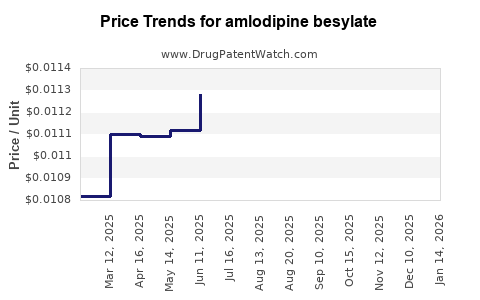
Last updated: February 12, 2026
Amlodipine besylate is a calcium channel blocker used primarily for treating hypertension and angina. The drug is available as a generic medication, which influences market dynamics and pricing trends.
Market Size and Demand Drivers
Global demand for amlodipine besylate is driven by the aging population, increasing prevalence of cardiovascular diseases, and retail drug growth. The World Health Organization estimates nearly 1.13 billion adults worldwide have elevated blood pressure, with medication adherence rates improving in developed markets.
- Market Value (2022): Estimated at USD 2.4 billion (GlobalData)
- Compound Annual Growth Rate (CAGR): Projected at 3.2% from 2023 to 2028
- Market Segments:
- Retail pharmacies account for approximately 70%
- Hospitals represent around 25%
- Other channels (mail order, online) cover the remaining 5%
- Regional Breakdown:
- North America: 45%
- Europe: 20%
- Asia-Pacific: 25%
- Rest of the World: 10%
Competitive Landscape
The market is highly fragmented with multiple generic manufacturers, including Teva, Mylan, Sun Pharmaceutical, and others. Brand-name versions, such as Norvasc (Pfizer), have diminished market share due to patent expiration. Entry barriers for generics are low, given the drug's age and known biosimilar equivalents.
Pricing Trends and Factors
Pricing for amlodipine besylate varies by formulation, dose, and region. In the United States:
- Brand-name (Norvasc): Average wholesale price (AWP) per 30-day supply ranges from USD 110 to USD 140 for a 5 mg tablet.
- Generics: Prices have declined sharply post-patent expiry; range from USD 4 to USD 12 per month (per 5 mg dose).
- Average Retail Price: Approximately USD 10–15 monthly per patient, depending on pharmacy.
In Europe and Asia, prices are generally lower due to different pricing controls and healthcare systems:
- Europe: Prices range from EUR 2 to EUR 8 per month.
- India: The same generic can cost as low as USD 1–2 monthly.
Price Projections (2023–2028)
- Generic price stabilization: With increased competition, generic prices are expected to remain stable or decline marginally by 2–3% annually.
- Brand-name resurgence: Unlikely, without new formulations or clinical advantages.
- Impact of biosimilars: Not applicable, since amlodipine is not biologic.
Market Trends and Risks
- Patent expiries: Many formulations lost patent protection in the early 2010s; new patents are unlikely.
- Regulatory environment: Price controls in certain regions may suppress prices further.
- Supply chain disruptions: Could temporarily influence pricing and availability.
- Emerging markets: Continued price reductions due to local manufacturing and tender processes.
Conclusion
The amlodipine besylate market remains mature with stable demand. Price levels continue to decline in generic form, especially in markets with robust competition. Future growth primarily depends on the overall cardiovascular disease prevalence and healthcare access improvements, particularly in emerging markets.
Key Takeaways
- The global market for amlodipine besylate was valued at USD 2.4 billion in 2022.
- Demand is driven by aging populations and cardiovascular disease prevalence.
- Generics dominate the market; prices in the US average USD 10–15 monthly, with lower prices globally.
- Prices are projected to decline slightly, stabilized by high competition.
- Market growth will depend on healthcare access and disease prevalence, especially in emerging markets.
FAQs
1. What factors influence the price of amlodipine besylate?
Pricing is affected by manufacturing costs, competition, patent status, regional pricing regulations, and healthcare system policies.
2. How does patent expiration impact the market?
Patent expiry leads to increased generic entries, decreasing prices and reducing brand-name market share.
3. Are there premium formulations of amlodipine?
No, the drug is primarily available as a generic, with no significant premium or novel formulations.
4. How do regional regulations affect drug pricing?
Regions with price controls, such as Europe and India, maintain lower prices than the US, where market forces and reimbursement negotiations influence costs.
5. What is the outlook for new formulations or improvements?
Limited; the drug's patent expirations and patent law restrictions make new formulations unlikely without significant clinical benefits.
References
- GlobalData, "Amlodipine market overview," 2022.
- World Health Organization, "Global cardiovascular disease statistics," 2021.
- IQVIA, "US prescription drug pricing overview," 2022.
- European Medicines Agency, "Pricing policies for cardiovascular medicines," 2022.
- Indian Pharmacopoeia, "Amlodipine pricing and availability," 2022.