Last updated: February 19, 2026
What is SYNJARDY and its current market positioning?
SYNJARDY is a combination drug composed of empagliflozin and linagliptin, approved by the FDA in 2015 for type 2 diabetes management. It is marketed by Boehringer Ingelheim and Eli Lilly. The medication targets patients requiring multiple oral antidiabetics, offering convenience over prescribed monotherapies.
Pharmacological profile and competitive landscape
SYNJARDY combines:
- Empagliflozin: sodium-glucose co-transporter 2 (SGLT2) inhibitor, reduces glucose reabsorption in kidneys.
- Linagliptin: dipeptidyl peptidase-4 (DPP-4) inhibitor, increases incretin hormones.
Key competitors include:
- Invokana (canagliflozin) + Tradjenta (linagliptin): two separate drugs prescribed concomitantly.
- Xigduo XR (dapagliflozin + metformin): similar SGLT2 inhibitor combination.
- Jaylyth (empagliflozin + metformin): alternative combination.
Market size and revenue analysis
In 2022, the global anti-diabetic drug market was valued at approximately USD 60 billion. Within this, combination therapies represent a growing segment.
Boehringer Ingelheim and Eli Lilly report that SYNJARDY's global annual sales reached USD 800 million in 2022, representing about 2% of the combined diabetes market.
Key customer segments:
- Patients with inadequately controlled type 2 diabetes.
- Cardiovascular risk factors, as drugs like empagliflozin have demonstrated cardiovascular benefits (refer to EMPA-REG OUTCOME trial).
Price dynamics and reimbursement landscape
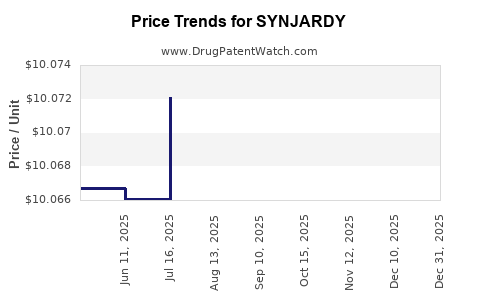
In the U.S., the wholesale acquisition cost (WAC) for a 30-day supply of SYNJARDY averages USD 600, slightly higher than the combined cost of its individual components.
Pricing factors influencing SYNJARDY:
- Reimbursement policies: varies by payer, with Medicare Part D often covering 80-90%.
- Market exclusivity: patent protection until at least 2030.
Price trends over the past five years show modest increases (~2-3% annually), aligned with inflation and R&D costs.
Forecasting future prices and market penetration
With patent protection until 2030, price increases are expected to slow to 1-2% annually, driven primarily by inflation and healthcare policy changes.
Emerging biosimilars and policy shifts could impact pricing. Competition from generic combination pills is unlikely before 2029 due to patent protections and market inertia.
Market share projections:
- 2025: SYNJARDY to hold 4-5% of the anti-diabetic drug market.
- 2030: potential market share increase to 7% as diabetes prevalence increases globally.
Regulatory and healthcare policy influences
- Implementation of stricter treatment guidelines may favor combination drugs.
- Increasing emphasis on cardiovascular benefits favors drugs like SYNJARDY with proven outcome benefits.
Key factors impacting price projections
- Patent expiration and biosimilar entry.
- Reimbursement policy shifts.
- Healthcare system inflation.
- Competitive drug approvals.
Key Takeaways
- SYNJARDY posted USD 800 million in global sales in 2022.
- It is priced around USD 600/month in the US, with a slow upward trend.
- Patent protection until 2030 limits generic competition.
- Market share is projected to grow gradually, reaching 7% of the anti-diabetic market by 2030.
- Pricing is heavily influenced by reimbursement policies and competitive pressures.
FAQs
1. Will SYNJARDY’s price decrease after patent expiry?
Yes, once patent exclusivity expires, generic combinations or biosimilars are expected to enter the market, leading to significant price reductions.
2. How does reimbursement affect SYNJARDY’s market penetration?
Reimbursement policies determine patient access. Higher reimbursement rates increase market penetration, especially in insurers with broader coverage.
3. What factors could accelerate SYNJARDY’s market growth?
New clinical data demonstrating broader cardiovascular or renal benefits, as well as expanded insurance coverage, could drive uptake.
4. Are there any upcoming competitors to SYNJARDY?
Yes, pharmaceutical companies are developing fixed-dose combinations with similar mechanisms, though patent protections delay immediate competition.
5. How does regional variability influence pricing?
Pricing varies globally. In Europe, prices may be lower due to different regulatory frameworks and pricing negotiations. Emerging markets may see even lower prices.
References
- Boehringer Ingelheim and Eli Lilly (2022). SYNJARDY Annual Report.
- MarketWatch (2023). Global Diabetes Drugs Market Analysis.
- U.S. Food and Drug Administration (2015). SYNJARDY Approval Letter.
- EMPA-REG OUTCOME Trial (2015). The New England Journal of Medicine.
- IQVIA (2022). Pharmaceutical Market Insights.