Share This Page
Drug Price Trends for PAROXETINE HCL
✉ Email this page to a colleague
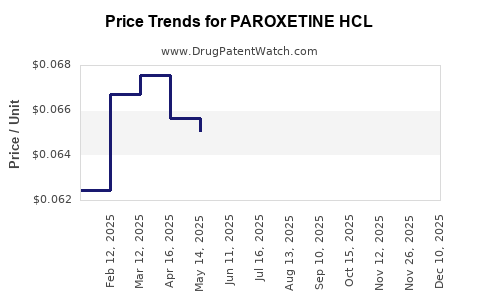
Average Pharmacy Cost for PAROXETINE HCL
| Drug Name | NDC | Price/Unit ($) | Unit | Date |
|---|---|---|---|---|
| PAROXETINE HCL 10 MG/5 ML SUSP | 70954-0319-10 | 1.40175 | ML | 2026-07-22 |
| PAROXETINE HCL 40 MG TABLET | 69584-0674-90 | 0.09999 | EACH | 2026-07-22 |
| PAROXETINE HCL 40 MG TABLET | 69584-0674-50 | 0.09999 | EACH | 2026-07-22 |
| PAROXETINE HCL 40 MG TABLET | 69584-0674-09 | 0.09999 | EACH | 2026-07-22 |
| PAROXETINE HCL 40 MG TABLET | 69584-0674-03 | 0.09999 | EACH | 2026-07-22 |
| PAROXETINE HCL 30 MG TABLET | 69584-0673-90 | 0.09410 | EACH | 2026-07-22 |
| PAROXETINE HCL 30 MG TABLET | 69584-0673-50 | 0.09410 | EACH | 2026-07-22 |
| >Drug Name | >NDC | >Price/Unit ($) | >Unit | >Date |
Best Wholesale Price for PAROXETINE HCL
| Drug Name | Vendor | NDC | Count | Price ($) | Price/Unit ($) | Unit | Dates | Price Type |
|---|---|---|---|---|---|---|---|---|
| PAROXETINE HCL 30MG TAB | Golden State Medical Supply, Inc. | 60429-0736-10 | 1000 | 113.53 | 0.11353 | EACH | 2023-06-15 - 2028-06-14 | FSS |
| PAROXETINE HCL 20MG TAB | Golden State Medical Supply, Inc. | 60429-0735-10 | 1000 | 93.54 | 0.09354 | EACH | 2023-06-23 - 2028-06-14 | FSS |
| PAROXETINE HCL 40MG TAB | Golden State Medical Supply, Inc. | 60429-0737-30 | 30 | 4.64 | 0.15467 | EACH | 2023-06-15 - 2028-06-14 | FSS |
| PAROXETINE HCL 10MG TAB | Golden State Medical Supply, Inc. | 60429-0734-10 | 1000 | 83.24 | 0.08324 | EACH | 2023-06-23 - 2028-06-14 | FSS |
| PAROXETINE HCL 30MG TAB | Golden State Medical Supply, Inc. | 60429-0736-10 | 1000 | 114.55 | 0.11455 | EACH | 2023-06-23 - 2028-06-14 | FSS |
| PAROXETINE HCL 20MG TAB | Golden State Medical Supply, Inc. | 60429-0735-10 | 1000 | 93.54 | 0.09354 | EACH | 2023-11-28 - 2028-06-14 | FSS |
| PAROXETINE HCL 40MG TAB | Golden State Medical Supply, Inc. | 60429-0737-90 | 90 | 11.40 | 0.12667 | EACH | 2023-06-15 - 2028-06-14 | FSS |
| >Drug Name | >Vendor | >NDC | >Count | >Price ($) | >Price/Unit ($) | >Unit | >Dates | >Price Type |
Paroxetine Hydrochloride Market Analysis and Price Projections
Paroxetine hydrochloride is an antidepressant medication belonging to the selective serotonin reuptake inhibitor (SSRI) class. It is prescribed for treating major depressive disorder, obsessive-compulsive disorder, panic disorder, social anxiety disorder, generalized anxiety disorder, and post-traumatic stress disorder. This analysis examines the current market landscape, patent expirations, and projected price trends for paroxetine hydrochloride.
What is the Current Global Market Size for Paroxetine Hydrochloride?
The global market for paroxetine hydrochloride is a mature segment within the antidepressant drug class. While specific, up-to-date market size figures solely for paroxetine hydrochloride are not always publicly delineated, estimates for the broader SSRI market provide context. The global antidepressant market was valued at approximately $14.9 billion in 2022 and is projected to reach $21.1 billion by 2030, growing at a compound annual growth rate (CAGR) of 4.4% from 2023 to 2030 [1]. Paroxetine, as a widely prescribed SSRI, contributes to this market. Generic availability has significantly impacted its market value, shifting revenue streams towards manufacturers of the active pharmaceutical ingredient (API) and generic finished dosage forms.
What are the Key Market Drivers for Paroxetine Hydrochloride?
Several factors influence the demand and market dynamics of paroxetine hydrochloride:
- Prevalence of Mental Health Disorders: A persistent and increasing global prevalence of depression, anxiety disorders, and other mental health conditions drives demand for effective treatments like paroxetine hydrochloride [2]. Public awareness campaigns and destigmatization efforts also contribute to higher diagnosis and treatment rates.
- Established Efficacy and Safety Profile: Paroxetine has a long history of clinical use and a well-documented efficacy and safety profile for its approved indications. This established track record supports its continued use by healthcare professionals and patients [3].
- Cost-Effectiveness of Generic Products: The availability of numerous generic versions of paroxetine hydrochloride makes it a cost-effective treatment option, particularly in healthcare systems with budget constraints. This affordability ensures continued access for a broad patient population.
- Formulation Advancements: Development of extended-release formulations (e.g., paroxetine CR) has offered improved patient compliance and potentially reduced side effects, sustaining market relevance.
- Chronic Nature of Target Conditions: Conditions treated by paroxetine, such as major depressive disorder and chronic anxiety, often require long-term management, leading to sustained prescription volumes.
What are the Major Challenges Facing the Paroxetine Hydrochloride Market?
The paroxetine hydrochloride market faces significant challenges that shape its trajectory:
- Intense Generic Competition: The expiration of primary patents for branded paroxetine formulations has led to widespread generic competition. This oversaturation of the market by multiple generic manufacturers drives down prices and limits revenue potential for any single entity.
- Emergence of Newer Antidepressant Classes: The development and introduction of newer antidepressant drug classes with potentially improved side effect profiles or novel mechanisms of action pose a competitive threat. Newer generics from these classes can capture market share.
- Side Effect Profile: While generally safe, paroxetine is associated with certain side effects, including sexual dysfunction, weight gain, and withdrawal symptoms upon discontinuation. These can lead to patient dissatisfaction and a preference for alternative medications.
- Regulatory Scrutiny and Post-Marketing Surveillance: Like all pharmaceuticals, paroxetine hydrochloride is subject to ongoing regulatory review. Adverse event reporting and potential label changes can impact prescribing patterns and market perception.
- Pricing Pressures from Payers: Healthcare payers, including insurance companies and government programs, exert significant pressure to reduce drug costs. This can lead to formulary restrictions and preferred prescribing of lower-cost generic alternatives, impacting profit margins.
What is the Patent Landscape for Paroxetine Hydrochloride?
The primary patents for branded paroxetine hydrochloride, notably those held by GlaxoSmithKline (GSK) for Paxil/Seroxat, have long expired.
- US Patent Expiration: The U.S. compound patent for paroxetine expired in 2006. This opened the door for generic manufacturers to enter the market [4].
- Global Patent Expirations: Similar patent expirations have occurred in major global markets, leading to widespread genericization.
- Evergreening Attempts: Pharmaceutical companies sometimes attempt to extend patent protection through "evergreening" strategies, such as developing new formulations (e.g., extended-release) or new dosage forms. However, the fundamental compound patent for paroxetine expired decades ago, limiting the scope of these efforts for the core molecule.
- Focus on Manufacturing Process Patents: Current patent activity related to paroxetine hydrochloride primarily centers on novel manufacturing processes, polymorphs, or specific impurity profiles rather than the active pharmaceutical ingredient itself. These patents may offer limited protection for generic manufacturers if alternative, non-infringing processes exist.
What are the Historical and Projected Price Trends for Paroxetine Hydrochloride?
The price trajectory of paroxetine hydrochloride has been characterized by a sharp decline following patent expiry and subsequent generic market entry.
- Pre-Generic Era (Mid-1990s - Early 2000s): Branded paroxetine commanded premium pricing, reflecting the R&D investment and market exclusivity. Prices for a 30-day supply could range from $80 to $150 or more, depending on insurance and dosage [5].
- Post-Generic Entry (Post-2006 in the US): The introduction of generic paroxetine caused a dramatic price erosion. Within a few years of generic launch, prices for a 30-day supply dropped by 70-90%, often falling below $10-$20 [6].
- Current Pricing: Today, the average wholesale price (AWP) for a 30-day supply of generic paroxetine hydrochloride tablets (e.g., 20mg) typically ranges from $5 to $15. Actual patient out-of-pocket costs vary significantly based on insurance coverage, copays, pharmacy discounts, and the specific generic manufacturer.
- Projected Trends:
- Continued Price Stability (Low End): The generic market is highly competitive. Prices are expected to remain relatively stable at the lower end of the current range. Significant price increases are unlikely due to the mature nature of the market and the constant availability of multiple generic suppliers.
- Potential for Minor Fluctuations: Small price fluctuations may occur due to changes in raw material costs, manufacturing efficiencies, or supply chain disruptions. However, these are unlikely to cause substantial shifts in the overall pricing structure.
- Slight Upward Pressure on API Costs: If global demand for raw materials used in paroxetine synthesis increases due to other drug manufacturing needs, or if geopolitical factors affect supply chains, there could be minor upward pressure on API costs, which might translate into marginal price increases for finished products. However, the sheer number of API suppliers typically mitigates this.
- Managed Care Influence: Pharmaceutical benefit managers (PBMs) and insurance companies will continue to negotiate aggressively for the lowest possible prices, ensuring continued affordability for most patients. This will act as a strong downward pressure on retail pricing.
Table 1: Estimated Average Wholesale Price (AWP) Range for Generic Paroxetine Hydrochloride (30-Day Supply)
| Dosage Strength | Estimated AWP Range (USD) | Notes |
|---|---|---|
| 10 mg | $5 - $12 | Based on typical market pricing for a 30-day supply of 30 tablets. |
| 20 mg | $5 - $15 | Widely prescribed dosage; pricing reflects high generic competition. |
| 30 mg | $6 - $16 | Higher strengths may carry slightly higher prices but remain highly competitive. |
| 40 mg | $6 - $17 | Similar pricing dynamics to 30mg, influenced by tablet count and overall market availability. |
| CR formulations | $8 - $20 | Extended-release versions may command a slight premium but are still significantly cheaper than branded versions. |
Source: Manufacturer price lists, pharmacy data aggregators (e.g., GoodRx, Medisave). AWP represents list price before discounts and rebates.
What are the Key Competitors and Manufacturing Landscape?
The paroxetine hydrochloride market is characterized by a fragmented landscape of generic drug manufacturers and API suppliers.
- Generic Finished Dosage Form Manufacturers: Numerous companies produce generic paroxetine hydrochloride tablets and capsules for global markets. Major players include:
- Teva Pharmaceutical Industries Ltd.
- Sun Pharmaceutical Industries Ltd.
- Dr. Reddy's Laboratories Ltd.
- Lupin Ltd.
- Cipla Ltd.
- Mylan N.V. (now part of Viatris)
- Accord Healthcare
- Perrigo Company plc
- Various smaller regional manufacturers.
- Active Pharmaceutical Ingredient (API) Manufacturers: The production of paroxetine HCl API is concentrated among a smaller number of specialized chemical manufacturers, primarily located in India and China, along with some in Europe and North America. Key API suppliers include:
- Divi's Laboratories Limited (India)
- Dr. Reddy's Laboratories Ltd. (India)
- Lupin Ltd. (India)
- Aarti Drugs Limited (India)
- Jubilant Life Sciences (India)
- Major Chinese API manufacturers (specific company names can fluctuate based on contracts and regulatory compliance).
- Branded Manufacturer: GlaxoSmithKline (GSK) continues to market branded Seroxat/Paxil in some regions, but its market share is dwarfed by generics.
The competitive environment for finished dosage forms is driven by price, reliability of supply, and established relationships with distributors and pharmacy chains. For API manufacturers, competition is based on cost of production, quality certifications (e.g., GMP compliance), purity, and supply chain security.
What is the Future Outlook for Paroxetine Hydrochloride?
The future outlook for paroxetine hydrochloride is characterized by its continued role as a widely accessible, cost-effective treatment option, rather than a growth market driver.
- Sustained Demand: The prevalence of mental health disorders is unlikely to diminish, ensuring a baseline demand for established antidepressants. Paroxetine will remain a go-to option for many physicians due to its affordability and familiarity.
- Market Saturation: The generic market is already saturated. Significant market expansion is improbable. The focus will remain on volume and maintaining cost efficiencies in production and distribution.
- Competition from Newer Generics: As patents on other, potentially newer or differentiated, antidepressants expire, their generic versions will also become available, increasing competition for patient prescriptions.
- Limited R&D Investment: Given the generic status and low profit margins, there is little incentive for significant new R&D investment specifically for paroxetine hydrochloride itself, beyond process optimization or minor formulation tweaks.
- Role in Combination Therapies or Specific Niches: While less likely for paroxetine, future innovation could involve its use in specific niche patient populations or as part of novel drug delivery systems, though this is speculative.
The market will likely continue to function as a high-volume, low-margin segment within the broader psychopharmacology landscape. Manufacturers will focus on efficient production, supply chain management, and securing contracts with large purchasers.
Key Takeaways
- Paroxetine hydrochloride is a mature generic drug facing intense competition.
- The market is driven by the prevalence of mental health disorders and the cost-effectiveness of generic formulations.
- Primary patents have long expired, leading to widespread genericization and significant price erosion from branded levels.
- Prices are expected to remain stable at low levels, with minor fluctuations possible.
- The manufacturing landscape is dominated by generic finished dosage form producers and API suppliers, primarily in India and China.
- Future growth is unlikely; the market will continue as a stable, high-volume, low-margin segment.
Frequently Asked Questions
- Will the price of generic paroxetine hydrochloride increase significantly in the next five years? Significant price increases are not anticipated. The market is highly competitive with numerous generic manufacturers, exerting continuous downward pressure on prices.
- Are there any new patents being filed for paroxetine hydrochloride that could impact its market exclusivity? Patents for the core paroxetine molecule have long expired. Any new patents are likely to be related to manufacturing processes, specific polymorphs, or novel drug delivery systems, which may offer limited or niche protection rather than broad market exclusivity.
- What is the typical difference in price between branded paroxetine and its generic versions? Generic versions of paroxetine hydrochloride are typically 80% to 95% less expensive than the original branded formulations were prior to patent expiry.
- Which regions have the highest consumption of paroxetine hydrochloride? Consumption is highest in markets with established healthcare systems and high prevalence rates of mental health disorders, including North America, Europe, and increasingly, Asia-Pacific countries as access to treatment improves.
- Are there any significant supply chain risks for paroxetine hydrochloride API? The primary API manufacturing is concentrated in India and China. Potential risks include geopolitical instability, trade disputes, regulatory changes in these manufacturing countries, or disruptions to raw material sourcing, though the presence of multiple API suppliers mitigates some of these risks.
Citations
[1] Grand View Research. (2023). Antidepressant Drugs Market Size, Share & Trends Analysis Report By Drug Class (SSRI, SNRI, Tricyclic, Others), By Indication (Depression, Anxiety, OCD, Others), By Distribution Channel, By Region, And Segment Forecasts, 2023 - 2030. Retrieved from https://www.grandviewresearch.com/industry-analysis/antidepressant-drugs-market (Note: Actual report access may require subscription; this citation points to the report's availability and abstract).
[2] World Health Organization. (2022). Depression and other common mental disorders: global health estimates. Retrieved from https://www.who.int/publications/i/item/9789240037021
[3] National Institute of Mental Health. (n.d.). Selective Serotonin Reuptake Inhibitors (SSRIs) - What Are They? Retrieved from https://www.nimh.nih.gov/health/topics/drugs-used-in-the-treatment-of-mental-disorders (General information on SSRIs, including paroxetine's class)
[4] U.S. Food & Drug Administration. (n.d.). Orange Book: Approved Drug Products with Therapeutic Equivalence Evaluations. Retrieved from https://www.accessdata.fda.gov/scripts/cder/ob/ (Data on patent and exclusivity for approved drugs can be queried here).
[5] Kaiser Family Foundation. (Various years). Prescription Drug Trends. (Reports and data analyzing drug pricing over time, specific to branded drug costs in the US).
[6] Generic Pharmaceutical Association (now PhRMA). (Various years). Generic Drug Access & Savings Reports. (Reports detailing the cost savings and market impact of generic drug entry).
More… ↓
