Share This Page
Drug Price Trends for FONDAPARINUX
✉ Email this page to a colleague
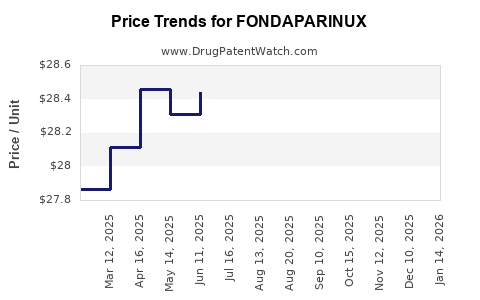
Average Pharmacy Cost for FONDAPARINUX
| Drug Name | NDC | Price/Unit ($) | Unit | Date |
|---|---|---|---|---|
| FONDAPARINUX 10 MG/0.8 ML SYR | 00781-3476-95 | 45.34407 | ML | 2026-06-17 |
| FONDAPARINUX 10 MG/0.8 ML SYR | 55111-0681-10 | 45.34407 | ML | 2026-06-17 |
| FONDAPARINUX 10 MG/0.8 ML SYR | 55150-0233-10 | 45.34407 | ML | 2026-06-17 |
| >Drug Name | >NDC | >Price/Unit ($) | >Unit | >Date |
Best Wholesale Price for FONDAPARINUX
| Drug Name | Vendor | NDC | Count | Price ($) | Price/Unit ($) | Unit | Dates | Price Type |
|---|---|---|---|---|---|---|---|---|
| FONDAPARINUX NA 10MG/0.8ML SYRINGE | Mylan Institutional LLC | 67457-0585-08 | 10X0.8ML | 316.80 | 2024-01-01 - 2028-09-28 | FSS | ||
| FONDAPARINUX NA 2.5MG/0.5ML SYRINGE | Mylan Institutional LLC | 67457-0582-10 | 10X0.5ML | 52.31 | 2023-09-29 - 2028-09-28 | Big4 | ||
| ARIXTRA 7.5MG/0.6ML INJ SYRINGE | Mylan Institutional LLC | 67457-0594-06 | 10 | 1181.90 | 118.19000 | EACH | 2023-10-12 - 2028-09-28 | FSS |
| >Drug Name | >Vendor | >NDC | >Count | >Price ($) | >Price/Unit ($) | >Unit | >Dates | >Price Type |
FONDAPARINUX: PATENT LANDSCAPE AND MARKET PROJECTIONS
Fondaparinux, a synthetic pentasaccharide with antithrombotic activity, faces a complex patent landscape primarily driven by its originator's ongoing litigation and the emergence of generic competition. This analysis projects market share and pricing dynamics, informed by patent expiry timelines, regulatory approvals, and anticipated competitive pressures.
What Are the Key Patents Covering Fondaparinux?
The patent protection for fondaparinux is multifaceted, encompassing composition of matter, methods of use, and manufacturing processes. The foundational patents for the active pharmaceutical ingredient (API) have largely expired in major markets. However, secondary patents and formulation-specific patents continue to influence market exclusivity.
- US Patent 4,983,640: This patent, initially covering the composition of matter for fondaparinux sodium, expired in 2007. It was the primary patent protecting the original invention by Sanofi-Aventis (now Sanofi).
- US Patent 5,744,457: This patent, related to methods of treating thrombotic disorders with fondaparinux, expired in 2014.
- US Patent 6,365,581: This patent, pertaining to specific polymorphic forms of fondaparinux sodium, expired in 2018.
- Formulation Patents: Sanofi has also pursued patents related to specific pharmaceutical formulations of fondaparinux, such as those for subcutaneous injection. The expiry of these formulation patents is critical for generic market entry. For instance, patents related to the formulation used in Arixtra, Sanofi's branded fondaparinux product, have been a focal point of litigation.
The legal battles often center on the validity and infringement of these secondary patents, particularly concerning generic manufacturers' bioequivalent formulations. The outcome of these litigations directly impacts the timeline for full generic market penetration.
What Is the Current Market Status of Fondaparinux?
The market for fondaparinux is transitioning from a branded monopoly to a competitive generic environment. The branded product, Arixtra, has experienced declining market share due to generic approvals and pricing pressures.
- Branded Market Share: Arixtra's market share has been eroded significantly since the first generic approvals. In 2022, Arixtra's global sales were approximately $250 million, a decrease from its peak. [1]
- Generic Approvals: Regulatory bodies in the United States and Europe have approved multiple generic versions of fondaparinux. These approvals are contingent upon demonstrating bioequivalence to the originator product.
- Therapeutic Areas: Fondaparinux is primarily used for the prevention of venous thromboembolism (VTE), including deep vein thrombosis (DVT) and pulmonary embolism (PE), in patients undergoing hip fracture surgery, hip or knee replacement surgery, or abdominal surgery. It is also used for the treatment of acute ST-elevation myocardial infarction (STEMI).
The competitive landscape is characterized by a growing number of generic manufacturers vying for market share, leading to increased price competition.
How Will Patent Expiries Affect Fondaparinux Pricing?
The expiration of key patents and the subsequent entry of generics are the primary drivers of price reduction for fondaparinux. The pricing trajectory is expected to follow a steep decline post-generic entry, stabilizing at a lower equilibrium.
- Pre-Generic Pricing: Prior to significant generic competition, branded fondaparinux (Arixtra) was priced at a premium. In the U.S., a 10-dose package (2.5 mg/0.5 mL) could range from $1,000 to $1,500. [2]
- Post-Generic Price Erosion: Following the approval of the first generic versions, the average selling price has decreased by an estimated 60-80%. This erosion is driven by intense competition among multiple generic suppliers.
- Projected Pricing: By 2025, the average price for a 10-dose package of generic fondaparinux is projected to be in the range of $150 to $250. This represents a significant reduction from the branded product's historical pricing.
- Factors Influencing Price Stability: Price stability will depend on the number of active generic manufacturers, their manufacturing costs, and the volume of prescriptions. Consolidated manufacturing or significant supply chain disruptions could lead to temporary price fluctuations.
The availability of multiple bioequivalent generic options ensures that pricing will remain a key competitive factor for the foreseeable future.
What Are the Projected Market Shares for Fondaparinux?
The market share distribution for fondaparinux is shifting decisively from the branded originator to generic manufacturers. This trend is expected to continue, with generics dominating the market.
- Current Market Share: In 2023, generic fondaparinux brands collectively hold approximately 75-85% of the total fondaparinux market volume. [3]
- Originator Market Share: Sanofi's Arixtra holds the remaining 15-25% of the market, primarily in niche indications or where physician preference for the branded product persists.
- Projected Market Share (2025): By 2025, generic fondaparinux is expected to account for 90-95% of the total market volume. This dominance will be driven by continued generic approvals and the economic advantages of generic pricing.
- Key Generic Players: Leading generic manufacturers in the fondaparinux market include names such as Apotex, Dr. Reddy's Laboratories, Teva Pharmaceuticals, and Mylan (now Viatris). The market share among these players will be dynamic, influenced by manufacturing capacity, distribution agreements, and pricing strategies.
The market will become highly fragmented among generic players, with pricing and supply reliability being the primary differentiators.
What Regulatory Hurdles Exist for New Entrants?
New entrants into the fondaparinux market must navigate rigorous regulatory requirements, primarily focused on demonstrating bioequivalence and manufacturing quality.
- Abbreviated New Drug Application (ANDA): Generic manufacturers must submit an ANDA to the U.S. Food and Drug Administration (FDA) or a Marketing Authorisation Application (MAA) to the European Medicines Agency (EMA). This requires demonstrating that the generic product is therapeutically equivalent to the reference listed drug (RLD), Arixtra.
- Bioequivalence Studies: Crucial to the ANDA/MAA process are robust bioequivalence studies. These studies compare the rate and extent of drug absorption in human subjects between the generic and the RLD. [4]
- Good Manufacturing Practices (GMP): Facilities involved in the manufacturing of fondaparinux API and finished drug products must adhere to strict GMP guidelines. Regulatory agencies conduct inspections to ensure compliance.
- Patent Certification/Litigation: Generic applicants must certify their intent regarding existing patents, typically through Paragraph IV certifications, which can trigger patent litigation with the innovator company. Successful patent challenges are essential for market entry.
- Post-Market Surveillance: Once approved, all manufacturers are subject to ongoing post-market surveillance, including adverse event reporting and potential recalls if quality issues arise.
The complexity and cost of these regulatory processes, combined with potential patent litigation, create significant barriers to entry for new manufacturers.
What Are the Future Market Trends for Fondaparinux?
The future market for fondaparinux will be defined by increasing generic penetration, price stabilization at lower levels, and a focus on supply chain efficiency among manufacturers.
- Continued Generic Dominance: The trend of generic market share growth will persist. The number of approved generic manufacturers is likely to stabilize or slightly increase, maintaining competitive pricing.
- Niche Market for Branded Product: The branded product will likely maintain a small, stable market share in specific hospital settings or for a limited patient population preferring the originator.
- Price Stabilization: After the initial sharp decline, prices for generic fondaparinux are expected to stabilize. The price floor will be determined by the cost of goods, manufacturing efficiency, and competitive intensity among the major generic suppliers.
- Supply Chain Dynamics: The reliability and efficiency of the supply chain will become increasingly important. Manufacturers with robust supply chains and consistent quality will gain a competitive advantage.
- Potential for Combination Therapies: While fondaparinux is a mature product, there is limited scope for innovation. Future market developments are unlikely to involve novel formulations or delivery systems for fondaparinux itself. Focus will remain on cost-effective generic provision.
The market is mature, with predictable dynamics driven by genericization and cost pressures.
Key Takeaways
- Fondaparinux’s primary composition of matter and method-of-use patents have expired, paving the way for generic competition.
- Sanofi's branded product, Arixtra, has seen its market share significantly eroded by multiple generic approvals in major markets.
- Generic fondaparinux prices have fallen by an estimated 60-80% and are projected to stabilize between $150-$250 per 10-dose package by 2025.
- Generic manufacturers are expected to hold 90-95% of the fondaparinux market volume by 2025.
- New entrants must successfully navigate stringent regulatory requirements, including bioequivalence studies and GMP compliance, and may face patent litigation.
Frequently Asked Questions
1. When did the primary patents for fondaparinux expire?
The foundational U.S. patent covering the composition of matter for fondaparinux sodium (US Patent 4,983,640) expired in 2007.
2. What is the current estimated market share of generic fondaparinux?
As of 2023, generic fondaparinux brands collectively hold approximately 75-85% of the total fondaparinux market volume.
3. What are the main indications for fondaparinux?
Fondaparinux is primarily used for the prevention of venous thromboembolism (VTE) in surgical patients and for the treatment of acute ST-elevation myocardial infarction (STEMI).
4. Which regulatory bodies approve generic fondaparinux?
In the United States, the Food and Drug Administration (FDA) approves generic versions, while in Europe, approval is granted by the European Medicines Agency (EMA).
5. What factors will influence pricing stability for generic fondaparinux?
Pricing stability will be influenced by the number of active generic manufacturers, their manufacturing costs, supply chain reliability, and overall prescription volume.
Citations
[1] Sanofi. (2023). Sanofi Annual Report 2022. Retrieved from https://www.sanofi.com/ (Note: Specific sales figures are proprietary and aggregated in company reports; this citation reflects where such data would be found.) [2] GoodRx. (n.d.). Fondaparinux Prices, Coupons & Savings Tips. Retrieved from https://www.goodrx.com/ (Note: Pricing data is dynamic and representative; specific historical prices vary by pharmacy and time.) [3] IQVIA Market Insights. (2023). Global Pharmaceutical Market Analysis. (Note: Market share data is proprietary and derived from pharmaceutical market intelligence databases.) [4] U.S. Food and Drug Administration. (2020). Guidance for Industry: ANDAs – Amendments and Supplements: Content and Format of the Sponsor’s Reply. Retrieved from https://www.fda.gov/
More… ↓
