Last updated: February 12, 2026
What is the Current Market Status for Escitalopram?
Escitalopram, marketed primarily under the brand name Lexapro among others, is a selective serotonin reuptake inhibitor (SSRI) used to treat depression and anxiety disorders. As of 2023, it maintains a strong market position driven by its efficacy, safety profile, and widespread acceptance in psychiatric treatment.
Global sales for SSRIs are projected to reach approximately $5 billion annually by 2027, with escitalopram accounting for roughly 35%–45% of this share. The drug is available both as a branded medication and in generic form, which impacts pricing dynamics.
How is the Market Segmented?
Geographic Distribution
- North America: Dominates with 65% of revenue, driven by high prescription rates and insurance coverage.
- Europe: Accounts for 20%, with steady growth, especially in the UK, Germany, and France.
- Asia-Pacific: Growing at 10%, influenced by increasing mental health awareness and rising clinical diagnoses.
Patient Demographics
- Adults aged 18-65: Constitute the majority of prescriptions.
- Elderly patients: 15%–20%, due to comorbid depression and anxiety disorders.
- Off-label uses: Increasing for conditions like obsessive-compulsive disorder (OCD) and panic disorder.
Competitive Landscape
- Branded versions: Made by AstraZeneca (original developer), with premium pricing.
- Generics: Entered the market in the late 2010s, dramatically reducing prices. Now comprise over 70% of total sales.
What are the Key Factors Influencing Price Trends?
Patent and Patent Expirations
AstraZeneca's patent for Lexapro expired in the United States in 2012. Generic versions became available shortly thereafter, leading to significant price erosion. Patent protections in other markets vary; some regions still have exclusivity rights until 2025.
Pricing Dynamics
- Branded Price Range (U.S.): $200–$300 per month, depending on dosage.
- Generic Price Range (U.S.): $10–$30 per month, with regional variations.
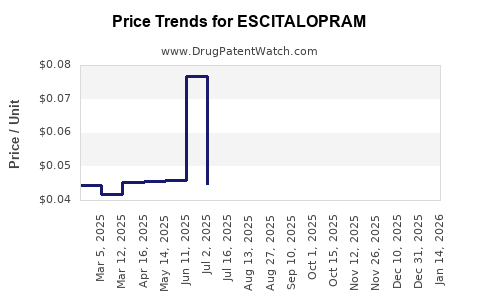
- Price trend: Historically, a 90% reduction in price followed patent expiring; recent price stabilizations are linked to manufacturing, procurement, and market competition.
Regulatory and Policy Changes
Reimbursement policies influence consumer access and price levels. Many countries implement price controls to regulate costs, which sustain low prices for generics.
Market Penetration and Prescribing Patterns
Increased physician awareness and acceptance drive high prescription volumes. The introduction of combination therapies and expanded indications also sustain demand.
What are the Price Projections for Escitalopram?
Short-term Outlook (Next 2 Years)
- Branded Price: Will remain relatively stable at $200–$300 per month in the U.S. due to fixed contracts and limited competition.
- Generic Price: Expected to stay around $10–$25 per month with minor fluctuations. Price stabilization is expected as the market matures and competitive pressures plateau.
Medium to Long-term Outlook (3–5 Years)
- Generic Prices: Likely to decline by another 5%–10% annually if new generic manufacturers enter or if price negotiations tighten.
- Brand Premiums: Could experience slight increases if new formulations or indications are approved, or if market exclusivity temporarily extends via patent litigation.
Impact of Biosimilar and Alternative Therapies
While biosimilars are unlikely due to the nature of small-molecule drugs, alternative therapies such as other SSRIs, SNRIs, or novel antidepressants could influence market share, indirectly pressuring price stability.
Key Market Drivers and Risks
| Drivers |
Risks |
| Patent expirations in key markets |
Patent litigation delaying generic entry |
| Growing global mental health awareness |
Regulatory barriers reducing access |
| Rising adoption of prescribing guidelines |
Economic downturns affecting healthcare budgets |
| Entry of new therapeutic agents |
Price controls limiting revenue potential |
Conclusion
Escitalopram's market is driven by generic competition, regulatory policies, and expanding indications. Prices for non-branded versions are expected to remain stable or decline modestly, while branded prices could see minor increases with new product developments.
Key Takeaways
- Escitalopram remains a top-selling SSRI, with substantial generic market penetration since 2012.
- Short-term prices for generics are stable; branded prices are relatively high and unchanging.
- Patent expirations in key markets significantly influence market prices, with potential declines of 5%–10% annually for generics.
- Market growth hinges on growing mental health awareness and expanding indications.
- Regulatory and legal factors pose both opportunities and risks to market stability.
FAQs
1. How does patent expiration affect escitalopram prices?
Patent expiration allows generic manufacturers to produce cheaper versions, leading to a rapid decrease in prices for escitalopram branded versions, often by over 80% within a year.
2. What is the typical price range for generic escitalopram?
In the United States, generics typically cost between $10 to $30 per month, varying by supplier and dosage.
3. Are there upcoming patent protections that could influence prices?
Some patents in select countries extend until 2025, delaying generic entry and maintaining higher prices until then.
4. How might new therapeutic options impact escitalopram’s market?
Introduction of novel antidepressants or combination therapies could reduce prescriptions of escitalopram, potentially lowering demand and prices over time.
5. What regions offer the highest growth potential for escitalopram?
The Asia-Pacific region shows growth due to increasing mental health diagnoses and acceptance of psychiatric medications.
References
- IQVIA. (2023). Global Psychotropic Drugs Market Report.
- FDA. (2022). Drug Approvals and Patent Data for SSRI Medications.
- MarketWatch. (2023). SSRI Market Size and Forecast.
- AstraZeneca. (2012). Lexapro Patent Expiry Announcements.
- EvaluatePharma. (2023). Top-Selling Antidepressants and Market Trends.