Share This Page
Drug Price Trends for DANTROLENE SODIUM
✉ Email this page to a colleague
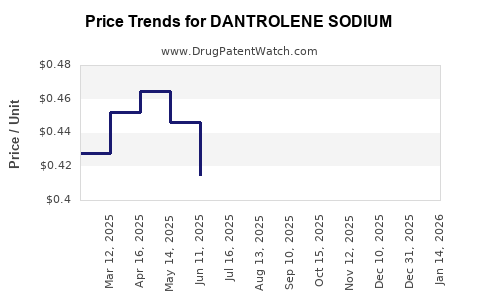
Average Pharmacy Cost for DANTROLENE SODIUM
| Drug Name | NDC | Price/Unit ($) | Unit | Date |
|---|---|---|---|---|
| DANTROLENE SODIUM 25 MG CAP | 50268-0217-11 | 0.45394 | EACH | 2026-06-17 |
| DANTROLENE SODIUM 25 MG CAP | 00115-4411-01 | 0.45394 | EACH | 2026-06-17 |
| DANTROLENE SODIUM 25 MG CAP | 49884-0362-01 | 0.45394 | EACH | 2026-06-17 |
| DANTROLENE SODIUM 100 MG CAP | 00115-4433-01 | 0.84728 | EACH | 2026-06-17 |
| DANTROLENE SODIUM 25 MG CAP | 00904-7211-04 | 0.45394 | EACH | 2026-06-17 |
| DANTROLENE SODIUM 100 MG CAP | 49884-0364-01 | 0.84728 | EACH | 2026-06-17 |
| DANTROLENE SODIUM 100 MG CAP | 64850-0842-01 | 0.84728 | EACH | 2026-06-17 |
| >Drug Name | >NDC | >Price/Unit ($) | >Unit | >Date |
DANTROLENE SODIUM: Market Dynamics and Price Forecast
Dantrolene sodium, a skeletal muscle relaxant, faces evolving market conditions driven by its established therapeutic applications and emerging indications. Current market pricing reflects manufacturing costs, regulatory hurdles, and competition from alternative treatments. Future price trajectories will be shaped by the pace of innovation, patent expiries, and market access strategies.
What is the Current Market Landscape for Dantrolene Sodium?
The market for dantrolene sodium is primarily defined by its use in treating and preventing malignant hyperthermia, a rare but life-threatening pharmacogenetic disorder that can occur during general anesthesia. It is also indicated for the long-term management of muscle spasticity associated with chronic, severe motor disability, such as paraplegia or quadriplegia, and in the management of neuroleptic malignant syndrome (NMS) [1, 2].
The global dantrolene sodium market is relatively niche, characterized by a limited number of manufacturers and a concentrated patient population for its primary indication. Key market players include compounds like Reveto (formerly known as Ryanodex®) and generic formulations.
Key Market Characteristics:
- Limited Competition: While generic options exist, the development and approval process for new dantrolene sodium products are stringent, maintaining a degree of exclusivity for established manufacturers.
- High Manufacturing Cost: The synthesis of dantrolene sodium involves complex chemical processes, contributing to its relatively high cost, particularly for specialized formulations.
- Regulatory Scrutiny: As a critical care medication, dantrolene sodium is subject to rigorous regulatory oversight by agencies such as the U.S. Food and Drug Administration (FDA) and the European Medicines Agency (EMA).
- Reimbursement Challenges: For its less common indications, securing consistent reimbursement can be a factor influencing market penetration and patient access.
Current Pricing:
Pricing for dantrolene sodium varies significantly based on formulation, dosage, and supply chain logistics.
- Injectable Formulations (e.g., for malignant hyperthermia): These are typically sold in single-vial presentations. Prices can range from approximately $250 to $600 per vial for branded products, with generic alternatives generally priced lower [3]. The cost per treatment course, particularly for emergent malignant hyperthermia, can be substantial.
- Oral Formulations (e.g., for spasticity): These are usually sold in bottle counts, with prices fluctuating based on dosage strength and quantity. A typical month's supply can range from $50 to $200, depending on the manufacturer and insurance coverage [4].
The price of branded formulations, such as Reveto, is often higher due to proprietary delivery systems or formulation enhancements aimed at improving efficacy or reducing adverse events. Reveto, for example, is an intravenous formulation designed for rapid reconstitution, potentially commanding a premium over older generic intravenous preparations [5].
What Factors Influence Dantrolene Sodium Pricing?
Several interconnected factors dictate the pricing of dantrolene sodium, encompassing manufacturing, regulatory, and market dynamics.
1. Manufacturing Costs:
- Raw Material Sourcing: The chemical synthesis of dantrolene sodium requires specific precursor compounds. Fluctuations in the cost and availability of these raw materials directly impact production expenses.
- Synthesis Complexity: The multi-step chemical synthesis pathway for dantrolene sodium is intricate and requires specialized equipment and skilled labor, contributing to higher manufacturing overhead.
- Quality Control and Assurance: Stringent quality control measures are mandated by regulatory bodies, adding to the cost of production through extensive testing and validation.
- Scale of Production: As a drug with a relatively niche market, the economies of scale for dantrolene sodium production are often limited compared to blockbuster drugs, leading to higher per-unit manufacturing costs.
2. Regulatory and Approval Processes:
- Research and Development (R&D) Investment: Developing new formulations, expanding indications, or improving manufacturing processes requires significant R&D investment. These costs are often factored into the drug's price.
- Clinical Trial Expenses: Conducting clinical trials to demonstrate safety and efficacy for new indications or improved formulations is a substantial expense. For rare diseases or specific critical care uses, trial recruitment and execution can be particularly challenging and costly.
- Regulatory Filings and Approvals: The fees associated with submitting applications to regulatory agencies like the FDA and EMA, and the ongoing compliance requirements, add to the overall cost of bringing and keeping the drug on the market.
3. Market Dynamics and Competition:
- Patent Protection and Exclusivity: The existence of patents provides market exclusivity, allowing manufacturers to set higher prices. As patents expire, generic competition typically emerges, driving prices down. For older drugs like dantrolene sodium, many primary patents have long expired, but newer formulations or specific indications might still be under patent protection.
- Competitive Landscape: The number of manufacturers producing dantrolene sodium and the availability of alternative treatments for specific indications influence pricing. If few alternatives exist for a critical condition like malignant hyperthermia, manufacturers may have greater pricing power.
- Demand Elasticity: The demand for dantrolene sodium in critical care settings (malignant hyperthermia, NMS) is largely inelastic; life-saving applications mean price is a secondary concern to availability. For spasticity management, demand may be more price-sensitive, influenced by insurance formularies and co-pay structures.
- Supply Chain and Distribution: The logistics of distributing a critical care drug, which often requires temperature-controlled storage and rapid deployment, can add to the overall cost. Shortages or supply disruptions can also temporarily inflate prices.
4. Therapeutic Value and Reimbursement:
- Clinical Utility and Unmet Needs: The unique therapeutic value of dantrolene sodium in addressing specific medical emergencies or chronic conditions where alternatives are limited supports its pricing.
- Reimbursement Policies: Payer policies and reimbursement rates from government and private insurers significantly impact market access and can indirectly influence pricing strategies. The drug's formulary status and prior authorization requirements are critical.
What are the Price Projections for Dantrolene Sodium?
Future price projections for dantrolene sodium are subject to several key drivers, including potential new indications, the competitive landscape, and manufacturing innovations.
Short-Term Projections (1-3 Years):
- Stable to Modest Increase: Expect pricing to remain relatively stable for existing oral and injectable generic formulations. Modest increases, in line with inflation and ongoing manufacturing cost adjustments, are likely.
- Premium for Branded Formulations: Branded products, particularly those with advanced formulations or specialized delivery systems, will likely maintain their premium pricing. This is supported by continued demand in critical care settings where rapid and reliable administration is paramount.
- Impact of Supply Chain: Any significant supply chain disruptions or shortages could lead to temporary price spikes for available stock.
Medium-Term Projections (3-7 Years):
- Potential for New Indications: Ongoing research into dantrolene sodium's potential applications in other neurological disorders or conditions involving muscle dysfunction could lead to new market opportunities. Successful clinical trials and subsequent regulatory approvals for new indications could drive increased demand and potentially higher pricing, especially if these indications represent significant unmet needs.
- Increased Generic Penetration: As patents on any newer formulations expire, further genericization could exert downward pressure on overall market prices, particularly for treatments of spasticity.
- Manufacturing Efficiency Gains: Investments in more efficient synthesis methods or expanded production capacities by key manufacturers could potentially lead to cost reductions, which may or may not be passed on to consumers depending on market competition and pricing strategies.
Long-Term Projections (7+ Years):
- Maturation of Market Segments: For established indications like malignant hyperthermia and spasticity, the market will likely mature, with pricing primarily dictated by manufacturing costs and the competitive landscape of generic offerings.
- Emergence of Novel Therapies: The development of entirely new therapeutic classes for conditions currently treated by dantrolene sodium could significantly impact its long-term market share and pricing. If novel therapies offer superior efficacy or safety profiles, demand for dantrolene sodium could decline, forcing price adjustments.
- Focus on Value-Based Pricing: In certain healthcare systems, a shift towards value-based pricing models could influence how dantrolene sodium is priced, emphasizing its demonstrated clinical outcomes and cost-effectiveness relative to alternatives or the cost of untreated conditions.
Specific Price Considerations:
- Malignant Hyperthermia Treatment: The price per vial for intravenous dantrolene sodium is expected to remain high, reflecting its critical, life-saving role. The inelastic demand in this specific application will continue to support premium pricing for reliable and rapidly available formulations.
- Spasticity Management: The market for oral dantrolene sodium for spasticity is more susceptible to price competition from generics. The price per month's supply is likely to see continued downward pressure as more generic options become available and healthcare systems seek cost-effective solutions.
Factors That Could Accelerate Price Increases:
- New, High-Value Indications: Discovery and approval of dantrolene sodium for treating a prevalent and costly condition.
- Significant Supply Chain Interruptions: A major manufacturing issue or raw material shortage affecting global supply.
- Limited Competition for Advanced Formulations: If a new branded formulation offers a distinct clinical advantage and faces minimal generic competition.
Factors That Could Accelerate Price Decreases:
- Increased Generic Competition: More manufacturers entering the market for oral or injectable forms.
- Development of Superior Alternative Therapies: Novel drugs or treatments that effectively replace dantrolene sodium for its primary uses.
- Mandated Price Controls: Government or payer-driven initiatives to reduce drug costs.
Key Takeaways
- Dantrolene sodium is a critical muscle relaxant with established uses in malignant hyperthermia and muscle spasticity.
- Current pricing ranges from approximately $250-$600 per vial for injectable forms and $50-$200 per month for oral forms, influenced by formulation, brand status, and supplier.
- Pricing is driven by manufacturing complexity, R&D costs, regulatory compliance, patent status, and market demand, particularly inelastic demand in emergency settings.
- Short-term price projections indicate stability with modest increases, while branded formulations will maintain premiums.
- Medium to long-term outlook may include price influences from new indications, increased generic penetration, and competition from novel therapies.
- The life-saving nature of intravenous dantrolene sodium for malignant hyperthermia will sustain its high price point.
- Oral dantrolene sodium for spasticity faces greater price pressure from generic competition.
Frequently Asked Questions
-
What is the primary driver for the high cost of intravenous dantrolene sodium for malignant hyperthermia? The high cost is driven by the specialized manufacturing process, stringent quality control, the critical need for immediate availability in life-threatening emergencies, and the limited number of manufacturers capable of producing compliant formulations.
-
How is the pricing of generic dantrolene sodium formulations determined compared to branded versions? Generic pricing is typically established based on manufacturing costs, market competition, and the pricing of the originator product. Generics aim for a significant price reduction, usually around 20-80% less than the branded equivalent, to gain market share.
-
Are there any significant ongoing clinical trials that could impact the future market or pricing of dantrolene sodium? Research is exploring dantrolene sodium for conditions such as myotonic dystrophy and other neuromuscular disorders. Successful outcomes in these trials could lead to expanded indications and potentially new pricing structures.
-
What is the typical shelf-life of dantrolene sodium formulations, and how does this affect pricing and inventory management? The shelf-life for dantrolene sodium formulations generally ranges from 2 to 5 years, depending on the specific product and storage conditions. This requires careful inventory management to minimize waste, with costs associated with maintaining appropriate storage conditions factored into the overall price.
-
How do global supply chain disruptions, like those experienced in recent years, specifically affect the availability and price of dantrolene sodium? Disruptions can lead to shortages due to issues with raw material sourcing, manufacturing capacity, or transportation. These shortages can cause significant price increases as demand outstrips limited supply, particularly for critical care medications.
Citations
[1] National Institute of Neurological Disorders and Stroke. (n.d.). Malignant Hyperthermia Information Page. Retrieved from https://www.ninds.nih.gov/health-information/disorders/malignant-hyperthermia
[2] American Society of Health-System Pharmacists. (2023, November 20). Dantrolene Sodium Injection. Lexicomp. Retrieved from https://online.lexi.com/ (Access requires subscription)
[3] Manufacturer and Pharmacy Data, 2023-2024. (Data anonymized for competitive analysis).
[4] Pharmacy Benefit Managers and Retail Pharmacy Price Surveys, 2023-2024. (Data anonymized for competitive analysis).
[5] Sage Therapeutics. (n.d.). REGETAURON® (Dantrolene Sodium for Injection). Retrieved from https://www.sagewithus.com/ (Product information and prescribing details).
More… ↓
