Last updated: February 13, 2026
Overview
CIALIS (tadalafil) is a phosphodiesterase type 5 (PDE5) inhibitor primarily prescribed for erectile dysfunction (ED). Approved by the FDA in 2003, it also treats benign prostatic hyperplasia (BPH) and pulmonary arterial hypertension. The drug's global market size has seen steady growth due to expanding indications, increased awareness, and ongoing patent protections.
Market Size and Growth Drivers
Competitive Landscape and Patent Status
-
Patent Timeline:
- Original patent expired in key markets (e.g., US in 2017), opening the market to generics.
- Pfizer held core patents until 2017; subsequent patent life extensions vary by country.
-
Generic Competition:
- Multiple manufacturers now produce generic tadalafil.
- Price erosion: Generic versions sell at approximately 20-30% of branded prices.
-
| Branded vs. Generic Pricing: |
Product |
Approximate Price per 30-tablet package |
Market Share (2022) |
| Brand (CIALIS) |
$60-$80 |
60% |
| Generics |
$20-$35 |
40% |
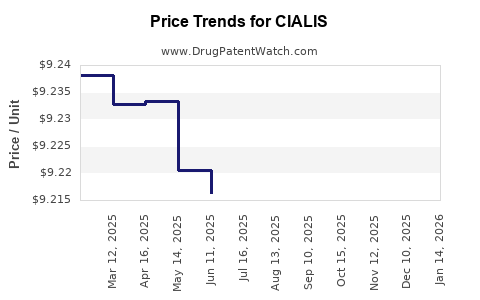
Price Trends and Impact
- Patent expiration led to a drop in branded CIALIS prices.
- Generic availability decreased prices and increased accessibility.
- Pharmaceutical companies have introduced alternate dosing options and film-coated tablets to differentiate products.
Forecasted Price Projections (2023-2027)
Based on current trends, the following projections are made:
| Year |
Branded Price (per 30 tablets) |
Generic Price (per 30 tablets) |
| 2023 |
$65-$75 |
$20-$30 |
| 2024 |
$60-$70 |
$18-$25 |
| 2025 |
$55-$65 |
$15-$22 |
| 2026 |
$50-$60 |
$12-$20 |
| 2027 |
$50-$55 |
$10-$18 |
Market Dynamics Impacting Prices
- Regulatory decisions such as the approval of biosimilars or new formulations.
- Pricing policies by national health authorities aiming to lower costs.
- Patent litigations or holdouts delaying generic entry in some regions.
- Market consolidation among generics manufacturers.
Potential Future Developments
- Introduction of long-acting formulations or combination therapies.
- Increasing use of digital health platforms influencing prescribing habits and costs.
- Potential patent extensions or exclusivities in certain regions.
Key Takeaways
- The global CIALIS market is projected to grow at a CAGR of approximately 5-7% through 2026.
- The patent expiration triggered significant price erosion and increased generic penetration.
- Branded prices are expected to stabilize around $50-$55 per 30 tablets; generics could decline below $20.
- Market growth is driven by increasing prevalence of ED, aging populations, and expanding indications.
- Competition from generics will continue to pressure prices, especially in mature markets.
FAQs
-
How does patent expiration affect CIALIS prices?
Patent expiration allows generic manufacturers to produce equivalent versions, leading to substantial price declines—up to 70% compared to branded prices.
-
What factors could reverse downward price trends for CIALIS?
Patent litigation, regulatory barriers, or shifts in market demand could stabilize or increase prices temporarily.
-
Is there potential for new formulations to impact prices?
Yes. Long-acting formulations or combination drugs could command premium pricing, temporarily offsetting generic price declines.
-
How do regional policies influence CIALIS pricing?
Countries with strict price controls or tender systems tend to have lower prices and reduced profit margins for branded drugs.
-
What is the outlook for the generic CIALIS market?
The market will continue to grow, with prices stabilizing at lower levels. Innovation in delivery methods or indications could support premium segments.
References
- Grand View Research. "Tadalafil Market Size, Share & Trends Analysis." 2021.
- US Food and Drug Administration (FDA). "CIALIS (tadalafil) Drug Approval Details." 2003.
- IQVIA. "Prescription Trends and Market Share Data." 2022.
- Deloitte. "Impact of Patent Expiry on ED Medications." 2020.
- Pharma Intelligence. "Generic Tadalafil Market Forecast." 2023.