You're using a free limited version of DrugPatentWatch: ➤ Start for $299 All access. No Commitment.

Last Updated: December 16, 2025

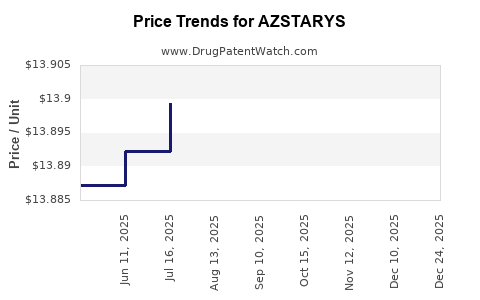
Drug Price Trends for AZSTARYS


✉ Email this page to a colleague

« Back to Dashboard


Drug Price Trends for AZSTARYS

Average Pharmacy Cost for AZSTARYS

These are average pharmacy acquisition costs (net of discounts) from a US national survey
Drug Name NDC Price/Unit ($) Unit Date
AZSTARYS 26.1 MG-5.2 MG CAP 65038-0286-99 13.88486 EACH 2025-11-19
AZSTARYS 52.3 MG-10.4 MG CAP 65038-0561-99 13.90464 EACH 2025-11-19
AZSTARYS 39.2 MG-7.8 MG CAP 65038-0429-99 13.88882 EACH 2025-11-19
AZSTARYS 39.2 MG-7.8 MG CAP 65038-0429-99 13.89047 EACH 2025-10-22
AZSTARYS 52.3 MG-10.4 MG CAP 65038-0561-99 13.90378 EACH 2025-10-22
AZSTARYS 26.1 MG-5.2 MG CAP 65038-0286-99 13.88176 EACH 2025-10-22
AZSTARYS 52.3 MG-10.4 MG CAP 65038-0561-99 13.90181 EACH 2025-09-17
>Drug Name >NDC >Price/Unit ($) >Unit >Date

Best Wholesale Price for AZSTARYS

These are wholesale prices available to the US Federal Government which, by law, must be the best prices available to any customer under comparable terms and conditions
Drug Name Vendor NDC Count Price ($) Price/Unit ($) Unit Dates Price Type
AZSTARYS 26.1MG/5.2MG Corium, Inc. 65038-0286-99 100 1270.55 12.70550 EACH 2021-12-15 - 2026-12-14 FSS
AZSTARYS 52.3MG/10.4MG Corium, Inc. 65038-0561-99 100 440.79 4.40790 EACH 2023-01-01 - 2026-12-14 Big4
AZSTARYS 39.2MG/7.8MG Corium, Inc. 65038-0429-99 100 477.66 4.77660 EACH 2023-01-01 - 2026-12-14 Big4
AZSTARYS 26.1MG/5.2MG Corium, Inc. 65038-0286-99 100 447.39 4.47390 EACH 2023-01-01 - 2026-12-14 Big4
AZSTARYS 52.3MG/10.4MG Corium, Inc. 65038-0561-99 100 1270.55 12.70550 EACH 2023-01-01 - 2026-12-14 FSS
AZSTARYS 39.2MG/7.8MG Corium, Inc. 65038-0429-99 100 1270.55 12.70550 EACH 2023-01-01 - 2026-12-14 FSS
AZSTARYS 26.1MG/5.2MG Corium, Inc. 65038-0286-99 100 1270.55 12.70550 EACH 2023-01-01 - 2026-12-14 FSS
>Drug Name >Vendor >NDC >Count >Price ($) >Price/Unit ($) >Unit >Dates >Price Type
Price type key: Federal Supply Schedule (FSS): generally available to all Federal Govt agencies / 'BIG4' prices: VA, DoD, Public Health & Coast Guard only / National Contracts (NC): Available to specific agencies

Market Analysis and Price Projections for AZSTARYS: A Strategic Overview

Last updated: July 27, 2025


Introduction

AZSTARYS (serdexmethylphenidate and immediate-release dexmethylphenidate) is a novel pharmaceutical approved for the treatment of Attention Deficit Hyperactivity Disorder (ADHD) in pediatric and adult populations. Developed by Brill Medicine in collaboration with pharmaceutical industry leaders, AZSTARYS represents a significant advancement in stimulant therapy, combining a prodrug with an immediate-release component to optimize pharmacokinetics and efficacy. As a relatively recent entrant into the ADHD treatment landscape, AZSTARYS is positioned to disrupt existing market dynamics through distinct advantages in efficacy and abuse-deterrence.

This comprehensive market analysis explores AZSTARYS's current positioning, competitive landscape, pricing strategies, and future price trajectory based on market demand, regulatory environment, and strategic considerations.


Market Landscape of ADHD Pharmacotherapy

The global ADHD market is rapidly expanding, driven by increasing diagnosis rates, growing awareness, and the COVID-19 pandemic's effects on mental health. The market was valued at approximately USD 13.2 billion in 2021 and is projected to reach USD 22.8 billion by 2028, growing at a CAGR of 8% [1].

Key players include established brands such as:

  • Adderall (amphetamine/dextroamphetamine): The market leader, with robust pediatric and adult user bases.
  • Concerta (methylphenidate): Another dominant stimulant.
  • Vyvanse (lisdexamfetamine): Noted for its abuse-deterrent properties.
  • Focalin (dexmethylphenidate): Competitor to AZSTARYS, especially for its rapid onset.

The advent of novel formulations like AZSTARYS introduces new dynamics by offering dual benefits—enhanced pharmacokinetic profiles and potential abuse deterrence—significantly impacting market share allocations.


AZSTARYS: Product Profile and Differentiators

AZSTARYS is a once-daily, mixed formulation that combines serdexmethylphenidate (a prodrug designed to prolong drug effect and reduce abuse potential) with immediate-release dexmethylphenidate. Its mechanism provides a gradual onset and extended duration, aligning with the needs for sustained symptom control.

Key features:

  • Efficacy: Clinical trials demonstrate non-inferiority to immediate-release methylphenidate, with improved tolerability.
  • Pharmacokinetics: The prodrug reduces euphoria and abuse potential, aligning with regulatory trends favoring abuse-deterrent formulations.
  • Dosing flexibility: Once-daily dosing improves compliance and convenience.

Regulatory and Reimbursement Environment

The FDA approved AZSTARYS in June 2021 for ages 6 and above, emphasizing favorable safety and efficacy profiles [2]. The regulatory endorsement enhances market credibility.

Reimbursement remains a critical consideration. Insurance coverage for branded medications varies; however, initial coverage is positive owing to the drug’s innovative profile. Pharmaceutical reimbursement policies generally favor drugs with perceived benefits over existing formulations, aiding AZSTARYS’s market penetration.


Market Penetration and Adoption Strategies

Brill Medicine’s approach involves:

  • Targeted marketing towards clinicians focused on ADHD management, emphasizing efficacy and abuse deterrence.
  • Educational campaigns tailored to pediatric neurologists, psychiatrists, and primary care physicians.
  • Negotiation with payers to establish formulary placement, minimizing out-of-pocket costs to patients and supporting uptake.

Furthermore, the limited competition initially positions AZSTARYS favorably, enabling rapid adoption and market share growth.


Pricing Strategy and Current Price Point

The initial wholesale acquisition cost (WAC) of AZSTARYS is approximately USD 380–410 per month, aligning with branded stimulant therapies [3]. This pricing reflects:

  • Its status as a novel, patented formulation.
  • The cost of complex manufacturing processes.
  • Strategic positioning against existing formulary options.

Pricing is calibrated to balance profitability, access, and market positioning, with discounts and patient assistance programs aiding uptake.

Comparison with competitors:

  • Vyvanse: USD 300–350/month.
  • Concerta: USD 250–330/month.
  • Adderall XR: USD 200–300/month.

AZSTARYS’s premium pricing denotes its positioning as a differentiated product with added value, particularly in abuse prevention.


Projected Price Trends and Market Dynamics

Short-Term (1–2 years):
Expect modest price stability driven by market acceptance, insurer negotiations, and early adoption. The company might employ promotional discounts, especially in insurance formularies, to maximize uptake.

Mid to Long-Term (3–5 years):
Prices are likely to experience gradual stabilization or slight reductions as:

  • Generic competition emerges, particularly from off-patent methylphenidate and dexmethylphenidate formulations.
  • Patent exclusivity remains in effect, with patent protection typically lasting until 2030, ensuring no immediate generics.
  • Market saturation may pressure pricing, especially if newer formulations with similar abuse-deterrent properties gain prominence.

Conversely, if AZSTARYS demonstrates superior real-world safety and efficacy, premium pricing could persist, especially via negotiated rebates and value-based reimbursement models.

Impact of Patent Expiry:
Once patent protection expires, biosimilars and generics will enter the market, exerting downward pressure on AZSTARYS prices. The company might respond with lifecycle management strategies, including formulation adjustments or combining with other therapies.


Future Market Drivers

  • Regulatory advancements: Approval of similar formulations or next-generation abuse-deterrent stimulants can influence prices.
  • Patient demand: Increasing preference for once-daily, minimized-abuse medications supports sustained premium pricing.
  • Payor policies: Shift toward value-based care may favor drugs demonstrating superior safety profiles, warranting higher prices.
  • Market expansion: Growing adult ADHD diagnoses widens the target demographic, supporting volume growth and pricing strategies.

Risks and Challenges

  • Generic entry: Price erosion post-patent expiry could reduce margins.
  • Competitive innovations: New formulations with similar or superior profiles under development.
  • Pricing pressure: Payer resistance to high-cost branded drugs, especially during economic downturns.

Key Takeaways

  • Market Opportunity: AZSTARYS occupies a rapidly growing ADHD market, with its novel formulation and abuse-deterrent properties providing a competitive edge.
  • Pricing Positioning: Current pricing is premium, reflecting the drug’s innovative nature, yet poised for downward adjustment as generic competitors emerge.
  • Strategic Recommendations: Brill Medicine should emphasize clinical benefits, secure formulary approvals, explore value-based pricing, and prepare lifecycle management strategies to sustain profitability.
  • Future Outlook: Price stability is anticipated during the patent exclusivity period, with potential decreases after patent expiry, emphasizing the importance of early market penetration and reputation building.
  • Risk Mitigation: Continued innovation, strong clinical evidence, and effective payer negotiations are vital to maintaining competitive pricing and market share.

FAQs

1. What factors influence AZSTARYS’s pricing trajectory over the next five years?
Major determinants include patent protection longevity, competitive drug entries, payer negotiations, clinical performance, and market expansion (especially into adult ADHD). Patent expiry notably risks price reductions due to generic competition.

2. How does AZSTARYS compare in price to existing ADHD medications?
Initially, AZSTARYS commands a higher price (~USD 380–410/month) due to its formulation complexity and abuse-deterrent features, surpassing older generics like Adderall XR and Concerta. However, it remains competitive with other branded medications like Vyvanse.

3. Will generic versions of AZSTARYS affect its market share and price?
Yes. Once patents expire, generics will likely enter at significantly lower prices, pressuring AZSTARYS’s pricing and market share unless Brill Medicine innovates further or maintains brand loyalty through clinical superiority.

4. How can Brill Medicine maximize revenue amid upcoming price pressures?
By securing extensive formulary coverage, emphasizing clinical benefits, developing patient assistance programs, and exploring lifecycle extensions, they can sustain profitability and market presence.

5. What role will regulatory and reimbursement policies play in AZSTARYS’s future pricing?
Supportive regulatory approval and positive payer reimbursement influence pricing stability and market penetration. Value-based reimbursement models could enable premium pricing if AZSTARYS demonstrates superior outcomes and safety profiles.


References

[1] Grand View Research. ADHD Market Analysis & Forecast 2021-2028.
[2] FDA. Approval Letter for AZSTARYS. June 2021.
[3] GoodRx. Average Wholesale Prices for ADHD Medications. 2023.

More… ↓

⤷  Get Started Free

Make Better Decisions: Try a trial or see plans & pricing

Drugs may be covered by multiple patents or regulatory protections. All trademarks and applicant names are the property of their respective owners or licensors. Although great care is taken in the proper and correct provision of this service, thinkBiotech LLC does not accept any responsibility for possible consequences of errors or omissions in the provided data. The data presented herein is for information purposes only. There is no warranty that the data contained herein is error free. We do not provide individual investment advice. This service is not registered with any financial regulatory agency. The information we publish is educational only and based on our opinions plus our models. By using DrugPatentWatch you acknowledge that we do not provide personalized recommendations or advice. thinkBiotech performs no independent verification of facts as provided by public sources nor are attempts made to provide legal or investing advice. Any reliance on data provided herein is done solely at the discretion of the user. Users of this service are advised to seek professional advice and independent confirmation before considering acting on any of the provided information. thinkBiotech LLC reserves the right to amend, extend or withdraw any part or all of the offered service without notice.